Home Blog Page 5

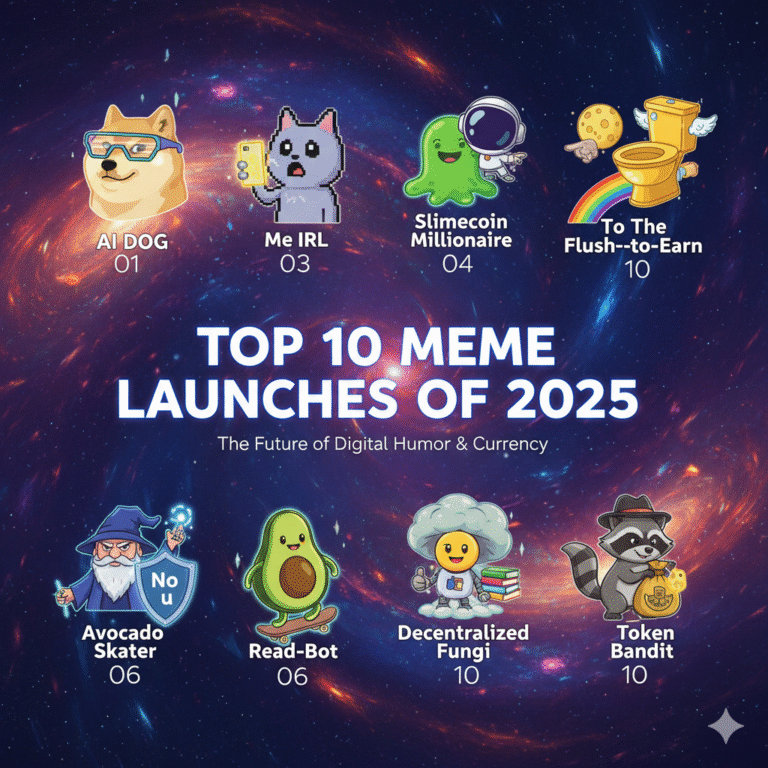
Top 10 Meme Coin Launches of 2025: The Hottest New Tokens Taking Over Crypto

Are you new to the cryptocurrency space? Meme coins represent a unique category of digital tokens. They’re inspired by internet jokes, viral trends, animals, and pop culture phenomena.

Unlike established cryptocurrencies such as Bitcoin or Ethereum, meme coins typically lack fundamental utility. Their value derives almost entirely from community engagement and social media hype. This hype can trigger explosive price movements.

Market Dominance in 2025

The meme coin landscape in 2025 reveals a striking concentration of value. A handful of established tokens continue their dominance. Dogecoin (DOGE), Shiba Inu (SHIB), and PEPE collectively control approximately 61% of the entire memecoin market capitalization.

As of October 28, 2025, the numbers tell the story. DOGE holds roughly $30.6 billion in market cap. SHIB maintains around $6.1 billion. PEPE sits at approximately $3.0 billion. The total meme sector is valued at roughly $65.5 billion according to CoinGecko.

To understand how these established tokens compare, check out this comprehensive comparison of BONK vs PEPE vs DOGE.

The 2025 Explosion

The year 2025 witnessed an unprecedented explosion in meme coin creation. More than 13 million new meme tokens launched throughout the year. This massive proliferation was driven largely by accessible Solana-based tooling. Platforms like Pump.fun led the charge, as documented in coverage by Bloomberg and Messari, alongside SEC filings.

Understanding why some memecoins survive while 99% die is crucial for anyone entering this volatile market.

What Makes a Meme Coin Launch Successful in 2025?

Creating a meme coin has never been easier from a technical standpoint. Developers can upload an image, assign a name, and deploy a token on platforms like Pump.fun for minimal cost.

However, achieving genuine success remains exceptionally rare. Several critical factors separate winning launches from the countless failures.

Viral Narrative Development

Viral narrative development stands as perhaps the most crucial element. Successful meme coins tie into trending news cycles. They connect with political events, celebrity endorsements, or cultural moments that capture widespread attention. The connection to current events creates natural publicity and drives initial interest.

Community Strength

Community strength and engagement directly correlates with sustainability. Projects that build robust communities on X (formerly Twitter) demonstrate significantly better staying power. They maintain diverse holder bases.

Those relying on concentrated ownership or artificial hype typically fail quickly.

Strategic Timing

Strategic timing can make or break a launch. Bull market conditions provide optimal launch windows. Major events like presidential inaugurations work well. Moments of peak retail enthusiasm also create opportunities.

Conversely, launching during market downturns typically results in poor performance. Low-attention periods should be avoided.

Blockchain Selection

Blockchain selection has emerged as a defining characteristic of 2025’s successful launches. Solana has established clear dominance in the meme coin sector. This is due to its high transaction speeds and minimal fees.

Platforms like Pump.fun and related launchpads have catalyzed enormous trading volumes on the Solana network, according to CoinGecko data. However, other chains are emerging as viable alternatives. Learn more about the new generation of memecoins on TON and Base blockchains that are gaining traction in 2025.

Market Overview

The Solana meme coin ecosystem experienced explosive growth throughout 2025. Pump.fun led the charge as the primary launching platform. With the total meme market capitalization sitting at approximately $65.5 billion as of October 28, 2025, the following ranking presents the top 10 launches of the year.

Each entry includes the token’s launch story. You’ll find factors driving its price appreciation. Current statistics are provided. Practical guidance for cryptocurrency beginners is included.

1. MemeCore ($M) – The Market Cap King (~$3.8B MC)

MemeCore launched in early 2025 on the Solana blockchain. It rapidly ascended to become the third-largest meme coin by market capitalization. It trails only the established giants DOGE and SHIB.

As of October 28, 2025, $M trades at approximately $2.24 per token. Its market cap hovers around $3.8 billion, according to CoinGecko.

Why MemeCore Exploded

The token’s explosive growth stems from its “meta” positioning. MemeCore literally represents the meme economy itself. This creates a recursive appeal that resonated with crypto traders.

The project cultivated a strong, engaged holder base from its earliest days. Securing listings on major centralized exchanges provided crucial liquidity. This enabled massive price multiples from initial valuations.

The Numbers for Beginners

For beginners considering the numbers, imagine purchasing $M at an early price of $0.02. With the current price around $2.24, that represents potential returns of over 11,000%.

However, this illustrates both the opportunity and the danger inherent in meme coins. Extreme volatility works both directions. Taking partial profits at predetermined price targets represents prudent risk management. Don’t attempt to time the absolute peak.

2. Pump.fun ($PUMP) – The Launchpad That Tokenized Itself (~$1.7B MC)

In a move of ironic brilliance, Pump.fun launched its own token in mid-July 2025. The platform is responsible for facilitating millions of meme coin launches.

The ICO raised approximately $600 million within minutes. This demonstrated the platform’s cultural cachet within the meme coin community, as documented in Wikipedia entries.

Current Performance

As of October 28, 2025, $PUMP trades at roughly $0.0048 according to CoinGecko data. This represents an increase of approximately 17% over the preceding 30-day period.

The token’s market capitalization sits around $1.7 billion. This cements its position as one of the year’s most significant launches. For a deeper dive into the rise of MemeFi platforms like Pump.fun, including MOG Coin and Banana Gun, explore how these platforms are revolutionizing meme coin trading.

The Meta-Narrative Appeal

The success of $PUMP derives from its meta-narrative appeal. The platform behind the meme coin revolution minting its own meme coin creates a circular logic. Crypto traders found this irresistible.

The token launch included various ecosystem incentives for creators and platform users. This added utility layers beyond pure speculation as noted in Wikipedia documentation.

Lessons for Newcomers

For cryptocurrency newcomers, $PUMP offers an important lesson. Always verify adequate trading volume and liquidity before entering positions.

Use price aggregators like Dexscreener and CoinGecko. These tools confirm that order books have sufficient depth. This prevents excessive slippage when executing trades.

3. Official Trump ($TRUMP) – Politics Meets Memes (~$1.4B MC)

Launched on January 17, 2025, $TRUMP emerged as the ultimate political meme coin. This was just days before Donald Trump’s presidential inauguration. Built on the Solana blockchain, the token currently trades around $7.06 as of late October 2025, as tracked on Learn Backpack Exchange.

Extreme Volatility in Action

The token’s trajectory illustrates meme coin volatility in its purest form. Shortly after launch, $TRUMP reached a peak valuation exceeding $10 billion. This was driven by inauguration hype and heavy trading on Solana.

However, the token experienced sharp retracement in late January. Political attention waned and early holders took profits, according to Crypto.com coverage.

The Perfect Storm

The $TRUMP phenomenon represents a perfect storm of factors. Political timing aligned perfectly. Solana network efficiency provided the infrastructure. Cultural moment capture drove the narrative.

An early $100 investment could have generated thousands of dollars in returns at the peak. But the subsequent volatility created equally dramatic losses for late buyers. The current market cap around $1.4 billion suggests the token has found support among dedicated holders. This persists despite the price decline from peak levels.

Trading Political Memes

Political meme coins react with extreme sensitivity to news cycles and headline flow. For beginners exploring this sector, maintaining close attention to social media platforms like X becomes essential. Traditional news sources matter too.

Political memes can pump on positive coverage. They dump just as quickly on negative sentiment or competing narratives.

4. Pudgy Penguins ($PENGU) – NFT to Meme Powerhouse (~$1.35B MC)

Pudgy Penguins represents a unique case study in meme coin evolution. It’s a successful NFT brand that expanded into the token space. The $PENGU token genesis occurred in late 2024. But 2025 marked its ascendance to meme coin dominance through major exchange listings and exponential trading traction.

Current Market Position

As of October 28, 2025, $PENGU trades at approximately $0.0215. Its market capitalization stands around $1.35 billion, per CoinGecko data.

The token received significant legitimacy boosts through listings on major platforms. Binance.US added it in mid-January 2025, as announced on Binance.US support channels.

Multiple Success Factors

The token’s success derives from multiple converging factors. Pudgy Penguins had already established a substantial NFT community before token launch. This provided a ready-made audience of engaged supporters.

Token airdrops to NFT holders created immediate distribution and alignment. Celebrity endorsements generated buzz. The brand’s general cute appeal attracted mainstream attention beyond crypto-native audiences. Market data coverage from NFT Plazas indicates early investors saw gains exceeding 10× from initial price points.

Beginner Guidance

For beginners attracted to the brand’s aesthetic appeal and community strength, $PENGU represents a relatively “safer” meme coin bet. This is given its established brand recognition.

However, even established projects experience significant volatility. Position sizing with money you can afford to lose remains critical.

5. Ribbita by Virtuals ($TIBBIR) – AI Meme Magic (~$411M MC)

Ribbita emerged in 2025 at the intersection of two dominant crypto narratives. Artificial intelligence met meme culture.

As of October 28, 2025, $TIBBIR trades at approximately $0.4108. Its market capitalization sits around $411 million, according to CoinGecko.

The Pump Mechanism

The token’s pump mechanism combined the trending AI agents narrative with viral video clips. These featured frog-themed content. This deliberately absurdist combination resonated with meme coin traders seeking the next narrative edge.

The AI integration angle provided just enough pseudo-utility to justify attention. It maintained pure meme appeal throughout.

Blending Narratives

The Ribbita launch demonstrates how successful 2025 meme coins blended multiple trending narratives. They didn’t rely on single concepts.

For beginners, this suggests monitoring the convergence of trending topics rather than isolated themes. The AI and memes combination remained hot throughout 2025. This made $TIBBIR well-positioned for sustained interest.

6. AI Companions ($AIC) – Your Virtual Buddy (~$380M MC)

AI Companions launched in mid-2025, capitalizing on the broader artificial intelligence wave sweeping through crypto markets. The token trades at approximately $0.379. Its market capitalization stands around $380 million as of October 28, 2025, per CoinGecko data.

The Narrative

The project’s narrative centers on meme-ified AI “friends” and virtual companions. This tapped into both the AI hype cycle and broader cultural conversations. Topics included digital relationships and artificial intelligence integration.

The combination of novelty factor and narrative density created fast capital flows into the token.

An Important Principle

For cryptocurrency beginners, $AIC illustrates an important principle. Narrative density matters, but sustainable liquidity matters more.

Tokens can pump on compelling stories. But without adequate trading volume and market depth, exits become problematic. Always verify liquidity metrics before entering positions. This applies regardless of how compelling the narrative appears.

7. Loaded Lions ($LION) – Roaring Returns (~$355M MC)

Loaded Lions represents Crypto.com’s entry into native meme tokenomics. It launched on March 3, 2025, as the official token for the platform’s established NFT brand.

As of October 28, 2025, $LION trades at roughly $0.0116. Its market capitalization stands around $355 million, according to CoinGecko.

Multiple Advantages

Built on the Cronos blockchain, $LION benefited from multiple advantages. A large pre-existing NFT community was already in place. Strategic token airdrops to brand supporters created alignment.

Clear tokenomics documentation provided transparency often lacking in meme coin launches. Cross-exchange availability through Crypto.com’s trading venues provided immediate liquidity and accessibility, as detailed on Crypto.com.

What This Demonstrates

The Loaded Lions case demonstrates how established Web3 brands can successfully launch meme tokens. They leverage existing communities and provide professional infrastructure.

For beginners, tokens backed by major platforms often present lower rug-pull risk compared to anonymous launches. However, they typically trade at higher initial valuations. This limits explosive upside potential.

As blockchain technology evolves, exploring the top emerging blockchains to watch in 2026 may reveal new opportunities for the next generation of meme coins.

8. Vine Coin ($VINE) – Nostalgia Blast (Top Buzz Launch)

Vine Coin launched on January 18, 2025. It capitalized on nostalgia for the defunct Vine video platform. The launch tied into the original co-founder’s revival efforts.

Built on Solana, $VINE peaked at approximately $0.47 on January 26, 2025. It then experienced significant retracement, as documented by Reuters coverage.

Multiple Catalysts

The token’s initial pump derived from multiple catalysts. Genuine nostalgia among millennials who remembered Vine’s cultural impact played a role. Social media chatter helped, including periodic mentions by Elon Musk about “bringing back Vine.”

The co-founder’s legitimate connection provided credibility to the launch. These factors combined to send the token vertical immediately following launch, per CoinGecko data.

A Cautionary Tale

Vine Coin serves as a cautionary tale about celebrity and founder-driven narratives. While such associations can create explosive initial pumps, they frequently result in blow-off tops. Speculators rush to exit.

For beginners, this highlights the importance of exit strategy management. Having predetermined profit-taking levels prevents the common mistake. Don’t hold through complete retracements after parabolic moves.

9. Bobo Coin ($BOBO) – Bear Market Savior

Bobo Coin launched on June 3, 2025, through Binance’s Alpha platform. This immediately demonstrated the power of major exchange backing.

The token surged approximately 110% within the first 24 hours. It achieved over $30 million in market capitalization on day one, according to Binance announcements.

The Character and Context

The token draws on “Bobo the bear” meme lore. This character represents bearish market sentiment. Paradoxically, it became a bullish trading vehicle.

The combination of established meme recognition and immediate Binance liquidity created fast momentum. This attracted momentum traders and meme collectors alike.

Exchange Impact

While current market cap data places $BOBO in the top 10 2025 launches, the token demonstrates something important. Exchange partnerships can dramatically impact initial performance.

For beginners, launches on major platforms like Binance often see better initial traction than purely decentralized launches. However, this comes with trade-offs in terms of launch accessibility and earliest-stage entry opportunities.

10. Useless Coin ($USELESS) – Ironic Winner

In perhaps the most meta launch of 2025, Useless Coin embraced complete transparency about its lack of utility. Launching in May 2025 on LetsBONK.fun (a Solana-based platform), $USELESS trades at approximately $0.29.

Its market capitalization ranges between $250-300 million across various tracking platforms, per CoinGecko and CoinMarketCap.

Honesty as Meme

The token’s success proves the power of honesty-as-meme in crypto markets. By explicitly advertising zero utility, no presale allocation, and no team tokens, $USELESS became a meme in itself.

It was a statement about meme coin culture that resonated precisely because of its transparent cynicism. Later listings on major trading venues demonstrated that the ironic positioning translated into genuine community support, as documented on Bybit Global Learn.

What This Represents

For cryptocurrency beginners, $USELESS represents both the absurdity and the self-awareness that characterizes mature meme coin markets. The project’s success without pretense of utility reinforces something important.

In meme coins, narrative and community trump technological innovation or fundamental value propositions.

How to Spot the Next Meme Launch (Beginner Guide)

For newcomers seeking to identify promising meme coin launches before they explode, several practical strategies can improve success rates while managing risk.

Utilize Pump.fun for Early Discovery

Utilize Pump.fun for early discovery. The platform enables both creation and early purchasing of newly launched tokens. But maintain realistic expectations.

With over 13 million launches in 2025 according to SEC documentation, the vast majority of projects fail quickly. Early entry provides maximum upside potential but carries maximum risk.

Verify Metrics on Tracking Platforms

Verify metrics on DexScreener and CoinGecko. High trading volume combined with adequate liquidity matters far more than attractive logos or slick marketing.

These aggregators provide transparent data about actual market activity. This helps distinguish genuine interest from artificial hype. Focus on CoinGecko metrics for volume, liquidity depth, and holder distribution.

Understanding the fundamentals behind why some memecoins survive while the vast majority fail can save you from costly mistakes.

Monitor Social Media Constantly

Monitor X (Twitter) trends constantly. Search for “new meme launch” and similar terms. But critically evaluate what you find.

Filter for tokens showing real liquidity rather than just social media engagement. Genuine community building differs dramatically from coordinated shilling.

Implement Strict Risk Management

Implement strict risk management. Rug pulls and instant dumps occur frequently in the meme coin sector. Cap your exposure at 1-5% of your total crypto portfolio per meme position.

This ensures that even complete losses on individual bets don’t devastate your overall holdings.

Use Appropriate Wallets and Tools

Use appropriate wallets and tools. For Solana-based meme coins (the dominant chain in 2025), Phantom wallet has become the community standard. It offers user-friendly interfaces and reliable transaction execution.

For exploring meme coins on other networks, consider the emerging opportunities on TON and Base blockchains.

Historical Context

Throughout 2025, meme coins at times outperformed major altcoins on pure momentum trading. The $TRUMP launch alone generated global mainstream headlines. It created multi-billion dollar market cap swings within days of launch, as covered by Crypto.com.

This demonstrates both the sector’s explosive potential and its extreme risk profile.

Conclusion: Meme Launches Are Crypto’s Wild West

The top meme coin launches of 2025 conclusively demonstrate that hype trumps utility in this sector. Tokens like $M, $PUMP, and $TRUMP lead with multi-billion dollar market capitalizations.

These are built entirely on narrative, timing, and community rather than technological innovation or practical use cases. For perspective on how these newcomers stack up against established players, review this comprehensive comparison of top meme coins.

Guiding Principles for Beginners

For beginners entering the meme coin space, several principles should guide your approach. Start with small position sizes you can afford to lose completely. Enjoy the entertainment value and community engagement rather than treating meme coins as serious investments.

Take profits regularly at predetermined levels rather than hoping for infinite gains. Keep close attention on Pump.fun and similar MemeFi platforms for early awareness of potential breakout launches. The next top 10 entry could emerge at any moment.

The Reality of 2025

The 2025 meme coin explosion created both life-changing gains and devastating losses. Success in this sector requires accepting extreme volatility. Maintaining disciplined risk management is essential.

Recognizing that the vast majority of launches fail completely is crucial. For those willing to embrace the chaos with eyes open, meme coins represent crypto’s wildest frontier. Fortunes are made and lost on the strength of memes, timing, and community belief.

As the blockchain landscape continues evolving, keeping an eye on emerging blockchains in 2026 may reveal the next generation of meme coin opportunities.

Why Some Memecoins Survive While 99% Die: The Brutal Truth Every Investor Must Know

Memecoins. You’ve seen the hype. A funny dog picture or frog meme launches on Solana or Base, skyrockets to millions in market cap overnight, and then… vanishes. Meanwhile, a handful like Dogecoin (DOGE), Shiba Inu (SHIB), and PEPE not only survive—they dominate, holding approximately 61% of the entire memecoin market cap as of October 28, 2025.

The numbers tell a stark story: DOGE commands roughly $30.3 billion, SHIB holds $6.1 billion, and PEPE sits at $3.0 billion, collectively dominating a meme category valued at approximately $65.5 billion (CoinGecko).

In 2025, the memecoin sector represents about 1.6% of the roughly $4.0 trillion global crypto market (CoinGecko). But behind the laughs and lambos lies a graveyard. Over 97% of memecoins launched in 2024 are already dead, according to multiple analyses (Fortune). On platforms like Pump.fun, approximately 15% die on day one and 98% within three months (Chainplay).

Why do most memecoins fail so spectacularly? And what makes the survivors thrive? This article breaks it down with hard data—no fluff, no guesses. If you’re new to crypto or hunting the next big memecoin, read on. Understanding this could save or make you a fortune.

The Shocking Stats: Memecoin Survival Rate Exposed

Picture this: millions of new memecoins launched in 2025. One widely cited study estimates approximately 5.9 million meme tokens launched in 2025—a pace roughly 10× higher than all DEX token launches in the same period of 2024 (NFT Evening).

Yet the survival statistics are brutal:

  • Approximately 15% die in the first 24 hours on Pump.fun (Altfins)
  • Roughly 98% collapse within 3 months (AMBCrypto)
  • The average lifespan on Pump.fun is about 12 days, meaning even “successful” coins don’t last long (Chainplay)

It’s Darwinian. Hype pumps prices, but without roots, they crash to zero. The top 3 survivors control the game, while thousands fade silently. As of October 28, 2025, DOGE, SHIB, and PEPE’s combined share stands at approximately 61% of the meme category (CoinGecko).

Beginner tip: Think of memecoins like lottery tickets. Billions play, but winners are rare—and somewhat predictable if you know the rules.

Why 99% of Memecoins Die: 7 Proven Killers

Most memecoins aren’t “investments.” They’re quick flips designed to extract cash. Here’s why they fail, backed by research:

1. Rug Pulls and Developer Dumps

Creators hold 20–80% of supply, pump via influencers, then sell everything. Documented cases are brutal—AnubisDAO alone saw roughly $60 million disappear within 24 hours in 2021 (CoinDesk).

2. No Real Community

Paid shills fade fast. True believers build cults; fakes ghost when hype dies. The difference between organic growth and manufactured hype becomes evident within weeks. Understanding how memecoins drive adoption across blockchain chains reveals the critical role authentic communities play in long-term sustainability.

3. Pump-and-Dump Schemes

Short-term gambles dominate the landscape. Political and celebrity-linked meme tokens have repeatedly spiked then crashed hard, as seen with LIBRA and other politician-linked scandals in early 2025 (Reuters).

4. Zero Utility or Revenue

Pure speculation crashes when “vibes” end. No product means no staying power. Without tangible use cases or revenue generation, these tokens collapse under their own weight. The shift toward memecoins evolving from jokes to ecosystems represents a critical survival strategy.

5. Whale Manipulation

One big seller can tank a coin 70% in minutes. Survivors have distributed enough to shrug off individual whales. Concentrated holdings create fatal vulnerability.

6. Poor Launch Mechanics

Unfair allocations kill trust from day one. Fair launches with no pre-mined tokens tend to win community support. Transparency in tokenomics matters more than many realize.

7. Fad Memes

TikTok trends die in weeks. Timeless memes, like Pepe’s 2008 roots, endure across market cycles. Cultural staying power translates directly to token longevity.

Example for newbies: You buy a hot new cat coin. It 10x’s to $5 million market cap. The dev sells 50% of their holdings, price crashes to $100K. Community quits. Dead coin.

The Secret Sauce: Why Survivors Like DOGE, SHIB, and PEPE Thrive

Only 1% make it. They share proven traits that separate them from the masses:

  • Ironclad Communities: Cult-like loyalty that weathers 90% drawdowns without panic selling
  • Fair Launches: 100% circulating supply with no insider allocations
  • Viral, Evergreen Memes: Old internet culture outlasts fleeting fads
  • External Boosts: Celebrity tweets and centralized exchange listings create momentum
  • Added Utility: Some evolve beyond jokes into functional ecosystems
  • Marketing Budgets: Post-launch spending on CEX listings and sustained promotion, not just initial hype

The rise of memecoins as marketing tools for brands conquering Web3 demonstrates how utility and branding converge to create staying power.

Case Study #1: Dogecoin (DOGE) – The Original Survivor

Launched in 2013 as a joke, Dogecoin sat relatively dormant until Elon Musk’s tweets ignited mainstream attention.

Market Cap: Approximately $30 billion as of October 28, 2025 (CoinGecko)

Why it lives: Massive, organic community built over years. Tesla accepts DOGE for select merchandise, and Musk has indicated SpaceX merch would accept DOGE as well (Tesla).

Lesson: One viral catalyst combined with genuine decentralization equals immortality in the memecoin world. For a deeper dive into how DOGE compares to other survivors, explore this comprehensive comparison of top meme coins in 2025.

Case Study #2: Shiba Inu (SHIB) – From Meme to Ecosystem

Launched in 2020 as the self-proclaimed “DOGE killer,” SHIB pumped on Reddit hype before evolving into something more substantial.

Evolution: Shibarium Layer-2 adds DeFi and NFT rails plus developer tooling; mainnet launched in August 2023 and subsequently stabilized (CoinDesk).

Holders: Millions of wallet addresses globally. Token burns systematically reduce supply.

Why it survives: Utility upgrade combined with relentless marketing creates a sustainable ecosystem.

Beginner example: SHIB started as fun but became a playground. Play-to-earn mechanisms keep users hooked beyond speculation.

Case Study #3: PEPE – Pure Meme Power

Launched in April 2023 with a 420.69 trillion supply, PEPE leverages the 4chan frog meme with roots dating back to 2008.

Market position: Top tier by market cap with sustained community raids and liquidity; market cap approximately $3.0 billion as of October 28, 2025 (CoinGecko).

No utility needed: Community strength combined with scarcity drives billion-dollar runs without traditional use cases.

Proof: Survived 2025 market crashes that obliterated hundreds of competitors.

How to Spot Memecoin Survivors: Your 2025 Checklist

Before investing in any memecoin, run through this essential checklist:

  1. Check Tokenomics: Is 100% unlocked? Does any team wallet hold more than 5%?
  2. Community Vibe: Are Telegram and Discord channels actively engaged? Is X (Twitter) buzz organic?
  3. Meme Age: Proven memes like Pepe outperform new AI cat derivatives
  4. On-Chain Analysis: Use DEXScreener to monitor whale selling patterns
  5. Avoid Red Flags: KOL dumps and celebrity coins carry documented crash risk from 2025 (Reuters)

Pro Tip: Tools like Bubble Maps reveal insider connections and hidden wallet clusters that might indicate manipulation.

Risk Note: Even winners drop 90% during market corrections. Never invest more than 1–2% of your portfolio per coin.

Memecoins in 2025: Evolving or Extinct?

Multiple studies this year found memes were the only major crypto sector with positive average returns—approximately 33% year-to-date at mid-year—but with massive dispersion and turnover (NFT Evening, The Defiant).

Hybrids combining meme appeal with utility are rising, but pure vibes persist as a dominant force. Bitcoin-native memecoins also exist, such as BRC-20 $DOG, underscoring that fair-launch meme experiments aren’t chain-specific (CoinMarketCap).

The emergence of new generation memecoins on TON and Base blockchains demonstrates how the sector continues expanding across multiple chains, each with unique characteristics and community dynamics.

Final Thought: Memecoins Aren’t Dying—They’re Filtering

The memecoin market isn’t disappearing; it’s becoming more selective. Bet on community strength, not temporary hype cycles. The next DOGE is out there, but 99% of launches are traps waiting to spring.

Do your own research, stay safe, allocate wisely, and may your bags moon. In a market where survival is the exception rather than the rule, understanding these fundamental dynamics could mean the difference between life-changing gains and devastating losses.

The evolution from pure speculation to memecoins with genuine utility and ecosystems marks a turning point in the sector. Those who understand the difference between fleeting hype and sustainable growth will position themselves for the rare success stories that define this wild corner of crypto.


Related Resources:

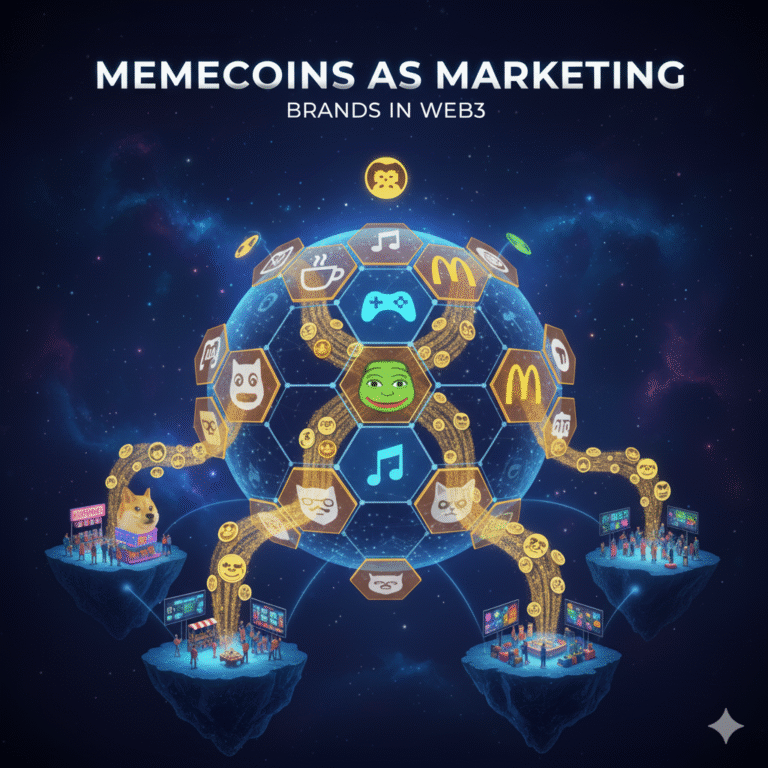
Memecoins as Marketing: How Brands Are Conquering Web3

In the fast-paced world of Web3, memecoins have exploded from internet jokes into powerful marketing tools. These fun, community-driven cryptocurrencies—think Dogecoin or Shiba Inu—are no longer just for speculators. Web3 brands are leveraging memecoins to build hype, engage fans, and drive real growth. But what makes them so effective?

This article breaks it down simply: We’ll explain memecoins, explore why brands love them, and dive into real case studies like 9GAG’s $MEME and Pudgy Penguins’ $PENGU. If you’re a beginner wondering how memecoins marketing works—or a brand eyeing Web3—this guide is for you. Let’s jump in.

What Are Memecoins? A Beginner’s Guide

Imagine a cryptocurrency born from a viral meme, like a dog in a hat or a chubby penguin. That’s a memecoin. Unlike Bitcoin (digital gold) or Ethereum (smart contracts), memecoins thrive on humor, community, and social media buzz.

Key features:

  • Low entry barrier: Anyone can launch one on platforms like Solana’s Pump.fun for pennies
  • Viral potential: Prices skyrocket with tweets from influencers (hello, Elon Musk!)
  • Community first: Holders vote, meme, and promote—turning fans into marketers

In 2025, memecoins dominate the cryptocurrency landscape. Dogecoin (DOGE) leads with billions in market cap, followed by PEPE, BONK, and newcomers like FARTCOIN. Solana has emerged as the primary venue for new memecoin launches thanks to low fees and speed, with Pump.fun driving approximately 80% of Solana memecoin launches. However, the new generation of memecoins on TON and Base blockchains in 2025 is challenging Solana’s dominance with innovative features and growing communities.

For brands in Web3, memecoins aren’t gambles—they’re marketing goldmines. To understand the full evolution of these digital assets, explore our comprehensive guide on memecoins in 2025: from jokes to ecosystems.

Learn more:

The Rise of Memecoins in Web3 Marketing

Web3 is all about decentralized ownership: NFTs, DAOs, and tokens. Brands entered via NFTs (e.g., Bored Ape Yacht Club), but memecoins supercharge that strategy by creating liquid, tradable assets that represent brand loyalty.

Why now?

  • 2024–2025 boom: Total memecoin market value sits in the tens of billions of dollars, peaking well above $50B in late-2024 and into 2025
  • Easy virality: One X post can generate millions in liquidity
  • Token utility: Brands add staking, airdrops, or merch unlocks
  • Cross-chain expansion: Understanding how memecoins drive adoption across blockchain chains is essential for multi-platform brand strategies

Traditional vs. Web3 brands:

TypeExampleStrategy
Web3 NativePudgy PenguinsNFT → Toy brand → Memecoin
Web2 Crossover9GAGMeme site → Web3 studio
Media/InfluencerBarstool SportsSatirical launch for buzz

This shift turns passive fans into active holders, creating unprecedented engagement levels. The model closely mirrors how social tokens turn communities into economies, where every holder becomes a stakeholder with real financial incentives to promote the brand.

External resources:

Why Brands Use Memecoins for Marketing

Memecoins as marketing equals free, explosive promotion. Here’s how:

  1. Instant Community: Launch generates holders who promote everywhere
  2. Low Cost, High ROI: $100K launch can yield $10M+ market cap overnight
  3. Engagement Metrics: Airdrops reward loyalty; memes boost visibility
  4. Real-World Tie-Ins: Tokens unlock merch, events, or discounts

Example for beginners: Launch $BRAND on Solana. Tweet: “Hold for free swag!” Watch holders flood Discord.

Stats: In 2025, top memecoins like $PENGU regularly trade $200M+ daily volume, demonstrating massive market interest and liquidity. This economic model shares DNA with traditional social tokens that transform communities into self-sustaining economies, where participation directly correlates with value creation.

Additional reading:

Case Study 1: 9GAG’s Memeland and $MEME – From Memes to Millions

9GAG, the site with 200M+ monthly users, launched Memeland in 2022—a Web3 studio blending memes and blockchain.

$MEME token (69B supply) powers the ecosystem:

  • Marketing win: Leveraged 9GAG’s massive existing audience for instant adoption
  • Features: NFTs (Potatoz), SocialFi, creator rewards
  • Results: Listed on Bitfinex; ecosystem unites fans across platforms

Lesson: Existing brand equity equals memecoin rocket fuel. 9GAG turned laughs into a thriving Web3 economy, demonstrating how established Web2 brands can successfully transition into Web3.

Sources:

Case Study 2: Pudgy Penguins’ $PENGU – The Consumer Brand Breakthrough

Pudgy Penguins started as Ethereum NFTs. Now? Toys in Walmart and Target, GIFs with billions of views across social media platforms. For brands building on Ethereum who want to understand the full ecosystem, having access to essential Ethereum tools every user must know is critical for managing NFT collections, token launches, and community engagement.

Launched $PENGU on Solana (2024/2025):

  • Price: Approximately $0.021 (around Top-60 by market cap)
  • Strategy: Memes plus real products equals mass appeal
  • Growth: Approximately $240M daily volume; bridges crypto newcomers via fun

Beginner tip: The ability to buy $PENGU while also purchasing Pudgy toys creates brand loyalty on steroids.

Impact: First Web3 consumer brand—proving memecoins can complement physical-goods flywheels (toys plus token). This demonstrates a revolutionary approach to brand building in the Web3 era, showing how memecoins drive adoption across different blockchain chains by creating multiple touchpoints from Ethereum NFTs to Solana tokens.

References:

Case Study 3: Meteora’s $M3M3 – Utility Meets Meme Magic

Meteora, a leading Solana DEX and liquidity platform, launched $M3M3 (meme³) with a unique utility-focused approach.

The twist:

  • Stake-to-earn model: Hold top memecoins, stake them, and eligible top stakers share fees from permanently-locked liquidity
  • Marketing angle: Positioned as “meme trader’s best friend”
  • Results: Helped drive activity around Meteora; token currently trades around $0.0006+

Pro move: Protocols use memecoins to reward users, not just generate hype. This creates sustainable engagement rather than pump-and-dump dynamics, similar to how social tokens turn communities into economies by offering real utility and shared financial incentives.

Learn more:

Case Study 4: Barstool Sports’ $GREED – Satire Sells

Dave Portnoy (Barstool founder) launched $GREED on Pump.fun and sold his entire position within about an hour, netting approximately $250K, triggering a crash and generating massive headlines. He later followed with $GREED2 and engaged with $JAILSTOOL.

Portnoy discussed memecoins on stage at Consensus 2025, adding fuel to the public debate about celebrity-backed tokens and their implications.

Takeaway: Even satirical launches can generate outsized attention, which equals free marketing. However, this case also highlights the risks and ethical considerations of memecoin marketing.

Sources:

Benefits of Memecoin Marketing for Web3 Brands

Virality: 100x faster reach than traditional advertising campaigns

Loyalty: Token holders become lifetime fans with financial stake in success

Data Gold: On-chain analytics track engagement with unprecedented precision

Monetization: Airdrops and token mechanics fund growth sustainably

ROI Example: $PENGU’s market cap sits at approximately $1B+, turning NFT fans into a memecoin-powered ecosystem and demonstrating the massive value creation potential. This success story illustrates what’s explored in our guide on memecoins in 2025: from jokes to ecosystems—the transformation of simple meme tokens into comprehensive brand universes.

Reference:

Challenges and Risks in Memecoin Marketing

Not all launches go smoothly. Brands must consider:

Volatility: Severe drawdowns are common (see $GREED crash)

Rug Pull Accusations: Insider dumps kill trust and brand reputation

Regulation: Authorities increasingly eye potential “securities” classification

Saturation: New token launches can surge into the thousands per day at peaks on Solana launchpads, though emerging platforms on TON and Base blockchains are offering alternative launch environments with different risk profiles

Fix: Implement transparent tokenomics and community governance to build trust.

Further reading:

Best Practices for Brands Launching Memecoins

Build First: Have NFTs or merchandise ready before launch

Fair Launch: No team allocation builds trust with community

Utility: Add staking, burns, and rewards for sustained engagement

Promote Smart: Leverage X (Twitter), Telegram, and influencers strategically

Solana Preference: Fast transactions and cheap fees make it ideal, though brands should also consider how memecoins drive adoption across blockchain chains to maximize reach

Tools: Platforms like Pump.fun and Raydium simplify the launch process. For Ethereum-based brands, familiarize yourself with essential Ethereum tools every user must know to manage your token ecosystem effectively.

Resources:

The Future of Memecoins in Brand Marketing

By 2026, industry experts predict every major brand may have its own token. AI-generated memes (like ai16z) and gaming integrations will become standard. Web2 giants might follow 9GAG’s lead into Web3, leveraging the power of social tokens to turn their communities into self-sustaining economies where fans are financially invested in brand success.

Prediction: Memecoins will become Web3’s equivalent of Super Bowl ads—fun, effective, and a permanent fixture in marketing strategies. The cross-chain future explored in how memecoins drive adoption across blockchain chains suggests brands will launch tokens on multiple networks simultaneously, maximizing accessibility and engagement.

Industry insights:

Conclusion: Launch Your Brand’s Memecoin Today

Memecoins as marketing isn’t a fad—it’s Web3’s secret weapon. From 9GAG’s $MEME empire to Pudgy’s $PENGU toys, brands win big with community plus creativity. As detailed in our analysis of memecoins in 2025: from jokes to ecosystems, these tokens have matured into sophisticated marketing instruments that bridge Web2 audiences with Web3 innovation.

Ready? Study these cases, choose your blockchain (whether Solana, TON, or Base), and watch your brand go viral. Web3 awaits.

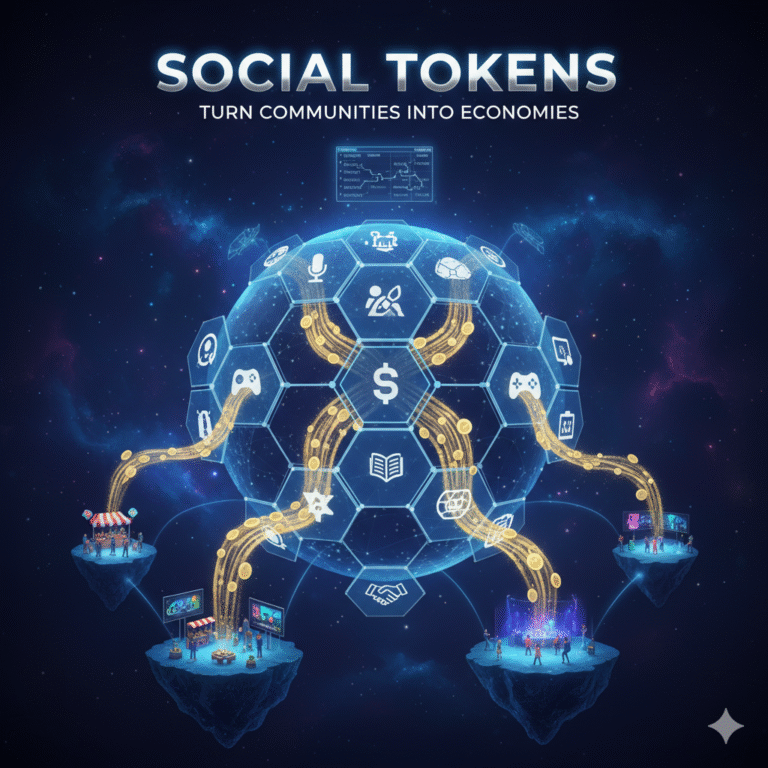
How Social Tokens Turn Communities into Economies

Introduction to Social Tokens in the Creator Economy

In today’s digital world, online communities are more than just groups of people chatting on social media. Instead, they’re evolving into vibrant economies where members can earn, spend, and invest. At the heart of this change are social tokens—digital assets built on blockchain technology that let creators and communities create their own mini-economies. Imagine turning your fan base into a group of stakeholders who not only support you but also benefit as your community grows. That’s the power of social tokens.

Social tokens are essentially cryptocurrencies tied to a person, brand, or group. Moreover, they allow fans to buy into a community, gaining access to exclusive perks while helping creators monetize their work directly. This shift is part of the broader Web3 movement, where blockchain enables decentralized ownership and participation. For beginners, think of it like loyalty points on steroids: instead of just redeeming them for discounts, you can trade them, vote with them, and watch their value rise with the community’s success.

This article explores how social tokens work, their types, benefits, real-world examples, challenges, and future potential. By the end, you’ll understand how these tools transform passive followers into active economic participants.

What Are Social Tokens? A Simple Explanation

Creators, influencers, or communities issue social tokens as digital currencies using blockchain networks like Ethereum or Solana. Unlike traditional money, they’re fungible—meaning each token is identical and can be easily traded, just like dollars or euros. However, their value comes from the reputation, content, or activities of the issuer, not a government.

For newcomers to blockchain, here’s a basic breakdown:

Blockchain Basics: Think of blockchain as a secure, transparent ledger that records all transactions without needing a bank. Furthermore, social tokens live here, ensuring fairness and preventing fraud. Layer 2 solutions like Base make these transactions faster and more affordable for everyday users.

Smart Contracts: These are automated rules coded into the token. For example, if you hold a certain number of tokens, you automatically get access to a private chat group—no middleman required. To understand how these powerful tools work, check out our guide on Ethereum smart contracts explained for beginners.

Social tokens differ from NFTs (non-fungible tokens), which are unique items like digital art. In contrast, tokens are more like shares in a company, giving you ongoing benefits rather than a one-off collectible. Additionally, they’re not just for celebrities; anyone with a following—artists, gamers, or even local groups—can launch one to build a sustainable economy around their community. Digital creators can benefit from both social tokens and NFT royalties to monetize their work effectively.

How Social Tokens Work: From Creation to Trading

Creating a social token starts with a creator deciding on its purpose, like rewarding loyal fans or funding projects. Subsequently, they use platforms like Roll to mint tokens. Note that Rally shut down its Ethereum sidechain in 2023, so most issuance now uses other infrastructure. Modern creators are increasingly deploying tokens on newer blockchains like TON and Base, which offer improved scalability. Fans buy these tokens using cryptocurrency, store them in digital wallets like MetaMask, and use them for perks. If you’re new to crypto wallets, our beginner’s guide on how to set up and use MetaMask safely will walk you through the process step by step.

Here’s a step-by-step process for beginners:

Issuance: The creator sets rules, such as total supply (e.g., 1 million tokens) to create scarcity.

Distribution: Subsequently, tokens are sold, airdropped (given for free), or earned through participation, like commenting or sharing content.

Usage: Holders redeem tokens for exclusive access, such as early music releases or voting on decisions.

Trading: On secondary markets like Uniswap or SushiSwap, tokens can be bought and sold, turning the community into a marketplace where value fluctuates based on demand.

This mechanism turns communities into economies by making participation economic. Consequently, fans aren’t just consumers; they’re investors whose actions can increase token value.

Types of Social Tokens: Which One Fits Your Community?

Creator Tokens: Tied to an individual, like a musician or influencer, offering personal perks. Example: $RAC by musician RAC.

Community Tokens: Used by groups or DAOs (Decentralized Autonomous Organizations), allowing holders to vote on collective decisions.

Fan Tokens: Popular in sports and entertainment, enabling fans to influence decisions like merchandise or events. For instance, teams like FC Barcelona and Juventus issue such tokens via platforms like Chiliz.

Platform Tokens: These reward activity on specific apps or sites, encouraging ongoing engagement.

Each type aligns incentives differently: creators get funding, while holders gain value through access and growth.

How Social Tokens Turn Communities into Thriving Economies

Traditionally, fans support creators via ads or subscriptions, but platforms often take significant cuts. In contrast, social tokens reduce intermediaries, letting creators earn more directly. This direct-to-fan model is particularly powerful in emerging markets where Ethereum adoption is growing, as it bypasses traditional financial barriers.

Key transformations include:

Monetization: Creators can raise funds directly from communities without traditional platform fees.

Engagement and Loyalty: Furthermore, tokens reward participation, increasing long-term involvement and fostering deeper connections.

Governance: In DAOs, token holders vote on decisions, turning members into co-owners with real influence.

Trading: Additionally, tokens can be resold on secondary markets, adding a financial layer to participation and creating liquidity.

Benefits for Creators, Fans, and Communities

For creators:

  • Direct revenue without traditional platform fees
  • Stronger relationships through exclusivity and token-gated content
  • Moreover, the ability to raise capital for projects from engaged supporters

For fans:

  • Potential financial upside if a creator’s success drives token demand
  • Influence over content direction or community decisions
  • Additionally, access to exclusive experiences and rewards

For communities:

  • Self-funded growth models that don’t rely on external investors
  • Broader participation with aligned economic incentives
  • Furthermore, democratic governance structures

Real-World Examples of Social Token Success

$RAC (Musician RAC): Grammy-winning producer RAC provided token-gated benefits to early supporters, creating exclusive access to his work and community.

$ALEX (Alex Masmej): He pioneered a “personal IPO” approach, raising funds from backers in exchange for defined perks tied to his career success through AlexMasmej.com.

Fan Tokens on Chiliz: Teams like FC Barcelona issue tokens for fan engagement. Notably, Chiliz reported approximately €260 million aggregate fan token market cap in 2024 with high daily trading volumes.

$FWB (Friends With Benefits): This tokenized cultural community at FWB.help offers gated events, networking opportunities, and collaborative projects for holders.

Sarafu (Kenya): Community members use these tokens through the Grassroots Economics program for local trade and financial inclusion in regions with limited banking access.

Challenges and Risks in Social Token Economies

Volatility: Token prices can rise or collapse dramatically based on community sentiment and market conditions. Therefore, potential investors should approach with caution.

Regulation: Some tokens may fall under securities laws from the SEC depending on their structure and how they’re marketed.

Platform Risk: Infrastructure failures can impact tokens, as evidenced by the Rally shutdown in 2023 and the Roll hack in 2021. However, emerging Layer 2 solutions are improving reliability and scalability.

Sustainability: Success requires continuous engagement and real utility beyond pure speculation.

Taxation: In jurisdictions like the United States, the IRS treats virtual currencies as property, creating taxable events for transactions.

Social tokens are likely to integrate further with NFTs, DAOs, and virtual environments as the technology matures. Instead of relying on broad speculative growth, adoption will follow improvements in user-friendly tooling, clearer regulatory frameworks, and mainstream creator interest.

The decentralized finance (DeFi) ecosystem continues to provide infrastructure for social token trading and liquidity. As Web3 technology becomes more accessible, social tokens may fundamentally redefine how value and influence circulate in digital communities, turning them into functional economic systems.

Key trends to watch include:

  • Integration with metaverse platforms like Decentraland and virtual worlds
  • Improved mobile wallet experiences for mainstream adoption
  • Additionally, hybrid models combining social tokens with traditional membership systems
  • Enhanced compliance frameworks for regulatory clarity from bodies like the Financial Action Task Force (FATF)
  • Furthermore, cross-platform interoperability allowing tokens to work across multiple applications

Conclusion

Social tokens are revolutionizing how communities operate, transforming them from simple gatherings into dynamic economies. By leveraging blockchain for direct monetization, engagement, and governance, they empower creators and fans alike to participate in shared economic success. Whether you’re a beginner exploring Web3 or a community leader seeking new monetization models, understanding social tokens opens the door to new possibilities in the emerging decentralized world.

The transformation from passive audience to active stakeholder represents a fundamental shift in how online communities function. As the technology matures and adoption grows, social tokens stand to reshape the creator economy by aligning incentives, distributing value more fairly, and giving communities unprecedented control over their economic destinies. Ultimately, this evolution promises a more equitable digital economy where everyone can participate and benefit from collective success.

Read also: NFT Marketplaces.

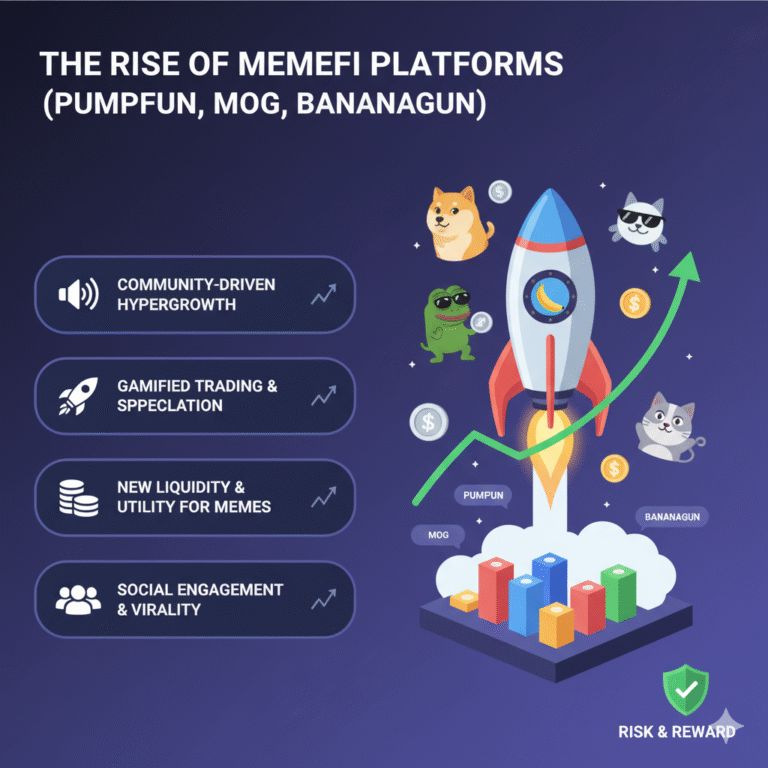
The Rise of MemeFi Platforms: Pump.fun, Mog Coin, and Banana Gun Explained

In the fast-paced world of cryptocurrency, a new trend has taken center stage: MemeFi. This blend of meme culture and decentralized finance (DeFi) has transformed how people create, trade, and engage with digital assets. Platforms like Pump.fun, Mog Coin, and Banana Gun are at the forefront of this movement, making it easier for beginners and experts alike to participate in the meme coin ecosystem. If you’re new to crypto, think of MemeFi as fun, community-driven projects that use humor and viral trends to build value, often on blockchains like Solana and Ethereum.

This comprehensive guide explores the rise of these platforms, explaining their features, history, and impact in simple terms. We’ll examine what makes them popular, backed by reliable data from industry sources and blockchain analytics platforms. Whether you’re curious about launching your own token or trading quickly, understanding MemeFi can help you navigate this exciting space.

What Is MemeFi? A Beginner’s Guide

MemeFi combines “memes” – those funny internet images or ideas that spread quickly – with DeFi, which is a way to handle money without traditional banks using blockchain technology. In simple words, MemeFi turns jokes into investable assets, like turning a cat picture into a digital coin that people buy and sell.

The concept started with early meme coins like Dogecoin in 2013, but it exploded in recent years. By 2025, the meme coin market has grown massively, with platforms enabling anyone to create tokens in seconds. This democratizes crypto, meaning you don’t need to be a tech wizard to join. For example, instead of complex coding, users can upload a meme image and launch a coin on Solana, a fast and cheap blockchain.

According to industry reports from Business Insider, meme coins now represent a significant portion of crypto trading activity on certain networks like Solana, where low fees make experimentation accessible—though the sector is also criticized for high speculation and frequent scams. Understanding the underlying blockchain infrastructure is crucial; technologies like ZK-Rollups and Layer 2 solutions are improving scalability and making these platforms more efficient for everyday users, enabling faster transactions and lower costs across the ecosystem.

The Evolution of Meme Coins Leading to MemeFi

Meme coins began as jokes but evolved into serious economic tools. Dogecoin, inspired by a Shiba Inu dog meme, started as a parody but gained real value through celebrity endorsements like Elon Musk’s tweets. Then came Shiba Inu (SHIB) in 2020, which added DeFi features like staking – earning rewards by holding coins.

The real shift happened around 2023–2024 with Solana’s rise. Solana’s speed and low costs made it popular for meme coins, unlike Ethereum’s higher fees during busy periods. This led to a boom: huge numbers of new tokens launched, fueled by social media hype. To understand why Solana and TON are rising as competitive alternatives, it’s important to recognize their unique advantages in speed and cost, even though Ethereum still maintains dominance in many areas. By 2025, MemeFi platforms have integrated gaming, lending, and trading bots, turning memes into fuller ecosystems. For instance, some projects now offer “tap-to-earn” games on Telegram, where users earn coins by playing simple games.

This evolution has attracted millions, with market caps reaching billions. The landscape now includes established players, and if you’re interested in comparing the top performers, you can read our detailed analysis of BONK vs PEPE vs DOGE vs WIF, each with unique characteristics and community followings. However, it’s not all smooth – rug pulls (creators abandoning projects) and scams are common, emphasizing the need for research, as documented by The Guardian’s technology coverage.

Spotlight on Pump.fun: The Meme Coin Launchpad

Pump.fun is one of the most talked-about MemeFi platforms, built on the Solana blockchain. Launched in January 2024, it simplifies creating meme coins, allowing anyone to make a token in under a minute. Here’s how it works: You upload an image (like a funny meme), add a name and description, pay a small fee in SOL (Solana’s currency), and your coin is live for trading on the official platform.

How Pump.fun Works

What sets Pump.fun apart is its “fair launch”-style model. The platform uses a bonding curve – a formula that increases price as more people buy – and when a token “graduates,” liquidity is migrated to a Raydium pool, making it tradable on the wider Solana DEX ecosystem. For those interested in the technical details of how these systems work, the Solana Stack Exchange offers comprehensive discussions on DEX mechanics and smart contract implementations.

By the end of its first year, Pump.fun had generated over $350 million in revenue from fees (the platform takes approximately 1% of trades), underscoring its popularity; more recent trackers on DefiLlama show cumulative revenue in the hundreds of millions and ongoing daily revenue around $1M depending on market conditions, as reported by WIRED’s technology coverage.

PumpFi: Expanding the Ecosystem

Pump.fun expanded in 2025 by launching PumpFi, an on-chain lending platform that lets users finance purchases of meme coins and NFTs—adding a DeFi layer atop the meme economy, according to Yahoo Finance. This expansion mirrors the broader trend where we’re seeing new generation memecoins emerging on TON and Base blockchains, showing how the MemeFi ecosystem continues to diversify across multiple networks beyond just Solana and Ethereum.

Instead of pointing to a single-day percentage change to claim “reclaimed dominance,” the latest coverage from late October 2025 on The Block reports Pump.fun again leading token launches and generating roughly $1M in daily revenue even amid a broader cooldown in the crypto markets.

Exploring Mog Coin: The Culture-Driven Meme Token

Mog Coin (MOG) represents the pure meme side of MemeFi. Launched in July 2023 on Ethereum as a community-driven token, it started as a joke inspired by cat memes and internet culture. MOG is an ERC-20 token, tradable on decentralized exchanges like Uniswap, and it has since achieved broad exchange coverage, as tracked by CoinGecko.

The Community Behind Mog

Mog thrives on community and virality. Its branding uses emojis and memes to build a loyal following. By 2025, Mog had evolved from a simple meme to a “culture coin,” with social media driving its growth. Mog’s supply is fixed as an ERC-20 parameter, and it trades actively on major exchanges. Understanding the differences between blockchain platforms is crucial when evaluating meme coins—for investors trying to decide between major cryptocurrencies, our guide on Bitcoin vs Ethereum fundamentals for 2025 provides essential context about the infrastructure supporting these tokens and helps you understand which blockchain might be better suited for different types of investments.

It’s important to note that “staking” for MOG generally refers to third-party or liquidity-pool programs rather than an official native staking mechanism; holders commonly engage with DeFi by providing liquidity or participating in external yield programs on platforms like Uniswap.

Banana Gun: Revolutionizing Meme Coin Trading

Banana Gun is a Telegram-based trading bot that has become prominent in the MemeFi world. Launched around 2023, it operates on Ethereum and Solana (and other chains), helping users “snipe” new tokens—buying seconds after launch to catch early moves. Features include auto-sniping, copy trading, limit orders, and profit tracking, with a web terminal called “Banana Pro” alongside the Telegram bot, all accessible through the official Banana Gun website.

Integration with Solana and Pump.fun

In 2025, Banana Gun integrated more tightly with Solana launches, and public posts describe a collaboration with Pump.fun to improve access and flow for Solana memecoins, as documented on CoinScan. This integration demonstrates how trading infrastructure is evolving to meet the demands of the rapidly expanding meme coin market, particularly on chains like Solana that offer the speed and low costs necessary for high-frequency meme coin trading.

Security Considerations

On September 19, 2024, Banana Gun suffered an exploit tied to its Telegram message oracle that siphoned roughly $3M from a small set of users; the team patched the issue and reimbursed affected users, according to a detailed security analysis by QuillAudits. This incident underscores the need for strict key management and hardware-wallet hygiene when using trading bots—always use hardware wallets like Ledger or Trezor for maximum security.

The BANANA Token Utility

Regarding the BANANA token: utility includes revenue-share and fee-rebate mechanics for holders, rather than a simple “discount” toggle; details vary by product tier and campaign, as tracked on CoinMarketCap.

The Impact of MemeFi Platforms on the Crypto Market

These platforms have reshaped crypto participation. Pump.fun alone has enabled the creation of millions of tokens—over 6 million by January 2025—fueling activity and liquidity on Solana; recent periods have even seen more than $1B daily volume pass through the platform during peaks. At the same time, analysts at Brave New Coin note rising concerns about speculation and market churn.

The democratization of token creation has brought both opportunities and challenges. While more people can participate in crypto markets than ever before, the ease of creating tokens has also led to market saturation and increased risk of fraudulent projects. The infrastructure supporting these platforms continues to evolve, with innovations like modular data availability networks such as Celestia improving scalability and performance across the ecosystem—lessons learned from the first year of mainnet operations show how critical proper infrastructure is for supporting high-volume token launches and maintaining network stability.

The choice of blockchain matters significantly for MemeFi platforms. While Ethereum remains the dominant smart contract platform, Solana and TON are rising as competitive alternatives due to their superior transaction speeds and lower costs, making them ideal for the high-frequency, low-value transactions common in meme coin trading.

Challenges and Risks in MemeFi

No discussion is complete without addressing the risks. Rug pulls are common, and high volatility means losses can be quick. Low barriers to entry lead to oversaturation. Security is key: the 2024 Banana Gun incident is a reminder to use hardware wallets and minimal bot allowances.

Independent research from organizations like Chainalysis shows a sizable share of new tokens historically exhibited pump-and-dump patterns, emphasizing the importance of due diligence before investing in any meme coin project.

Key Risk Factors to Consider:

  • Rug pulls: Developers abandoning projects after raising funds—a common occurrence tracked by blockchain security firms
  • High volatility: Rapid price swings can lead to significant losses, as documented in crypto market analysis
  • Scams and fraud: Many projects are designed to exploit inexperienced traders
  • Security vulnerabilities: Trading bots and platforms can be exploited, as documented in security audit reports from QuillAudits
  • Regulatory uncertainty: The legal status of meme coins remains unclear in many jurisdictions, as discussed by legal experts at Coinbase
  • Market manipulation: Low liquidity tokens are susceptible to price manipulation
  • Technical risks: Smart contract vulnerabilities and platform exploits require thorough code audits

Future Outlook for MemeFi Platforms

Looking ahead, MemeFi could integrate more with AI, NFTs, and gaming. Pump.fun has introduced new products like PumpFi and has explored token initiatives; coverage in September 2025 highlighted more than $1B in single-day volume, reflecting ongoing demand as reported by CoinDesk Markets.

It’s important to note that claims about a “$1B raise” are inaccurate—what’s documented is trading-volume milestones and a 2025 token sale window, not a capital raise of that size, according to verified sources on The Block.

By 2030, outcomes remain highly uncertain; projections of a “trillion-dollar” meme-coin sector are speculative and not a consensus forecast among major research houses like Messari or Delphi Digital.

Conclusion: Embracing the MemeFi Wave

The rise of MemeFi platforms like Pump.fun, Mog Coin, and Banana Gun marks a fun, accessible era in crypto. From easy launches to speedy trades, they empower users while blending humor with finance. These platforms have democratized access to cryptocurrency creation and trading, allowing anyone with an internet connection to participate in this emerging market.

However, success comes with research and caution. The same features that make MemeFi accessible also create opportunities for fraud and manipulation. Whether you’re a beginner eyeing your first meme coin or an expert sniping launches, MemeFi offers endless possibilities—but only for those who approach it with proper knowledge and risk management.

For those looking to dive deeper into the meme coin space, understanding how different meme coins like BONK, PEPE, DOGE, and WIF compare can help inform your investment decisions and give you perspective on which tokens have the strongest communities and most sustainable tokenomics. Additionally, if you’re choosing between major cryptocurrencies as a foundation for your portfolio, our comprehensive Bitcoin vs Ethereum investment guide for 2025 provides essential insights into the two largest blockchain networks.

Understanding the competitive landscape between different blockchains is also crucial—our analysis of why Solana and TON are rising but still can’t kill Ethereum explains the trade-offs between speed, cost, and security that affect where meme coins are launched and traded.

Stay informed by following crypto news outlets, trade smart using reputable exchanges, and enjoy the ride. The MemeFi revolution is here, and understanding how these platforms work is essential for anyone looking to participate in the next generation of cryptocurrency markets.

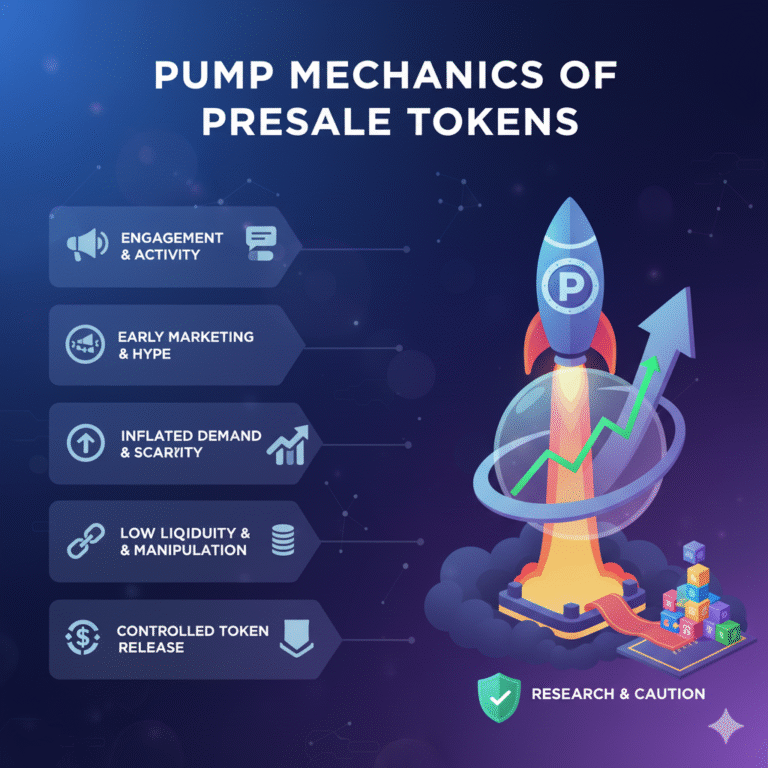
Understanding Pump Mechanics in Presale Tokens: A Beginner’s Guide to Crypto Manipulation

In the fast-paced world of cryptocurrency, presale tokens offer exciting opportunities for early investors to get in on the ground floor of new projects. However, beneath the hype lies a darker side: pump mechanics, often tied to manipulative schemes that can lead to significant losses for unsuspecting participants. This comprehensive guide explores the pump mechanics of presale tokens, breaking down complex concepts into simple terms for crypto novices and experienced traders alike.

By the end of this article, you’ll understand why pump and dump schemes are prevalent in presales, recognize warning signs, and learn strategies to protect your investments. Let’s dive in.

What Are Presale Tokens?

Presale tokens refer to cryptocurrencies sold to investors before they are officially launched on public exchanges. This stage, often part of Initial Coin Offerings (ICOs), Initial DEX Offerings (IDOs), or token generation events (TGEs), allows blockchain projects to raise funds for development. Buyers typically purchase these tokens at a discounted price, betting on future value growth once the token hits the market.

In a typical presale, a project might allocate a portion of its total token supply—commonly 20–30%—for early sale. This creates scarcity and builds community buzz. According to industry reporting, 2025 saw extremely large token sale volumes on launch platforms, with one widely cited figure being $1.32 billion raised by Pump.fun’s token (source: Yahoo Finance). However, this early access isn’t without risks. Presales often lack regulatory oversight, making them fertile ground for manipulation.

Key Features of Presale Tokens

Discounted Pricing: Tokens are cheaper than post-launch prices to incentivize early adoption and reward risk-taking investors.

Vesting Periods: Some projects lock tokens for months to prevent immediate selling and stabilize post-launch prices.

Tokenomics: Rules governing supply, distribution, and burns (permanent removal of tokens) to influence value over time.

While legitimate presales fund innovative blockchain projects with real utility, others exploit the model for quick profits through pump mechanics. Understanding the broader cryptocurrency landscape, including the fundamental differences between Bitcoin and Ethereum, can help investors make more informed decisions about which presale tokens might have genuine value versus those built on hype alone.

What Is a Pump and Dump Scheme?

A pump and dump scheme is a fraudulent trading strategy where manipulators artificially inflate (pump) a token’s price before selling (dumping) their holdings, causing the price to crash. This leaves late buyers with worthless assets. In cryptocurrency markets, these schemes target low-liquidity tokens, where small trades can cause dramatic price swings.

The U.S. Commodity Futures Trading Commission explicitly warned about virtual-currency pump-and-dumps and how hype on social media can drive them (source: CFTC.gov). For scale, Chainalysis found that 54% of ERC-20 tokens listed on DEXes in 2023 showed patterns suggestive of pump-and-dumps, though they represented only 1.3% of DEX trading volume (source: Chainalysis).

Simply put, it’s like inflating a balloon with hot air (hype) and popping it once it’s full, profiting from the burst while leaving others holding deflated assets. For those new to cryptocurrency markets, understanding what crypto trading entails and how it works is essential before participating in any presale or trading activity.

How Pump Mechanics Work in Presale Tokens

Pump mechanics in presale tokens follow a structured playbook. Here’s a step-by-step breakdown based on documented cases and expert analyses.

Phase 1: Accumulation

Schemers buy or receive large quantities of tokens during the presale at low prices. In some projects, insiders get allocations without vesting requirements, allowing quick flips. For a concrete example of launch unlock dynamics, the World Liberty Financial ($WLFI) presale disclosed that 20% of tokens were unlocked at launch, illustrating how even partial unlocks can create early-sell pressure (source: Binance).

For newcomers looking to understand how to safely navigate cryptocurrency exchanges when purchasing presale tokens or trading post-launch, our comprehensive Binance tutorial for 2025 walks through every step from account creation to secure trading practices.

Phase 2: Hype Building

Using social media platforms like X (formerly Twitter), Telegram groups, and influencers, promoters spread exaggerated claims about the token’s potential. In 2024–2025, U.S. authorities ran an undercover operation (NexFundAI) that exposed market makers using wash trading and other tactics to simulate demand and manipulate prices, with multiple criminal and civil cases following (sources: Reuters, The Verge).

Phase 3: The Pump

As retail investors buy in, driven by FOMO (fear of missing out), the price surges. Low-liquidity presale tokens amplify this effect—a few large buys can double the value. Launch platforms like Pump.fun use bonding curves, where price algorithmically increases with each buy, automating early-phase price ascent (source: Phemex).

Some meme-token presales even hardwire external triggers: for instance, PUMPD marketed a mechanism where the token burns or “pumps” when Bitcoin rises, attracting presale buyers (source: TradingView). When evaluating such claims, it’s helpful to examine Ethereum’s actual network statistics and key metrics to distinguish between realistic blockchain-based mechanisms and empty marketing promises. Understanding the difference between spot trading and futures trading is also crucial, as pump schemes often exploit traders unfamiliar with leverage and margin mechanics in futures markets.

Phase 4: The Dump

Once the price hits a target, orchestrators sell their holdings, flooding the market and crashing the price. Sudden volume spikes without news are a classic red flag noted by market guides (source: Brave New Coin).

Phase 5: Post-Dump Tactics

Some schemes rinse and repeat by rebranding or moving to new blockchains. On-chain tools and DEX scanners help trace creator wallets with histories of rug pulls. The importance of blockchain transparency becomes clear when examining projects like Celestia’s modular data availability network, which demonstrated how proper architecture and transparency can build trust—qualities notably absent in pump-and-dump schemes.

Mitigation Mechanisms

In presales, mechanics like vesting can mitigate dumps. Some projects use locked reserves and community approvals for emissions and spending (source: Solana Stack Exchange). However, project-specific claims should always be verified through third-party audits or on-chain proofs before relying on them. Learning from established DeFi practices, such as how legitimate lending protocols manage risk, can help investors recognize which presale projects implement genuine risk mitigation versus those offering only superficial protections.

Signs to Spot a Potential Pump and Dump in Presales

Beginners can avoid traps by watching for these verified indicators:

Unrealistic Promises: Claims like “Guaranteed 100x returns” without substantive utility or business model are major red flags.

Insider Advantages: Team tokens with little or no vesting periods create significant dump risk when insiders can sell immediately after launch.

Low Liquidity and High Volatility: Thin markets are easily manipulated, with small trades causing dramatic price swings.

Social Media Coordination: Sudden buzz from anonymous or bot-like accounts and wash-trade “volume” are common tells (source: Reuters).

No Utility: Meme tokens without real use cases often rely purely on hype and speculation.

Pre-Market Trading Dynamics: New features like Binance’s “Pre-Market” trading (OTC orderbook for not-yet-listed assets) have drawn community criticism about uneven early access (source: Ledger).

Tools like DEXTools, Etherscan, BscScan, and similar on-chain explorers can trace wallet histories and large holder movements, helping you identify suspicious patterns.

Risks and Consequences of Pump Mechanics

Participating in pumped presales carries substantial risks:

Financial Losses: Most victims buy near price tops and sell near lows, resulting in significant capital loss. Unlike traditional investment protections, the cryptocurrency space lacks the insurance mechanisms found in regulated markets, though emerging DeFi insurance protocols like InsurAce and Nexus Mutual are working to address smart contract and protocol risks—though they typically don’t cover losses from pump-and-dump schemes.

Market Instability and Trust Erosion: Documented by analytics firms tracking manipulation trends (source: Chainalysis), these schemes damage the broader crypto ecosystem.

Legal Repercussions: Pump-and-dump schemes are illegal in many jurisdictions, with U.S. agencies (CFTC, SEC, DOJ/FBI) pursuing manipulation cases, including the NexFundAI sting (source: CFTC.gov).

Emotional Toll: FOMO-driven decisions lead to stress, anxiety, and lasting regret.

How to Protect Yourself from Pump Schemes in Presales

Stay safe with these practical steps:

Research Thoroughly: Verify team backgrounds, smart contract audits from reputable firms (CertiK, Hacken, Trail of Bits), and whitepaper claims.

Diversify: Don’t invest more than you can afford to lose. Never put all your capital into a single presale token.

Use Reputable Platforms: Prefer established launchpads with anti-dump features like vesting schedules, cliff periods, and purchase caps.

Monitor On-Chain Data: Track large wallet movements, unlock schedules, and liquidity pool changes using blockchain explorers.

Avoid Hype: If it sounds too good to be true, wait for post-launch stability and real-world adoption signals.

Educate Yourself: Scam-awareness resources from Ledger and Coinbase are useful primers (source: Medium).

Note on launch design innovations: Bonding-curve launches can make pricing more transparent (price increases with buys, decreases with sells), but they do not eliminate manipulation risk and design details matter (source: dYdX).

Pump-and-dump schemes can violate securities laws, commodities regulations, and fraud statutes. The CFTC’s 2018 customer advisory specifically warned retail users about virtual-currency pump-and-dumps and urged skepticism toward social-media hype (source: CFTC.gov). In 2024–2025, U.S. authorities executed the NexFundAI operation targeting coordinated manipulation (including wash trading), resulting in criminal charges and civil actions (source: Reuters).

Projects demonstrating transparent tokenomics and locked liquidity can reduce rug-pull risk. One example frequently cited in 2024–2025 media and project docs is The Nation Token ($NATO), which locked Uniswap liquidity until January 1, 2030 and avoided presales—an approach meant to limit insider dumping (source: Block Leaders). As always, verify such claims on-chain and via third-party audits.

Conclusion: Navigating Presale Pumps Wisely

Pump mechanics in presale tokens exploit excitement and patchy regulation, turning potential opportunities into pitfalls. By understanding the accumulation → hype → pump → dump cycle, beginners can spot schemes early and protect their investments. Remember, legitimate projects focus on utility, sustainability, and community value—not quick flips and guaranteed returns.

As cryptocurrency markets evolve, mechanism design innovations like bonding curves, vesting schedules, and locked liquidity aim to reduce manipulation. Yet no mechanism replaces thorough due diligence. Stay informed, invest cautiously, verify claims on-chain, and prioritize long-term value over short-term hype.

With knowledge as your shield, you can navigate the crypto space more safely and make informed investment decisions that align with your financial goals.


Key Takeaways:

  • Presale tokens offer early access but carry manipulation risks
  • Pump and dump schemes follow predictable patterns across accumulation, hype, pump, and dump phases
  • Watch for red flags: unrealistic promises, no vesting, coordinated social media hype, and low liquidity
  • Protect yourself through research, diversification, on-chain monitoring, and skepticism toward hype
  • Legal authorities actively pursue pump-and-dump perpetrators
  • No investment mechanism eliminates the need for thorough due diligence

External Sources Referenced:

The Psychology of Crypto FOMO: Understanding and Overcoming the Fear of Missing Out

In the fast-paced world of cryptocurrency investing, emotions often run high. One of the most common psychological hurdles faced by traders is FOMO, or the Fear of Missing Out. This phenomenon drives investors to make impulsive decisions, chasing hype and potentially leading to significant financial losses. But what exactly is the psychology behind crypto FOMO, and how can beginners navigate it? In this article, we’ll explore the roots of FOMO in cryptocurrency trading, its impacts, historical examples, and practical strategies to overcome it. Whether you’re new to crypto or looking to refine your approach, understanding FOMO can help you become a more disciplined investor.

What is FOMO in the Context of Cryptocurrency?

FOMO, short for Fear of Missing Out, is a psychological state where individuals feel anxious about missing potentially rewarding experiences that others are enjoying. In cryptocurrency, this translates to the dread of missing out on massive gains from surging coins or tokens. Imagine scrolling through social media and seeing posts about friends or influencers boasting huge profits from a new altcoin—suddenly, you’re tempted to buy in without research.

This isn’t just a casual worry; it’s a powerful emotional trigger amplified by the volatile nature of crypto markets. Unlike traditional stocks, cryptocurrencies can skyrocket or plummet overnight, fueled by news, celebrity endorsements, or viral trends. For instance, when Bitcoin rallied dramatically in 2017, many investors jumped in late, driven by FOMO, only to face corrections later. According to surveys reported by Axios, 84% of U.S. crypto holders have made investment decisions due to FOMO at some point, highlighting its widespread grip on the community.

At its core, FOMO in crypto stems from human nature’s aversion to regret. Investors fear not just missing profits but also the social sting of watching others succeed while they sit on the sidelines. This is particularly potent in decentralized markets where information spreads rapidly via platforms like Twitter (now X) or Reddit, creating echo chambers of excitement that fuel impulsive decision-making. This phenomenon is especially prevalent in viral trends like memecoins, which drive adoption across blockchain chains through social hype and community enthusiasm.

The Psychological Principles Driving Crypto FOMO

To grasp why FOMO is so prevalent in crypto trading, we need to delve into key psychological principles. Behavioral finance experts point to several cognitive biases that fuel this emotion.

Loss aversion stands as one of the primary drivers. This concept, developed by psychologists Daniel Kahneman and Amos Tversky as part of prospect theory, suggests that people feel the pain of losses twice as intensely as the pleasure of equivalent gains. In crypto, this manifests as investors rushing to buy during rallies, fearing they’ll “lose” by not participating, even if the asset is overvalued.

Another critical principle is social proof, popularized by psychologist Robert Cialdini. When we see crowds flocking to a coin—through rising prices, media hype, or social media buzz—we assume it must be a good investment. This herd mentality is exacerbated in crypto, where pump-and-dump schemes can create artificial hype, drawing in FOMO-driven buyers. Research documented on ScienceDirect shows significant herding behavior and time-varying herding patterns in crypto markets.

Overconfidence bias also plays a substantial role. Traders often overestimate their ability to predict market moves, especially after seeing quick wins shared online. Combined with fear, uncertainty, and doubt (FUD)—the flip side of FOMO—this creates a cycle of emotional trading. Peer-effect evidence extends to both miners and investors, and market studies published on SSRN reveal asymmetric volatility in crypto, where positive shocks can amplify volatility more than negative shocks—an asymmetry consistent with FOMO-driven chasing behavior.

Additionally, recent research on SpringerLink indicates that regret and FOMO are associated with speculative trading, while cryptocurrency and financial literacy can mitigate FOMO-biased decisions. Understanding these psychological principles is the first step toward making more rational investment choices.

The Effects of FOMO on Crypto Investors

FOMO isn’t harmless—it has tangible, often detrimental effects on investors’ portfolios and mental health. A 2024 Kraken survey of 1,248 U.S. crypto holders found that 63% believe emotional decisions (including FOMO/FUD) negatively affected their portfolios, 84% had made decisions due to FOMO, and 81% due to FUD.

One major effect is impulsive buying at inflated prices. Investors driven by FOMO often enter trades late in a rally, buying high and selling low when the inevitable correction hits. This results in overtrading, where emotional decisions override strategy, increasing transaction fees and tax implications. This is particularly common when investors rush into trending assets on platforms like Base by Coinbase, America’s leading Ethereum Layer 2 solution, without understanding the underlying technology or risks.

Psychologically, FOMO heightens stress and anxiety. Constant market monitoring can lead to burnout, with traders obsessing over missed opportunities. For those who rely on social media as a primary information source, secondary reports from Nasdaq on the same Kraken survey note that approximately 85% said emotional decisions hurt their portfolios—underscoring how external influences amplify FOMO’s negative effects.

On a broader scale, FOMO influences market dynamics. Research shows it drives herding behavior, where uninformed investors pile in during high valuations, exacerbating volatility. For beginners, this means higher risk of financial loss, especially without proper education. Studies consistently show that regret and FOMO increase speculative trading, while financial literacy dampens it.

Historical Examples of FOMO in Crypto Markets

History is rife with examples where FOMO propelled crypto markets to dizzying heights—and subsequent crashes. These cases illustrate the psychology in action and offer valuable lessons for today’s investors.

The 2017 Bitcoin Bull Run

The 2017 Bitcoin bull run stands as a classic example. According to Axios, Bitcoin surged toward $20,000 in December 2017, attracting massive retail interest. Many investors jumped in late, driven by fear of missing the rally, only to face sharp pullbacks in early 2018 when prices corrected dramatically. Understanding the fundamental differences between major cryptocurrencies, as outlined in this Bitcoin vs Ethereum investment guide for 2025, could have helped investors make more informed decisions during this volatile period.

The 2021 Crypto Boom

Similarly, the 2021 crypto boom saw Ethereum and altcoins like Dogecoin explode in value. Celebrity influence—especially Elon Musk’s tweets—regularly moved prices dramatically. Reuters reported that Dogecoin jumped over 60% after one such tweet in February 2021. Multiple academic studies on ScienceDirect document this “Musk effect” and its role in amplifying FOMO-driven trading behavior.

The 2024–2025 Cycle

More recently, the 2024–2025 cycle saw renewed retail interest amid ETF-driven rallies and fresh highs, again raising FOMO risk for newcomers. This cycle has also witnessed a new generation of memecoins on TON and Base blockchains, creating fresh opportunities for FOMO-driven speculation. Mainstream outlets like Investopedia documented the influx and advised keeping crypto allocations small—often under 10%, sometimes under 3%—as a risk guardrail against emotional decision-making.

These examples demonstrate that FOMO isn’t new—it’s a recurring psychological force in speculative markets that investors must learn to recognize and control.

Strategies to Overcome FOMO in Cryptocurrency Investing

The good news? You can combat FOMO with deliberate strategies. Experts recommend building emotional resilience through education and discipline.

Develop a Trading Plan

Start with clear goals, risk tolerance, and entry/exit rules. Stick to it religiously to avoid impulse trades. For beginners, many advisors suggest keeping crypto to a small slice of your portfolio—typically under 10% of total investments. Investopedia recommends this approach to limit exposure while you learn the market dynamics. Before investing, it’s crucial to choose the right platform—consider exploring the top 10 crypto exchanges for beginners in 2025 to find a secure and user-friendly option.

Educate Yourself

Boost your financial literacy to reduce FOMO’s sway. Evidence from SpringerLink shows that cryptocurrency and financial literacy significantly mitigate FOMO-driven speculation. Take time to understand blockchain technology, market fundamentals, and technical analysis before making investment decisions. Consider learning about different organizational structures in crypto, such as DAOs (Decentralized Autonomous Organizations) that run companies on Ethereum, to better understand the ecosystem. For those choosing between major cryptocurrencies, reading a comprehensive comparison of Bitcoin vs Ethereum can help you make more informed, less emotion-driven investment decisions.

Avoid Social Media Triggers

Limit exposure to hype-filled platforms. Notably, in the Kraken survey’s secondary reporting by Nasdaq, approximately 85% of those relying on social media said emotional decisions harmed their investment results. Implement a cooling-off period before acting on information from social platforms—wait at least 24 hours before making any trade based on social media buzz.

Diversify and Focus on Long-Term Goals

Don’t chase every trend. Diversify across different assets and adopt a buy-and-hold strategy to weather volatility. Focus on projects with solid fundamentals rather than short-term price movements driven by hype.

Practice Mindfulness and Reflection

Journal your past trades to learn from FOMO mistakes. Document why you made each decision and review these entries regularly. Techniques like meditation and mindfulness can help curb anxiety and promote more rational decision-making.

Seek Community Support

Join balanced forums or consult financial advisors, but avoid echo chambers that amplify FOMO. Look for communities that emphasize education and risk management over hype and quick profits.

By implementing these strategies, investors can shift from emotion-driven to logic-based decisions, potentially improving long-term outcomes and reducing the psychological toll of crypto investing.

Conclusion: Mastering Your Mind in Crypto Trading

The psychology of crypto FOMO reveals how deeply emotions intertwine with investing. Rooted in cognitive biases like loss aversion, social proof, and overconfidence, it drives impulsive actions that can lead to significant losses, as evidenced by historical bubbles and recent surveys. However, by understanding these psychological principles and adopting strategies like solid planning, continuous education, and disciplined risk management, even beginners can overcome FOMO.

Remember, successful crypto investing is about patience and thorough research, not chasing every price spike. Stay informed, stay disciplined, and let logic guide your decisions. In a market as unpredictable as cryptocurrency, mastering your psychology might be your greatest asset for long-term success.


External Sources:

How to Spot Rug Pulls and Avoid Scams in Cryptocurrency

In the fast-paced world of cryptocurrency, where opportunities for high returns abound, so do the risks. One of the most notorious threats to investors, especially beginners, is the “rug pull.” This scam has cost countless people millions of dollars, often leaving them with worthless tokens overnight. If you’re new to crypto or DeFi (Decentralized Finance), understanding rug pulls is crucial to protecting your investments.

This comprehensive guide will explain what rug pulls are, how to identify them, and practical steps to avoid falling victim. We’ll use simple language to break it down, drawing from reliable sources to ensure accuracy. By the end, you’ll have the tools to navigate the crypto space more safely.

Remember, while crypto can be rewarding, always invest only what you can afford to lose. Let’s dive in.

What Is a Rug Pull?

A rug pull is a type of cryptocurrency scam where the developers or creators of a project suddenly abandon it and disappear with investors’ funds. The term comes from the idea of “pulling the rug out from under” someone, leaving them to fall. In crypto terms, this means the project’s token value crashes to zero almost instantly.

Typically, rug pulls happen in DeFi projects built on blockchains like Ethereum and BNB Chain. Developers create a new token or protocol, hype it up to attract investments, and then drain the liquidity pool or sell off their holdings. Investors are left holding tokens that can’t be sold or are worth nothing.

Rug pulls differ from other scams like hacks because they’re intentional acts by insiders. They’re common in unregulated spaces like DeFi, where anyone can launch a project without oversight. According to Chainalysis, rug pulls accounted for approximately 37% of all crypto scam revenue in 2021, totaling around $2.8 billion—a sharp jump from roughly 1% in 2020.

Types of Rug Pulls

Not all rug pulls look the same. Understanding the variations can help you spot them early. Here are the main types:

Hard Rug Pull: This is the most abrupt form. Developers suddenly remove all liquidity from the project’s pool on a decentralized exchange (DEX) like Uniswap or PancakeSwap. They might also transfer funds to unknown wallets and vanish. An example is when a project’s smart contract allows the team unlimited access to funds, which they exploit at peak hype. Understanding how smart contracts work can help you identify these vulnerabilities.

Soft Rug Pull: More subtle, this involves gradual actions like dumping large amounts of tokens over time, causing the price to drop slowly. Developers might use multiple wallets to sell off holdings without immediate detection. It’s harder to spot but equally devastating for investors.

Liquidity Stealing: Common in DeFi pools, where creators promise high yields to lure liquidity providers. Once enough funds are deposited, they withdraw everything, crashing the token’s value and leaving investors unable to sell.

Backdoor Exploits: Some projects have hidden code in smart contracts that allow creators to mint unlimited tokens or drain funds. This isn’t always a “hack” but a built-in scam mechanism designed from the start.

These types often overlap, but the end result is the same: significant investor losses and worthless tokens.

How Rug Pulls Work: A Step-by-Step Breakdown

To avoid rug pulls, it’s helpful to know their playbook. Scammers follow a predictable pattern:

Project Launch: Developers create a token or DeFi protocol, often copying code from legitimate projects (called “forking”). They release a whitepaper promising revolutionary features, like high-yield farming or NFT integrations.

Hype Building: Using social media platforms, influencers, and Telegram groups, they generate buzz. Promises of “100x gains” or “guaranteed returns” draw in investors. Fake endorsements or paid promotions amplify the excitement and create artificial credibility.

Investor Influx: People buy the token, adding liquidity to pools. The price pumps as more join, creating FOMO (fear of missing out). Trading volume increases, making the project appear legitimate and successful.

The Pull: At the peak, developers execute the scam. They might remove liquidity from DEX pools, sell massive token holdings (dumping), or use smart contract vulnerabilities to steal funds directly from the protocol.

Aftermath: The token price plummets to near-zero. Developers delete social accounts and disappear, often with millions in crypto transferred to anonymous wallets or through crypto mixers to obscure the trail.

This process can happen in hours or weeks. For instance, in DeFi, smart contracts on platforms like Ethereum make it easy to set up projects but also to exploit unsuspecting investors. Even newer blockchains like Sui and Aptos, which are revolutionizing blockchain with Move language, aren’t immune to these scams.

Common Signs of a Potential Rug Pull

Spotting red flags early can save your portfolio from devastating losses. Here are key warning signs, explained simply:

Anonymous or Unverified Team: If the developers hide their identities (no LinkedIn profiles, photos, or track records), it’s a huge red flag. Legitimate projects have doxxed (publicly identified) teams with verifiable backgrounds and reputations to protect.

Unrealistic Promises: Claims like “guaranteed 1,000% APY” or “moonshot gains” without a solid plan or revenue model are suspicious. If it sounds too good to be true, it probably is. No legitimate investment can guarantee extraordinary returns.

Lack of Audits: Reputable projects get their smart contracts audited by established firms like CertiK, Quantstamp, or PeckShield. No audit means no third-party verification of the code’s safety. Proceed with extreme caution.

Concentrated Token Ownership: Use tools like Etherscan or BscScan to check if a few wallets hold most tokens. This concentration allows easy price manipulation and dumping. Learning about essential Ethereum tools can help you investigate projects more thoroughly.

No Liquidity Locks: Legitimate projects often lock liquidity through services like Team Finance to prevent immediate withdrawal. However, note that Team Finance itself suffered a roughly $15 million exploit in October 2022 during a Uniswap migration, according to The Block. Liquidity locks reduce but don’t eliminate rug pull risk.

Sudden Price Spikes: A token surging 10x or more in days without substantive news or developments might indicate manipulated hype before a dump.

Poor Community Engagement: Fake followers, bots in chats, or censored criticism on Discord or Telegram signal issues. Legitimate projects encourage open discussion and transparency.

Ambiguous Whitepaper or Roadmap: Vague documents without clear utility, technical details, or realistic timelines are common in scams. Professional projects provide detailed, achievable plans.

Abnormal Trading Volume: A spike followed by a sharp drop could indicate creators pumping the price before pulling liquidity.

Fake News or Hype: Over-the-top marketing without substance, like unverified partnerships with major companies or celebrity endorsements that can’t be confirmed.

If you see multiple signs, walk away. Beginners should start with small investments to test the waters and never invest more than they can afford to lose completely.

Famous Rug Pull Examples

Real-world cases illustrate the dangers and financial devastation caused by rug pulls:

Squid Game Token (2021): Inspired by the Netflix show, this token surged to approximately $2,800 before crashing to zero. According to WIRED, developers withdrew roughly $3.3 to $3.36 million and disappeared. Many investors also reported they couldn’t sell due to contract restrictions built into the code.

AnubisDAO (2021): This project raised approximately $58 to $60 million in ETH within hours of launching. According to Chainalysis, liquidity was quickly drained and funds were moved to unknown wallets in what appeared to be a coordinated rug pull.

Meerkat Finance (2021): On BNB Chain, approximately $31 million was drained a day after launch. CoinDesk reported it was widely suspected as a rug pull at the time, though the project’s developers initially claimed it was a hack.

These examples show how even hyped projects with significant trading volume can collapse overnight. Scammers often target trends like memes, popular TV shows, or current events to exploit excitement and bypass critical thinking.

How to Avoid Rug Pulls: Practical Tips

Prevention is better than cure. Here’s a beginner-friendly guide to protecting yourself:

Research the Team: Google team member names, check LinkedIn profiles, and verify past projects. Look for established reputations in the crypto space. Avoid anonymous teams unless they have exceptional technical credentials and audit history.

Check Smart Contracts: Use blockchain explorers like Etherscan or BscScan to review code. Look for third-party audits and locked liquidity, keeping in mind that locks aren’t bulletproof protection as noted by The Block. Understanding what smart contracts are and how they function is essential for evaluating project safety.

Analyze Tokenomics: Ensure fair distribution, vesting schedules for team tokens, and real utility beyond speculation. Tools like DexTools and DexScreener help you review liquidity depth and trading pairs.

Engage with the Community: Join Discord or Telegram channels, but watch for bots and censorship of legitimate concerns. Read forums like Reddit’s r/CryptoCurrency for community warnings and experiences.

Use Rug-Check Tools: Platforms like TokenSniffer, Honeypot.is, and GoPlus Security can flag common risks including honeypots, malicious functions, and suspicious ownership patterns. Treat results as initial screening, not absolute guarantees.

Start Small and Diversify: Don’t go all-in on one project, especially new or unproven ones. Spread investments across established tokens like ETH or BTC alongside any speculative positions.

Consider DeFi Insurance: As the DeFi space matures, insurance protocols are emerging to protect against smart contract failures and exploits. Learn about the future of DeFi insurance with platforms like InsurAce and Nexus Mutual that can provide an additional layer of protection for your investments.

Secure Your Wallet: Use hardware wallets like Ledger or Trezor, enable two-factor authentication, and never share private keys or seed phrases. For comprehensive wallet security practices, check out this Ethereum security guide with 10 essential rules to protect your crypto in 2025. Avoid unsolicited DMs promising airdrops or investment opportunities.

Monitor On-Chain Activity: Tools like Whale Alert track large transfers that might signal dumps or suspicious movements of funds by development teams or large holders. Familiarizing yourself with essential Ethereum tools will enhance your ability to monitor and analyze projects.

Report Suspicious Projects: Use Chainabuse (by TRM Labs)—a free, public, multi-chain reporting portal. If you’re in the U.S., also report to the FBI IC3 and the FTC. Depending on the asset, the SEC or CFTC may also be relevant authorities.

Educate Yourself Continuously: Follow reliable sources like CoinDesk, CoinTelegraph, security firms’ blogs, and established crypto educators. Stay updated on new scam tactics and security best practices across various blockchain ecosystems.

By following these steps, you significantly reduce your risk exposure. Remember, DeFi’s decentralization means no refunds or chargebacks—your due diligence is your only safety net.

Tools and Resources for Safer Investing

Empower yourself with these free tools and resources:

Block Explorers: Etherscan for Ethereum, BscScan for BNB Chain, Solscan for Solana—essential for checking transactions, smart contracts, and token holder distribution. These are among the top essential Ethereum tools every user must know.

Audit Firms: Look for security reports from CertiK, Quantstamp, or PeckShield. These provide third-party verification of smart contract safety.

Rug and Honeypot Detectors: TokenSniffer, Honeypot.is, and GoPlus Security help identify common scam characteristics in token contracts.

Data and Charts: CoinGecko and CoinMarketCap for comprehensive token information; DexTools and DexScreener for real-time liquidity and trading pair analysis.

Communities and Reporting: Reddit communities like r/DeFi and r/CryptoCurrency for peer discussions; Chainabuse by TRM Labs for reporting scams across multiple blockchains.

Educational Resources: Chainalysis publishes annual crypto crime reports with valuable insights into scam trends and patterns. CryptoCompare offers market data and educational content.

Blockchain-Specific Resources: Depending on which blockchain you’re exploring, different tools may be more relevant. For example, newer blockchains like Sui and Aptos offer enhanced security features through their Move programming language.

Using these tools consistently can transform you from a beginner into a more savvy and protected investor.

Conclusion: Stay Vigilant in the Crypto World

Rug pulls and cryptocurrency scams thrive on hype, inexperience, and FOMO, but with knowledge and diligence, you can spot warning signs and avoid them. Always prioritize thorough research over fear of missing out, and remember that legitimate projects build value over time through real utility, not overnight through empty promises.

By recognizing signs like anonymous teams, unaudited code, concentrated token holdings, and unlocked or poorly managed liquidity (even “locked” liquidity can be mishandled during protocol migrations, as The Block has documented), you’ll protect your hard-earned money from devastating losses. Understanding smart contract fundamentals and utilizing essential blockchain tools will significantly enhance your ability to identify potential scams.

Cryptocurrency offers exciting opportunities for financial growth and technological innovation, but safety must come first. If you’re just starting your crypto journey, focus on established projects with proven track records and learn gradually. Consider additional protection through DeFi insurance platforms, implement the essential security rules for protecting your Ethereum and crypto assets, and stay informed through reliable sources like CoinDesk and WIRED.

The crypto space rewards those who do their homework. Stay vigilant, stay skeptical of unrealistic promises, and always remember: if an investment opportunity seems too good to be true, it almost certainly is. Whether you’re exploring traditional Ethereum DeFi or next-generation blockchains like Sui and Aptos, your safety depends on thorough research, continuous education, and unwavering caution.

Airdrop Strategies That Actually Work: A Beginner’s Guide to Earning Free Crypto

In the fast-paced world of cryptocurrency, airdrops have become a popular way for blockchain projects to distribute free tokens and build communities. If you’re new to crypto, you might wonder: what exactly are airdrops, and how can you participate without getting scammed? This article breaks it down in simple terms, focusing on proven strategies that help beginners safely farm airdrops. We’ll cover everything from the basics to advanced tips, drawing from reliable sources to ensure accuracy. Whether you’re looking to boost your wallet with free tokens or learn more about blockchain engagement, these strategies can help you get started.

By the end, you’ll understand effective crypto airdrop strategies, how to find upcoming airdrops, and best practices for airdrop farming. Let’s dive in.

What Are Crypto Airdrops and How Do They Work?

Crypto airdrops are essentially free giveaways of digital tokens or coins by blockchain projects. These distributions happen directly to users’ cryptocurrency wallets as a marketing tool to increase awareness, reward early supporters, and encourage more people to use the platform. Think of it like a company handing out free samples to attract customers—except in crypto, those samples could potentially grow in value.

Here’s how they typically work: A project announces an airdrop and sets eligibility rules. They take a “snapshot” of the blockchain at a specific time to see who qualifies based on their wallet activity or holdings. Then, tokens are sent automatically to eligible wallets via smart contracts, or users might need to claim them manually on the project’s website. No purchase is required for legitimate airdrops, but some involve completing simple tasks.

Example: Uniswap’s well-known airdrop rewarded early users based on a snapshot before September 1, 2020, and had an official claim on Uniswap’s site.

Airdrops serve multiple purposes for projects. They help decentralize token ownership, bootstrap user adoption, and create buzz in the crypto community. Understanding the economics behind token distribution is crucial—our guide on tokenomics explained, including burns, locks, and liquidity covers how projects structure their token supply and why airdrops are often part of broader distribution strategies. For participants, it’s a low-risk way to earn crypto, but success depends on smart strategies.

Types of Crypto Airdrops You Should Know

Not all airdrops are the same. Understanding the different types can help you choose which ones to pursue. Here are the main categories:

Standard Airdrops: These are straightforward giveaways where you sign up on the project’s website and provide your wallet address. Tokens are distributed to a limited number of participants, often on a first-come, first-served basis.

Bounty Airdrops: You earn tokens by completing tasks like sharing posts on social media, joining Telegram groups, or writing reviews. Points are awarded based on your actions, and higher points mean more tokens.

Holder Airdrops: If you already hold certain tokens or NFTs in your wallet, you automatically qualify. For example, projects in the Cosmos ecosystem have historically targeted ATOM stakers and holders in multiple drops, as documented by Stakely.

Exclusive Airdrops: These target specific users, such as early community members or those who’ve spent time on the project without focusing solely on holdings. Many decentralized autonomous organizations use exclusive airdrops to reward active governance participants, similar to strategies discussed in our comprehensive guide to DAO treasury management in 2025.

Retroactive Airdrops: Rewards are given for past actions, like using a protocol before the airdrop announcement. This recognizes early adopters without requiring new tasks.

Task-Based or Interaction Airdrops: Involve on-chain activities like swapping tokens or providing liquidity on decentralized apps (dApps).

Raffle Airdrops: Eligible users enter a lottery, and winners are selected randomly.

Knowing these types helps you tailor your approach. For beginners, start with standard or bounty airdrops, as they require minimal technical knowledge.

Why Participate in Crypto Airdrops? The Real Benefits

Airdrops aren’t just about free money—they offer tangible advantages for beginners entering the crypto space. First, they provide a risk-free introduction to blockchain technology. You can learn how wallets work, interact with dApps, and understand token economics without investing your own funds. Before you start, make sure you’re using a secure wallet—our guide on the top 10 crypto wallets in 2025 covers the best options for Ethereum, Bitcoin, and multi-chain support.

Second, successful airdrops can lead to significant gains. For instance, Uniswap’s UNI and Arbitrum’s ARB airdrops became large-value events for early users. According to The Block and CoinMarketCap, ARB distributed approximately 1.16 billion tokens to roughly 625,000 eligible wallets on March 23, 2023.

Finally, airdrops encourage active participation in the crypto ecosystem. By joining communities and completing tasks, you stay informed about trends, which can improve your overall trading or investing strategies. However, remember that not every airdrop will pay off—patience and selectivity are key.

Step-by-Step Guide to Farming Crypto Airdrops

Farming airdrops means actively seeking and qualifying for them to maximize rewards. Here’s a simple, five-step process based on proven methods:

1. Research Promising Projects

Start by identifying potential airdrops early. Use reliable resources like CoinMarketCap Airdrops and CoinGecko’s airdrop research, follow crypto communities on X (formerly Twitter), and track DeFi trackers. Look for signs of legitimacy: strong fundamentals, active development (e.g., testnet progress), and genuine community engagement.

When evaluating projects, examine their token economics carefully. Our article on tokenomics explained, covering burns, locks, and liquidity helps you understand whether a project has sustainable distribution mechanisms that could make their airdropped tokens valuable long-term. Set up Google alerts for “upcoming crypto airdrops” to stay ahead.

Understanding emerging trends can help you spot potential airdrops early. For instance, learning how memecoins drive adoption across blockchain chains can reveal new ecosystems where projects may launch airdrops to bootstrap their communities.

2. Set Up and Interact with Protocols

Create a compatible Web3 wallet (like MetaMask or Trust Wallet) and add the relevant network. For testnets, claim free test tokens from faucets and perform actions like swapping or bridging. On mainnets, use small amounts of real crypto for similar tasks. This builds your on-chain history, which many projects reward.

Consider exploring liquidity provision as part of your airdrop strategy. Our complete guide to yield farming on Ethereum explains the risks and rewards of providing liquidity—many protocols have historically rewarded early liquidity providers with governance token airdrops.

3. Maintain Consistent Activity

Keep your wallet active with regular, organic interactions (not spam)—for example, periodic swaps or staking/LP on reputable protocols. Avoid creating many low-quality wallets; sybil-resistant projects analyze behavior patterns. Join project Discords or Telegrams to complete social tasks.

4. Track Eligibility and Updates

Monitor official channels for announcements. Use aggregators and guides to check typical criteria and community-tracked eligibility. Be patient—some airdrops are purely retroactive and announce after the activity period.

5. Claim and Secure Rewards

Once eligible, use the official claim site to receive tokens. After claiming, review and revoke token approvals you no longer need to reduce risk using services like Revoke.cash.

This process can take time, but consistent effort often leads to rewards worth hundreds or even thousands of dollars.

Effective Airdrop Strategies That Actually Work

To turn airdrop farming into a reliable pursuit, focus on strategies backed by real-world success. Here are some that work for beginners:

Engage Early and Genuinely: Join projects in their infancy, especially in reputable ecosystems like Ethereum or Solana. Participate in testnets and communities to build credibility. Example: early Arbitrum users received the $ARB airdrop based on prior on-chain activity, as reported by CoinMarketCap.

Use Aggregators and Trackers: Combine CoinMarketCap Airdrops, CoinGecko research, and official project channels. Prioritize 5–10 high-potential targets over chasing everything.

Focus on Low-Cost Networks: Farm on Layer 2 solutions or low-fee chains to minimize costs. Ethereum Layer 2 solutions like Arbitrum, Optimism, and zkSync have become popular airdrop hunting grounds.

Build On-Chain History: Instead of aiming for an arbitrary number of monthly transactions, focus on regular, organic usage over time (bridging, swapping, staking) that reflects genuine engagement—many projects design criteria to filter out spammy activity.

Leverage Referrals and Communities: Some programs reward referrals or off-chain “yap-to-earn” contributions (e.g., Sanctum popularized social contribution metrics). Track sentiment with tools like the Fear & Greed Index on CoinGecko to time participation.

Diversify Across Types: Mix retroactive and task-based strategies. Example: Cosmos ecosystem projects have repeatedly targeted ATOM stakers and holders in past drops, as noted by Stakely.

These strategies emphasize quality over quantity, helping you avoid burnout while maximizing rewards.

Risks Involved and How to Stay Safe

While airdrops are exciting, they’re not without dangers. The biggest risk is scams: fake airdrops that phish for your private keys or wallet connections. Other issues include worthless tokens, tax implications (airdrops may count as income), and over-investing in unconfirmed drops.

To participate safely:

Verify Everything: Only use official websites and social channels. Check for misspellings in URLs or handles. Resources like Etherscan can help verify contract addresses.

Use Secure Wallets: Opt for hardware wallets for storage and reputable software wallets for interactions. Check our detailed comparison in the top 10 crypto wallets in 2025 to find the best security features for your needs. Most self-custody wallets don’t support “2FA” in the traditional sense; instead, secure them with strong passphrases or biometrics and enable 2FA on exchange accounts where applicable.

Avoid Red Flags: Never share seed phrases, sign unknown transactions, or pay upfront “claim” fees.

Research Thoroughly: Look into the project’s team, documentation, whitepaper, and community feedback before engaging. Beyond airdrops, consider protecting your crypto assets with insurance solutions—our article on the future of DeFi insurance explores platforms like InsurAce and Nexus Mutual that can safeguard your holdings.

Revoke Approvals Post-Claim: Periodically review and revoke unnecessary token approvals using Revoke.cash.

Be Aware of Regional Rules and KYC: Some airdrops require KYC (Know Your Customer) verification or have country restrictions; read official terms.

By following these guidelines, you can minimize risks and focus on legitimate opportunities.

Real-World Examples of Successful Airdrops

History shows airdrops can pay off significantly:

Uniswap (UNI, 2020): Early users who interacted before September 1, 2020 became eligible to claim, with many receiving substantial value at peak prices. Details are available on Uniswap’s support site. This airdrop highlighted the value of early liquidity provision—a strategy we explore in depth in our yield farming on Ethereum guide.

Arbitrum (ARB, 2023): Approximately 1.16 billion ARB tokens (roughly 11.6% of supply) were airdropped to around 625,000 eligible wallets on March 23, 2023; one of the largest Layer 2 distributions to date, as reported by The Block and CoinMarketCap.

zkSync (ZK, 2024): Roughly 695,000 wallets were eligible in a one-time airdrop designed to reward “real” users, according to The Block.

Celestia (TIA, 2023): The “Genesis Drop” rewarded early modular-ecosystem contributors and users around mainnet launch in October/November 2023, as detailed on the Celestia Blog.

Jito (JTO, Solana, December 2023): The Jito Foundation allocated 80% of its 100 million JTO airdrop to JitoSOL points holders (stakers and users), with widely reported launch-day valuations around $225 million across recipients. More information is available at jito.network.

These examples highlight how strategies like early participation and on-chain activity lead to real rewards.

Start Your Airdrop Journey Today

Crypto airdrops offer an accessible entry into blockchain, with strategies like early engagement, consistent activity, and safety-first approaches proving effective for beginners. By researching projects, using reputable aggregators, and avoiding scams, you can farm airdrops successfully without excessive speculation. Remember, patience is crucial—not every airdrop will pay off, but the right ones can add real value to your portfolio.

If you’re ready to try, start by selecting a secure wallet from our comprehensive wallet comparison guide and check out CoinMarketCap Airdrops and CoinGecko airdrop research today. Stay informed, stay safe, and happy farming!


External Resources:

Tokenomics Explained: Burns, Locks & Liquidity

In the world of cryptocurrencies, tokenomics plays a crucial role in determining a project’s success and value. Tokenomics, short for “token economics,” refers to the structure and rules governing how a cryptocurrency or token operates within its ecosystem. Moreover, it includes aspects like supply, distribution, utility, and incentives that influence a token’s price, adoption, and long-term viability. For beginners, think of tokenomics as the blueprint that outlines how tokens are created, used, and managed—like the rules of a game that ensure fairness and excitement for all players.

This article dives into three key elements of tokenomics: token burns, locks, and liquidity provision. These mechanisms help control supply, build trust, and enable smooth trading. Furthermore, we’ll explain each in simple terms, with real-world examples, to help newcomers grasp why they matter. By understanding these, you’ll be better equipped to evaluate crypto projects and make informed decisions.

What Is Tokenomics and Why Does It Matter?

At its core, tokenomics defines the economic model behind a token. Specifically, it answers questions like: How many tokens exist? How are they distributed? What can you do with them? Ultimately, a well-designed tokenomics model creates scarcity, encourages participation, and aligns incentives between users, developers, and investors.

For instance, Bitcoin’s tokenomics is famous for its fixed maximum supply of 21 million coins, which creates scarcity similar to gold. In contrast, this differs from tokens like Ethereum, which has no hard cap but uses mechanisms to manage inflation. Poor tokenomics can lead to price crashes or project failure, while strong ones foster growth. According to experts, tokenomics impacts everything from investor confidence to ecosystem sustainability.

Key components include:

Supply Metrics: Circulating supply (tokens available now), total supply (including locked ones), and max supply (the absolute limit).

Distribution: How projects allocate tokens, such as through mining, staking, or airdrops.

Utility: Real-world uses, like paying fees or voting in governance.

Incentives: Rewards or penalties that projects design to encourage behaviors, like holding or providing liquidity.

Consequently, burns, locks, and liquidity are tools within this framework to manage supply and demand dynamically. Let’s break them down.

Understanding Token Burns: Reducing Supply for Scarcity

Token burning is a deflationary mechanism where projects permanently remove tokens from circulation. As a result, this reduces the overall supply, potentially increasing the value of remaining tokens through basic supply and demand principles—fewer tokens chasing the same demand can drive prices up. It’s like a company buying back its shares to boost stock value.

How Token Burns Work

Projects “burn” tokens by sending them to a special wallet address (often called a “burn address”) with no private key, making them irretrievable. Additionally, this process is transparent and verifiable on the blockchain. Burns can be:

Scheduled: Regular events, like quarterly burns.

Transaction-Based: A portion of fees from each trade that projects burn automatically.

One-Time Events: Large burns that teams execute to adjust supply dramatically.

Therefore, burns counteract inflation from new token minting and signal a project’s commitment to value preservation.

Examples of Token Burns

Ethereum (ETH): Since the 2021 EIP-1559 upgrade, Ethereum burns a portion of transaction fees. During high network activity, burns can exceed new issuance, making ETH temporarily deflationary. To understand how this mechanism works in detail, read our guide on how EIP-1559 makes Ethereum more predictable and when it can help investors. Cumulatively, this has destroyed millions of ETH worth tens of billions of USD since August 2021.

Binance Coin (BNB): Binance runs periodic burns aiming to reduce BNB’s total supply from 200 million to 100 million. Furthermore, they use an auto-burn formula plus gas-fee burns on BNB Chain. For a comprehensive overview of BNB’s tokenomics and burn mechanisms, check out our ultimate guide to Binance Coin.

Shiba Inu (SHIB): In May 2021, Vitalik Buterin burned roughly 410 trillion SHIB, a landmark one-time event. Subsequently, the community has continued smaller burns since. The dollar value fluctuates with price; at the time it was estimated around several billions of USD.

Stellar (XLM): In 2019, the Stellar Development Foundation burned 55 billion XLM, cutting the total supply roughly in half from approximately 105 billion to 50 billion.

Benefits and Risks for Beginners

Burns build investor confidence by demonstrating long-term commitment and can stabilize prices during volatility. However, they’re not a guarantee of success—projects need strong utility too. On the other hand, risks include over-reliance on burns without real demand, leading to hype-driven pumps and dumps. Always check a project’s whitepaper for burn schedules.

In tokenomics, burns are a powerful tool for creating scarcity, but they work best when combined with growing adoption.

The Role of Token Locks: Building Trust Through Restriction

Token locks, or vesting, involve restricting access to tokens for a set period. Importantly, this prevents sudden floods of supply that could crash prices, often called “dumps.” Consequently, locks align incentives by ensuring teams and investors commit long-term, reducing risks like “rug pulls” where creators abscond with funds.

How Token Locks Work

Projects lock tokens via smart contracts, which enforce time-based or milestone-based releases. For example:

Vesting Schedules: Many projects implement multi-year vesting (e.g., 1–4 years) for team and investor allocations. As a result, this discourages immediate selling after token generation events.

Liquidity Locks: In DeFi, LP (liquidity provider) tokens from DEX pools can be locked in third-party lockers like Team Finance or UNCX. Therefore, the project can’t suddenly withdraw the pool—mitigating rug-pull risk. To explore more DeFi protocols and their security mechanisms, visit our guide to the top 10 DeFi protocols across all chains.

Clarification: Uniswap itself does not force “locked” liquidity by default. Instead, LPs deposit into pools and can withdraw unless they voluntarily send the LP tokens to a time-lock. Projects often lock LP tokens post-launch to signal safety.

Examples of Token Locks in DeFi

Uniswap (UNI) Ecosystem: Projects launching on Uniswap commonly lock LP tokens via lockers to prevent liquidity withdrawal and build trust. Learn more about how Uniswap operates in our complete guide to token swapping on Ethereum.

Team & Investor Allocations: Many token launches use vesting for insiders. However, specifics vary by project as teams consider it best practice rather than a universal rule.

Staking Mechanics: On Ethereum, staking reduces liquid supply, but since the Shanghai/Capella upgrade on April 12, 2023, users can now withdraw staked ETH subject to exit queues. Therefore, it is no longer locked until an unknown future upgrade.

Game-Theory-Heavy Models: Some protocols like Olympus DAO use staking/bonding designs that encourage holding. Nevertheless, they’ve also shown that poor risk controls can lead to sharp drawdowns—illustrating that locks alone don’t prevent volatility.

Benefits and Risks for Beginners

Locks prevent volatility from unlocks and signal legitimacy—look for projects with audited locks and transparent schedules that reputable lockers publish. For investors, locked liquidity means safer trading without fear of sudden drains. Conversely, overly long locks can limit flexibility, and poor implementation might trap funds if contracts have bugs. Beginners should verify locks on chain and via locker dashboards.

Locks are essential in tokenomics for stability, turning short-term hype into sustainable growth.

Liquidity Provision: Enabling Smooth Trading

Liquidity refers to how easily tokens can be bought or sold without big price swings. In crypto, liquidity provision means supplying tokens to pools on decentralized exchanges (DEXs) like Uniswap, allowing trades. Subsequently, providers earn fees from swaps, making it a passive income source.

How Liquidity Provision Works

In automated market makers (AMMs), users deposit equal values of two tokens (e.g., ETH/USDC) into a pool. Then, they receive LP tokens representing their share. When someone trades, they pay a fee that the protocol distributes to providers. Uniswap v3 introduced concentrated liquidity, letting providers choose price ranges for higher capital efficiency. Additionally, common fee tiers on Uniswap are 0.01%, 0.05%, 0.3%, and 1% (v3 added multiple tiers; v2 used 0.3% by default).

Moreover, as Layer 2 solutions like Base continue to scale Ethereum, liquidity provision becomes more cost-effective for smaller investors. Discover more about how Base by Coinbase scales Ethereum in our beginner’s guide to Layer 2 blockchain solutions.

Examples of Liquidity Provision

Uniswap Pools: A beginner might provide $500 ETH and $500 USDC to the ETH/USDC pool. If trades occur, they earn fees proportional to their share.

Yield Farming: Providers can stake LP tokens in additional contracts to earn extra rewards.

Liquid Staking: Services like Lido issue liquid staking tokens (e.g., stETH) that users can trade or pair in pools—providing liquidity while staking.

Benefits and Risks for Beginners

Liquidity provision boosts ecosystem health by reducing slippage (price impact on large trades). However, the main risk is impermanent loss—when the relative price of the two assets diverges compared with simple holding. Understand impermanent loss before providing liquidity; it’s a fundamental AMM trade-off, not a bug.

Note: Returns (APY) vary widely by pair, volume, and price range. Therefore, avoid relying on fixed “typical” ranges; always review current pool data and fees for the specific pair on platforms like Uniswap Analytics.

Why Burns, Locks, and Liquidity Shape Successful Tokenomics

These mechanisms work together to create balanced ecosystems. Specifically, burns reduce supply for scarcity, locks prevent dumps for stability, and liquidity enables trading for utility. For example, a project might burn fees, lock team tokens, and incentivize liquidity provision to attract users.

For beginners, evaluate tokenomics by checking supply caps, burn rates, lock durations, and liquidity depth on reputable dashboards and explorers like Etherscan or CoinGecko. Strong tokenomics, like Bitcoin’s supply schedule or Ethereum’s fee-burn plus staking dynamics, can support enduring value. Nevertheless, no mechanism guarantees success. Look for real utility, transparent governance, and an engaged community.

In summary, mastering these concepts empowers you to navigate crypto confidently. Whether investing or building, tokenomics is the foundation of blockchain innovation.


Related Resources: