
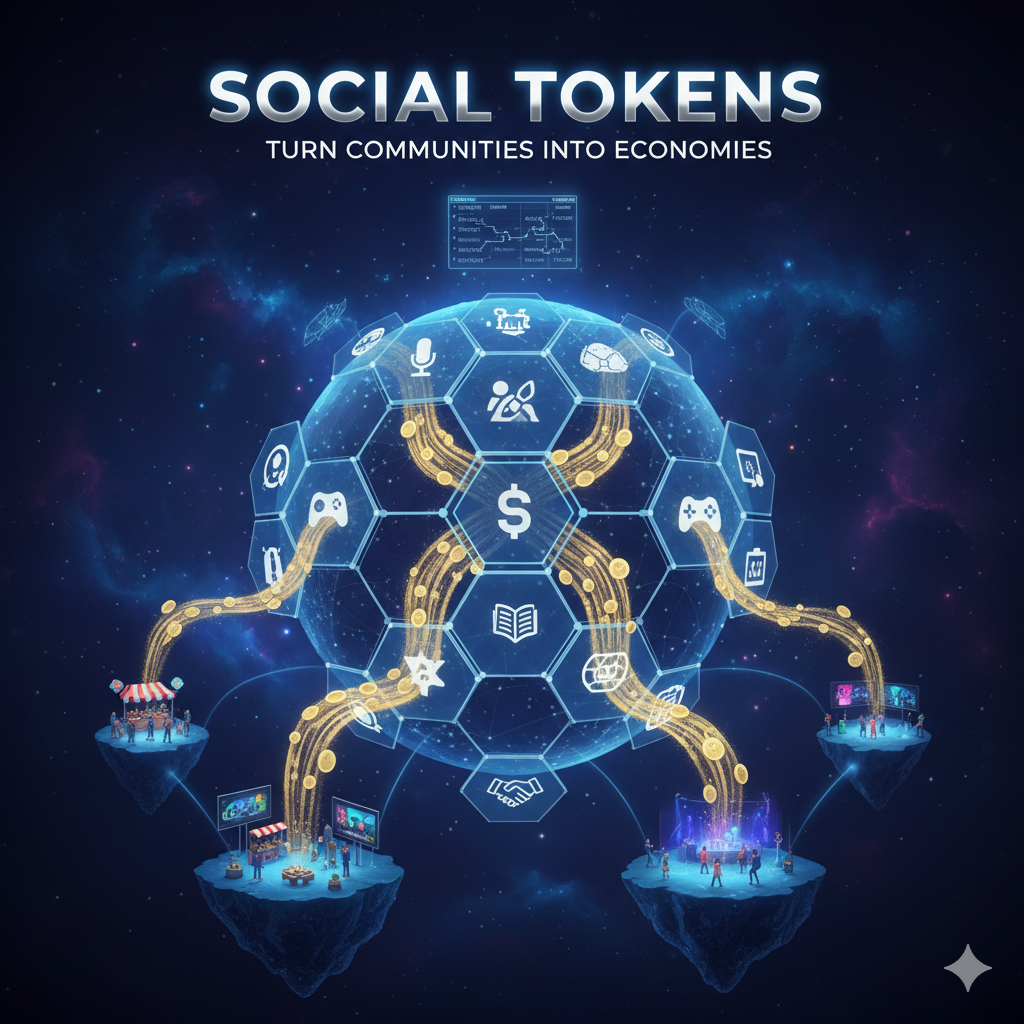
Introduction to Social Tokens in the Creator Economy
In today’s digital world, online communities are more than just groups of people chatting on social media. Instead, they’re evolving into vibrant economies where members can earn, spend, and invest. At the heart of this change are social tokens—digital assets built on blockchain technology that let creators and communities create their own mini-economies. Imagine turning your fan base into a group of stakeholders who not only support you but also benefit as your community grows. That’s the power of social tokens.
Social tokens are essentially cryptocurrencies tied to a person, brand, or group. Moreover, they allow fans to buy into a community, gaining access to exclusive perks while helping creators monetize their work directly. This shift is part of the broader Web3 movement, where blockchain enables decentralized ownership and participation. For beginners, think of it like loyalty points on steroids: instead of just redeeming them for discounts, you can trade them, vote with them, and watch their value rise with the community’s success.
This article explores how social tokens work, their types, benefits, real-world examples, challenges, and future potential. By the end, you’ll understand how these tools transform passive followers into active economic participants.
What Are Social Tokens? A Simple Explanation
Creators, influencers, or communities issue social tokens as digital currencies using blockchain networks like Ethereum or Solana. Unlike traditional money, they’re fungible—meaning each token is identical and can be easily traded, just like dollars or euros. However, their value comes from the reputation, content, or activities of the issuer, not a government.
For newcomers to blockchain, here’s a basic breakdown:
Blockchain Basics: Think of blockchain as a secure, transparent ledger that records all transactions without needing a bank. Furthermore, social tokens live here, ensuring fairness and preventing fraud. Layer 2 solutions like Base make these transactions faster and more affordable for everyday users.
Smart Contracts: These are automated rules coded into the token. For example, if you hold a certain number of tokens, you automatically get access to a private chat group—no middleman required. To understand how these powerful tools work, check out our guide on Ethereum smart contracts explained for beginners.
Social tokens differ from NFTs (non-fungible tokens), which are unique items like digital art. In contrast, tokens are more like shares in a company, giving you ongoing benefits rather than a one-off collectible. Additionally, they’re not just for celebrities; anyone with a following—artists, gamers, or even local groups—can launch one to build a sustainable economy around their community. Digital creators can benefit from both social tokens and NFT royalties to monetize their work effectively.
How Social Tokens Work: From Creation to Trading
Creating a social token starts with a creator deciding on its purpose, like rewarding loyal fans or funding projects. Subsequently, they use platforms like Roll to mint tokens. Note that Rally shut down its Ethereum sidechain in 2023, so most issuance now uses other infrastructure. Modern creators are increasingly deploying tokens on newer blockchains like TON and Base, which offer improved scalability. Fans buy these tokens using cryptocurrency, store them in digital wallets like MetaMask, and use them for perks. If you’re new to crypto wallets, our beginner’s guide on how to set up and use MetaMask safely will walk you through the process step by step.
Here’s a step-by-step process for beginners:
Issuance: The creator sets rules, such as total supply (e.g., 1 million tokens) to create scarcity.
Distribution: Subsequently, tokens are sold, airdropped (given for free), or earned through participation, like commenting or sharing content.
Usage: Holders redeem tokens for exclusive access, such as early music releases or voting on decisions.
Trading: On secondary markets like Uniswap or SushiSwap, tokens can be bought and sold, turning the community into a marketplace where value fluctuates based on demand.
This mechanism turns communities into economies by making participation economic. Consequently, fans aren’t just consumers; they’re investors whose actions can increase token value.
Types of Social Tokens: Which One Fits Your Community?
Creator Tokens: Tied to an individual, like a musician or influencer, offering personal perks. Example: $RAC by musician RAC.
Community Tokens: Used by groups or DAOs (Decentralized Autonomous Organizations), allowing holders to vote on collective decisions.
Fan Tokens: Popular in sports and entertainment, enabling fans to influence decisions like merchandise or events. For instance, teams like FC Barcelona and Juventus issue such tokens via platforms like Chiliz.
Platform Tokens: These reward activity on specific apps or sites, encouraging ongoing engagement.
Each type aligns incentives differently: creators get funding, while holders gain value through access and growth.
How Social Tokens Turn Communities into Thriving Economies
Traditionally, fans support creators via ads or subscriptions, but platforms often take significant cuts. In contrast, social tokens reduce intermediaries, letting creators earn more directly. This direct-to-fan model is particularly powerful in emerging markets where Ethereum adoption is growing, as it bypasses traditional financial barriers.
Key transformations include:
Monetization: Creators can raise funds directly from communities without traditional platform fees.
Engagement and Loyalty: Furthermore, tokens reward participation, increasing long-term involvement and fostering deeper connections.
Governance: In DAOs, token holders vote on decisions, turning members into co-owners with real influence.
Trading: Additionally, tokens can be resold on secondary markets, adding a financial layer to participation and creating liquidity.
Benefits for Creators, Fans, and Communities
For creators:
- Direct revenue without traditional platform fees
- Stronger relationships through exclusivity and token-gated content
- Moreover, the ability to raise capital for projects from engaged supporters
For fans:
- Potential financial upside if a creator’s success drives token demand
- Influence over content direction or community decisions
- Additionally, access to exclusive experiences and rewards
For communities:
- Self-funded growth models that don’t rely on external investors
- Broader participation with aligned economic incentives
- Furthermore, democratic governance structures
Real-World Examples of Social Token Success
$RAC (Musician RAC): Grammy-winning producer RAC provided token-gated benefits to early supporters, creating exclusive access to his work and community.
$ALEX (Alex Masmej): He pioneered a “personal IPO” approach, raising funds from backers in exchange for defined perks tied to his career success through AlexMasmej.com.
Fan Tokens on Chiliz: Teams like FC Barcelona issue tokens for fan engagement. Notably, Chiliz reported approximately €260 million aggregate fan token market cap in 2024 with high daily trading volumes.
$FWB (Friends With Benefits): This tokenized cultural community at FWB.help offers gated events, networking opportunities, and collaborative projects for holders.
Sarafu (Kenya): Community members use these tokens through the Grassroots Economics program for local trade and financial inclusion in regions with limited banking access.
Challenges and Risks in Social Token Economies
Volatility: Token prices can rise or collapse dramatically based on community sentiment and market conditions. Therefore, potential investors should approach with caution.
Regulation: Some tokens may fall under securities laws from the SEC depending on their structure and how they’re marketed.
Platform Risk: Infrastructure failures can impact tokens, as evidenced by the Rally shutdown in 2023 and the Roll hack in 2021. However, emerging Layer 2 solutions are improving reliability and scalability.
Sustainability: Success requires continuous engagement and real utility beyond pure speculation.
Taxation: In jurisdictions like the United States, the IRS treats virtual currencies as property, creating taxable events for transactions.
The Future of Social Tokens: Trends and Predictions
Social tokens are likely to integrate further with NFTs, DAOs, and virtual environments as the technology matures. Instead of relying on broad speculative growth, adoption will follow improvements in user-friendly tooling, clearer regulatory frameworks, and mainstream creator interest.
The decentralized finance (DeFi) ecosystem continues to provide infrastructure for social token trading and liquidity. As Web3 technology becomes more accessible, social tokens may fundamentally redefine how value and influence circulate in digital communities, turning them into functional economic systems.
Key trends to watch include:
- Integration with metaverse platforms like Decentraland and virtual worlds
- Improved mobile wallet experiences for mainstream adoption
- Additionally, hybrid models combining social tokens with traditional membership systems
- Enhanced compliance frameworks for regulatory clarity from bodies like the Financial Action Task Force (FATF)
- Furthermore, cross-platform interoperability allowing tokens to work across multiple applications
Conclusion
Social tokens are revolutionizing how communities operate, transforming them from simple gatherings into dynamic economies. By leveraging blockchain for direct monetization, engagement, and governance, they empower creators and fans alike to participate in shared economic success. Whether you’re a beginner exploring Web3 or a community leader seeking new monetization models, understanding social tokens opens the door to new possibilities in the emerging decentralized world.
The transformation from passive audience to active stakeholder represents a fundamental shift in how online communities function. As the technology matures and adoption grows, social tokens stand to reshape the creator economy by aligning incentives, distributing value more fairly, and giving communities unprecedented control over their economic destinies. Ultimately, this evolution promises a more equitable digital economy where everyone can participate and benefit from collective success.
Read also: NFT Marketplaces.