
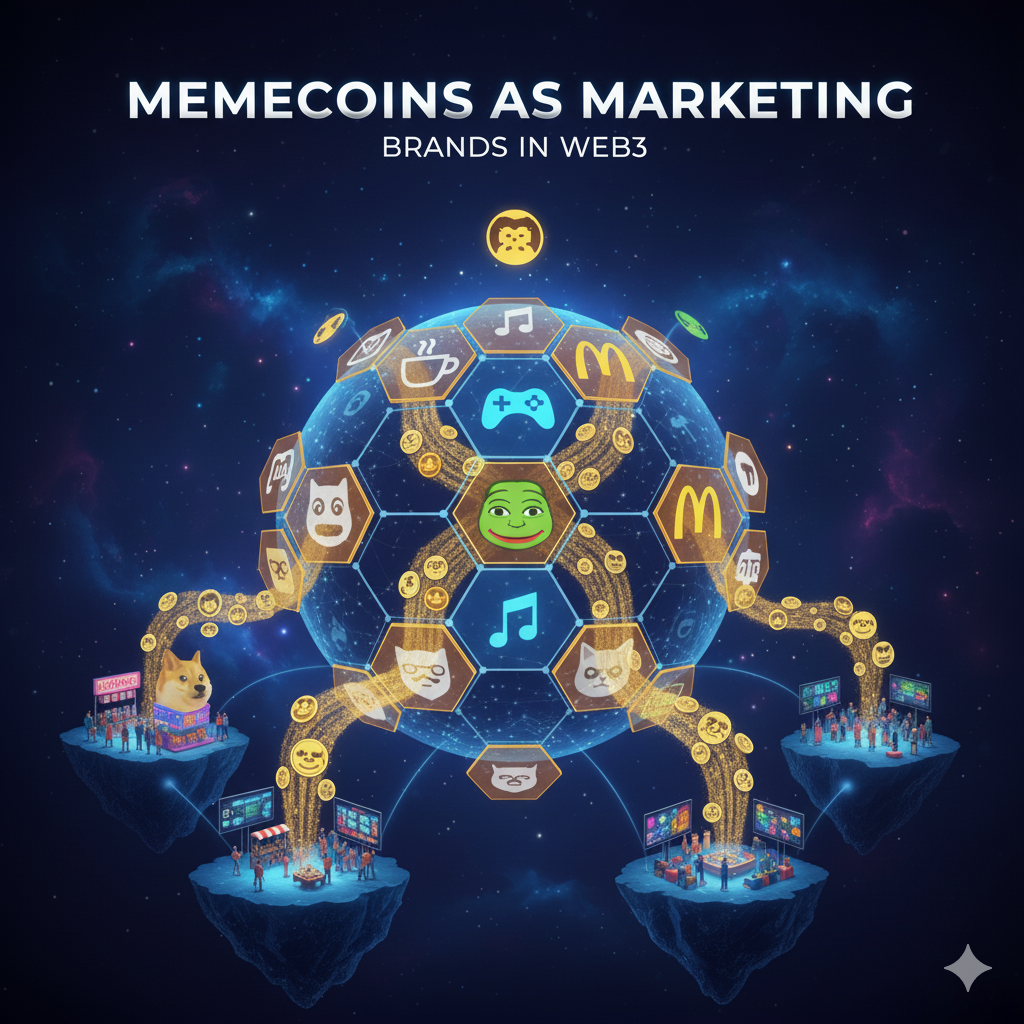
In the fast-paced world of Web3, memecoins have exploded from internet jokes into powerful marketing tools. These fun, community-driven cryptocurrencies—think Dogecoin or Shiba Inu—are no longer just for speculators. Web3 brands are leveraging memecoins to build hype, engage fans, and drive real growth. But what makes them so effective?
This article breaks it down simply: We’ll explain memecoins, explore why brands love them, and dive into real case studies like 9GAG’s $MEME and Pudgy Penguins’ $PENGU. If you’re a beginner wondering how memecoins marketing works—or a brand eyeing Web3—this guide is for you. Let’s jump in.
What Are Memecoins? A Beginner’s Guide
Imagine a cryptocurrency born from a viral meme, like a dog in a hat or a chubby penguin. That’s a memecoin. Unlike Bitcoin (digital gold) or Ethereum (smart contracts), memecoins thrive on humor, community, and social media buzz.
Key features:
- Low entry barrier: Anyone can launch one on platforms like Solana’s Pump.fun for pennies
- Viral potential: Prices skyrocket with tweets from influencers (hello, Elon Musk!)
- Community first: Holders vote, meme, and promote—turning fans into marketers
In 2025, memecoins dominate the cryptocurrency landscape. Dogecoin (DOGE) leads with billions in market cap, followed by PEPE, BONK, and newcomers like FARTCOIN. Solana has emerged as the primary venue for new memecoin launches thanks to low fees and speed, with Pump.fun driving approximately 80% of Solana memecoin launches. However, the new generation of memecoins on TON and Base blockchains in 2025 is challenging Solana’s dominance with innovative features and growing communities.
For brands in Web3, memecoins aren’t gambles—they’re marketing goldmines. To understand the full evolution of these digital assets, explore our comprehensive guide on memecoins in 2025: from jokes to ecosystems.
Learn more:
The Rise of Memecoins in Web3 Marketing
Web3 is all about decentralized ownership: NFTs, DAOs, and tokens. Brands entered via NFTs (e.g., Bored Ape Yacht Club), but memecoins supercharge that strategy by creating liquid, tradable assets that represent brand loyalty.
Why now?
- 2024–2025 boom: Total memecoin market value sits in the tens of billions of dollars, peaking well above $50B in late-2024 and into 2025
- Easy virality: One X post can generate millions in liquidity
- Token utility: Brands add staking, airdrops, or merch unlocks
- Cross-chain expansion: Understanding how memecoins drive adoption across blockchain chains is essential for multi-platform brand strategies
Traditional vs. Web3 brands:
| Type | Example | Strategy |
|---|---|---|
| Web3 Native | Pudgy Penguins | NFT → Toy brand → Memecoin |
| Web2 Crossover | 9GAG | Meme site → Web3 studio |
| Media/Influencer | Barstool Sports | Satirical launch for buzz |
This shift turns passive fans into active holders, creating unprecedented engagement levels. The model closely mirrors how social tokens turn communities into economies, where every holder becomes a stakeholder with real financial incentives to promote the brand.
External resources:
Why Brands Use Memecoins for Marketing
Memecoins as marketing equals free, explosive promotion. Here’s how:
- Instant Community: Launch generates holders who promote everywhere
- Low Cost, High ROI: $100K launch can yield $10M+ market cap overnight
- Engagement Metrics: Airdrops reward loyalty; memes boost visibility
- Real-World Tie-Ins: Tokens unlock merch, events, or discounts
Example for beginners: Launch $BRAND on Solana. Tweet: “Hold for free swag!” Watch holders flood Discord.
Stats: In 2025, top memecoins like $PENGU regularly trade $200M+ daily volume, demonstrating massive market interest and liquidity. This economic model shares DNA with traditional social tokens that transform communities into self-sustaining economies, where participation directly correlates with value creation.
Additional reading:
Case Study 1: 9GAG’s Memeland and $MEME – From Memes to Millions
9GAG, the site with 200M+ monthly users, launched Memeland in 2022—a Web3 studio blending memes and blockchain.
$MEME token (69B supply) powers the ecosystem:
- Marketing win: Leveraged 9GAG’s massive existing audience for instant adoption
- Features: NFTs (Potatoz), SocialFi, creator rewards
- Results: Listed on Bitfinex; ecosystem unites fans across platforms
Lesson: Existing brand equity equals memecoin rocket fuel. 9GAG turned laughs into a thriving Web3 economy, demonstrating how established Web2 brands can successfully transition into Web3.
Sources:
- Memeland Official Site
- CoinMarketCap $MEME Data
- Bitfinex Blog on Memeland
- Binance Research on Memeland
Case Study 2: Pudgy Penguins’ $PENGU – The Consumer Brand Breakthrough
Pudgy Penguins started as Ethereum NFTs. Now? Toys in Walmart and Target, GIFs with billions of views across social media platforms. For brands building on Ethereum who want to understand the full ecosystem, having access to essential Ethereum tools every user must know is critical for managing NFT collections, token launches, and community engagement.
Launched $PENGU on Solana (2024/2025):
- Price: Approximately $0.021 (around Top-60 by market cap)
- Strategy: Memes plus real products equals mass appeal
- Growth: Approximately $240M daily volume; bridges crypto newcomers via fun
Beginner tip: The ability to buy $PENGU while also purchasing Pudgy toys creates brand loyalty on steroids.
Impact: First Web3 consumer brand—proving memecoins can complement physical-goods flywheels (toys plus token). This demonstrates a revolutionary approach to brand building in the Web3 era, showing how memecoins drive adoption across different blockchain chains by creating multiple touchpoints from Ethereum NFTs to Solana tokens.
References:
- Walmart Pudgy Penguins Products
- NFT Now on Pudgy Penguins
- CoinMarketCap $PENGU Statistics
- DappRadar NFT Analytics
Case Study 3: Meteora’s $M3M3 – Utility Meets Meme Magic
Meteora, a leading Solana DEX and liquidity platform, launched $M3M3 (meme³) with a unique utility-focused approach.
The twist:
- Stake-to-earn model: Hold top memecoins, stake them, and eligible top stakers share fees from permanently-locked liquidity
- Marketing angle: Positioned as “meme trader’s best friend”
- Results: Helped drive activity around Meteora; token currently trades around $0.0006+
Pro move: Protocols use memecoins to reward users, not just generate hype. This creates sustainable engagement rather than pump-and-dump dynamics, similar to how social tokens turn communities into economies by offering real utility and shared financial incentives.
Learn more:
Case Study 4: Barstool Sports’ $GREED – Satire Sells
Dave Portnoy (Barstool founder) launched $GREED on Pump.fun and sold his entire position within about an hour, netting approximately $250K, triggering a crash and generating massive headlines. He later followed with $GREED2 and engaged with $JAILSTOOL.
Portnoy discussed memecoins on stage at Consensus 2025, adding fuel to the public debate about celebrity-backed tokens and their implications.
Takeaway: Even satirical launches can generate outsized attention, which equals free marketing. However, this case also highlights the risks and ethical considerations of memecoin marketing.
Sources:
Benefits of Memecoin Marketing for Web3 Brands
Virality: 100x faster reach than traditional advertising campaigns
Loyalty: Token holders become lifetime fans with financial stake in success
Data Gold: On-chain analytics track engagement with unprecedented precision
Monetization: Airdrops and token mechanics fund growth sustainably
ROI Example: $PENGU’s market cap sits at approximately $1B+, turning NFT fans into a memecoin-powered ecosystem and demonstrating the massive value creation potential. This success story illustrates what’s explored in our guide on memecoins in 2025: from jokes to ecosystems—the transformation of simple meme tokens into comprehensive brand universes.
Reference:
Challenges and Risks in Memecoin Marketing
Not all launches go smoothly. Brands must consider:
Volatility: Severe drawdowns are common (see $GREED crash)
Rug Pull Accusations: Insider dumps kill trust and brand reputation
Regulation: Authorities increasingly eye potential “securities” classification
Saturation: New token launches can surge into the thousands per day at peaks on Solana launchpads, though emerging platforms on TON and Base blockchains are offering alternative launch environments with different risk profiles
Fix: Implement transparent tokenomics and community governance to build trust.
Further reading:
Best Practices for Brands Launching Memecoins
Build First: Have NFTs or merchandise ready before launch
Fair Launch: No team allocation builds trust with community
Utility: Add staking, burns, and rewards for sustained engagement
Promote Smart: Leverage X (Twitter), Telegram, and influencers strategically
Solana Preference: Fast transactions and cheap fees make it ideal, though brands should also consider how memecoins drive adoption across blockchain chains to maximize reach
Tools: Platforms like Pump.fun and Raydium simplify the launch process. For Ethereum-based brands, familiarize yourself with essential Ethereum tools every user must know to manage your token ecosystem effectively.
Resources:
The Future of Memecoins in Brand Marketing
By 2026, industry experts predict every major brand may have its own token. AI-generated memes (like ai16z) and gaming integrations will become standard. Web2 giants might follow 9GAG’s lead into Web3, leveraging the power of social tokens to turn their communities into self-sustaining economies where fans are financially invested in brand success.
Prediction: Memecoins will become Web3’s equivalent of Super Bowl ads—fun, effective, and a permanent fixture in marketing strategies. The cross-chain future explored in how memecoins drive adoption across blockchain chains suggests brands will launch tokens on multiple networks simultaneously, maximizing accessibility and engagement.
Industry insights:
Conclusion: Launch Your Brand’s Memecoin Today
Memecoins as marketing isn’t a fad—it’s Web3’s secret weapon. From 9GAG’s $MEME empire to Pudgy’s $PENGU toys, brands win big with community plus creativity. As detailed in our analysis of memecoins in 2025: from jokes to ecosystems, these tokens have matured into sophisticated marketing instruments that bridge Web2 audiences with Web3 innovation.
Ready? Study these cases, choose your blockchain (whether Solana, TON, or Base), and watch your brand go viral. Web3 awaits.