
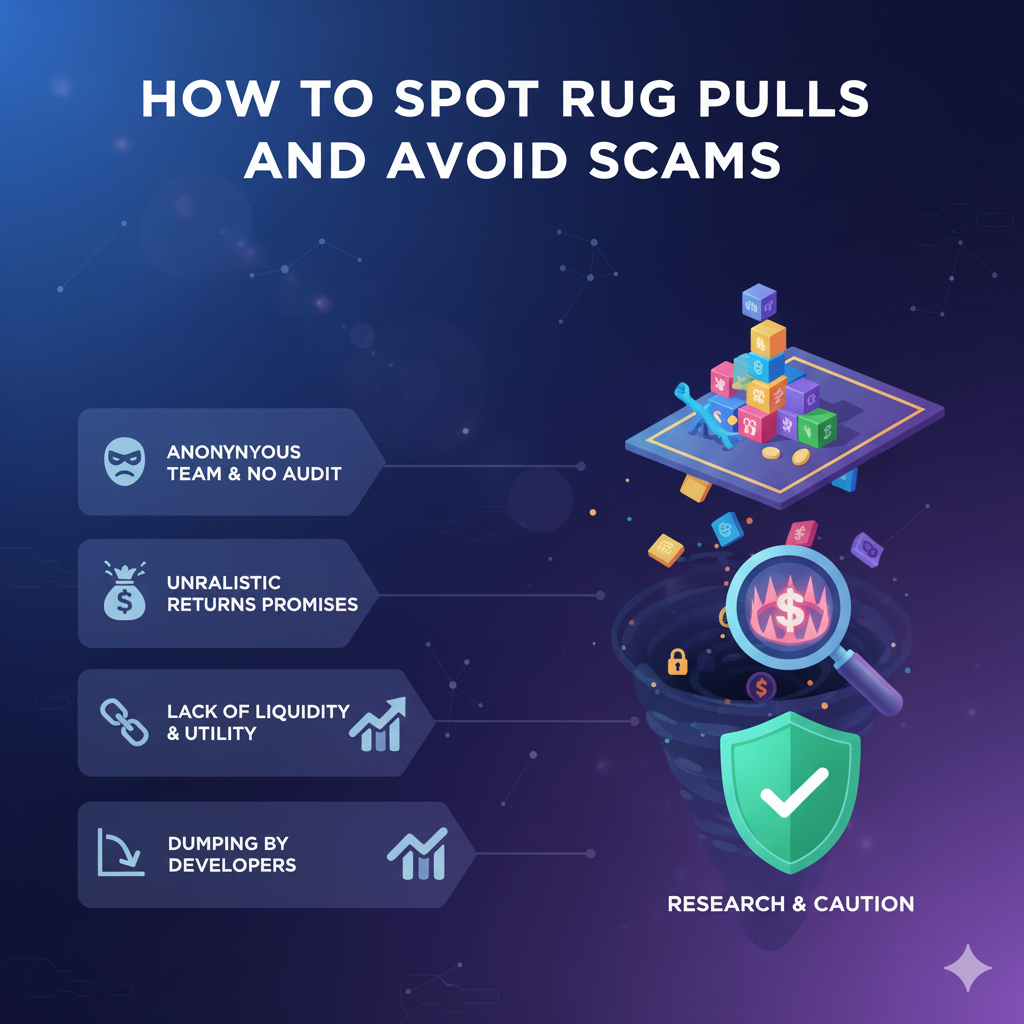
In the fast-paced world of cryptocurrency, where opportunities for high returns abound, so do the risks. One of the most notorious threats to investors, especially beginners, is the “rug pull.” This scam has cost countless people millions of dollars, often leaving them with worthless tokens overnight. If you’re new to crypto or DeFi (Decentralized Finance), understanding rug pulls is crucial to protecting your investments.
This comprehensive guide will explain what rug pulls are, how to identify them, and practical steps to avoid falling victim. We’ll use simple language to break it down, drawing from reliable sources to ensure accuracy. By the end, you’ll have the tools to navigate the crypto space more safely.
Remember, while crypto can be rewarding, always invest only what you can afford to lose. Let’s dive in.
What Is a Rug Pull?
A rug pull is a type of cryptocurrency scam where the developers or creators of a project suddenly abandon it and disappear with investors’ funds. The term comes from the idea of “pulling the rug out from under” someone, leaving them to fall. In crypto terms, this means the project’s token value crashes to zero almost instantly.
Typically, rug pulls happen in DeFi projects built on blockchains like Ethereum and BNB Chain. Developers create a new token or protocol, hype it up to attract investments, and then drain the liquidity pool or sell off their holdings. Investors are left holding tokens that can’t be sold or are worth nothing.
Rug pulls differ from other scams like hacks because they’re intentional acts by insiders. They’re common in unregulated spaces like DeFi, where anyone can launch a project without oversight. According to Chainalysis, rug pulls accounted for approximately 37% of all crypto scam revenue in 2021, totaling around $2.8 billion—a sharp jump from roughly 1% in 2020.
Types of Rug Pulls
Not all rug pulls look the same. Understanding the variations can help you spot them early. Here are the main types:
Hard Rug Pull: This is the most abrupt form. Developers suddenly remove all liquidity from the project’s pool on a decentralized exchange (DEX) like Uniswap or PancakeSwap. They might also transfer funds to unknown wallets and vanish. An example is when a project’s smart contract allows the team unlimited access to funds, which they exploit at peak hype. Understanding how smart contracts work can help you identify these vulnerabilities.
Soft Rug Pull: More subtle, this involves gradual actions like dumping large amounts of tokens over time, causing the price to drop slowly. Developers might use multiple wallets to sell off holdings without immediate detection. It’s harder to spot but equally devastating for investors.
Liquidity Stealing: Common in DeFi pools, where creators promise high yields to lure liquidity providers. Once enough funds are deposited, they withdraw everything, crashing the token’s value and leaving investors unable to sell.
Backdoor Exploits: Some projects have hidden code in smart contracts that allow creators to mint unlimited tokens or drain funds. This isn’t always a “hack” but a built-in scam mechanism designed from the start.
These types often overlap, but the end result is the same: significant investor losses and worthless tokens.
How Rug Pulls Work: A Step-by-Step Breakdown
To avoid rug pulls, it’s helpful to know their playbook. Scammers follow a predictable pattern:
Project Launch: Developers create a token or DeFi protocol, often copying code from legitimate projects (called “forking”). They release a whitepaper promising revolutionary features, like high-yield farming or NFT integrations.
Hype Building: Using social media platforms, influencers, and Telegram groups, they generate buzz. Promises of “100x gains” or “guaranteed returns” draw in investors. Fake endorsements or paid promotions amplify the excitement and create artificial credibility.
Investor Influx: People buy the token, adding liquidity to pools. The price pumps as more join, creating FOMO (fear of missing out). Trading volume increases, making the project appear legitimate and successful.
The Pull: At the peak, developers execute the scam. They might remove liquidity from DEX pools, sell massive token holdings (dumping), or use smart contract vulnerabilities to steal funds directly from the protocol.
Aftermath: The token price plummets to near-zero. Developers delete social accounts and disappear, often with millions in crypto transferred to anonymous wallets or through crypto mixers to obscure the trail.
This process can happen in hours or weeks. For instance, in DeFi, smart contracts on platforms like Ethereum make it easy to set up projects but also to exploit unsuspecting investors. Even newer blockchains like Sui and Aptos, which are revolutionizing blockchain with Move language, aren’t immune to these scams.
Common Signs of a Potential Rug Pull
Spotting red flags early can save your portfolio from devastating losses. Here are key warning signs, explained simply:
Anonymous or Unverified Team: If the developers hide their identities (no LinkedIn profiles, photos, or track records), it’s a huge red flag. Legitimate projects have doxxed (publicly identified) teams with verifiable backgrounds and reputations to protect.
Unrealistic Promises: Claims like “guaranteed 1,000% APY” or “moonshot gains” without a solid plan or revenue model are suspicious. If it sounds too good to be true, it probably is. No legitimate investment can guarantee extraordinary returns.
Lack of Audits: Reputable projects get their smart contracts audited by established firms like CertiK, Quantstamp, or PeckShield. No audit means no third-party verification of the code’s safety. Proceed with extreme caution.
Concentrated Token Ownership: Use tools like Etherscan or BscScan to check if a few wallets hold most tokens. This concentration allows easy price manipulation and dumping. Learning about essential Ethereum tools can help you investigate projects more thoroughly.
No Liquidity Locks: Legitimate projects often lock liquidity through services like Team Finance to prevent immediate withdrawal. However, note that Team Finance itself suffered a roughly $15 million exploit in October 2022 during a Uniswap migration, according to The Block. Liquidity locks reduce but don’t eliminate rug pull risk.
Sudden Price Spikes: A token surging 10x or more in days without substantive news or developments might indicate manipulated hype before a dump.
Poor Community Engagement: Fake followers, bots in chats, or censored criticism on Discord or Telegram signal issues. Legitimate projects encourage open discussion and transparency.
Ambiguous Whitepaper or Roadmap: Vague documents without clear utility, technical details, or realistic timelines are common in scams. Professional projects provide detailed, achievable plans.
Abnormal Trading Volume: A spike followed by a sharp drop could indicate creators pumping the price before pulling liquidity.
Fake News or Hype: Over-the-top marketing without substance, like unverified partnerships with major companies or celebrity endorsements that can’t be confirmed.
If you see multiple signs, walk away. Beginners should start with small investments to test the waters and never invest more than they can afford to lose completely.
Famous Rug Pull Examples
Real-world cases illustrate the dangers and financial devastation caused by rug pulls:
Squid Game Token (2021): Inspired by the Netflix show, this token surged to approximately $2,800 before crashing to zero. According to WIRED, developers withdrew roughly $3.3 to $3.36 million and disappeared. Many investors also reported they couldn’t sell due to contract restrictions built into the code.
AnubisDAO (2021): This project raised approximately $58 to $60 million in ETH within hours of launching. According to Chainalysis, liquidity was quickly drained and funds were moved to unknown wallets in what appeared to be a coordinated rug pull.
Meerkat Finance (2021): On BNB Chain, approximately $31 million was drained a day after launch. CoinDesk reported it was widely suspected as a rug pull at the time, though the project’s developers initially claimed it was a hack.
These examples show how even hyped projects with significant trading volume can collapse overnight. Scammers often target trends like memes, popular TV shows, or current events to exploit excitement and bypass critical thinking.
How to Avoid Rug Pulls: Practical Tips
Prevention is better than cure. Here’s a beginner-friendly guide to protecting yourself:
Research the Team: Google team member names, check LinkedIn profiles, and verify past projects. Look for established reputations in the crypto space. Avoid anonymous teams unless they have exceptional technical credentials and audit history.
Check Smart Contracts: Use blockchain explorers like Etherscan or BscScan to review code. Look for third-party audits and locked liquidity, keeping in mind that locks aren’t bulletproof protection as noted by The Block. Understanding what smart contracts are and how they function is essential for evaluating project safety.
Analyze Tokenomics: Ensure fair distribution, vesting schedules for team tokens, and real utility beyond speculation. Tools like DexTools and DexScreener help you review liquidity depth and trading pairs.
Engage with the Community: Join Discord or Telegram channels, but watch for bots and censorship of legitimate concerns. Read forums like Reddit’s r/CryptoCurrency for community warnings and experiences.
Use Rug-Check Tools: Platforms like TokenSniffer, Honeypot.is, and GoPlus Security can flag common risks including honeypots, malicious functions, and suspicious ownership patterns. Treat results as initial screening, not absolute guarantees.
Start Small and Diversify: Don’t go all-in on one project, especially new or unproven ones. Spread investments across established tokens like ETH or BTC alongside any speculative positions.
Consider DeFi Insurance: As the DeFi space matures, insurance protocols are emerging to protect against smart contract failures and exploits. Learn about the future of DeFi insurance with platforms like InsurAce and Nexus Mutual that can provide an additional layer of protection for your investments.
Secure Your Wallet: Use hardware wallets like Ledger or Trezor, enable two-factor authentication, and never share private keys or seed phrases. For comprehensive wallet security practices, check out this Ethereum security guide with 10 essential rules to protect your crypto in 2025. Avoid unsolicited DMs promising airdrops or investment opportunities.
Monitor On-Chain Activity: Tools like Whale Alert track large transfers that might signal dumps or suspicious movements of funds by development teams or large holders. Familiarizing yourself with essential Ethereum tools will enhance your ability to monitor and analyze projects.
Report Suspicious Projects: Use Chainabuse (by TRM Labs)—a free, public, multi-chain reporting portal. If you’re in the U.S., also report to the FBI IC3 and the FTC. Depending on the asset, the SEC or CFTC may also be relevant authorities.
Educate Yourself Continuously: Follow reliable sources like CoinDesk, CoinTelegraph, security firms’ blogs, and established crypto educators. Stay updated on new scam tactics and security best practices across various blockchain ecosystems.
By following these steps, you significantly reduce your risk exposure. Remember, DeFi’s decentralization means no refunds or chargebacks—your due diligence is your only safety net.
Tools and Resources for Safer Investing
Empower yourself with these free tools and resources:
Block Explorers: Etherscan for Ethereum, BscScan for BNB Chain, Solscan for Solana—essential for checking transactions, smart contracts, and token holder distribution. These are among the top essential Ethereum tools every user must know.
Audit Firms: Look for security reports from CertiK, Quantstamp, or PeckShield. These provide third-party verification of smart contract safety.
Rug and Honeypot Detectors: TokenSniffer, Honeypot.is, and GoPlus Security help identify common scam characteristics in token contracts.
Data and Charts: CoinGecko and CoinMarketCap for comprehensive token information; DexTools and DexScreener for real-time liquidity and trading pair analysis.
Communities and Reporting: Reddit communities like r/DeFi and r/CryptoCurrency for peer discussions; Chainabuse by TRM Labs for reporting scams across multiple blockchains.
Educational Resources: Chainalysis publishes annual crypto crime reports with valuable insights into scam trends and patterns. CryptoCompare offers market data and educational content.
Blockchain-Specific Resources: Depending on which blockchain you’re exploring, different tools may be more relevant. For example, newer blockchains like Sui and Aptos offer enhanced security features through their Move programming language.
Using these tools consistently can transform you from a beginner into a more savvy and protected investor.
Conclusion: Stay Vigilant in the Crypto World
Rug pulls and cryptocurrency scams thrive on hype, inexperience, and FOMO, but with knowledge and diligence, you can spot warning signs and avoid them. Always prioritize thorough research over fear of missing out, and remember that legitimate projects build value over time through real utility, not overnight through empty promises.
By recognizing signs like anonymous teams, unaudited code, concentrated token holdings, and unlocked or poorly managed liquidity (even “locked” liquidity can be mishandled during protocol migrations, as The Block has documented), you’ll protect your hard-earned money from devastating losses. Understanding smart contract fundamentals and utilizing essential blockchain tools will significantly enhance your ability to identify potential scams.
Cryptocurrency offers exciting opportunities for financial growth and technological innovation, but safety must come first. If you’re just starting your crypto journey, focus on established projects with proven track records and learn gradually. Consider additional protection through DeFi insurance platforms, implement the essential security rules for protecting your Ethereum and crypto assets, and stay informed through reliable sources like CoinDesk and WIRED.
The crypto space rewards those who do their homework. Stay vigilant, stay skeptical of unrealistic promises, and always remember: if an investment opportunity seems too good to be true, it almost certainly is. Whether you’re exploring traditional Ethereum DeFi or next-generation blockchains like Sui and Aptos, your safety depends on thorough research, continuous education, and unwavering caution.