Home Blog Page 6

Tokenomics Explained: Burns, Locks & Liquidity

In the world of cryptocurrencies, tokenomics plays a crucial role in determining a project’s success and value. Tokenomics, short for “token economics,” refers to the structure and rules governing how a cryptocurrency or token operates within its ecosystem. Moreover, it includes aspects like supply, distribution, utility, and incentives that influence a token’s price, adoption, and long-term viability. For beginners, think of tokenomics as the blueprint that outlines how tokens are created, used, and managed—like the rules of a game that ensure fairness and excitement for all players.

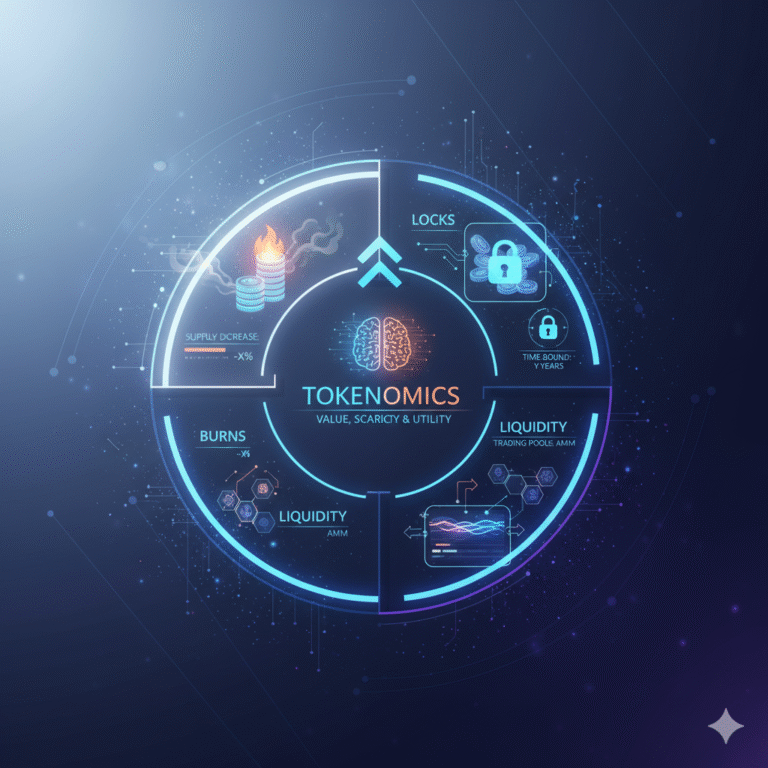
This article dives into three key elements of tokenomics: token burns, locks, and liquidity provision. These mechanisms help control supply, build trust, and enable smooth trading. Furthermore, we’ll explain each in simple terms, with real-world examples, to help newcomers grasp why they matter. By understanding these, you’ll be better equipped to evaluate crypto projects and make informed decisions.

What Is Tokenomics and Why Does It Matter?

At its core, tokenomics defines the economic model behind a token. Specifically, it answers questions like: How many tokens exist? How are they distributed? What can you do with them? Ultimately, a well-designed tokenomics model creates scarcity, encourages participation, and aligns incentives between users, developers, and investors.

For instance, Bitcoin’s tokenomics is famous for its fixed maximum supply of 21 million coins, which creates scarcity similar to gold. In contrast, this differs from tokens like Ethereum, which has no hard cap but uses mechanisms to manage inflation. Poor tokenomics can lead to price crashes or project failure, while strong ones foster growth. According to experts, tokenomics impacts everything from investor confidence to ecosystem sustainability.

Key components include:

Supply Metrics: Circulating supply (tokens available now), total supply (including locked ones), and max supply (the absolute limit).

Distribution: How projects allocate tokens, such as through mining, staking, or airdrops.

Utility: Real-world uses, like paying fees or voting in governance.

Incentives: Rewards or penalties that projects design to encourage behaviors, like holding or providing liquidity.

Consequently, burns, locks, and liquidity are tools within this framework to manage supply and demand dynamically. Let’s break them down.

Understanding Token Burns: Reducing Supply for Scarcity

Token burning is a deflationary mechanism where projects permanently remove tokens from circulation. As a result, this reduces the overall supply, potentially increasing the value of remaining tokens through basic supply and demand principles—fewer tokens chasing the same demand can drive prices up. It’s like a company buying back its shares to boost stock value.

How Token Burns Work

Projects “burn” tokens by sending them to a special wallet address (often called a “burn address”) with no private key, making them irretrievable. Additionally, this process is transparent and verifiable on the blockchain. Burns can be:

Scheduled: Regular events, like quarterly burns.

Transaction-Based: A portion of fees from each trade that projects burn automatically.

One-Time Events: Large burns that teams execute to adjust supply dramatically.

Therefore, burns counteract inflation from new token minting and signal a project’s commitment to value preservation.

Examples of Token Burns

Ethereum (ETH): Since the 2021 EIP-1559 upgrade, Ethereum burns a portion of transaction fees. During high network activity, burns can exceed new issuance, making ETH temporarily deflationary. To understand how this mechanism works in detail, read our guide on how EIP-1559 makes Ethereum more predictable and when it can help investors. Cumulatively, this has destroyed millions of ETH worth tens of billions of USD since August 2021.

Binance Coin (BNB): Binance runs periodic burns aiming to reduce BNB’s total supply from 200 million to 100 million. Furthermore, they use an auto-burn formula plus gas-fee burns on BNB Chain. For a comprehensive overview of BNB’s tokenomics and burn mechanisms, check out our ultimate guide to Binance Coin.

Shiba Inu (SHIB): In May 2021, Vitalik Buterin burned roughly 410 trillion SHIB, a landmark one-time event. Subsequently, the community has continued smaller burns since. The dollar value fluctuates with price; at the time it was estimated around several billions of USD.

Stellar (XLM): In 2019, the Stellar Development Foundation burned 55 billion XLM, cutting the total supply roughly in half from approximately 105 billion to 50 billion.

Benefits and Risks for Beginners

Burns build investor confidence by demonstrating long-term commitment and can stabilize prices during volatility. However, they’re not a guarantee of success—projects need strong utility too. On the other hand, risks include over-reliance on burns without real demand, leading to hype-driven pumps and dumps. Always check a project’s whitepaper for burn schedules.

In tokenomics, burns are a powerful tool for creating scarcity, but they work best when combined with growing adoption.

The Role of Token Locks: Building Trust Through Restriction

Token locks, or vesting, involve restricting access to tokens for a set period. Importantly, this prevents sudden floods of supply that could crash prices, often called “dumps.” Consequently, locks align incentives by ensuring teams and investors commit long-term, reducing risks like “rug pulls” where creators abscond with funds.

How Token Locks Work

Projects lock tokens via smart contracts, which enforce time-based or milestone-based releases. For example:

Vesting Schedules: Many projects implement multi-year vesting (e.g., 1–4 years) for team and investor allocations. As a result, this discourages immediate selling after token generation events.

Liquidity Locks: In DeFi, LP (liquidity provider) tokens from DEX pools can be locked in third-party lockers like Team Finance or UNCX. Therefore, the project can’t suddenly withdraw the pool—mitigating rug-pull risk. To explore more DeFi protocols and their security mechanisms, visit our guide to the top 10 DeFi protocols across all chains.

Clarification: Uniswap itself does not force “locked” liquidity by default. Instead, LPs deposit into pools and can withdraw unless they voluntarily send the LP tokens to a time-lock. Projects often lock LP tokens post-launch to signal safety.

Examples of Token Locks in DeFi

Uniswap (UNI) Ecosystem: Projects launching on Uniswap commonly lock LP tokens via lockers to prevent liquidity withdrawal and build trust. Learn more about how Uniswap operates in our complete guide to token swapping on Ethereum.

Team & Investor Allocations: Many token launches use vesting for insiders. However, specifics vary by project as teams consider it best practice rather than a universal rule.

Staking Mechanics: On Ethereum, staking reduces liquid supply, but since the Shanghai/Capella upgrade on April 12, 2023, users can now withdraw staked ETH subject to exit queues. Therefore, it is no longer locked until an unknown future upgrade.

Game-Theory-Heavy Models: Some protocols like Olympus DAO use staking/bonding designs that encourage holding. Nevertheless, they’ve also shown that poor risk controls can lead to sharp drawdowns—illustrating that locks alone don’t prevent volatility.

Benefits and Risks for Beginners

Locks prevent volatility from unlocks and signal legitimacy—look for projects with audited locks and transparent schedules that reputable lockers publish. For investors, locked liquidity means safer trading without fear of sudden drains. Conversely, overly long locks can limit flexibility, and poor implementation might trap funds if contracts have bugs. Beginners should verify locks on chain and via locker dashboards.

Locks are essential in tokenomics for stability, turning short-term hype into sustainable growth.

Liquidity Provision: Enabling Smooth Trading

Liquidity refers to how easily tokens can be bought or sold without big price swings. In crypto, liquidity provision means supplying tokens to pools on decentralized exchanges (DEXs) like Uniswap, allowing trades. Subsequently, providers earn fees from swaps, making it a passive income source.

How Liquidity Provision Works

In automated market makers (AMMs), users deposit equal values of two tokens (e.g., ETH/USDC) into a pool. Then, they receive LP tokens representing their share. When someone trades, they pay a fee that the protocol distributes to providers. Uniswap v3 introduced concentrated liquidity, letting providers choose price ranges for higher capital efficiency. Additionally, common fee tiers on Uniswap are 0.01%, 0.05%, 0.3%, and 1% (v3 added multiple tiers; v2 used 0.3% by default).

Moreover, as Layer 2 solutions like Base continue to scale Ethereum, liquidity provision becomes more cost-effective for smaller investors. Discover more about how Base by Coinbase scales Ethereum in our beginner’s guide to Layer 2 blockchain solutions.

Examples of Liquidity Provision

Uniswap Pools: A beginner might provide $500 ETH and $500 USDC to the ETH/USDC pool. If trades occur, they earn fees proportional to their share.

Yield Farming: Providers can stake LP tokens in additional contracts to earn extra rewards.

Liquid Staking: Services like Lido issue liquid staking tokens (e.g., stETH) that users can trade or pair in pools—providing liquidity while staking.

Benefits and Risks for Beginners

Liquidity provision boosts ecosystem health by reducing slippage (price impact on large trades). However, the main risk is impermanent loss—when the relative price of the two assets diverges compared with simple holding. Understand impermanent loss before providing liquidity; it’s a fundamental AMM trade-off, not a bug.

Note: Returns (APY) vary widely by pair, volume, and price range. Therefore, avoid relying on fixed “typical” ranges; always review current pool data and fees for the specific pair on platforms like Uniswap Analytics.

Why Burns, Locks, and Liquidity Shape Successful Tokenomics

These mechanisms work together to create balanced ecosystems. Specifically, burns reduce supply for scarcity, locks prevent dumps for stability, and liquidity enables trading for utility. For example, a project might burn fees, lock team tokens, and incentivize liquidity provision to attract users.

For beginners, evaluate tokenomics by checking supply caps, burn rates, lock durations, and liquidity depth on reputable dashboards and explorers like Etherscan or CoinGecko. Strong tokenomics, like Bitcoin’s supply schedule or Ethereum’s fee-burn plus staking dynamics, can support enduring value. Nevertheless, no mechanism guarantees success. Look for real utility, transparent governance, and an engaged community.

In summary, mastering these concepts empowers you to navigate crypto confidently. Whether investing or building, tokenomics is the foundation of blockchain innovation.


Related Resources:
How Memecoins Drive Adoption Across Blockchain Chains

In the ever-evolving world of cryptocurrency, memecoins have emerged as more than just internet jokes turned digital assets. These tokens, often inspired by memes like Dogecoin’s Shiba Inu dog or Pepe the Frog, are playing a surprising role in expanding blockchain technology’s reach.

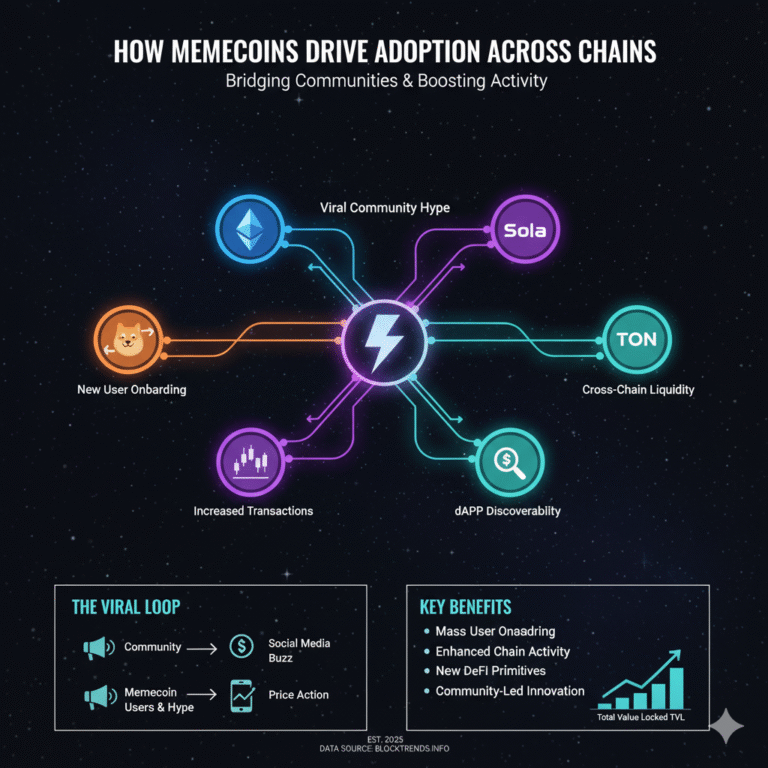
Traditional cryptocurrencies focus on solving real-world problems like payments or decentralized finance (DeFi). In contrast, memecoins thrive on humor, community, and viral trends. This makes them accessible to beginners. As a result, they draw in new users who might otherwise find blockchain intimidating. Consequently, memecoins have evolved from simple jokes to complex ecosystems, driving adoption not just on one chain but across multiple blockchains, boosting activity, liquidity, and innovation in the crypto space.

This article explores how memecoins are fueling this growth, backed by real examples and data from reliable sources. We’ll break it down into simple terms, so even if you’re new to crypto, you can follow along.

The Cultural Power of Memecoins: A Gateway for New Users

Memecoins start with something simple and relatable: a meme. Consider Dogecoin (DOGE), launched in 2013 as a joke based on the “Doge” meme. It gained traction through social media buzz and celebrity endorsements, particularly from Elon Musk. This helped it reach an all-time high market cap of approximately $83–89 billion in May 2021.

This cultural appeal lowers the entry barrier for newcomers. Unlike complex projects requiring technical knowledge, memecoins invite participation through fun and shared experiences. Moreover, they serve as an accessible introduction to blockchain technology before users explore more complex aspects of cryptocurrency.

Why Memecoins Attract New Users

Experts note that memecoins act as a “Trojan horse” for crypto adoption. They wrap speculation in humor, making blockchain less scary. For instance, during market highs, memecoins attract retail investors who generate more activity on networks like Ethereum and Solana.

This influx of users increases transaction volumes. In turn, this validates the blockchain’s utility. On Solana, memecoin seasons have coincided with large spikes in decentralized exchange (DEX) volumes and network fees. Subsequently, these metrics cool off when markets soften.

Furthermore, on Solana, BONK’s holder base has grown into the hundreds of thousands, approaching one million. This makes it one of the most widely held tokens on the chain. When comparing BONK to other leading memecoins like PEPE, DOGE, and WIF, it’s clear that community size and holder distribution play crucial roles in determining long-term success.

For beginners, starting with a small investment in a fun token can lead to exploring deeper crypto features. These include wallets or trading platforms. Therefore, memecoins bridge cultural trends and digital assets, serving as an entry point that encourages long-term engagement.

Expanding Across Chains: From Single-Network to Multi-Chain Marvels

One key way memecoins drive adoption is by going multi-chain. Early memecoins like DOGE were tied to one blockchain. DOGE still runs natively on its own chain. However, wrapped versions (such as wDOGE on Ethereum) let DOGE circulate on other networks. This is how many legacy coins gain multi-chain presence.

Multi-Chain Strategy in Action

Take Floki Inu (FLOKI) and Pepe (PEPE) as examples. These tokens operate on multiple chains, enhancing accessibility and liquidity. By deploying on various blockchains, they tap into diverse user bases. Additionally, they reduce costs through lower-fee networks and boost trading activity.

Cross-chain compatibility is becoming standard. Tools like Chainlink’s Cross-Chain Interoperability Protocol (CCIP) enable secure token and message passing across more than 20 chains. Moreover, the SHIB ecosystem (Shibarium) has integrated CCIP to expand interoperability.

Launchpads like Memetropolis claim to let projects launch across six chains. These include Solana, Ethereum, BNB Chain, Base, Avalanche, and Arbitrum. They use LayerZero-based interoperability. This omnichain approach pools liquidity and reduces friction for users moving between networks.

Emerging Blockchain Ecosystems

For chains like Base (operated by Coinbase) or TON (linked to Telegram’s ecosystem), top memecoins often act as leveraged bets on chain growth. Coinbase counts approximately 100–120 million verified users historically. Meanwhile, Telegram surpassed 1 billion monthly active users by 2025. These represent huge funnels for on-chain applications and tokens.

The new generation of memecoins emerging on TON and Base blockchains demonstrates how these platforms leverage their massive user bases to drive adoption. This multi-chain strategy not only drives adoption by making memecoins more available. It also encourages users to explore different blockchains, spreading awareness and usage.

Boosting Liquidity and Network Activity

Memecoins aren’t just fun; they create real economic activity. By attracting speculators and communities, they increase transaction volumes. This benefits the underlying blockchains. On Solana, memecoin waves have coincided with surges in DEX volumes and chain fees. Correspondingly, these metrics dip during risk-off periods.

The Liquidity Advantage

Liquidity is a big winner here. Multi-chain deployments mean more trading pairs and deeper pools. This reduces slippage and makes trades efficient. Platforms like Pump.fun on Solana have generated roughly $800 million or more in cumulative protocol fees to date. Projections suggest it could cross $1 billion in 2025. This shows the sheer scale of memecoin-driven activity.

For beginners, memecoins can introduce concepts like liquidity pools or decentralized exchanges in a low-stakes way. As users trade, they learn about blockchain mechanics. Thus, this fosters broader adoption. If you’re new to crypto and want to safely manage your memecoin investments, exploring the best crypto wallets for Ethereum, Bitcoin, and multi-chain support is an essential first step.

Integration with DeFi and Real Utility

While memecoins started as pure speculation, many are evolving. They’re integrating with DeFi, turning from jokes into functional assets. For example, BONK on Solana participates in DeFi integrations. Meanwhile, dogwifhat (WIF) serves as a community mascot that helped catalyze Solana activity during peaks.

WIF’s all-time high price was approximately $4.83. This implies a peak market cap of roughly $4.8–5 billion given its circulating supply.

Building Sustainable Models

Projects like Memeland onboard users in Asia via Web2 audiences. Others build revenue-sharing or buyback mechanics to create sticky utility. On Base, tokens like TOSHI, DEGEN, and BRETT have fostered social and creator-led use cases. This turns the chain into a hub for real usage.

Cross-chain tools like Chainlink CCIP make this safer and more seamless. Furthermore, omnichain launchpads reward creators for deploying where their communities already live. As the industry matures, there’s a growing shift toward sustainable tokenomics models that prioritize real yield over Ponzi-like structures. This evolution is crucial for memecoins seeking long-term viability beyond initial hype cycles.

Real-World Examples of Memecoin-Driven Adoption

Let’s examine specific examples that demonstrate how memecoins drive blockchain adoption:

Dogecoin (DOGE): Started and still runs on its own chain. Wrapped DOGE exists on EVM networks for cross-chain use. At its 2021 peak, DOGE exceeded an $80 billion market cap.

Shiba Inu (SHIB): Ethereum-native with its own Layer 2 solution called Shibarium. Shibarium integrated Chainlink CCIP, aligning with CCIP’s 20+ chain reach for interoperability. Currently, SHIB’s market cap in October 2025 fluctuates around $6–7 billion.

Pepe (PEPE): Ethereum-based memecoin with an all-time high price on December 9, 2024. It reached approximately $0.000028, implying a peak market cap of roughly $11–12 billion.

dogwifhat (WIF): Solana’s flagship meme with an all-time high of approximately $4.83. This implies a peak market cap of $4.8–5 billion.

Brett (BRETT) on Base: Leading Base memecoin that has traded in the hundreds of millions to billions market-cap range. Its all-time high price reached around $0.234 in 2024.

Avalanche (AVAX): COQ Inu (COQ) and Landwolf (WOLF) are active Avalanche memecoins. They illustrate how competing memes on a single Layer 1 blockchain vie for attention and liquidity.

TON: REDO (Resistance Dog) is a prominent TON memecoin. It’s tied culturally to Telegram and TON. Its on-chain activity and listings are tracked across TON DEXs and aggregators.

These examples show memecoins can represent a material share of a chain’s market cap during peaks. However, the ratio varies widely by chain and market cycle.

The Future: Memecoins as a Pillar of Blockchain Growth

Looking ahead, memecoins will likely integrate more with DeFi, NFTs, and artificial intelligence. They’re becoming increasingly interoperable across chains. Trends like multi-chain launches will enhance accessibility. Meanwhile, proof-of-stake chains such as Solana and Avalanche continue courting these communities with low fees and high throughput.

Challenges and Opportunities

However, challenges like hype cycles and rug pulls persist. Therefore, chains must balance fun with real utility. Regulatory scrutiny is also increasing. Consequently, projects need to focus on building sustainable value beyond speculation.

Despite these challenges, the memecoin sector demonstrates resilience. The total memecoin sector hovers around $60–65 billion today. This underscores that they’re no longer a fringe phenomenon.

Conclusion: Your Gateway to Blockchain

In summary, memecoins drive blockchain adoption by making cryptocurrency fun and approachable. They expand across chains and boost network activity. For beginners, starting with a memecoin could be your first step into a vast, interconnected crypto world.

As these tokens continue to evolve, they’re proving that humor and community can coexist with technological innovation. Whether you’re a seasoned trader or a curious newcomer, memecoins offer an accessible entry point to explore blockchain technology.


Key Resources:

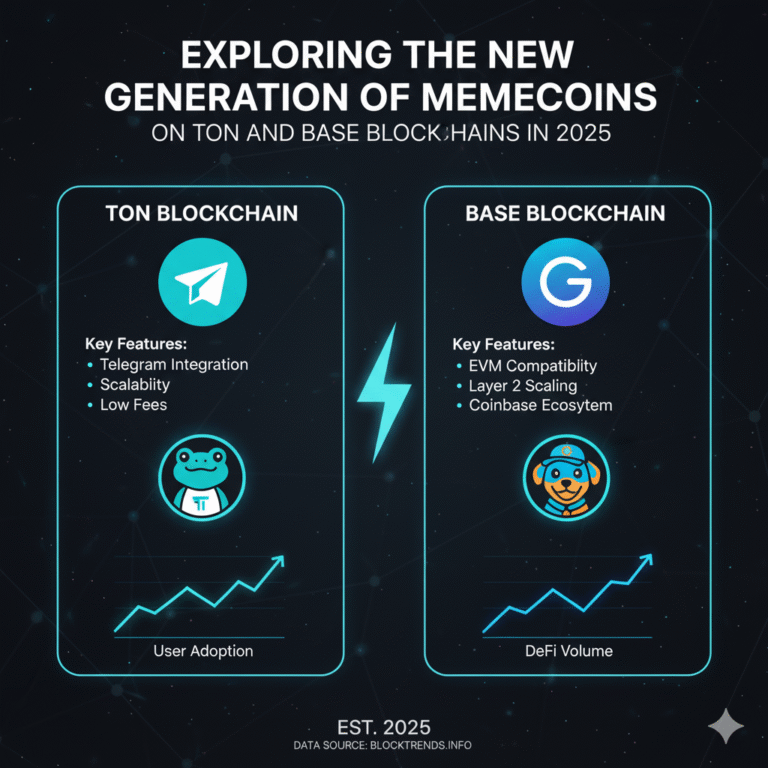
Exploring the New Generation of Memecoins on TON and Base Blockchains in 2025

In the fast-paced world of cryptocurrency, memecoins have evolved from simple internet jokes to significant players in the blockchain ecosystem. These tokens, often inspired by memes, animals, or cultural trends, are capturing the attention of both seasoned investors and newcomers. As we move into 2025, a new generation of memecoins is emerging on innovative blockchains like TON (The Open Network) and Base. This article dives into what makes these memecoins “new generation,” explores the underlying blockchains, highlights key examples, and discusses trends and risks—all in simple terms for beginners.

If you’re new to crypto, think of memecoins as fun, community-driven digital assets that can sometimes skyrocket in value due to viral hype. Unlike traditional cryptocurrencies like Bitcoin, which focus on utility as money, memecoins thrive on social media buzz and cultural relevance. The “new generation” refers to those built on advanced, scalable blockchains like TON and Base, which offer lower fees, faster transactions, and better integration with apps. These features make them more accessible and appealing in 2025’s bull market.

Understanding TON Blockchain: A Foundation for Viral Memecoins

TON, or The Open Network, is a blockchain originally developed by Telegram’s founders and now maintained by an open-source community. It’s designed for speed and scalability, with TON’s documentation citing tested throughput of approximately 104,700 transactions per second with minimal fees—often just pennies. This makes TON ideal for memecoins, as users can trade small amounts without high costs eating into profits.

TON’s integration with Telegram apps has fueled its growth. In 2025, TON boasts a massive user base, thanks to mini-apps and games that reward players with tokens. This ecosystem has birthed a wave of memecoins that blend fun with real-world engagement. According to KuCoin’s analysis, Notcoin’s tap-to-earn launch in early 2024 attracted over 35 million players and secured major exchange listings. Market data from CoinGecko shows TON meme coins’ total market cap in the low hundreds of millions, with daily volumes in the tens of millions.

Why is TON attracting new-generation memecoins? Its low barriers to entry allow anyone to launch a token quickly, fostering creativity. Plus, TON’s focus on decentralization and user-friendly tools sets it apart from older chains like Ethereum, which can be slower and more expensive.

Top New-Generation Memecoins on TON in 2025

Here are some standout memecoins on TON that represent the new wave. These aren’t just jokes—they often include community features, games, or social causes, making them more sustainable than early memecoins like Dogecoin.

Notcoin (NOT)

Launched as a simple Telegram game where users “mine” tokens by tapping, Notcoin has grown into a major player. According to Binance and CoinMarketCap data, it briefly touched approximately $1 billion market cap around its May 2024 listings. However, as of October 24, 2025, NOT trades around $0.00082 with a market cap near $80–82 million. Its appeal lies in gamification—users earn NOT through mini-games, encouraging long-term holding. For beginners, think of it as Candy Crush meets crypto: fun and rewarding.

Dogs (DOGS)

Inspired by the classic dog meme theme, Dogs is one of TON’s recognized memecoins. It leverages TON’s Telegram integration for viral airdrops and community events. Current data from CoinMarketCap shows a market cap around $30 million with price near $0.000058. What makes it “new generation”? It includes staking options where holders earn rewards, adding utility beyond hype.

Resistance Dog (REDO)

This memecoin combines humor with a rebellious spirit, often tied to anti-censorship themes. According to CoinMarketCap, the price tracks around $0.05 with on-chain market trackers indicating a fully diluted valuation of approximately $5 million. CoinGecko confirms NFT integrations and community donations exist, though at a modest scale.

TON FISH MEMECOIN (FISH)

A fish-themed token that’s swimming upstream in popularity. Recent metrics from CoinMarketCap point to very small caps of approximately $1–2 million in fully diluted valuation and micro-prices around $0.000000004.

The Resistance Cat (RECA) and Povel Durev (DUREV)

These are edgier entries in the TON ecosystem. CoinGecko data shows RECA trades near $0.016–0.02 with a tiny market cap of approximately hundreds of thousands. CoinMarketCap indicates DUREV changes hands around $0.006 with approximately $0.6 million market cap.

These memecoins show TON’s shift toward interactive, community-focused tokens. In 2025, launches on TON have surged, with platforms like GeckoTerminal and DEXScreener tracking many new trading pairs monthly.

Base Blockchain: Coinbase’s Gateway to Affordable Crypto

Base is an Ethereum Layer-2 blockchain built by Coinbase, launched to make crypto cheaper and faster. According to Coinbase Help and Optimism documentation, it uses optimistic rollups via the OP Stack to bundle transactions, reducing fees while inheriting Ethereum’s security. In 2025, Base has exploded in popularity, hosting a deluge of new memecoins. One widely-circulated report from Blockchain Reporter claimed “nearly 800,000 tokens created in October,” though this figure comes from secondary reporting and should be treated cautiously.

Base’s appeal for memecoins? Seamless integration with Coinbase wallets, making it easy for beginners to buy and trade without complex bridges. It’s also home to social features via Farcaster, a decentralized social network, blending memes with on-chain interactions. CoinGecko confirms Farcaster ecosystem trackers show active tokens like DEGEN used for tipping. According to CoinLaw, typical Layer-2 fees often come in under $0.01 post-Dencun conditions, though they vary.

Leading New-Generation Memecoins on Base in 2025

Base’s memecoin scene is diverse, with tokens drawing from pop culture, animals, and even social media trends. Here’s a look at the frontrunners:

Brett (BRETT)

Often called Base’s mascot, Brett is inspired by a cartoon character. According to CoinGecko data as of October 2025, the current market cap sits at approximately $270 million. Trading in the $0.02–0.03 range currently, it has grown via community events and NFT drops on the Base network.

Toshi (TOSHI)

Launched shortly after Base went live, Toshi is a cat-themed token with a market cap near $300 million and price around $0.00071–0.00072 as of October 2025, according to CoinMarketCap. It integrates with Base’s DeFi tools for staking and farming. Its early adoption gives it a loyal base (pun intended).

Degen (DEGEN)

Starting as a reward token on Farcaster, Degen has evolved into a significant player. CoinGecko shows a market cap nearer $70–75 million and price around $0.002 currently. It rewards social interactions, like tipping for posts, merging memes with web3 social media—a key new-generation trait.

Ski Mask Dog

A dog-in-ski-mask meme with utility in gaming. CoinMarketCap data indicates a current market cap of approximately $20–22 million and price around $0.022.

Mochi (MOCHI) and Bamboo (BAMBOO)

Both exist on Base but are small-cap projects. According to Phantom, CoinMarketCap, and CoinGecko, MOCHI has low-to-mid single-digit millions in market cap, while BAMBOO shows thin liquidity and limited data.

Emerging tokens like Based Eggman and Clanker are also buzzing, with presales and launchpads driving hype. Note that Pump.fun is primarily a Solana launchpad, as documented on Wikipedia.

The new wave on TON and Base isn’t just about memes—it’s about innovation. Key trends include:

Gamification and Utility

Tokens like Notcoin and Toshi add games or staking, turning holders into active participants. KuCoin’s research documents Notcoin’s game mechanics and growth trajectory.

Social Integration

Base’s Farcaster and TON’s Telegram tie memecoins to social networks, boosting virality. CoinGecko confirms the Farcaster ecosystem and tipping tokens strengthen this link.

Low Fees and Scalability

Both chains enable micro-transactions, attracting retail investors. Understanding how Base scales Ethereum through Optimism documentation and CoinLaw confirms that Base (using OP Stack) offers Layer-2 fees under a cent, while TON targets high transaction throughput.

Community and Culture

Regional narrative-driven memes periodically trend across both ecosystems, reflecting the diverse, global nature of crypto communities.

Presales and Launchpads

Chain-agnostic launchpad hype continues to drive initial interest in new memecoin projects, with platforms like Uniswap and PancakeSwap facilitating early trading.

In October 2025, memecoins on these chains have seen volatility but overall growth. CoinGecko data shows Base meme market cap at approximately $0.97 billion with leaders like TOSHI and BRETT dominating the category.

Risks and Tips for Beginners Investing in Memecoins

While exciting, memecoins are high-risk investments. Prices can crash 90% overnight due to hype fading or “rug pulls” (scams where creators dump tokens). Always research: Check market caps on CoinGecko or CoinMarketCap, read whitepapers, and join communities on X (formerly Twitter).

Investment Tips:

Start small: Invest only what you can afford to lose.

Diversify: Don’t put everything in one memecoin. Consider studying the broader memecoin ecosystem to understand different projects.

Use reputable exchanges: Trade on TON via Telegram-integrated DEXes/CEXes or Base via Coinbase Wallet and major DEXes.

Stay informed: Follow credible sources like CoinDesk, The Block, and analytics platforms.

Remember, memecoins aren’t regulated like stocks—always do your own research (DYOR).

Conclusion: The Future of Memecoins on TON and Base

The new generation of memecoins on TON and Base is redefining crypto fun in 2025. With scalable technology, community focus, and viral potential, these tokens offer entry points for beginners while intriguing experts. Whether it’s Notcoin’s games on TON or Brett’s culture on Base, the blend of memes and utility is here to stay. As the market evolves, keep an eye on trends like social-fi and presales for the next big thing. If you’re dipping your toes in, start with education and caution—crypto’s rewards come with risks.


Key Resources:

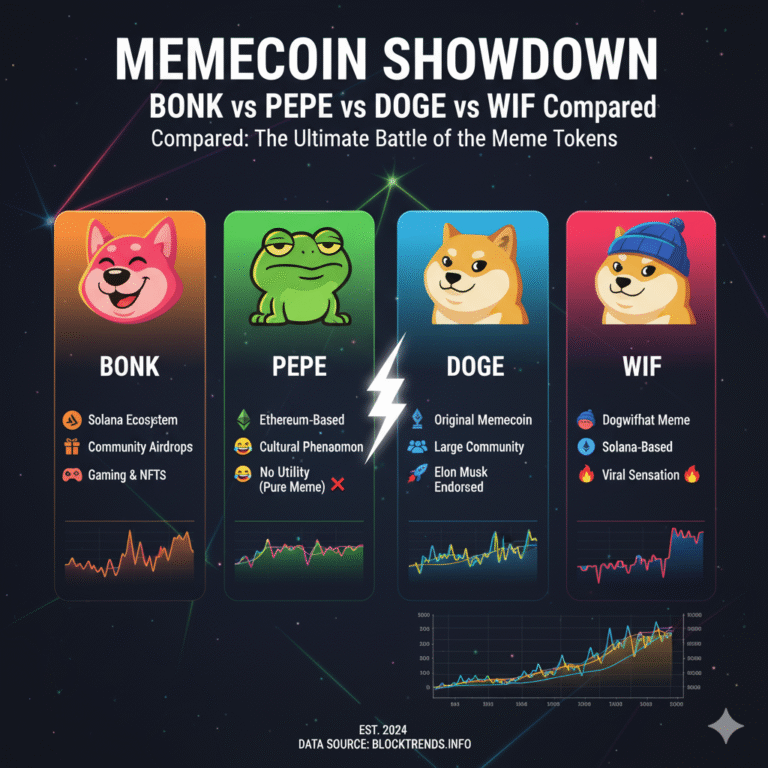
BONK vs PEPE vs DOGE vs WIF: A Comprehensive Comparison of Top Meme Coins in 2025

In the fast-paced world of cryptocurrencies, meme coins have carved out a unique niche. These digital assets, inspired by internet jokes, viral images, and cultural phenomena, often prioritize fun and community over traditional utility. While they can deliver explosive gains, they’re also known for high volatility. Throughout this article, we’ll compare four popular meme coins: BONK, PEPE, DOGE (Dogecoin), and WIF (dogwifhat). We’ll break down their origins, technical details, market performance, and investment considerations to help beginners decide if they’re worth exploring.

What Are Meme Coins?

Meme coins are cryptocurrencies born from online memes—humorous images, videos, or ideas that spread rapidly across social media. Unlike Bitcoin or Ethereum, which focus on technology like secure payments or smart contracts, meme coins thrive on hype, celebrity endorsements, and community engagement. In contrast to traditional cryptocurrencies, they often lack real-world applications but can skyrocket in value due to viral trends.

For example, imagine a funny dog picture turning into a billion-dollar asset. That’s the magic (and risk) of meme coins. Currently, in 2025, the meme coin market cap sits in the tens of billions (typically around $60–90 billion), fluctuating with overall market conditions according to CoinGecko. With DOGE still leading as the original, newer entrants like PEPE, BONK, and WIF have joined the scene. Each operates on different blockchains, appealing to diverse investor groups. To learn more about how meme coins have evolved, check out our complete guide to memecoins in 2025.

History and Origins of Each Meme Coin

Dogecoin (DOGE): The Pioneer

Dogecoin started in December 2013 as a joke. Created by software engineers Billy Markus and Jackson Palmer, it was forked from Litecoin and featured the famous “Doge” meme—a Shiba Inu dog with quirky captions like “much wow.” Initially, the goal was to mock the crypto hype of the time, but it quickly gained a loyal following for its lighthearted vibe. DOGE uses proof-of-work (Scrypt) and has a fixed annual issuance of approximately 5 billion DOGE per year, which makes it inflationary.

Elon Musk, CEO of Tesla, became a vocal supporter, tweeting about DOGE and even calling it his “favorite coin.” Consequently, this boosted its popularity, turning it from a parody into a serious contender. By 2025, DOGE remains the king of meme coins and is accepted for select Tesla merchandise (items marked “Dogecoin only”).

PEPE: The Frog Phenomenon

PEPE launched on Ethereum in April 2023 as a tribute to Pepe the Frog, a cartoon character from Matt Furie’s 2005 comic that became an internet sensation in the early 2000s. Notably, it has a “no tax” policy and a total supply of 420.69 trillion tokens. Moreover, the team has executed and publicized burn events that reduce supply over time.

The token exploded in popularity during the 2023 “memecoin season,” reaching billions in market cap at peaks. Subsequently, PEPE was listed on major exchanges including Binance in May 2023, which materially expanded liquidity. Its roadmap leans heavily into meme culture and exchange listings. While PEPE operates on Ethereum—a blockchain that has seen institutional adoption through ETFs—the token itself remains highly speculative.

BONK: Solana’s Community Dog

BONK debuted on Solana on Christmas Day 2022, as the first dog-themed coin on that blockchain. Inspired by DOGE and Shiba Inu, it was created “for the people, by the people” to revive liquidity on Solana after the FTX collapse. Impressively, half its supply was airdropped to the Solana community, and early trading started in late December 2022. The “BONK effect” coincided with SOL jumping approximately 36% in early January 2023 according to TradingView.

Furthermore, BONK aims to integrate with Solana apps, making it more than just a joke—it’s a tool for ecosystem growth. For a deeper understanding of Solana’s rise, read our analysis on why Solana is rising but still can’t kill Ethereum.

WIF (dogwifhat): The Hat-Wearing Sensation

WIF launched on Solana in late 2023, based on a 2019 viral image of a Shiba Inu dog in a pink knitted hat. Amusingly, it’s described simply as “literally just a dog wif a hat,” emphasizing pure meme appeal without complex features. The token gained traction amid Solana’s memecoin boom, at times flipping BONK in market cap during late-2024/early-2025 runs according to CoinMarketCap.

Important correction: The community raised funds to put the dog on the Las Vegas Sphere, but the appearance never materialized and the plan was eventually dropped with refunds discussed. Ultimately, it was not displayed on the Sphere, as reported by Protos, CoinDesk, and Decrypt.

Technical Specifications: Blockchain, Supply, and More

Meme coins differ in their underlying technology, which affects speed, fees, and scalability. Understanding these differences is crucial for investors.

DOGE: Runs on its own blockchain (proof-of-work, Scrypt). The circulating supply was approximately 151.4 billion DOGE on October 19, 2025. Additionally, issuance is ongoing with around 5 billion DOGE per year (no hard cap) according to CoinMarketCap.

PEPE: Built on Ethereum (ERC-20). Total supply 420.69 trillion; “no tax” policy; burns have occurred. However, high Layer-1 gas fees can be a drawback, but Layer-2 solutions help mitigate this issue. The Ethereum network has matured significantly, with institutional investors entering through ETF products, though this institutional interest hasn’t translated to meme coins yet.

BONK: On Solana (fast, low fees). Circulating supply approximately 81.84 trillion; max approximately 88.87 trillion (per CoinMarketCap as of October 2025). Importantly, 50% of supply was airdropped.

WIF: Also Solana-based. Fixed supply approximately 998.84 million per CoinMarketCap.

In summary, DOGE and PEPE are on established but (at Layer-1) comparatively slower and fee-heavier chains. In contrast, BONK and WIF leverage Solana’s efficiency. For a comprehensive comparison of blockchain metrics, see our Ethereum vs Solana vs Polygon vs TON chain comparison.

Market Performance in 2025

As of October 2025, here’s how they perform based on data from CoinMarketCap:

DOGE:

  • Market Cap: ~$29.58 billion (October 19, 2025)
  • Current Price: $0.1953
  • All-Time High: $0.7376 (May 2021)
  • 24-Hour Change: Varies

PEPE:

  • Market Cap: ~$3 billion (range)
  • Current Price: Varies
  • All-Time High: ~$0.0000172–0.0000177 (May 2024)
  • 24-Hour Change: Volatile

BONK:

  • Market Cap: ~$1.19 billion (example current reading)
  • Current Price: Varies
  • All-Time High: $0.00005916 (November 20, 2024)
  • 24-Hour Change: Tied to SOL cycles

WIF:

  • Market Cap: ~$0.5–0.6 billion (range)
  • Current Price: Varies
  • All-Time High: ~$4.85 (March 2024)
  • 24-Hour Change: High volatility

Note: Market caps and current prices are moving targets; these snapshots confirm the scale and all-time highs.

Community and Adoption

Community is the lifeblood of meme coins. Without strong community support, these tokens would likely fail.

DOGE boasts millions of followers worldwide. Notably, Tesla accepts DOGE for select merchandise (items labeled “Dogecoin only”).

PEPE skews to meme-native culture and is listed on Binance. Its community thrives on social media platforms.

BONK focuses on Solana integration, with tools like BonkBot for trading. This ecosystem approach sets it apart from pure meme plays.

WIF thrives on absurdity and viral momentum. Correction: The Las Vegas Sphere display never happened despite fundraising; that claim was premature and incorrect according to CoinDesk.

Pros and Cons of Investing in These Meme Coins

Investing in meme coins can be thrilling, but it’s highly speculative. Here’s a balanced view:

Pros:

High Growth Potential: All have delivered multi-X returns in past cycles. For instance, WIF’s March 2024 peak near $4.8 is a case in point according to CoinMarketCap.

Community-Driven: Strong holder bases can sustain attention and drive momentum. This grassroots support often translates to resilience during market downturns.

Low Entry Barrier: Sub-$1 unit prices feel approachable for beginners (though unit bias can be misleading). New investors often prefer assets they can buy in whole numbers.

Fun Factor: Endorsements from figures like Elon Musk and DOGE boost visibility, as reported by Engadget. Celebrity attention can drive significant price action.

Cons:

Extreme Volatility: 50%+ drawdowns are common in the meme coin space. Therefore, investors must prepare for significant price swings.

Limited Utility: Many rely primarily on narrative and community rather than real-world use cases. Unlike Bitcoin and Ethereum, most meme coins lack fundamental value propositions. While Ethereum has attracted institutional investment through ETFs, meme coins remain purely retail-driven speculative assets.

Regulatory Risks: Speculative tokens are increasingly on regulators’ radar globally. Government crackdowns could impact prices severely.

Intense Competition: New meme coins constantly emerge, fragmenting attention and liquidity. This makes sustained success challenging.

For beginners: Start small, research communities on X (formerly Twitter), and use tools like CoinMarketCap and CoinGecko for tracking prices and market data. Additionally, never invest funds you can’t afford to lose.

Direct Comparison: Which One Stands Out?

For Stability: DOGE—proven track record since 2013 and ongoing mainstream visibility via Tesla merch. Its longevity gives it an edge.

For Explosive Gains: WIF or PEPE—historically higher volatility and upside potential according to CoinMarketCap. However, this comes with proportionally higher risk.

For Ecosystem Ties: BONK—deep Solana integration and tooling via BonkBot. This practical utility distinguishes it from pure speculation plays.

Beginner-Friendly: DOGE, with simple mechanics and broad awareness documented on CoinMarketCap. New investors find it easier to understand and access.

If you’re interested in ecosystem comparisons, check out our analysis of Ethereum vs Solana NFTs to understand the broader blockchain landscape.

Future Outlook for 2025 and Beyond

With Bitcoin’s halving cycles influencing markets, meme coins could rally during bull runs. Nevertheless, price targets like “DOGE $0.50, PEPE $0.00005, BONK $0.0001, WIF $5” are purely speculative and not consensus forecasts—treat them as scenarios, not guarantees. Performance will likely track: Solana’s health (BONK/WIF), Ethereum fees and upgrades (PEPE), and celebrity-driven attention (DOGE) according to market analysis on CoinMarketCap.

Furthermore, the evolution of blockchain technology will play a crucial role. Improvements in scalability and transaction costs could benefit certain meme coins more than others. Meanwhile, regulatory clarity (or lack thereof) will significantly impact the entire sector.

Conclusion: Should You Invest in BONK, PEPE, DOGE, or WIF?

Meme coins like BONK, PEPE, DOGE, and WIF offer excitement but demand extreme caution. DOGE is the safer bet for newcomers, while others provide higher-risk, higher-reward opportunities. Always use verified data from sources like CoinMarketCap and CoinGecko. Moreover, diversify your portfolio, and never invest more than you can afford to lose.

DYOR (Do Your Own Research): Before investing in any cryptocurrency, especially volatile meme coins, conduct thorough research. Read whitepapers, join community forums on platforms like Reddit and X, check official project websites, and verify information across multiple reputable sources. The cryptocurrency market is highly unpredictable, and past performance does not guarantee future results. Ultimately, make informed decisions based on your own financial situation, risk tolerance, and investment goals.

In 2025, as crypto continues to mature, these meme coins could evolve into more substantial projects—or fade into obscurity. Stay informed via platforms like X and aggregators such as CoinMarketCap and CoinGecko for the latest market updates and developments. For more insights into the evolving cryptocurrency landscape, explore our comprehensive guide to memecoins.


Disclaimer: This article is for informational purposes only and does not constitute financial advice. Cryptocurrency investments are highly risky and volatile. Always conduct your own research and consult with a qualified financial advisor before making investment decisions.

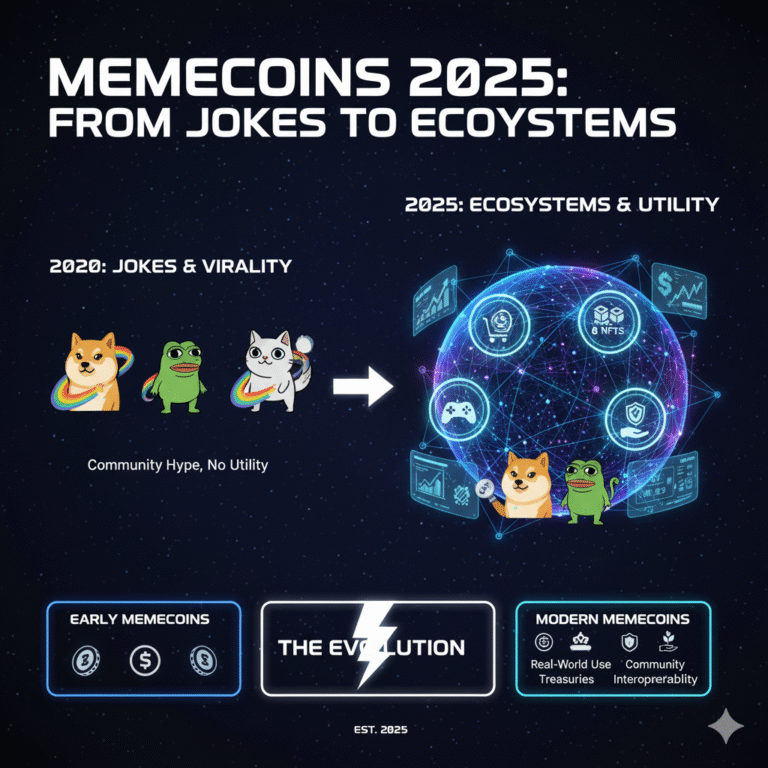
Memecoins 2025: From Jokes to Ecosystems – The Complete Guide

In the fast-paced world of cryptocurrency, memecoins have transformed from lighthearted internet jokes into significant players in the digital economy. As of 2025, sector estimates commonly place memecoins at roughly 5–7% of the total crypto market, or about $80–90 billion, representing a remarkable evolution from their humble beginnings.

What started as humorous experiments, like Dogecoin’s creation in 2013, has evolved into robust ecosystems offering real utility, community-driven governance, and even integration with decentralized finance (DeFi). Galaxy Digital’s 2025 research frames memecoins as a “permanent fixture” of crypto markets, signaling a fundamental shift in how the industry perceives these community-driven tokens.

This comprehensive guide explores the journey of memecoins in 2025, their transformation from mere memes to structured projects, and what beginners need to know to navigate this exciting yet volatile space.

What Are Memecoins? Understanding the Basics

Memecoins are cryptocurrencies inspired by internet memes, viral trends, or cultural phenomena. Unlike traditional coins like Bitcoin (BTC), which focus on being a store of value, or Ethereum (ETH), which powers smart contracts, memecoins derive their value primarily from community hype, social media buzz, and emotional appeal.

Think of memecoins as digital collectibles fueled by fun and speculation. They often start with low prices—sometimes fractions of a cent—making them accessible for beginners. However, their volatility is extreme; prices can skyrocket overnight due to a viral tweet or plummet if interest fades. For those new to trading these assets, understanding which crypto exchanges work best for beginners is essential before diving in.

The scale of memecoin creation in 2025 is staggering. Multiple analyses show hundreds of thousands up to over a million new meme tokens being created monthly early in the year, and more than 13 million memecoins launched across 2025 overall, highlighting both the popularity and the extreme churn in this market segment.

The harsh reality: Studies of Pump.fun/Solana tokens find that approximately 98–99% never “graduate” or lose over 90% from their all-time high, underscoring the extreme attrition rate. For beginners, this means focusing on established projects with strong communities rather than chasing every new launch.

Learn more about cryptocurrency fundamentals:

The Origins: From Dogecoin to Cultural Phenomena

Memecoins trace their roots back to Dogecoin (DOGE), launched in 2013 as a parody of Bitcoin featuring the Shiba Inu dog from the “Doge” meme. What began as a joke transformed into something far more substantial, particularly after endorsements from high-profile figures like Elon Musk propelled it to mainstream fame.

By January 1, 2025, Dogecoin’s market cap stood around $47.8 billion (rank #7)—firmly among the top crypto assets at that snapshot, demonstrating its staying power in the cryptocurrency ecosystem.

Following Dogecoin’s success, Shiba Inu (SHIB) emerged in 2020 as the self-proclaimed “Dogecoin killer.” It quickly built a massive community and expanded into DeFi with ShibaSwap, a decentralized exchange. Shiba Inu’s L2 “Shibarium” went live in August 2023 and continues to be documented as the ecosystem’s Layer-2 in 2025. SHIB’s market cap exceeded $10 billion at the January 1, 2025 snapshot.

Other notable early examples include Pepe (PEPE), inspired by the Pepe the Frog meme, which briefly topped approximately $10 billion market cap during its 2024 surge before retracing, illustrating memecoin cyclicality.

These origins demonstrate how memecoins leverage emotional resonance—the fun, relatable aspect that draws people in. They represent digital communities rather than just tokens. For beginners, this means value often comes from narrative and hype, not just underlying technology.

The Evolution in 2025: From Speculation to Utility

By 2025, memecoins are no longer dismissed as mere jokes. Galaxy Digital’s October 2025 report explicitly argues they’ve become a lasting component of the crypto economy, with infrastructure (e.g., Pump.fun) industrializing token creation and liquidity. The key shift? From pure speculation to utility-driven models.

Real Utility Examples

Shiba Inu integrates DeFi and its own L2 (Shibarium), with official developer docs active in 2025. The Layer-2 scaling solution represents the type of infrastructure innovation happening across the broader Ethereum ecosystem, as discussed in our analysis of essential Ethereum tools every user must know.

FLOKI positions Valhalla as its NFT/metaverse game and highlights DeFi tools in its whitepaper and site. This integration of NFTs within memecoin ecosystems reflects the ongoing relevance of NFTs on Ethereum, even as the market has evolved significantly from its 2021 peak.

BONK on Solana has combined DeFi integrations with a DAO-approved plan to burn 1 trillion tokens upon reaching approximately 1 million holders, representing a milestone-triggered mechanism for token economics.

New Success Metrics

KPIs that matter now include trading/liquidity metrics, on-chain holder counts, dev activity, listing/”graduation” rates, and governance participation rather than one-off price spikes. The market has become more sophisticated, with investors looking beyond simple price movements to evaluate long-term viability.

Median hold times on Solana have shrunk dramatically (from approximately 300 seconds to approximately 100 seconds), reflecting highly mercenary flows, indicating the speculative nature remains intense even as utility increases. Understanding how Solana compares to Ethereum, Polygon, and TON in terms of chain metrics helps contextualize where memecoins thrive best.

Explore DeFi and Layer-2 solutions:

Top Memecoins to Watch in 2025

Based on market data and trends, here are the leading memecoins frequently cited in 2025:

Dogecoin (DOGE): The original memecoin with approximately $47.8 billion market cap at the January 1, 2025 snapshot (Top-10). Its longevity and established community make it a relative safe haven in the memecoin space.

Shiba Inu (SHIB): Over $10 billion market cap at the same snapshot; ongoing L2 (Shibarium) development. The ecosystem approach distinguishes SHIB from pure meme plays.

Pepe (PEPE): Saw approximately $10 billion market cap during November 2024 rally before retracing; strong community and liquidity. Demonstrates the cyclical nature of memecoin valuations.

FLOKI: Building out Valhalla and DeFi components per official docs/site. Represents the utility-driven evolution of memecoins.

BONK: Large token-holder base with a DAO-approved 1 trillion token burn contingent on 1 million holders; deep integration with Solana’s DeFi stack.

Across ecosystems like Ethereum, Solana, Base, and Cardano, memecoins like WIF, POPCAT, and SNEK have gained prominence. Rankings shift frequently with market cycles, so always verify current data through reliable trackers.

Track live memecoin data:

Building Ecosystems: The New Frontier

The defining story of 2025 is memecoins building comprehensive ecosystems beyond simple token launches. Shiba Inu’s ShibaSwap/Shibarium stack supports swapping, staking and L2-based dApp activity. FLOKI’s Valhalla pushes a metaverse/gameplay angle. On Solana, BONK integrates widely with DeFi and community tooling; the 1 trillion token burn is a DAO-approved, milestone-triggered mechanism.

The scale of memecoin creation has reached industrial levels. Creation counts run into the millions via Pump.fun alone on Solana, representing a fundamental shift in how tokens are launched and distributed. This modular approach to token infrastructure mirrors innovations happening across the broader blockchain landscape, similar to what Celestia has pioneered with modular data availability.

This ecosystem approach marks a maturation of the memecoin sector, moving from single-purpose tokens to comprehensive platforms with multiple use cases and revenue streams.

Critical Risks and Challenges for Beginners

Despite significant growth, memecoins remain highly speculative investments. After a late-2024 peak, the sector saw sharp corrections through 2025; issuance continued nonetheless, with over 13 million memecoins created this year.

Scams are rampant in this space. Platform data show the vast majority of tokens either fail to list, fail to retain liquidity, or drop over 90% from highs. The barrier to entry for token creation is so low that bad actors can easily launch projects with no intention of building anything sustainable.

Essential Safety Guidelines for Beginners

Always DYOR (Do Your Own Research). Look for transparent teams, audited code, and active communities. Verify official channels through multiple sources before investing.

Diversify your holdings. Don’t put all your capital into one memecoin, no matter how promising it appears. The failure rate is simply too high.

Use risk controls. Only invest what you can afford to lose completely. Set stop-losses if trading, and never use leverage on memecoin positions.

Start small. Research projects on reputable market trackers, check community strength on platforms like X (formerly Twitter), and use compatible wallets such as MetaMask for EVM chains. For beginners looking to purchase their first memecoins, choosing from trusted crypto exchanges is the critical first step.

Educational resources for safe crypto investing:

Future Outlook: What’s Next for Memecoins

Looking ahead, memecoins will likely remain a powerful yet volatile market narrative. Emerging trends include cross-chain expansion, improved creator tools, and better token-launch guardrails to protect investors.

What is well-documented: industrialized issuance (e.g., Pump.fun) and sticky community culture continue to shape user acquisition and on-chain activity. The infrastructure for launching and trading memecoins has become sophisticated, democratizing token creation while simultaneously increasing the noise-to-signal ratio.

Treat price “supercycle” forecasts skeptically. Forward-looking price targets are opinions, not facts. The fundamental nature of memecoins—driven by community sentiment and viral trends—makes long-term price prediction essentially impossible.

What seems certain is that memecoins have carved out a permanent niche in the cryptocurrency ecosystem. Whether they continue to evolve toward greater utility or remain primarily speculative vehicles will depend on regulatory developments, market maturation, and community innovation.

Conclusion: Navigating the Memecoin Landscape

Memecoins have undeniably transformed from internet jokes into significant crypto market participants, representing billions in market capitalization and attracting millions of participants. Their evolution toward utility-driven models and ecosystem building demonstrates genuine innovation beyond pure speculation.

However, the extreme volatility, high failure rates, and prevalence of scams mean beginners must approach this sector with caution and thorough research. Focus on established projects with transparent teams, real utility, and active communities. Start small, diversify, and never invest more than you can afford to lose.

The memecoin phenomenon reflects broader crypto trends: the power of community, the importance of narrative, and the democratization of financial instruments. Whether you choose to participate or observe from the sidelines, understanding memecoins provides valuable insights into the evolving blockchain ecosystem.


Key Resources for Continued Learning:

Related Articles:

Disclaimer: This article is for informational purposes only and does not constitute financial advice. Cryptocurrency investments carry substantial risk. Always conduct your own research and consult with financial professionals before making investment decisions.

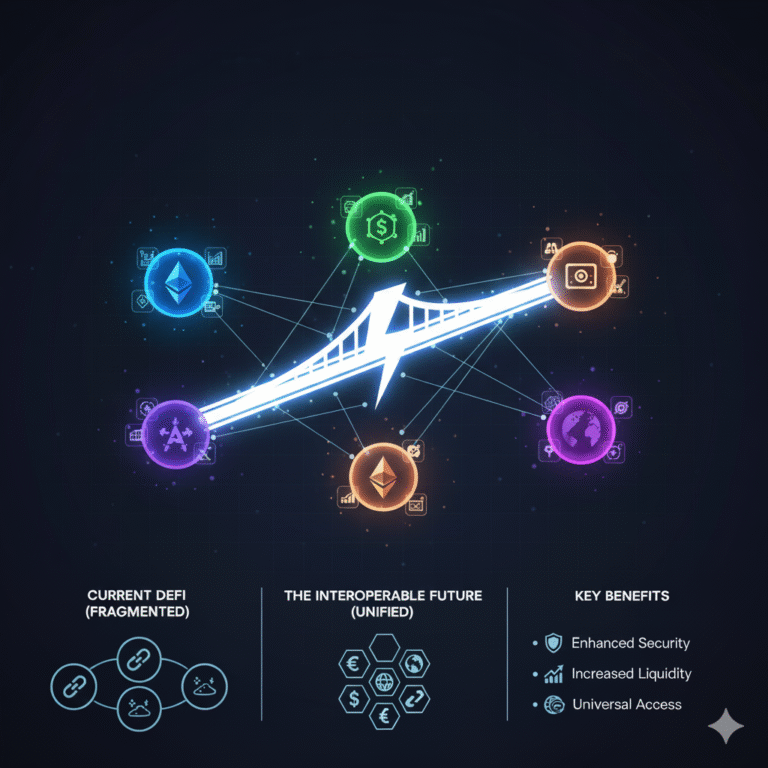
How Interoperability Will Change DeFi: Unlocking the Future of Decentralized Finance

0

In the world of decentralized finance (DeFi), innovation moves at lightning speed. But one major hurdle has held it back: blockchain silos. Imagine trying to send money from one country to another without any exchange system—it’s inefficient and limiting. That’s where blockchain interoperability comes in. This technology allows different blockchains to “talk” to each other, share data, and move assets seamlessly. As DeFi grows, interoperability isn’t just a nice-to-have; it’s set to transform how we lend, borrow, trade, and invest in crypto.

This article explores how interoperability will reshape DeFi, making it more accessible, efficient, and powerful. We’ll break it down in simple terms, with real-world examples, so even beginners can grasp the big picture. By the end, you’ll see why experts believe this shift could drive mass adoption of DeFi.

What Is Blockchain Interoperability?

At its core, blockchain interoperability is the ability for separate blockchain networks to communicate and interact. Think of blockchains like Ethereum, Solana, and Binance Smart Chain as isolated islands. Without bridges, assets and data can’t move between them easily. Interoperability builds those bridges, enabling cross-chain transactions without needing intermediaries.

There are a few key ways this happens:

Cross-Chain Bridges: Tools like Wormhole or the BNB Chain Bridge let users transfer tokens between networks. Wormhole commonly uses a lock-and-mint model that issues wrapped representations on the destination chain. To learn more about the most secure options available today, check out our guide on cross-chain bridges in 2025.

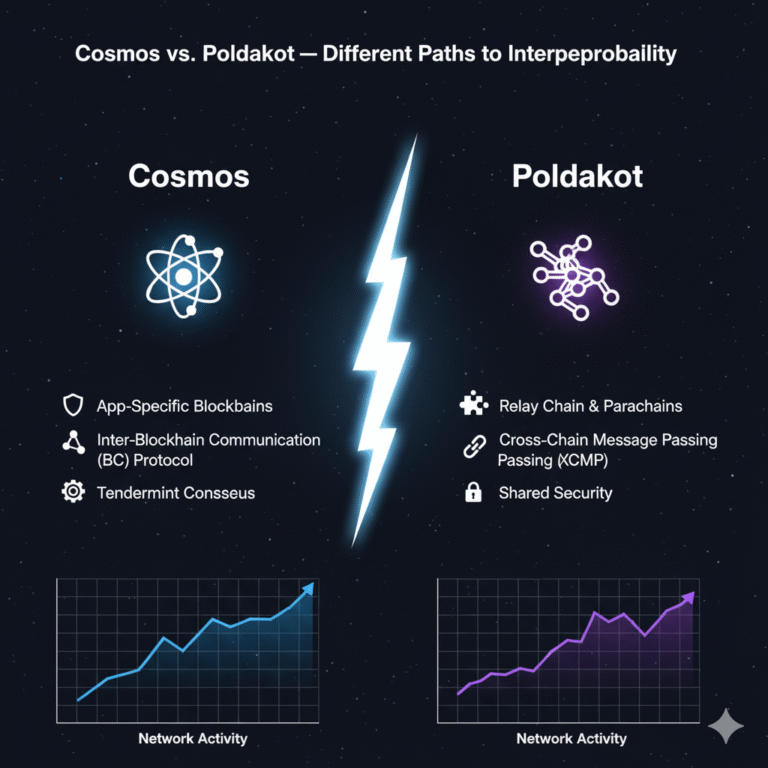
Protocols for Communication: Systems such as Cosmos’ Inter-Blockchain Communication (IBC) or Polkadot’s XCM/XCMP allow secure message passing for data and asset transfers. These two ecosystems take different approaches to solving interoperability—learn more in our comparison of Cosmos vs Polkadot: Different Paths to Interoperability.

Wrapped Assets: Projects like Wrapped Bitcoin (WBTC) represent assets from one chain (Bitcoin) on another (Ethereum), making them usable in DeFi apps.

Why does this matter for DeFi? DeFi includes services like lending (Aave), trading (Uniswap), and yield farming. Right now, these are often locked to single chains, fragmenting liquidity and users. Interoperability changes that by creating a connected ecosystem.

The Current Challenges in DeFi Without Interoperability

DeFi has exploded, with billions locked in protocols according to DeFiLlama. But fragmentation creates problems:

Limited Liquidity: If you’re on Ethereum, you can’t easily access Solana’s fast, cheap trades. This splits capital pools, leading to higher slippage and worse prices.

Poor User Experience: Switching chains means dealing with multiple wallets, bridges, and fees. Beginners often get frustrated and stick to centralized exchanges like Binance or Coinbase.

Innovation Barriers: Developers build in silos, reinventing features instead of combining the best from each chain.

Security Risks: Manual bridging can expose users to hacks or scams. Bridge exploits have historically been a major vector in crypto, as documented by Investopedia and Chainalysis.

These issues slow DeFi’s growth. As one expert notes, “Siloed blockchains are holding DeFi back.” Interoperability addresses them head-on, paving the way for a more unified financial system.

Key Benefits of Interoperability in DeFi

Interoperability brings tangible advantages that could supercharge DeFi. Here’s how:

Enhanced Liquidity: Assets flow freely across chains, creating deeper pools. For example, a user could provide liquidity on Ethereum and borrow against it on Solana, boosting overall efficiency.

Better Capital Efficiency: Funds aren’t trapped. You can move collateral seamlessly, maximizing yields without high costs. This is particularly important for lending protocols that manage risk across multiple chains.

Improved User Experience: No more chain-hopping headaches. Interoperable wallets like MetaMask and Phantom are evolving to let you interact with DeFi as if it’s one big network.

Increased Innovation: Developers mix and match protocols. Imagine a lending app on one chain using price oracles from another for accurate rates.

Broader Access: More users, including institutions, can join. Cross-chain solutions like Chainlink CCIP provide standardized rails for compliant, scalable flows.

These benefits aren’t theoretical. As DeFi evolves, interoperability fosters novel financial products and improves access according to industry research from Messari and The Block.

How Interoperability Will Transform DeFi

Interoperability isn’t just about moving tokens—it’s about reimagining finance.

Revolutionizing Liquidity and Trading

Today, DeFi trading is chain-specific. Interoperability creates unified liquidity pools across networks. For instance, automated market makers (AMMs) like Uniswap could pull liquidity from multiple chains, reducing spreads and improving prices.

Skate is developing an AMM that maintains a single, canonical pricing curve across multiple chains (e.g., Solana and Ethereum), aiming for seamless trades with unified liquidity.

Enabling Cross-Chain Lending and Borrowing

Lending protocols like Aave are multi-chain, but true interoperability takes it further. Users could collateralize assets on one chain and borrow on another, optimizing for the best rates. Understanding how lending protocols manage risk in DeFi becomes even more critical in a cross-chain environment.

Blend Capital is a Stellar-based lending protocol enabling customizable lending pools; in practice it integrates within Stellar’s payments/stablecoin ecosystem rather than serving as a general cross-chain borrowing hub.

Boosting Innovation and New Use Cases

Interoperability unlocks composability—where protocols “plug in” to each other. A user might deposit into an AMM, use LP tokens as collateral for a loan, and stake the borrowed assets elsewhere, all cross-chain.

Real-world applications include:

  • Cross-Chain NFTs: You can bridge or issue NFTs using “omnichain” standards (e.g., LayerZero ONFT) to move or list representations across networks; it’s not a direct sale of the original Ethereum NFT on a Solana marketplace without bridging.
  • Scalability Solutions: Offload transactions to faster chains while anchoring to secure ones—helped by cross-chain messaging frameworks (e.g., Chainlink CCIP, LayerZero). Projects like NEAR Protocol have also made significant strides in solving scalability through innovative sharding solutions.
  • Institutional DeFi: Tools like idOS focus on portable identity and onboarding across apps/chains, supporting compliant capital flows.

As one post highlights, “Interoperability bridges the gap for institutional DeFi.”

Enhancing Security and Scalability

While bridges have faced hacks, projects are working on more trust-minimized designs (e.g., zero-knowledge-secured interoperability layers like Union). To be precise, these aim to reduce trust assumptions rather than eliminate all risk. Layer-2s (e.g., Optimism, Arbitrum) can pair with interoperability rails for faster, cheaper transactions, as covered by Blockworks.

Optimism’s approach to scaling Ethereum through its Superchain ecosystem demonstrates how layer-2 solutions can work together seamlessly, creating an interconnected network of chains that share security and liquidity. This scalability push could handle trillions in value, making DeFi a real alternative to traditional banks.

Real-World Examples of Interoperability Projects in DeFi

Several projects are leading the charge:

Cosmos IBC: Connects chains in its ecosystem for secure asset transfers; IBC v2 (2025) simplifies connectivity and expands routing beyond Cosmos to other stacks. Cosmos Hub serves as the central hub for this interconnected network.

Polkadot XCM/XCMP: A messaging format for communication between consensus systems; XCMP underpins parachain-to-parachain interactions. To understand the philosophical and technical differences, read our detailed analysis on Cosmos vs Polkadot.

Wormhole (Portal Token Bridge): A widely used cross-chain messaging/bridging stack; its Token Bridge typically locks the source asset and mints a wrapped asset on the target chain. See how it ranks among the top 10 most secure cross-chain bridges in 2025.

Persistence One: Building Bitcoin-centric interoperability (“BTCfi”) to bring BTC into DeFi use cases.

Chainlink: Beyond oracles, CCIP provides cross-chain messaging and token movement rails adopted by multiple ecosystems including Avalanche, Polygon, and others.

Optimism Superchain: An emerging model where multiple Layer-2 chains share the same bridge, security, and communication layer, enabling native interoperability between chains in the ecosystem. Learn more about Optimism’s Superchain vision.

These examples show interoperability in action, from basic transfers to advanced financial products.

Challenges and Solutions in Implementing Interoperability

No tech is perfect. Key challenges include:

Security Risks: Bridges can be vulnerable; designs using minimized trust assumptions (including ZK proofs) are in development to strengthen guarantees, as discussed on Blockworks and CoinDesk. For a comprehensive overview of the safest options, consult our guide on cross-chain bridges in 2025.

Complexity: Developers need convenient standards and APIs. For instance, EIP-7930 (Interoperable Addresses) is a proposed standard to describe addresses across chains—useful, but still evolving.

Regulatory Hurdles: Cross-chain compliance is tricky, but privacy-preserving identity layers (e.g., idOS) aim to address reusable KYC/identity across apps and chains.

Solutions are emerging, with infrastructure platforms like Enso Finance building unified execution/”shortcuts” layers that orchestrate complex multi-step DeFi flows across protocols and chains, as reported by Delphi Digital.

The Future Outlook: DeFi’s Interconnected Era

By 2025 and beyond, many expect interoperability to become “the new standard” according to analysis from Coin Bureau and Bankless. We’ll see:

  • Unified ecosystems where chains specialize (e.g., Solana for speed, Ethereum for security), while cross-chain rails stitch them together.
  • Mass adoption as users enjoy seamless experiences without needing to understand the underlying complexity.
  • Integration with AI and RWAs (Real World Assets) for smarter, more inclusive finance, as discussed by a16z crypto.

As one analyst puts it, “Interoperability isn’t a feature—it’s diplomacy.” It prevents “chain wars” and builds a collaborative Web3.

In summary, interoperability will make DeFi more liquid, user-friendly, and innovative. For beginners, it’s like upgrading from isolated apps to a fully connected internet of finance. As projects mature, watch for explosive growth. If you’re new to DeFi, start exploring multi-chain wallets—the future is cross-chain.


Key Takeaways

  • Blockchain interoperability enables different networks to communicate and share assets seamlessly
  • Current DeFi fragmentation limits liquidity, user experience, and innovation potential
  • Cross-chain bridges, protocols like IBC and XCM, and wrapped assets are making interoperability possible
  • Benefits include enhanced liquidity, better capital efficiency, improved UX, and increased innovation
  • Leading projects like Cosmos, Polkadot, Wormhole, Chainlink, and Optimism Superchain are pioneering interoperable solutions
  • Security challenges remain, but trust-minimized designs and standards are evolving
  • The future of DeFi is interconnected, with specialized chains working together through cross-chain infrastructure

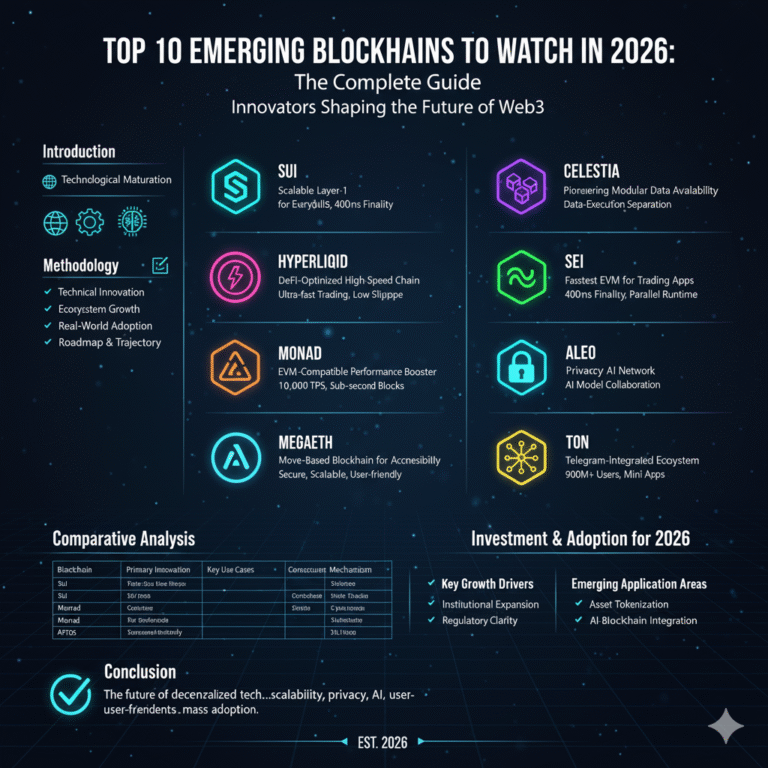
Top 10 Emerging Blockchains to Watch in 2026

As the blockchain industry evolves, 2026 is poised to be a pivotal year for innovation in decentralized technologies. Emerging blockchains are gaining momentum through unique features, scalability improvements, and real-world applications, distinguishing them from established giants like Bitcoin and Ethereum. These platforms address key challenges such as speed, privacy, cost, and integration with AI or DeFi, making them attractive for developers, investors, and users alike.

This comprehensive guide explores the top 10 emerging blockchains to watch in 2026, based on verified data from industry reports, expert analyses, and recent developments. Whether you’re a beginner curious about crypto or an experienced trader, these insights will help you navigate the rapidly changing landscape of decentralized technology.

1. Sui: The Scalable Layer-1 for Everyday Use

Sui is a Layer-1 blockchain designed to make Web3 as accessible as Web2, delivering high speed and low costs for everyday users. The platform achieves impressive performance metrics, with up to 297,000 transactions per second (TPS) in controlled tests and an average finality time of approximately 400-480 milliseconds, making it ideal for gaming, finance, and decentralized applications.

Key Technical Features:

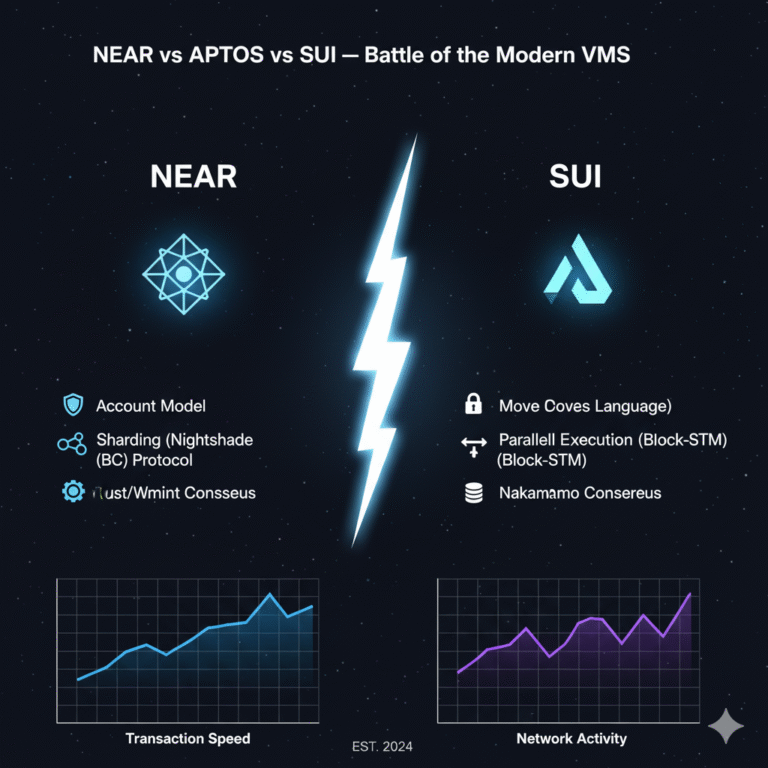
The blockchain utilizes the Move programming language, which ensures secure smart contracts with less code complexity than traditional alternatives. This design choice reduces vulnerabilities and makes development more accessible to teams building on the platform. To understand how Sui compares to other modern blockchains, check out this detailed comparison of NEAR vs Aptos vs Sui.

Why Watch Sui in 2026?

According to Sui’s official metrics dashboard, the network has surpassed 200 million total active accounts, demonstrating significant user adoption. Strategic partnerships, such as the collaboration with CCP Games for EVE Frontier, signal strong growth potential in the gaming sector. For beginners, think of Sui as a fast highway for digital assets where you can send money or NFTs without waiting or paying high fees.

Recent developments include a flourishing ecosystem with funded projects and grants supporting innovation. As DeFi and NFTs continue to expand, Sui’s affordability and performance position it strongly for mass adoption. Learn more about how Sui and Aptos are revolutionizing blockchain with Move language.

External Resources:

2. Hyperliquid: DeFi-Optimized High-Speed Chain

Hyperliquid is a Layer-1 blockchain laser-focused on decentralized finance (DeFi), offering ultra-fast trading with low slippage. The platform specializes in perpetual futures and other derivatives, processing high volumes with exceptional efficiency.

Unique Funding Model:

Unlike many blockchain projects, Hyperliquid notably eschewed traditional venture capital backing. Instead, the project launched its HYPE token via an airdrop to users, demonstrating a community-first approach to distribution and governance.

Why Hyperliquid is Emerging in 2026:

The team has introduced HyperEVM to broaden application support beyond its initial DeFi focus. With its HYPE token and ecosystem airdrops, Hyperliquid is positioned for expansion, especially in prediction markets and perpetual trading. For newcomers, imagine trading stocks on a blockchain without delays—Hyperliquid makes that possible with near-instant settlement and low costs.

Recent updates have expanded the platform’s capabilities, making it more attractive to developers building sophisticated financial applications.

External Resources:

3. Monad: EVM-Compatible Performance Booster

Monad is an EVM-compatible Layer-1 blockchain targeting approximately 10,000 TPS and sub-second finality while maintaining decentralization. The platform uses optimistic parallel execution and a custom database called MonadDB to handle massive scale without requiring high-end hardware from validators.

Strong Financial Backing:

Monad Labs raised $225 million in April 2024, led by Paradigm, with earlier seed funding secured in 2023. The mainnet and token claims opened in October 2025, marking a significant milestone for the project.

Why Watch Monad in 2026?

Programs like the Monad Founder Residency and a global pitch competition offering $1 million in prizes demonstrate a booming ecosystem. For beginners, think of Monad as Ethereum on steroids—you can run the same applications but faster and cheaper, without sacrificing compatibility with existing tools and infrastructure.

The platform’s approach to parallel execution allows it to process multiple transactions simultaneously, dramatically increasing throughput while maintaining the security guarantees developers expect from EVM-compatible chains. For an in-depth analysis of how Monad compares to other modular approaches, explore this comprehensive comparison of Celestia vs Monad vs EigenLayer.

External Resources:

4. MegaETH: Extreme Throughput for Real-Time Apps

MegaETH is an EVM-compatible Layer-2 solution aiming for approximately 100,000 TPS and roughly 10-millisecond block times, enabling real-time experiences for gaming and high-frequency trading. The platform leverages hardware optimizations and advanced execution techniques to achieve these ambitious targets.

Investment and Development:

MegaETH is backed by prominent investors including Dragonfly and notable angel investors, with reports also mentioning participation from Ethereum co-founder Vitalik Buterin. The testnet has demonstrated very high throughput, generating significant attention in the blockchain community.

Why MegaETH is Emerging:

A public sale and ecosystem growth initiatives are driving momentum for the project. For beginners, MegaETH represents a supercharged network where applications feel instant, eliminating the lag that has historically plagued blockchain-based gaming and trading platforms. Understanding why Ethereum remains popular in emerging markets helps contextualize the importance of Layer-2 solutions like MegaETH.

It’s important to note that the performance figures are based on team targets and testnet numbers; mainnet realities may differ as the network scales with real-world usage patterns.

External Resources:

5. Aptos: Move-Based Blockchain for Accessibility

Aptos is a Move-based Layer-1 blockchain emphasizing security and scalability, with user-friendly tools like Petra Wallet and comprehensive developer SDKs, including Unity integrations for gaming. The platform offers advanced features such as randomness APIs and easy onboarding mechanisms to lower barriers to entry.

Major Partnerships:

Aptos has secured strategic partnerships with technology giants including Microsoft (Azure OpenAI integration), Alibaba Cloud, and NBCUniversal, demonstrating enterprise-level confidence in the platform’s capabilities.

Strong Financial Foundation:

Aptos raised approximately $350 million across 2022 funding rounds, including a $200 million seed round led by a16z and a $150 million Series A led by FTX Ventures and Jump Crypto.

Why Watch Aptos in 2026?

Expansions in the Asia-Pacific region with Alibaba Cloud and initiatives like Backlot Club with NBCUniversal point to significant growth in consumer applications, identity solutions, and DeFi. For beginners, Aptos enables you to log in with familiar accounts to use digital assets securely, bridging Web2 and Web3 experiences. Discover more about how Sui and Aptos are revolutionizing blockchain with the Move language.

External Resources:

6. Celestia: Pioneering Modular Data Availability

Celestia is the first live modular data availability (DA) network, separating data availability and consensus from execution. This architecture allows anyone to launch rollups more easily and cost-effectively than traditional monolithic blockchain designs.

Funding and Development:

The project raised $55 million across Series A and B rounds to build out the modular blockchain stack, attracting support from prominent crypto investors.

Why Celestia is Emerging:

Celestia serves as the “building blocks” layer for modular chains. The platform’s role is expanding through integrations with projects like Arbitrum Orbit and Rollup-as-a-Service (RaaS) providers that enable teams to deploy custom rollups in minutes rather than months.

For those new to blockchain technology, think of Celestia as the foundation that makes it easier and cheaper for developers to create their own customized blockchains without starting from scratch. Read about Celestia’s mainnet year one and lessons learned from the first modular data availability network. For a deeper understanding of modular architecture, explore this comprehensive comparison of modular blockchains.

External Resources:

7. Sei: Fastest EVM for Trading Apps

Sei positions itself as the fastest EVM Layer-1, citing approximately 400-millisecond finality and targets of 200,000+ TPS with Sei Giga. The chain uses a parallelized EVM and Twin-Turbo consensus to optimize specifically for high-frequency trading applications.

Notable Backing:

Sei has secured investment from major players including Coinbase Ventures, Jump Crypto, Multicoin Capital, and Circle, demonstrating strong institutional confidence.

Technical Note:

Realized mainnet TPS varies based on workload conditions; vendor claims typically reflect laboratory or test settings rather than sustained real-world performance.

Why Sei Matters in 2026:

Upgrades like Sei Giga aim to dramatically boost DeFi trading volumes. For everyday users, this means you can trade like you would on a stock trading app, but in a decentralized environment without intermediaries. The platform’s focus on perpetual contracts positions it advantageously for the next wave of DeFi growth.

External Resources:

8. Aleo: Privacy-First Blockchain

Aleo is a zero-knowledge Layer-1 blockchain designed for private, compliant applications across payments, identity verification, and gaming. The mainnet launched in September 2024, marking the transition from development to production use.

Real-World Integration:

In 2025, Aleo announced an integration with Request Finance, a platform that has processed over $1 billion in payments. This partnership enables private, compliant payroll and business transfers, demonstrating real-world utility for privacy-preserving blockchain technology.

Strong Investor Support:

Aleo secured major funding rounds, including early support from a16z in 2021 and a $200 million Series B in 2022, providing substantial resources for development and ecosystem growth.

Why Watch Aleo?

The platform targets the privacy-compliance gap that has limited blockchain adoption in regulated industries. For beginners, Aleo allows you to send money privately while maintaining compliance with regulatory requirements—a critical balance for enterprise adoption.

External Resources:

9. Bittensor: Decentralized AI Network

Bittensor is a blockchain where artificial intelligence models compete and collaborate for token rewards, creating an “Internet of AI.” The platform incentivizes open AI development through subnets that reward useful model outputs, enabling a marketplace for machine learning capabilities.

The AI-Crypto Convergence:

As the intersection of artificial intelligence and cryptocurrency grows, Bittensor’s design for marketplace-style incentives is attracting builders who see potential in decentralized AI infrastructure.

Why Bittensor is Emerging:

For beginners, think of Bittensor as crowdsourced AI—similar to Wikipedia but for machine learning, with crypto-native incentives rewarding contributors. The platform enables developers to monetize AI models while users access a competitive marketplace of AI services.

The decentralized approach contrasts sharply with centralized AI development dominated by large technology companies, potentially democratizing access to advanced AI capabilities.

External Resources:

10. TON: Telegram-Integrated Ecosystem

The Open Network (TON) integrates seamlessly with Telegram for DeFi, games, and Mini Apps, using Toncoin for transactions. The platform supports stablecoins like USDT on TON inside Telegram’s wallet, enabling frictionless crypto transactions within the messaging app.

Exclusive Integration:

In January 2025, Telegram and the TON Foundation announced TON as the exclusive blockchain for Telegram’s Mini App platform, standardizing wallet connections via TON Connect. This exclusivity arrangement significantly amplifies TON’s distribution potential.

Massive User Base:

Telegram surpassed 1 billion monthly active users in 2025, making TON’s mobile onboarding uniquely powerful. Users can play games or send USDT directly in chat, eliminating the technical barriers that have historically limited crypto adoption. Understanding how blockchain adoption works in emerging markets provides context for TON’s accessibility-first approach.

Why TON Matters in 2026:

This isn’t merely integration—it’s an exclusivity arrangement for Mini Apps that gives TON unparalleled access to a billion-user platform. The combination of familiar interface, massive distribution, and blockchain functionality positions TON for mainstream adoption in ways few other blockchains can match.

External Resources:

Preparing for the Blockchain Boom in 2026

These top 10 emerging blockchains—Sui, Hyperliquid, Monad, MegaETH, Aptos, Celestia, Sei, Aleo, Bittensor, and TON—represent the cutting edge of decentralized technology. They tackle critical challenges including scalability, privacy, AI integration, and user-friendliness, backed by significant funding and rapidly growing ecosystems.

Getting Started:

For beginners, start by exploring wallets associated with these platforms and consider small investments to familiarize yourself with how each ecosystem operates. As regulatory clarity improves and mainstream adoption surges, staying informed about these emerging blockchains could reveal opportunities in trading, development, or early ecosystem participation.

Key Takeaways:

The blockchain landscape in 2026 will be defined by specialization rather than one-size-fits-all solutions. Sui and Monad focus on high-performance general-purpose computing. Hyperliquid and Sei optimize for DeFi and trading. Celestia pioneers modular architecture. Aleo prioritizes privacy. Bittensor bridges AI and blockchain. TON leverages massive distribution through Telegram.

Understanding the unique value proposition of each platform will be essential for anyone looking to participate in the next wave of blockchain innovation, whether as a user, developer, investor, or observer of this transformative technology. To deepen your understanding of modern blockchain architectures, explore these related topics: modular blockchain comparisons, Move-based blockchain innovations, and Celestia’s first-year insights.


Additional Resources:

TON vs TRON: Telegram’s Blockchain vs Asia’s Blockchain Giants

In the fast-evolving world of cryptocurrencies and blockchain technology, two platforms stand out for their unique approaches to scalability, adoption, and real-world utility: TON (The Open Network) and TRON. TON, closely tied to the popular messaging app Telegram, brings blockchain to millions through seamless integrations, while TRON has carved a niche as a powerhouse in Asia’s blockchain scene, focusing on high-speed transactions and stablecoin settlements. This comparison explores their histories, technologies, strengths, and differences, helping beginners understand why these networks matter in 2025.

Whether you’re new to crypto or looking to diversify, this TON vs TRON guide breaks it down simply, using verified facts from reliable sources.

Understanding TON: Telegram’s Gateway to Blockchain

TON, or The Open Network, is a decentralized layer-1 blockchain designed for speed and efficiency. Originally conceived by Telegram’s founders in 2018, the project faced regulatory hurdles from the U.S. Securities and Exchange Commission, leading Telegram to step back in 2020. According to SEC documentation, Telegram settled with the SEC in June 2020, agreeing to return approximately $1.2 billion to investors and pay an $18.5 million penalty. Today, TON is maintained by the independent TON Foundation, a community-driven organization that allowed the network to evolve without corporate oversight.

For a deeper dive into how TON transformed from Telegram’s ambitious project into a Web3 ecosystem, check out our comprehensive guide on TON blockchain: from Telegram’s ambition to a Web3 super app in 2025.

TON’s Technical Foundation

At its core, TON uses a Proof-of-Stake (PoS) consensus mechanism, where validators stake Toncoin (TON) to secure the network and earn rewards. What sets TON apart is its multi-blockchain architecture with dynamic sharding. As explained by Serokell’s technical analysis, sharding splits the blockchain into smaller “shards” to handle more transactions simultaneously, making it scalable for mass adoption. For beginners, think of sharding like dividing a busy highway into multiple lanes—it reduces congestion and speeds things up.

The Telegram Advantage

TON’s biggest edge comes from its integration with Telegram, which surpassed 1 billion monthly active users in March 2025. According to TechCrunch reporting and Telegram’s official documentation, features like Telegram Mini Apps allow developers to build lightweight applications that run directly in the app, supporting seamless crypto payments via TON Connect.

Users can play games like Hamster Kombat or Notcoin, earn tokens, and transfer them without leaving Telegram. This integration has boosted TON’s user base significantly, with CoinDesk covering how viral mini-apps demonstrate blockchain going mainstream.

TON’s 2025 Metrics

In 2025, TON’s ecosystem shows strong growth. According to DeFiLlama and Chainspect data:

  • Total Value Locked (TVL): ~$110 million
  • Stablecoin market cap: ~$860+ million
  • Toncoin market capitalization: ~$5.4 billion
  • 24-hour trading volume: ~$140–150 million
  • Real-time throughput: ~19 TPS
  • Transaction fees: Remain low, often fractions of a cent to a few cents

TON’s roadmap includes work on TON Payments, featuring payment channels that aim to improve throughput and user experience for micro-transactions through off-chain processing. To understand how TON compares with other rising blockchain platforms, read our analysis on Solana and TON: why these chains are rising but still can’t kill Ethereum.

Exploring TRON: Asia’s Blockchain Powerhouse

TRON, launched in 2017 by entrepreneur Justin Sun, started as a platform for decentralized content sharing but has grown into a global settlement layer for payments and DeFi. It’s known for its high throughput and low costs, making it a favorite in regions with high crypto adoption.

TRON’s Technical Architecture

TRON uses a Delegated Proof-of-Stake (DPoS) system, where users vote for 27 “super representatives” to validate transactions. This setup is energy-efficient and fast, differing from traditional mining models. According to TRON’s developer documentation, the network supports smart contracts compatible with Ethereum’s tooling (TVM ≈ EVM), allowing relatively easy migration of decentralized applications.

Real-World Utility Focus

For newcomers, TRON’s appeal lies in its focus on real-world utility. The network has become a leader in stablecoins like USDT, handling very large payment volumes. According to Chainalysis research, in Asia—where crypto adoption is booming—TRON dominates with low fees and high speeds, enabling everything from remittances to DeFi lending. The network’s share of retail USDT transfers under $1,000 was estimated around 65% in some analyses.

Enterprises are increasingly exploring blockchain technology for business applications, and platforms like TRON play a significant role in payment infrastructure. Learn more about corporate blockchain adoption in our article on Ethereum in business: how companies are actually using ETH.

TRON’s 2025 Metrics

By Q3 2025, TRON demonstrates substantial network activity according to TRONSCAN:

  • Total Value Locked (TVL): ~$5.8–6.0 billion
  • Total accounts: ~339 million
  • Total transactions: ~11.7+ billion
  • Real-time TPS: ~140
  • Market capitalization: ~$30–31 billion
  • Daily active addresses: ~2.6–2.7 million

Transaction Fees in 2025

While TRON transactions are inexpensive compared to some networks, average fees have generally been in the $0.50–$0.70 range mid-2025, after a network vote cut some fee components by approximately 60%, as reported by Brave New Coin.

A significant 2025 development: Cointelegraph reported that MetaMask added support for TRON, improving wallet access for millions of users.

Key Differences: TON vs TRON Head-to-Head

Technology and Consensus Mechanisms

TON employs PoS with dynamic sharding for parallel processing, as detailed in Serokell’s technical overview. This makes it adaptable for future scaling but adds complexity for developers new to the space.

TRON uses DPoS with 27 super representatives. Fast and efficient, developers can reuse EVM-style tooling on TVM, as explained in TRON’s developer hub.

Winner for Beginners: TRON, due to simpler mechanics and mature tooling.

Scalability and Performance

Scalability is crucial in blockchain. Measured real-time TPS in 2025 are:

  • TON: ~19 TPS
  • TRON: ~140 TPS (approximately 7–8× higher)

While TRON currently demonstrates higher throughput, TON’s sharding architecture promises significant future scaling gains as the technology matures.

Transaction Fees and Speed

TON: Fees are low and predictable, often fractions of a cent to a few cents depending on the action and wallet settings. Confirmations are quick, as noted by Pantani e Conti’s analysis.

TRON: Fees are low but typically in the tens of cents range on average in 2025 (around $0.50–$0.70), according to Medium reporting, with confirmations in seconds.

Example: Sending $10 in USDT on TRON might cost well under $1 and settle quickly. On TON, it can be even cheaper, with similarly fast user experience when using Telegram-integrated flows or TON Payments channels for off-chain micro-transactions.

Adoption and Community

TON leverages Telegram’s massive 1 billion+ user base and Mini Apps for organic growth. The integration with Telegram provides unprecedented access to potential blockchain users through an app they already use daily. TechCrunch’s coverage highlights this unique distribution advantage.

TRON excels in Asia, powering retail stablecoin transfers and DeFi. The network regularly shows ~2.6–2.7 million daily active addresses in recent snapshots, demonstrating sustained engagement from its user base.

Use Cases and Ecosystems

TON excels in Telegram-integrated applications, micropayments, and emerging DeFi. TON Payments enables fast, off-chain transfers via payment channels, perfect for gaming and social media monetization.

TRON dominates stablecoin transfers and hosts more mature DeFi and NFT ecosystems. The TVL comparison (~$5.8–6.0 billion for TRON vs ~$110 million for TON) shows TRON’s significantly more developed DeFi base. Both networks feature promising DeFi protocols—explore the broader landscape in our guide to DeFi 2025: top 10 protocols across all chains.

For investors interested in maximizing returns within blockchain ecosystems, staking and restaking strategies have become increasingly important. Learn about advanced yield strategies in our beginner’s guide to liquid restaking tokens (LRTs): maximizing your crypto yields.

Getting Started: Trading TON and TRON

If you’re interested in acquiring Toncoin (TON) or TRX tokens, the first step is choosing a reliable cryptocurrency exchange. Both tokens are widely available on major platforms that support beginners with user-friendly interfaces, security features, and educational resources. For detailed guidance on selecting the right platform, check out our comprehensive review of the top 10 crypto exchanges for beginners in 2025.

When choosing an exchange for TON or TRON trading, consider factors like:

  • Availability: Ensure the exchange supports both TON and TRX trading pairs
  • Fees: Compare trading fees, withdrawal fees, and deposit options
  • Security: Look for exchanges with strong security track records and insurance funds
  • User experience: Beginner-friendly interfaces make the learning curve easier
  • Liquidity: Higher liquidity means better prices and faster execution

Challenges and Future Outlook for TON and TRON

Both networks face distinct hurdles. TON deals with ongoing regulatory scrutiny tied to its historical Telegram origins, though it’s now structurally separate via the TON Foundation. The SEC settlement marked a turning point that enabled community governance.

TRON has faced criticism around illicit finance risks alongside efforts to improve compliance, common challenges for networks focused on peer-to-peer transfers.

In 2025, TON’s roadmap focuses on payments infrastructure, performance improvements, and transparency upgrades. TRON emphasizes retail payment optimization and wallet integrations, exemplified by the MetaMask addition expanding accessibility.

Conclusion: Choosing Between TON and TRON

TON vs TRON isn’t about one being objectively better—it’s about which platform fits your needs. If you’re interested in social applications and already use Telegram, TON offers easy entry with low fees and viral distribution potential through Mini Apps. For high-volume transfers, Asian market exposure, or established DeFi opportunities, TRON’s proven throughput and stablecoin dominance shine.

Both platforms represent blockchain’s shift toward real-world accessibility. TON bridges social media and crypto in an unprecedented way, while TRON powers Asia’s digital economy with battle-tested infrastructure. As crypto matures in 2025, watching these giants for innovations could provide insights into blockchain’s mainstream future.


External Sources:

NEAR vs Aptos vs Sui — Battle of the Modern VMs

In the fast-evolving world of blockchain technology, virtual machines (VMs) play a crucial role in executing smart contracts efficiently and securely. As blockchain adoption grows in 2025, platforms like NEAR, Aptos, and Sui stand out for their innovative VMs. These systems handle high throughput, low latency, and enhanced security with ease.

This article compares NEAR vs Aptos vs Sui, focusing on their modern VMs in a battle for superiority. Whether you’re a beginner exploring blockchain basics or a developer seeking insights into performance and scalability, we’ll break it down in simple terms. We use verified facts from reliable sources throughout this comparison.

These three Layer-1 blockchains address common pain points. Specifically, they solve slow transaction speeds and high fees seen in older networks like Ethereum. NEAR uses WebAssembly (WASM) for its VM. Meanwhile, Aptos and Sui leverage the Move VM with unique twists. By examining their architectures, features, and real-world performance, we can see how they stack up. This comparison is based on official documentation, benchmarks, and industry analyses to ensure accuracy.

What is a Blockchain Virtual Machine?

A blockchain virtual machine is essentially the “engine” that runs smart contracts. Think of it as a secure sandbox where programs operate without trusting any single party. VMs translate high-level code into machine-readable instructions. Consequently, transactions are processed consistently across all network nodes.

Traditional VMs, like Ethereum’s EVM, are stack-based and can be slow. This limitation affects scalability negatively. However, modern VMs optimize for speed and parallelism. As a result, multiple operations happen simultaneously. For beginners, imagine a VM as a universal translator. Developers write code in familiar languages, and the VM executes it efficiently on the blockchain.

Key benefits include:

  • Security — preventing bugs like reentrancy attacks
  • Performance — high transactions per second (TPS)
  • Developer-friendliness — support for popular programming languages

In the NEAR vs Aptos vs Sui comparison, each VM brings unique strengths to these areas. Therefore, they’re ideal for DeFi, gaming, and NFTs. To understand how blockchain gaming works in practice, check out our guide on Ethereum gaming and how blockchain games actually work.

NEAR Protocol’s Virtual Machine: WebAssembly Powerhouse

NEAR Protocol, launched in 2020, uses a WebAssembly (WASM)-based VM. This design delivers high performance and accessibility. WASM is a stack-based virtual machine by design. It targets near-native speeds through a compact binary format and efficient JIT compilation pipeline. The WebAssembly specification details these technical aspects.

At its core, NEAR’s runtime compiles smart contracts written in languages like Rust or AssemblyScript into WASM bytecode. The VM enforces a gas model. Users pay for computation, storage, and bandwidth. This prevents spam and ensures fair usage.

Additionally, security is bolstered by WASM’s sandboxing. This isolates code execution and relies on correct implementation of the WASM security model. Features like function calls allow contracts to interact seamlessly. Furthermore, the VM supports dynamic module loading for better modularity.

Performance-wise, NEAR achieves low latency and high throughput through sharding. The Nightshade technology divides the network into smaller shards. Consequently, parallel processing becomes possible. In May 2025, NEAR publicly reported approximately 600 millisecond block times and 1.2 second user finality. These improvements followed Nightshade 2.0 optimizations.

For developers, NEAR offers tools like the NEAR CLI and SDKs. This lowers the entry barrier significantly. In fact, beginners can deploy a simple contract in minutes.

NEAR’s zkWASM capabilities come through an announced partnership with Polygon Labs. Together, they’re building a zkWASM prover for WASM chains. Polygon’s technology blog discusses this collaboration. Moreover, the project’s broader climate positioning includes carbon-neutral certifications. These are purchased via providers like South Pole, though this depends on periodic recertification.

Aptos’ Move Virtual Machine: Security-First Design

Aptos, founded by former Meta engineers, launched in 2022. It employs the Move VM, originally developed for the Diem project. Move is a resource-oriented language that treats digital assets as first-class citizens. Therefore, it prevents common errors like double-spending through static verification.

The Aptos Move VM uses a bytecode interpreter for execution. Its architecture focuses heavily on parallelism. It employs Block-STM (Software Transactional Memory) for optimistic concurrent execution. This detects conflicts dynamically and allows high TPS.

Peer-reviewed research and foundation posts document impressive numbers. Specifically, 110,000 to 170,000 TPS in controlled benchmarks. Additionally, a sustained approximately 20,000 TPS for 30 minutes in standardized setups. ACM Digital Library papers and Aptos Labs documentation detail these findings. Security features include formal verification of critical modules. There’s also a focus on modularity for upgradability.

Recent Aptos materials cite sub-second finality. Block times are well under 130 milliseconds. User finality clocks in at approximately 650 milliseconds. However, numbers depend on network conditions and measurement methods. Messari reports these performance metrics.

For beginners, Move’s syntax is straightforward. A simple token transfer script demonstrates resource ownership. Notably, there are no loops or recursion risks.

Developer experience is strong with tools like the Aptos CLI, Move Analyzer, and integration with Rust. Real-world adoption examples include EXPO 2025 Osaka’s Digital Wallet. Partners reported over 133,000 new accounts and approximately 558,000 transactions during the event period. This showcases consumer-facing throughput effectively. PR Newswire and the Laotian Times covered this deployment.

In the NEAR vs Aptos vs Sui showdown, Aptos’ VM shines in security and broad application adaptability. To dive deeper into Move language advantages, read our analysis of Sui and Aptos revolutionizing blockchain with Move language.

Sui’s Move Virtual Machine: Object-Centric Innovation

Sui, also stemming from Diem alumni, went live in 2023. It adapts the Move VM with an object-centric data model. Unlike traditional account-based systems, Sui treats everything as objects with unique IDs. Consequently, this enables parallel execution by default. There’s no need for sequential processing unless objects overlap. Sui’s official documentation explains this architecture.

The VM uses Narwhal/Bullshark-family DAG consensus. In 2024–2025, Sui rolled out Mysticeti, a low-latency variant. It demonstrated approximately 500 millisecond commit latency in WAN tests. Additionally, sub-second latency in research results. Meanwhile, it sustains high throughput under load. The Sui Blog documents these achievements. This means strong horizontal scalability rather than literal “infinite TPS.”

On security, Sui leverages Move’s verification and additional tooling. However, 2025 saw several notable third-party protocol exploits on Sui. These included Cetus (approximately $220–223 million in May 2025), Nemo (approximately $2.4 million in September 2025), and Typus (approximately $3.4 million in October 2025).

In response, the Sui Foundation announced an ecosystem-wide $10 million security initiative. This funds monitoring, audits, and shared defenses. The Sui Blog, Cointelegraph, and The Block reported these developments.

For performance, Sui excels in gaming and NFTs. Independent transactions dominate these use cases. The platform offers sub-second finality and low fees. Beginners can grasp the object model through examples like NFT minting. Objects are created and transferred without global state locks. For more on NFT economics, explore our guide on NFT royalties in 2025.

Developer tools include Sui CLI, Move packages, and Rust support. These foster rapid iteration. On adoption metrics, public dashboards and reports show TVL crossing approximately $2 billion in October 2025. It peaked around $2.6 billion per DeFiLlama-based coverage. Meanwhile, daily active addresses have varied widely in 2025. Phemex analysis shows this variability. Point estimates should be treated cautiously due to measurement differences.

Head-to-Head Comparison: Performance, Security, and More

In the battle of modern VMs, performance is paramount. NEAR’s WASM VM offers near-native speed and sharding for scalability. It delivers approximately 600 millisecond blocks and 1.2 second finality. These numbers were reported in 2025.

Meanwhile, Move-based systems emphasize parallel execution. Aptos demonstrates high benchmarked throughput. Specifically, 110,000–170,000 TPS in labs. Additionally, approximately 20,000 sustained for 30 minutes in verifiable tests. It achieves sub-second finality. However, real-world TPS varies.

Similarly, Sui’s object model proactively reduces conflicts. With Mysticeti, it targets sub-second commit latency under test conditions. arXiv research papers, NEAR Protocol documentation, and Aptos Labs materials detail these metrics.

Security-wise, all three prioritize safety effectively. NEAR uses WASM sandboxing. Aptos employs systematic verification and Block-STM determinism. ACM Digital Library documents this approach. Sui combines Move verification with new ecosystem security investments. These followed 2025 incidents.

Developer experience varies by background. NEAR favors web developers familiar with Rust and WASM. Conversely, Move in Aptos and Sui appeals to security-conscious builders. Sui’s model eases parallelism according to Sui’s documentation.

Adoption in 2025 shows interesting patterns. Sui grows quickly in DeFi metrics. TVL exceeds $2 billion per DeFiLlama. Aptos lands enterprise and consumer showcases. The EXPO 2025 wallet via PR Newswire demonstrates this. NEAR pushes latency and finality improvements. It also pursues zkWASM collaboration with Polygon.

Point-in-time usage statistics like daily active users and TPS fluctuate significantly. They’re not directly comparable across chains. Therefore, treat headline comparisons with care. For broader Layer-1 comparisons, see our analysis of Ethereum vs Solana vs Polygon vs TON chain metrics.

Use Cases and Future Outlook

NEAR suits cross-chain applications and AI integrations well. It leverages its flexible WASM foundation and developer-friendly tooling effectively. Aptos excels in real-world finance applications. The EXPO 2025 digital wallet demonstrates this. It onboarded over 133,000 users successfully.

Sui dominates gaming and DeFi with its speed and object-centric architecture. This makes it ideal for NFT marketplaces and high-frequency trading platforms. For context on modular blockchain design, check out our article on Avalanche L1s and modular DeFi.

As blockchain technology evolves, these VMs could drive mass adoption. They solve fundamental scalability issues that plagued earlier networks. Each platform continues iterating on its core technology. NEAR advances sharding. Aptos refines Block-STM. Sui optimizes Mysticeti consensus.

Conclusion

The NEAR vs Aptos vs Sui battle highlights diverse approaches to modern VMs. NEAR offers versatile WASM architecture. Aptos provides secure Move implementation with Block-STM. Sui delivers innovative object-centric design. Each platform offers unique strengths for beginners and experts alike. Together, they push blockchain technology toward faster, safer futures.

For developers choosing between these platforms, consider your specific use case carefully. Choose NEAR for web-friendly development and cross-chain needs. Select Aptos for security-critical financial applications. Pick Sui for gaming and high-throughput DeFi.

All three represent significant advances over legacy blockchain VMs. They demonstrate that the future of decentralized computing is parallel, secure, and increasingly performant.

For the latest updates and detailed documentation:

Read also: Ethereum vs Solana vs Polygon.

Cosmos vs Polkadot — Different Paths to Interoperability

In the rapidly evolving world of blockchain technology, interoperability stands out as a critical feature for connecting isolated networks. Cosmos and Polkadot are two leading platforms addressing this challenge, each offering unique solutions to enable seamless communication between blockchains. This article explores Cosmos vs Polkadot, highlighting their approaches to blockchain interoperability. Written for beginners, it uses simple explanations while drawing on verified facts from reliable sources like official websites and industry reports. Whether you’re curious about how these platforms work or considering them for development, this guide breaks down the essentials.

Blockchain interoperability allows different chains to exchange data and assets efficiently, much like how the internet connects various websites. As of 2025, with thousands of blockchains in existence, projects like Cosmos and Polkadot are pivotal in building a more connected ecosystem.

What is Blockchain Interoperability?

Blockchain interoperability is the ability of separate blockchain networks to interact and share information without relying on centralized intermediaries. Think of it as a universal language that lets different systems “speak” to each other. For example, it enables transferring a token from one chain to another without high fees or delays.

This matters because early blockchains, like Bitcoin and Ethereum, function in isolation, leading to fragmented markets and inefficiencies. Interoperability boosts scalability, reduces costs, and enhances user experience by pooling liquidity across chains. According to official Cosmos documentation, the IBC protocol has connected over 115 chains as of early 2025, demonstrating rapid ecosystem growth. Similarly, the Polkadot ecosystem counts hundreds of projects actively building on its infrastructure.

To achieve interoperability, blockchain networks rely on various technologies including cross-chain bridges, which facilitate asset transfers between different networks while maintaining security.

For beginners: Imagine blockchains as countries with their own currencies. Interoperability is like a global exchange system that lets you trade without borders.

Introduction to Cosmos

Cosmos, launched in 2019, positions itself as the “Internet of Blockchains.” It provides a framework for creating independent, sovereign blockchains that can connect via standardized protocols. The core is the Cosmos Hub, which acts as a central coordinator, but the ecosystem prioritizes app-specific chains (appchains) tailored for particular uses, like decentralized exchanges or gaming.

Cosmos focuses on developer-friendly tools, allowing customization while ensuring interoperability. Cosmos chains commonly feature low transaction fees and fast block times, typically around 1-2 seconds. Recent developments include the launch of IBC v2 (“Eureka”) pilots aiming to extend IBC beyond Cosmos to ecosystems like Ethereum—an expansion effort currently rolling out across the industry.

Key Features of Cosmos

Cosmos SDK: This is an open-source framework for developing custom blockchains. The SDK itself is written in Go, while smart contracts in the Cosmos ecosystem are typically built via CosmWasm in Rust. Projects such as Osmosis and Celestia build on this stack, with Celestia’s consensus layer utilizing CometBFT and Cosmos-stack components.

IBC Protocol: The Inter-Blockchain Communication (IBC) protocol is Cosmos’s core technology for interoperability. It allows trustless transfers of tokens and data between chains using light clients—no third-party trust required. As of early-to-mid 2025, IBC connects approximately 115-120+ chains. For a deeper understanding of how IBC enables seamless blockchain connectivity, see our comprehensive guide on how IBC actually connects blockchains in the Cosmos ecosystem.

Emerging initiatives are bringing IBC to additional ecosystems, including EVM-compatible chains like Oasys through projects such as TOKI and Datachain.

CometBFT Consensus: Formerly known as Tendermint Core, CometBFT is the replication engine used by many Cosmos-stack chains, providing fast finality and high throughput for appchains.

Smart Contracts and Sovereignty: Cosmos supports WebAssembly (WASM) smart contracts on chains like Neutron and Osmosis. An important distinction: chains do not automatically inherit security from the Cosmos Hub. Rather, some may opt into shared or replicated security arrangements through Interchain Security (ICS). Neutron serves as a key smart-contract hub in this model, though governance discussions around smart contract deployment continue to evolve in 2025.

Recent 2025 updates include IBC v2 (Eureka) development and enterprise-oriented interoperability efforts, with ecosystem initiatives focusing on programmable finance and sovereign blockchain applications.

For beginners: Cosmos is like a Lego set—you build your own blockchain pieces and connect them easily.

Introduction to Polkadot

Polkadot, founded by Ethereum co-founder Gavin Wood and launched in 2020, is a multi-chain platform emphasizing shared security and scalability. It uses a central Relay Chain to coordinate “parachains”—specialized blockchains that plug into the network for enhanced performance.

Polkadot aims for a unified ecosystem where chains share resources, making it resilient against attacks. According to official Polkadot statistics, the network features approximately $5.1 billion in staked economic security and a Nakamoto Coefficient of 185, indicating strong decentralization. Key 2025 upgrades include Asynchronous Backing, Agile Coretime, and Elastic Scaling (collectively known as Polkadot 2.0), which together underpin its scaling roadmap.

Key Features of Polkadot

Relay Chain and Parachains: The Relay Chain handles security and consensus, while parachains are customizable slots for specific applications—shared security covers all connected chains. The ecosystem spans hundreds of projects, with counts changing as auctions, migrations, and development cycles progress. For an in-depth look at how parachains function within the Polkadot ecosystem, check out our detailed explanation of Polkadot parachains in 2025.

XCM Protocol: Cross-Consensus Messaging (XCM) enables interoperability by allowing messages and assets to move between parachains and, via bridges, to external chains. It’s designed for secure, programmable cross-chain interactions.

Substrate Framework: Like Cosmos SDK for Cosmos, Substrate lets developers build chains with on-chain governance, runtime upgrades, and WebAssembly execution, providing flexibility and customization options.

Governance and Upgrades: Polkadot uses OpenGov, an on-chain governance system with broad community participation. OpenGov regularly passes treasury and network-upgrade proposals, with token-economic topics debated directly on-chain.

Recent developments focus on AI integrations, Decentralized Physical Infrastructure Networks (DePIN), and multi-chain use cases, including Bifrost’s liquid staking expansions and other ecosystem projects advancing throughout 2025.

For beginners: Polkadot is like a bustling city with a central government (Relay Chain) providing security to neighborhoods (parachains).

Comparing Cosmos and Polkadot

When comparing Cosmos vs Polkadot, both pursue blockchain interoperability but differ in philosophy and execution. This comparison is particularly relevant when evaluating different blockchain architectures, similar to comparing Ethereum vs Solana vs Polygon for DeFi applications.

Similarities

  • Both use modular frameworks (Cosmos SDK vs. Substrate) for custom chain building
  • They enable cross-chain communication: IBC in Cosmos and XCM in Polkadot
  • Focus on scalability and developer tools, supporting languages like Rust for smart contracts and chain development
  • Growing ecosystems: Cosmos with approximately 115-120+ IBC-connected chains; Polkadot with hundreds of active projects

Differences

Security Model: Polkadot emphasizes shared security via the Relay Chain, where all parachains benefit from collective validator protection. Cosmos prioritizes sovereignty—chains manage their own validators and governance and may opt into shared security via Interchain Security, but they do not automatically inherit Cosmos Hub security.

Interoperability Approach: Cosmos’s IBC is light-client based and permissionless, allowing any compatible chain to connect. Polkadot’s XCM coordinates within a unified system with tight integration, using bridges to connect to external ecosystems. As of 2025, Cosmos leads in the count of active IBC-connected chains, while Polkadot advances with Agile Coretime and Elastic Scaling to integrate diverse workloads.

Performance and Cost: Cosmos offers low transaction fees and configurable performance across its sovereign chains. Polkadot’s benchmark tests have demonstrated high transaction throughput capabilities, with the Nakamoto Coefficient of 185 indicating strong network decentralization.

Market Position: Both DOT and ATOM tokens maintain significant positions in the cryptocurrency market, though rankings fluctuate with market conditions and should be verified at current time of reference.

In 2025 analyses, Cosmos leads in live cross-chain connectivity counts through IBC adoption, while Polkadot advances with integrated upgrades like Elastic Scaling and Asynchronous Backing.

Comparison Table

AspectCosmosPolkadot
SecuritySovereign per chain (ICS optional)Shared via Relay Chain
InteroperabilityIBC (~115-120+ chains, 2025)XCM (tight integration)
FrameworkCosmos SDK (Go) + CosmWasm (Rust)Substrate (Rust)
FocusFlexibility and appchainsScalability and unity
2025 UpdatesIBC v2/Eureka pilots beyond CosmosPolkadot 2.0 (Agile Coretime, Elastic Scaling)

Real-World Applications

Cosmos powers decentralized finance (DeFi) platforms like Osmosis and has initiatives to connect gaming ecosystems like Oasys to IBC via TOKI and Datachain projects. Polkadot supports DePIN applications, DAOs, and cross-chain DeFi through projects like Bifrost and numerous other ecosystem participants.

Both platforms are used extensively in finance and Web3 applications. Cosmos’s IBC v2/Eureka work targets broader Ethereum connectivity, while Polkadot’s bridge infrastructure (including projects like Snowbridge) forms part of its pathway to external ecosystem integration. Understanding the most secure cross-chain bridges in 2025 is crucial when evaluating interoperability solutions across these platforms.

Future Prospects

Looking ahead, Cosmos plans broader IBC adoption through v2/Eureka rollouts and enterprise-friendly interoperability solutions, with anticipated growth in AI and Web3 applications. Polkadot’s 2025 “2.0” upgrades aim for accelerated growth via Agile Coretime and Elastic Scaling, with EVM support and faster execution continuing to evolve across its parachains.

The multi-chain future also includes scaling solutions on established networks. For instance, Optimism’s Superchain represents another approach to ecosystem scaling, demonstrating that interoperability strategies extend beyond just Cosmos and Polkadot.

Industry analysts generally expect interoperability to remain a key driver for both platforms, as the blockchain ecosystem matures and demands for cross-chain functionality increase. Both Cosmos and Polkadot are positioned to play significant roles in shaping the multi-chain future of decentralized technology.

Conclusion

Cosmos vs Polkadot showcases diverse paths to blockchain interoperability: Cosmos with sovereign freedom and flexible appchain architecture, Polkadot with shared security and unified integration. Choosing between them depends on specific development needs—flexibility and independence with Cosmos, or integrated security and coordinated scaling with Polkadot.

As the blockchain space matures in 2025 and beyond, both platforms continue to contribute meaningfully to a more connected blockchain future, benefiting developers, enterprises, and users alike. Understanding their distinct approaches helps developers and organizations make informed decisions about which platform best serves their interoperability requirements.


Key Resources:

CometBFT Documentation

Cosmos Official Website

Cosmos Blog

IBC Protocol Documentation

Polkadot Official Website

Polkadot Wiki

Substrate Documentation

Cosmos SDK GitHub