Home Blog Page 15

How to Buy Ethereum Safely in 2025: A Beginner’s Guide

4

Ethereum is the world’s second-largest crypto asset by market cap, powering decentralized apps, smart contracts, and NFTs. Its native asset, ether (ETH), pays for computation (“gas”) on the network.

This step-by-step guide shows you how to buy ETH in 2025 safely, from choosing a reputable exchange to storing ETH correctly. Crypto is volatile and scams are real — caution beats bravado.

What is Ethereum, and why buy it?

Ethereum is a programmable blockchain for apps, tokens, and smart contracts; ether (ETH) is the currency that powers it. Use ETH to transact, deploy contracts, mint and trade NFTs, and access decentralized finance (DeFi).

Why people buy ETH:

Web3 access: Pay gas fees to use DeFi protocols, NFT marketplaces, and on-chain applications. Ethereum powers thousands of decentralized applications across gaming, finance, social media, and digital art.

Portfolio diversification: ETH offers a different risk profile than traditional assets like stocks and bonds, though it remains a high-risk investment with significant volatility.

Network effects: Thousands of apps and tokens run on Ethereum, creating the largest developer ecosystem in blockchain. This network effect reinforces Ethereum’s position as the leading smart contract platform.

Step 1 — Know the risks before you buy

Price volatility: ETH can move sharply in hours or days. Price swings of 10-20% in a single day are not uncommon during periods of market turbulence.

Irreversibility: Send to the wrong address or wrong network and you may not get it back. Blockchain transactions cannot be reversed, and there’s no customer service to call for refunds.

Scams and phishing: Fraud losses continue to rise across the crypto industry. Treat unsolicited “support” messages as hostile, whether they come via email, social media, or phone calls.

Safety rules that save people’s money:

Never share your seed phrase, private keys, passwords, or 2FA codes. Real support teams will never ask for this information under any circumstances.

Bookmark official websites and beware of look-alike URLs. Scammers create nearly identical domains to trick users into entering credentials on fake sites.

Step 2 — Pick a trusted exchange (and confirm it serves your country)

What to look for:

Security and 2FA: Prefer exchanges that support hardware security keys (FIDO/WebAuthn) in addition to app-based two-factor authentication. Hardware keys provide stronger phishing protection than SMS or authenticator apps.

KYC and compliance: Legitimate platforms will verify your identity through Know Your Customer (KYC) procedures. This is normal and required for regulatory compliance.

Transparent fees and funding options: Reputable exchanges clearly display their fee structures for deposits, withdrawals, and trading. Review these before committing funds.

Reputation and regulatory standing: Check whether the exchange is registered with financial authorities in your region and has a track record of protecting customer assets.

Beginner-friendly options (alphabetical):

Coinbase — Widely used in North America and Europe with extensive educational resources and strong anti-phishing guidance. Availability varies by country, so check Coinbase’s supported regions before signing up.

Gemini — A New York-chartered trust company under NYDFS supervision with global licenses. Gemini emphasizes regulatory compliance and offers hardware security key support.

Kraken — Security-focused exchange with clear verification tiers and a strong reputation for customer protection. Check Kraken’s verification requirements for your region.

Binance / Binance.US — Offers low trading fees but regional restrictions apply. In the United States, you’ll use Binance.US rather than the international Binance platform, and it isn’t available in all states. Check Binance.US support for state-specific availability. For a detailed walkthrough of using Binance, see our complete Binance tutorial for beginners.

For a comprehensive comparison of beginner-friendly platforms, read our guide to the top 10 crypto exchanges for beginners in 2025.

Important: If an exchange or specific payment method isn’t available where you live, don’t use a VPN to circumvent geographic restrictions. This violates terms of service and can result in account suspension or fund seizure.

Sign-up checklist:

Create your account and complete KYC verification as prompted. You’ll typically need government-issued ID and proof of address.

Turn on two-factor authentication, preferably with a hardware security key for maximum protection against phishing attacks.

Set unique, long passwords (20+ characters recommended) and enable anti-phishing codes where supported by the exchange.

Step 3 — Add funds

Common funding methods:

Bank transfer: Often lower fees with speed varying by country and payment rail. ACH transfers in the US typically take 3-5 business days, while SEPA transfers in Europe may clear within 1-2 days.

Card purchase: Fast processing (often instant) but usually comes with higher fees, typically 3-4% of the purchase amount. Read the exchange’s fee page carefully before choosing this option.

Digital wallets: Some exchanges support PayPal and other digital wallet deposits in limited regions. Availability depends on both the exchange and your country.

Always deposit via the official app or website after verifying the URL. Double-check the payee information and keep transaction receipts for your records.

Step 4 — Buy ETH

Navigate to the Buy/Sell or Trade section and select Ethereum (ETH).

Choose between a market order (executes instantly at current market price) or limit order (executes only when ETH reaches your specified price).

Review the transaction fees, total cost, and amount of ETH you’ll receive, then execute the order.

Start small to get comfortable with the process before making larger purchases.

Step 5 — Store ETH securely (exchange vs. self-custody)

You have two broad choices for storing your Ethereum:

A) Leave it on the exchange (custodial): Convenient for frequent trading, but you’re relying entirely on the platform’s security measures. Exchange hacks and failures have resulted in billions in customer losses historically.

B) Move it to your own wallet (self-custody): You control the private keys, accepting more responsibility in exchange for greater resilience if an exchange fails. Visit ethereum.org’s wallet guide for detailed recommendations.

Wallet types:

Hot wallet (software): Options like MetaMask (browser extension and mobile) or Trust Wallet (mobile and web extension) connect to the internet. These are ideal for DeFi interactions and NFT trading but require careful device security.

Cold wallet (hardware): Devices like Ledger Nano X (featuring Secure Element chip with CC EAL5+ certification) or Trezor Model T (with touchscreen and Shamir Backup support) store keys offline. These provide the best security for larger holdings and long-term storage. Check Ledger’s security features for technical specifications.

For a detailed comparison of wallet options across different use cases, see our guide to the top 10 crypto wallets in 2025.

Non-negotiable security basics:

Back up your seed phrase offline using paper or metal backup plates. Never type your seed phrase into any website, app, or message, and never share it with anyone.

Test a small withdrawal first before moving significant amounts. This confirms you have the correct address and network settings.

Keep wallet apps and browser extensions updated to patch security vulnerabilities as they’re discovered.

Step 6 — Avoid the most common failures

Wrong network or wrong address: ETH exists on multiple networks including Ethereum mainnet, Layer 2 solutions (Arbitrum, Optimism, Base), and other chains like BNB Chain. If you withdraw on the wrong network to a wallet or exchange that doesn’t support it, funds can be stuck or permanently lost. Always match both the asset and network on the sending and receiving sides.

Phishing and impersonators: Bookmark official URLs and only access exchanges and wallets through verified links. Customer support will never ask for seed phrases, private keys, passwords, or 2FA codes. Any message requesting these is a scam, period.

News-driven spam and “urgent” calls: After data breaches or major crypto news, scammers increase phishing campaigns. Treat all unsolicited “support” messages as hostile, especially those creating artificial urgency about account security or verification requirements.

Step 7 — Understand taxes and rules (yes, really)

In many countries, selling or swapping ETH can trigger capital gains taxes or other reporting requirements. Exchanging ETH for another cryptocurrency is typically a taxable event, not just converting to fiat currency.

Keep detailed records of all purchases, sales, trades, and transfers with dates and amounts. US readers should review the IRS Digital Assets guidance. Tax laws differ significantly by jurisdiction, so consult a tax professional familiar with cryptocurrency in your country.

Step 8 — Put ETH to work (carefully)

DeFi (earn, borrow, swap):

Aave: Lend your ETH to earn interest or borrow other assets using ETH as collateral. Aave is one of the largest decentralized lending protocols with billions in total value locked.

Uniswap: Swap tokens directly from your wallet without centralized intermediaries. Uniswap pioneered automated market maker (AMM) technology that powers much of DeFi. For a step-by-step walkthrough, check out our complete guide to Uniswap.

To learn more about decentralized finance protocols and how they work, read our complete beginner’s guide to DeFi on Ethereum.

Start with small amounts to understand smart contract risks. Regularly revoke token approvals you no longer need using tools like Revoke.cash to limit potential exposure from compromised protocols.

NFTs:

Marketplaces like OpenSea support Ethereum NFTs across art, collectibles, gaming assets, and more. Always verify collection authenticity and understand gas fees and royalty structures before purchasing.

Staking ETH (earn network rewards):

Solo staking requires 32 ETH and running your own validator node. This is appropriate for advanced users comfortable with server maintenance and uptime requirements. Check Crypto Council for Innovation’s staking guide for technical details.

Pooled or liquid staking services like Rocket Pool or exchange staking programs let you stake smaller amounts (sometimes as little as 0.01 ETH). Withdrawals have been supported on Ethereum since the Shanghai/Capella upgrade in April 2023, but exit times depend on the network’s validator queue and individual providers may have their own unbonding or processing windows. This is not a fixed “lockup” period. Read provider terms carefully before staking. Visit ethereum.org’s staking guide for comprehensive information.

Step 9 — Track and learn

Prices and market data: Use CoinGecko or CoinMarketCap to track ETH price, trading volume, market capitalization, and historical performance.

Official updates and education: Follow ethereum.org for protocol upgrades, network statistics, and educational content. Bookmark exchange and wallet help centers for troubleshooting.

Stick to your investment plan. Volatility will tempt you into emotional decisions driven by fear or greed. Having predetermined rules helps avoid costly mistakes.

Step 10 — Make (and write down) your ETH plan

Long-term hold strategy: Store most funds in a hardware wallet for maximum security. Keep a small hot wallet balance for occasional transactions.

Active DeFi and NFT use: Use a hot wallet for frequent interactions with decentralized applications, while keeping larger treasury holdings in a hardware wallet that rarely connects to the internet.

Selling rules: Decide your exit triggers before emotions get involved. This might include specific price targets, time horizons, or changes to your investment thesis. Write these down and review them during calm market conditions, not during panics or rallies.

Quick FAQ (2025)

Is Ethereum still #2 by market cap? Yes, Ethereum maintains its position as the second-largest cryptocurrency by market capitalization. Check live rankings on CoinMarketCap.

Best exchange for beginners? Coinbase, Gemini, and Kraken are popular choices with strong educational resources and user-friendly interfaces. Binance and Binance.US can be cost-effective due to lower fees, but availability varies significantly by region and US state. Always verify the platform operates legally in your location before signing up. See our top 10 crypto exchanges for beginners for a detailed comparison.

Do I need KYC? On major exchanges, yes. KYC verification is required for legal compliance with anti-money laundering regulations and helps protect your account security.

Should I keep ETH on an exchange? For small trading balances you plan to use frequently, keeping ETH on an exchange is reasonable. For savings or larger amounts, use self-custody with a hardware wallet to eliminate exchange failure risk.

Top scam red flag? Anyone asking for your seed phrase, private keys, or 2FA codes is running a scam. Legitimate support teams never request this information. Hang up immediately, close the browser tab, and report the attempt to the actual platform.

Final word

Start small with amounts you can afford to lose. Verify every step of the process before executing transactions. Use hardware security keys for exchange accounts and hardware wallets for significant holdings. Back up your seed phrase offline using durable materials.

Ethereum offers powerful capabilities for decentralized applications and programmable money, but the ecosystem is unforgiving of sloppy operational security. Take your time learning the basics, and you’ll be well-positioned to safely participate in the Ethereum ecosystem.

Sources & further reading

Ethereum fundamentals: Ethereum.org provides comprehensive guides on the protocol, wallet options, staking mechanics, withdrawal procedures, and security best practices.

Market data: CoinGecko and CoinMarketCap offer real-time ETH price tracking, historical data, and market cap rankings.

Exchange resources: Coinbase Help Center (KYC requirements, anti-phishing guidance), Kraken Support (verification tiers), and Binance.US Support (state availability lists).

DeFi and NFT platforms: Uniswap documentation, Aave protocol docs, and OpenSea help center provide detailed guides for decentralized finance and NFT marketplaces.

Staking information: Rocket Pool documentation and Ethereum.org’s staking explainer cover different staking approaches, validator requirements, and withdrawal mechanisms.

Security and fraud prevention: Federal Trade Commission (FTC) crypto fraud guidance, Coinbase phishing protection resources, and 2025 security alerts for emerging threats.

Top 10 Crypto Wallets in 2025: Best Picks for Ethereum, Bitcoin, and Multi-Chain Support

2

Introduction: Choosing the Right Cryptocurrency Wallet in 2025

In 2025, crypto wallets have evolved far beyond simple storage apps. Today’s best cryptocurrency wallets function as security devices, cross-chain bridges, NFT galleries, and DeFi dashboards all in one. Understanding what makes a crypto wallet secure and functional is essential for protecting your digital assets.

Important: A crypto wallet doesn’t actually store your coins—it secures the private keys that control your funds on the blockchain. Choosing the right wallet means balancing security, usability, multi-chain support, and advanced features like staking or decentralized exchange (DEX) swaps.

This comprehensive guide reviews the 10 best crypto wallets of 2025, including both hardware wallets and software wallets, with current information on supported networks, key security features, and pricing.

How We Evaluated the Best Crypto Wallets for 2025

Our Selection Criteria

1. Security First

2. User Experience

  • Intuitive interface design
  • Availability across mobile, desktop, and browser extension platforms

3. Multi-Chain Support

4. Advanced Features

  • DApp browser access
  • Staking capabilities
  • NFT management
  • Built-in token swaps

5. Verified Information

  • Pricing and features confirmed from official sources
  • Real user adoption numbers (not marketing claims)

Quick Comparison: Best Crypto Wallets 2025

WalletTypePlatformsNetworks SupportedBest ForPrice
Bitget WalletSoftware (non-custodial)iOS, Android, Extension100+ chains (ETH, BNB, SOL, BTC)All-in-one multi-chain tradingFree
Ledger Nano XHardware (cold storage)Mobile + Desktop5,000+ coins via Ledger LiveLong-term holders, maximum security$149
MetaMaskSoftware (non-custodial)Extension, iOS, AndroidEthereum + Solana (native)DeFi, NFTs, EVM + SOL dAppsFree
Trust WalletSoftware (non-custodial)iOS, Android, Extension100+ networksMobile-first, broad token coverageFree
Trezor Model THardware (cold storage)Desktop (Trezor Suite)8,000+ assetsOpen-source security$129
Coinbase WalletSoftware (non-custodial)iOS, Android, ExtensionBTC, ETH/EVM, SOL, moreBeginners + Coinbase usersFree
ExodusSoftware (non-custodial)Desktop, Mobile, Extension1,000,000+ assetsBeautiful UX + built-in swapsFree
ZengoSoftware (MPC, seedless)iOS, AndroidMajor chains (BTC, ETH, etc.)Seedless security for beginnersFree
SafePal S1Hardware (cold, air-gapped)Mobile app pairingMulti-chain (BTC, ETH, etc.)Budget hardware wallet$49.99
PhantomSoftware (non-custodial)Extension, iOS, AndroidSolana, Ethereum, Polygon, BitcoinSolana power-usersFree

Prices as of October 2025; always verify current pricing on official websites

Detailed Reviews: Top 10 Cryptocurrency Wallets

1. Bitget Wallet — Best All-in-One Multi-Chain Wallet

Official Website: Bitget Wallet

Why Bitget Wallet Stands Out

Bitget Wallet offers comprehensive support for 100+ blockchain networks with integrated DApp browser, DEX aggregation, and NFT marketplace—positioning itself as a true “one app for Web3” solution.

Key Features:

  • 12 million+ monthly active users (August 2025)
  • $300M Protection Fund (platform-level incident coverage)
  • Built-in swap functionality across multiple chains
  • NFT gallery and marketplace integration

Security Considerations: The Protection Fund covers platform-level incidents but does NOT protect against user errors like phishing attacks or lost private keys. For significant balances, consider pairing with a hardware wallet.

Best For: Active traders who need multi-chain access and integrated DeFi tools


2. Ledger Nano X — Best Hardware Wallet for Security

Official Website: Ledger.com

Why Ledger Nano X Is the Security Gold Standard

The Ledger Nano X features a Secure Element chip (CC EAL5+ certified) that keeps your private keys completely offline, providing maximum protection against online threats.

Key Features:

  • Supports 5,000+ cryptocurrencies and tokens
  • Bluetooth connectivity for mobile use
  • Ledger Live app for easy management
  • Compatible with third-party wallet software

Price: Approximately $149

Security Technology:

  • Offline key storage (cold wallet)
  • Secure Element chip certification
  • Proprietary Ledger OS

Best For: Long-term cryptocurrency holders who prioritize security above all else


3. MetaMask — Best Wallet for DeFi and NFTs

Official Website: MetaMask.io

Why MetaMask Leads in DeFi

MetaMask has been the default Ethereum wallet for years, and as of July 8, 2025, it now offers native Solana support, making it a true multi-chain powerhouse.

Key Features:

  • 30 million+ monthly active users
  • Native Ethereum and Solana support
  • Extensive DApp and NFT integrations
  • Hardware wallet compatibility (Ledger, Trezor)
  • Browser extension and mobile apps

Recent Updates: The addition of native Solana support in July 2025 eliminated the need for network switching, providing seamless access to both Ethereum and Solana ecosystems. For a complete setup guide, check out our beginner’s guide on how to set up and use MetaMask safely.

Considerations: Ethereum gas fees can be high during network congestion. Learn to adjust gas settings for optimal transaction costs.

Best For: DeFi enthusiasts, NFT collectors, and users who need both Ethereum and Solana access


4. Trust Wallet — Best Mobile Crypto Wallet

Official Website: TrustWallet.com

Why Trust Wallet Excels on Mobile

Trust Wallet provides support for 100+ blockchain networks with a mobile-first design that makes managing crypto assets simple and intuitive.

Key Features:

  • Comprehensive token coverage across major chains
  • Built-in DApp browser (on Android)
  • Staking options for multiple cryptocurrencies
  • WalletConnect integration for iOS

Ownership Note: Originally acquired by Binance in 2018, Trust Wallet now operates independently and is reportedly owned personally by Binance founder CZ following a 2023 share restructuring.

Best For: Mobile users who need broad multi-chain token support


5. Trezor Model T — Best Open-Source Hardware Wallet

Official Website: Trezor.io

Why Trezor Model T Prioritizes Transparency

Trezor’s commitment to open-source firmware and Shamir Backup (SLIP-39) makes it the choice for security-conscious users who want full transparency.

Key Features:

  • Open-source firmware (fully auditable)
  • Supports 8,000+ cryptocurrencies
  • Shamir multi-share backup for advanced recovery
  • Touchscreen interface
  • Trezor Suite software

Price: $129 (official store)

Shamir Backup Explained: Unlike traditional 24-word recovery phrases, Shamir Backup splits your recovery into multiple shares, requiring a threshold number to restore access—ideal for advanced security setups.

Best For: Users who value open-source transparency and advanced backup options


6. Coinbase Wallet — Best Wallet for Beginners

Official Website: Coinbase.com/wallet

Why Coinbase Wallet Simplifies Crypto

Coinbase Wallet offers a gentle introduction to self-custody while maintaining seamless integration with the Coinbase exchange ecosystem.

Key Features:

  • Mobile app supports BTC, ETH/EVM, Solana
  • Browser extension for desktop DApp access
  • Self-custody (you control your keys)
  • Direct link to Coinbase exchange for fiat on-ramps
  • Educational resources built into the app

Key Distinction: Coinbase Wallet is different from the main Coinbase app. The exchange app is custodial (Coinbase holds your keys), while Coinbase Wallet is non-custodial (you hold your keys).

Best For: Cryptocurrency beginners and existing Coinbase users who want to explore DeFi while maintaining an easy learning curve


7. Exodus — Best Desktop Wallet with Beautiful Design

Official Website: Exodus.com

Why Exodus Wins on User Experience

Exodus combines stunning visual design with one-click staking and a built-in exchange, making it perfect for users who value aesthetics and simplicity.

Key Features:

  • Support for 1,000,000+ digital assets
  • Beautiful, intuitive interface
  • Built-in exchange (powered by multiple partners)
  • One-click staking for multiple coins
  • Desktop, mobile, and browser extension versions
  • 24/7 human support

Pricing Note: Exodus is free to download and use. The company makes money from exchange spreads (typically 2-5% markup on swaps) and staking commissions.

Best For: Users who want a visually appealing, easy-to-use wallet with built-in trading features


8. Zengo — Best Seedless Wallet for Beginners

Official Website: Zengo.com

Why Zengo Eliminates Seed Phrase Anxiety

Zengo uses Multi-Party Computation (MPC) technology to eliminate seed phrases entirely, removing the #1 source of user error in cryptocurrency security.

Key Features:

  • Seedless recovery using facial biometrics
  • MPC technology splits keys across three locations
  • Support for Bitcoin, Ethereum, and major chains
  • Built-in Web3 firewall for transaction protection
  • Simple inheritance planning features

How MPC Works: Your private key is split into three mathematical shares: one on your device, one on Zengo’s servers, and one encrypted with your biometric data. Two shares are needed for transactions, so even if Zengo’s servers are compromised, your funds remain secure.

Best For: Complete beginners who want maximum security without the responsibility of managing seed phrases


9. SafePal S1 — Best Budget Hardware Wallet

Official Website: SafePal.com

Why SafePal S1 Offers Affordable Security

The SafePal S1 provides air-gapped hardware security at under $50, making it accessible for users who want cold storage protection without premium pricing.

Key Features:

  • Completely air-gapped (no USB, Bluetooth, or WiFi)
  • QR code communication with mobile app
  • Support for 10,000+ tokens across 20+ blockchains
  • Built-in battery and camera
  • EAL5+ Secure Element chip

Price: $49.99

How It Works: The SafePal S1 never connects to the internet or any device. All communication happens through QR codes displayed on the device screen and scanned by your phone camera.

Important: Always purchase directly from safepal.com to avoid counterfeit devices.

Best For: Budget-conscious users who need hardware wallet security


10. Phantom — Best Solana Wallet (Now Multi-Chain)

Official Website: Phantom.app

Why Phantom Dominates Solana

Phantom built its reputation as the premier Solana wallet and has successfully expanded to support Ethereum, Polygon, and Bitcoin (Taproot) without compromising its exceptional Solana experience.

Key Features:

  • Best-in-class Solana UX (NFTs, staking, DeFi)
  • Support for Bitcoin (Taproot/Bech32)
  • Ethereum and Polygon integration
  • Ledger hardware wallet compatibility
  • Built-in token swaps
  • Mobile and browser extension

Network Support:

  • Solana (comprehensive features)
  • Ethereum (full support)
  • Polygon (full support)
  • Bitcoin (custody only, no swapping yet)

Best For: Solana power-users who need access to other major chains


How to Choose the Best Crypto Wallet for Your Needs

By User Profile

Complete Beginners:

Security-First / Large Holdings:

DeFi and NFT Users:

Mobile-First Multi-Chain:

Budget Hardware Security:

By Primary Blockchain

Ethereum and EVM Chains: MetaMask, Trust Wallet, Coinbase Wallet. Learn more about Ethereum wallets: hardware vs software vs mobile.

Solana: Phantom, MetaMask (as of July 2025)

Bitcoin: Ledger Nano X, Trezor Model T, Exodus, Phantom

Multi-Chain Everything: Bitget Wallet, Trust Wallet, Exodus

Cryptocurrency Wallet Security Best Practices

Essential Safety Checklist

  1. Never share your recovery phrase or MPC recovery factors with anyone
  2. Use hardware wallets for significant amounts (generally $1,000+)
  3. Enable 2FA and biometric authentication wherever available
  4. Download only from official websites and app stores (phishing is rampant)
  5. Test with small transfers first before moving large amounts
  6. Keep your recovery phrase offline (never store digitally or in cloud services)
  7. Verify addresses carefully before sending transactions
  8. Use multiple wallets (separate hot wallets for daily use, cold wallets for savings)

Common Crypto Wallet Scams to Avoid

  • Fake wallet apps in app stores (always verify publisher)
  • Phishing websites mimicking official wallet sites
  • Social media impersonators offering “support”
  • Seed phrase requests (legitimate services NEVER ask for this)
  • Too-good-to-be-true airdrops requiring wallet connection

Multi-Chain by Default

The walls between blockchain ecosystems are crumbling. MetaMask’s addition of native Solana support and Phantom’s expansion to Bitcoin and Ethereum signal a future where “which chain” becomes less relevant to end users. To understand more about how Solana and TON are rising but still can’t kill Ethereum, explore the competitive dynamics between these ecosystems.

Key Development: Cross-chain bridges and atomic swaps are becoming standard features rather than third-party integrations.

MPC and Passkey Authentication

Seed phrases are being phased out for mainstream users. Multi-Party Computation (MPC) and passkey-based recovery (similar to Apple’s Face ID or Google’s passwordless login) are reducing user error and improving security.

Examples: Zengo’s biometric recovery, Web3Auth integration, and account abstraction solutions.

Hardware Wallet UX Improvements

Hardware wallet manufacturers are focusing on user experience:

  • Ledger continues refining Secure Element designs with improved mobile connectivity
  • Trezor pushes open-source transparency with Shamir backup flexibility
  • New entrants are exploring touchscreen interfaces and improved desktop apps

Account Abstraction

Ethereum’s ERC-4337 and similar standards on other chains enable:

  • Social recovery (trusted contacts can help recover accounts)
  • Spending limits and whitelisting
  • Gasless transactions (sponsored by dApps)
  • Session keys (temporary permissions for games and apps)

Frequently Asked Questions About Crypto Wallets

What’s the best crypto wallet for beginners in 2025?

Zengo (MPC-based, seedless recovery) or Coinbase Wallet (clear documentation, easy Coinbase integration) are ideal starting points. Both eliminate common beginner mistakes while maintaining security.

What’s the best wallet for DeFi and NFTs?

MetaMask (now supporting both Ethereum and Solana ecosystems) and Phantom (Solana-first with Ethereum, Polygon, and Bitcoin support) lead in DeFi and NFT functionality.

Can I store Bitcoin and Ethereum in the same wallet?

Yes. Multi-chain wallets like Bitget Wallet, Trust Wallet, Exodus, Phantom, and Zengo support multiple blockchains. Always verify your specific tokens are supported before transferring funds.

What’s the difference between hot wallets and cold wallets?

Hot wallets are software connected to the internet (convenient but less secure for large amounts). Cold wallets are hardware devices that store keys offline (maximum security for long-term holdings). Learn more about cold storage.

Are hardware wallets worth it?

For holdings above $1,000, hardware wallets provide essential security. They protect against malware, phishing, and remote attacks. The $50-$150 investment is worthwhile insurance for significant cryptocurrency holdings.

What happens if I lose my hardware wallet?

Your funds are safe if you have your recovery phrase (24-word seed). You can restore access using a new hardware wallet or compatible software wallet. This is why keeping your recovery phrase secure and offline is critical.

Is MetaMask safe?

MetaMask is safe when used properly. It’s a non-custodial hot wallet, meaning you control your keys but they’re on an internet-connected device. Follow security best practices: never share your seed phrase, verify transaction details, and use hardware wallet integration for large amounts.

What is the most secure crypto wallet?

Hardware wallets like Ledger Nano X and Trezor Model T provide the highest security by keeping private keys completely offline. For software wallets, MPC-based solutions like Zengo eliminate seed phrase vulnerabilities.

Official Wallet Websites

Cryptocurrency Education

Security Resources

Conclusion: Choosing Your Crypto Wallet in 2025

The best cryptocurrency wallet depends on your specific needs, technical comfort level, and holding strategy. For most users, a combination approach works best:

  1. Hardware wallet (Ledger, Trezor, or SafePal) for long-term holdings
  2. Software wallet (MetaMask, Phantom, or Bitget) for daily transactions and DeFi
  3. Beginner-friendly option (Zengo or Coinbase Wallet) for learning and small amounts

Remember: not your keys, not your coins. The power and responsibility of self-custody is what makes cryptocurrency revolutionary—choose a wallet that matches your security needs and use best practices to protect your digital assets.


Last Updated: October 2025

Disclaimer: This article is for informational purposes only and does not constitute financial advice. Always do your own research before choosing a cryptocurrency wallet or making investment decisions. Cryptocurrency investments carry risk, and you should never invest more than you can afford to lose.

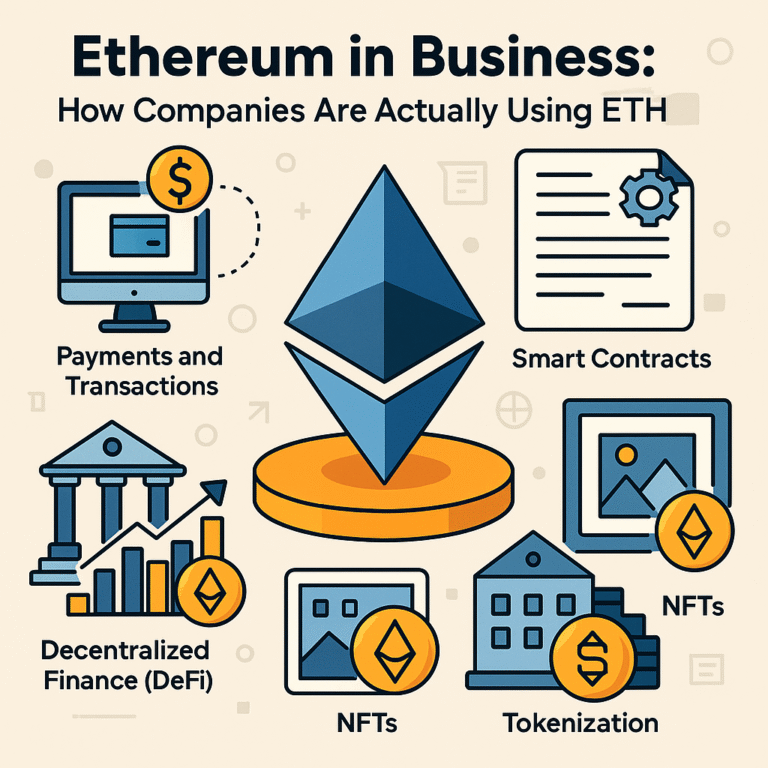
Ethereum in Business: How Companies Are Actually Using ETH

1

Why Businesses Care About Ethereum

Ethereum is more than just “crypto”—it’s a programmable, shared ledger that enables money, contracts, and data to move with fewer intermediaries. For companies, this translates into lower fees, faster settlement times, automated processes, and auditable records.

A major turning point came with Ethereum’s 2022 Merge to proof-of-stake, which reduced energy consumption by approximately 99.95% compared to the previous proof-of-work system. This dramatic improvement in energy efficiency removed a significant environmental objection that many enterprises had previously cited.

Payments & Settlement: Faster Cashflow, Fewer Intermediaries

Card Networks & Stablecoins

Major payment networks are exploring blockchain-based settlement. Visa piloted a program to settle merchant payments using USDC stablecoin on Ethereum in partnership with Crypto.com, later expanding stablecoin settlement capabilities to additional blockchain networks. This initiative demonstrates how card settlement processes can be shortened and automated using public blockchain infrastructure.

Consumer Payment Platforms

PayPal entered the blockchain space by launching PYUSD, an Ethereum-based U.S. dollar stablecoin. While PayPal added support for a second blockchain in 2024, Ethereum remains the canonical issuance network for PYUSD.

E-Commerce Integration

Shopify merchants can accept cryptocurrency payments, including ETH and various stablecoins, through payment providers like Coinbase Commerce and BitPay. Some merchants have also integrated newer payment rails such as Solana Pay, though Ethereum and its Layer-2 solutions remain core payment pathways for blockchain-based commerce.

Transaction Cost Reductions

The March 13, 2024 Dencun upgrade (EIP-4844) introduced “blobs” that dramatically reduced Layer-2 transaction fees—often to just pennies per transaction. This advancement makes cross-border payments and micro-transactions practical at enterprise scale.

Key Takeaway: For businesses struggling with cross-border payment speed and fees, stablecoin settlement on Ethereum—particularly via Layer-2 solutions—has become a credible, production-ready option.

Smart Contracts: Automating Business Logic

Pharmaceutical Supply Chain Compliance

The MediLedger project, developed by Chronicled, operates on Quorum (an enterprise fork of Ethereum) to help pharmaceutical companies comply with DSCSA requirements, including track-and-trace and returns verification. This represents a leading example of “private Ethereum” implementation for supply chain management using smart contracts.

Banking Infrastructure

J.P. Morgan’s Quorum, later acquired by ConsenSys, underpins multiple bank-grade networks including Onyx. JPM Coin transactions run on permissioned ledgers derived from Ethereum technology, demonstrating the platform’s viability for institutional banking.

Enterprise Privacy Solutions

EY Nightfall combines zero-knowledge proofs with Ethereum, enabling firms to use the public blockchain while keeping transaction details private—addressing one of the key concerns enterprises have about public blockchain adoption.

Telecom Settlements

Zeebu utilizes on-chain smart contracts to automate wholesale telecom payments, showcasing how B2B invoicing can move on-chain. While still early-stage, this represents the direction of automated business-to-business settlements.

Reality Check: Production environments feature both public Ethereum and permissioned Ethereum variants like Quorum. Public Ethereum offers openness and liquidity, while permissioned versions can simplify compliance and data privacy requirements.

DeFi for Treasury & Market Access

Decentralized Finance (DeFi) protocols on Ethereum provide 24/7 lending, market-making, and token swaps with programmable custody and atomic settlement. By September 2025, DeFi’s total value locked rebounded to approximately $160-170 billion across all blockchains, with Ethereum serving as the anchor network.

While not yet reaching trillions in locked value, DeFi has scaled sufficiently for serious corporate pilots and treasury management strategies. Companies can leverage DeFi for on-chain liquidity, automated market operations, or as building blocks for proprietary fintech products. However, smart-contract and market risks require robust risk management controls.

NFTs & Customer Engagement on Ethereum Layer-2s

Brand Activations

Nike launched .SWOOSH on Polygon (an Ethereum Layer-2 network), transforming virtual collections into a recurring customer engagement platform. Other major brands including Adidas and Coca-Cola have launched NFT campaigns, with Coca-Cola deploying on Base (another Ethereum Layer-2).

Loyalty Programs

Starbucks ran Odyssey on Polygon as a collectible-based loyalty pilot program. The company sunset the pilot in 2024, providing a valuable lesson that user experience and program design matter as much as the underlying technology.

Bottom Line: NFTs have evolved from hype to targeted brand utility—encompassing tickets, collectibles, and token-gated perks—with most deployments occurring on Ethereum Layer-2 networks for improved cost efficiency and user experience.

Tokenization: Real-World Assets On-Chain

Institutional Investment Products

BlackRock’s BUIDL, a tokenized U.S. dollar liquidity fund on Ethereum, launched in March 2024 and surpassed $1 billion in assets under management by March 2025. This milestone proves that institutional capital will utilize public blockchain infrastructure when proper regulatory wrappers and compliance frameworks are in place.

Banking Sector Adoption

UBS Asset Management launched uMINT, a tokenized money market fund on Ethereum, following a pilot of a tokenized Variable Capital Company (VCC) fund under the Monetary Authority of Singapore’s Project Guardian. UBS has also completed cross-border repo transactions using natively issued digital bonds on public blockchains.

Significance: Tokenization can compress issuance and settlement cycles while enabling composable finance—such as using fund tokens as collateral. Ethereum’s liquidity and developer tooling make it an attractive platform for these innovations.

Infrastructure: Enterprise Implementation

Managed Node Services

Google Cloud’s Blockchain Node Engine offers managed Ethereum nodes, while AWS Amazon Managed Blockchain (AMB Access) supports Ethereum JSON-RPC endpoints. These services enable teams to deploy blockchain solutions without managing node infrastructure. (Microsoft retired its original “Azure Blockchain Service” in 2021; current Azure blockchain usage primarily occurs through partner solutions and virtual machines.)

Industry Standards & Consortia

The Enterprise Ethereum Alliance continues coordinating specifications and best practices with members spanning technology and finance sectors, facilitating broader enterprise adoption.

Costs & Sustainability

Energy Efficiency

Following the Merge, Ethereum’s energy consumption decreased by approximately 99.95%, addressing a critical ESG concern for many corporations considering blockchain adoption.

Transaction Fees & Throughput

The Dencun upgrade (EIP-4844) reduced Layer-2 data costs significantly. In 2025, the Pectra upgrade further increased blob capacity (target of 6, maximum of 9 per block), pushing Layer-2 fees even lower while increasing throughput capacity.

Interoperability & Multi-Chain Reality

Many enterprise deployments combine Ethereum mainnet, Layer-2 solutions, and sometimes other blockchain networks. Cross-chain communication protocols like Chainlink CCIP (now generally available) and LayerZero connect Ethereum to dozens of networks—essential when partners or users operate across different blockchains.

Practical Implementation Guidance

Choose the Right Approach

For payments and treasury management, start with stablecoins on Ethereum Layer-2 networks. For asset issuance, evaluate tokenization options including custody, KYC/AML requirements, and transfer restrictions.

Public vs. Permissioned Decision

Public Ethereum provides liquidity and composability, while Quorum-style private chains simplify data privacy and compliance. Many organizations use both approaches for different use cases.

Treat Smart Contracts as Critical Software

Implement audits, monitoring systems, incident response playbooks, and kill-switches where appropriate. Smart contracts require the same rigor as any mission-critical software system.

Manage the Risk Stack

Address smart-contract risk, market risk, counterparty risk, and regulatory risk. Don’t deploy DeFi protocols directly into corporate treasury operations without proper controls and governance.

Plan for Interoperability

Expect partners and users on different blockchain networks. Design systems with cross-chain communication protocols like CCIP or LayerZero from the beginning.

The Bottom Line

Ethereum is already operating in production environments for payment settlement, B2B automation, tokenized investment funds, and brand engagement—often utilizing Ethereum Layer-2 networks for cost efficiency and improved user experience.

The technology continues maturing with upgrades like Dencun and Pectra, institutional infrastructure is real with products like BUIDL and uMINT, and managed cloud services reduce operational complexity. This isn’t hype—it’s foundational infrastructure for digital finance and data flows.

For organizations exploring blockchain for business applications, Ethereum (including both public and enterprise variants) represents the default starting point, backed by the largest developer community, most extensive tooling ecosystem, and proven institutional adoption.


Note: Blockchain technology involves risks. Organizations should conduct thorough due diligence and consult with legal, compliance, and technical experts before implementation.

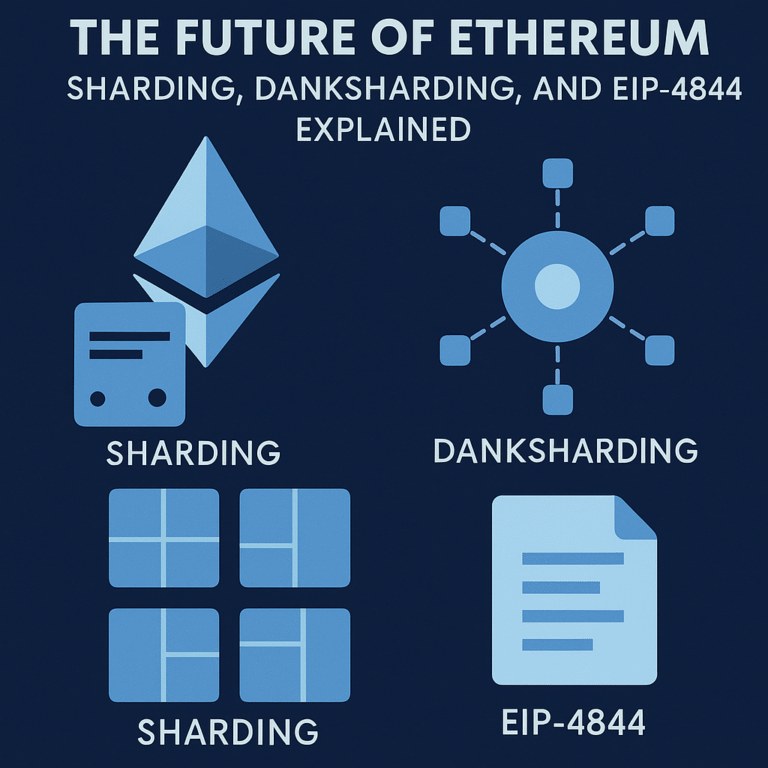
The Future of Ethereum: Sharding, Danksharding, and EIP-4844 Explained

0

Ethereum has evolved from an expensive, congested smart-contract chain into the settlement layer for an expanding Layer-2 (L2) ecosystem. However, base-layer throughput remains limited, and fees spike during periods of high demand. The roadmap to address these challenges centers on three key innovations: sharding (reframed as data sharding), Danksharding, and the already-implemented EIP-4844 (Proto-Danksharding). Together, these upgrades aim to make L2 transactions significantly cheaper and scale Ethereum to support global usage while maintaining decentralization.

TL;DR: Ethereum’s Scaling Milestones

EIP-4844, deployed through the Dencun upgrade on March 13, 2024, introduced blobs—affordable, temporary data storage for rollups—resulting in L2 fee reductions of approximately 50-99% shortly after launch. The Pectra upgrade, activated on May 7, 2025, increased blob throughput by raising the target from 3 to 6 blobs per block and the maximum from 6 to 9, further expanding L2 data capacity.

Looking ahead, Danksharding will scale from current proto-danksharding limits to 64 blobs per block, with proposer-builder separation (PBS) and data availability sampling (DAS) as essential prerequisites, massively boosting L2 capacity. PeerDAS (EIP-7594), part of the upcoming Fusaka upgrade, enables nodes to sample blob data rather than downloading all of it and introduces staged “BPO” (Blob-Parameter-Only) blob increases, with testnets already scheduled.

The long-term target outlined in Vitalik’s roadmap is approximately 100,000+ transactions per second (TPS) across L2s and L1 combined, though this is a goal rather than a guarantee.

Understanding Ethereum’s Shift: From Execution Sharding to Data Sharding

Early “Eth2” plans envisioned multiple execution shards, each capable of running smart contracts. With rollups proving their effectiveness, Ethereum pivoted its strategy: concentrate execution on L2s while optimizing L1 for data availability. In simpler terms, L2s handle the computational heavy lifting while L1 guarantees that data is published so anyone can verify it. This represents the core principle of Ethereum’s rollup-centric roadmap.

Why this matters: L2 solutions need to post batches of transaction data to L1. When posting data is inexpensive and abundant, L2 fees remain low and throughput scales effectively. This approach differs from other blockchain architectures, such as NEAR Protocol’s sharding implementation, which focuses on execution sharding across multiple chains.

EIP-4844 (Proto-Danksharding): The Blob Revolution

Shipped through the Dencun upgrade on March 13, 2024, EIP-4844 introduced a new transaction type that carries blobs—opaque data chunks utilized by rollups. These blobs exist on the consensus layer temporarily (approximately 4096 epochs, or roughly 18 days), are committed using KZG cryptography, and are priced in a separate fee market to avoid competing with regular gas. Typical blob size is approximately 128 KiB, with initial limits setting a target of 3 blobs per block and a maximum of 6.

Impact: Following the Dencun upgrade, numerous L2s reported fee reductions ranging from 50-99%, making activities like swaps and mints dramatically more affordable, as reported by The Defiant and other industry sources.

Interesting fact: The KZG ceremony that secured blob proofs attracted approximately 141,000 contributions, making it the largest ceremony of its kind.

Pectra Upgrade (May 7, 2025): Expanding Blob Capacity

The Pectra upgrade didn’t fundamentally redesign the system but rather fine-tuned key parameters to enable further L2 scaling. Through EIP-7691, Ethereum doubled the target blob count from 3 to 6 and increased the maximum from 6 to 9 per block, representing a significant expansion in daily L2 data capacity and providing relief for blob pricing pressures.

To be precise: the target is 6 blobs with a maximum of 9, compared to the pre-Pectra configuration of target 3 and maximum 6, as detailed in the EIP-7691 specification.

While Pectra included other enhancements such as EIP-7702 for smart-account style authorizations, the blob increase represents the primary scaling improvement.

Danksharding: The Ultimate Scaling Solution

Danksharding extends proto-danksharding and dramatically scales blobs—from 6 (proto limits) to 64 blobs per block—while maintaining node requirements light enough for widespread participation. Two critical components enable this:

PBS (proposer-builder separation): Specialized builders assemble blocks and proposers select them, reducing MEV centralization pressure and enabling larger blocks safely. Learn more about PBS on ethresear.ch.

DAS (data availability sampling): Nodes randomly sample small pieces of blob data for verification instead of downloading everything, preserving security while dramatically reducing bandwidth requirements. This is similar in concept to how modular blockchains like Celestia approach data availability.

With 64 blobs at approximately 128 KiB each, this translates to roughly 8 MiB of blob data per block available for rollups, though exact numbers may evolve as outlined in Ethereum’s roadmap documentation.

PeerDAS & Fusaka: The Next Implementation Phase

PeerDAS (EIP-7594) represents the practical DAS networking upgrade arriving with the Fusaka release. It distributes blob data custody across subnets and enables regular nodes to verify availability by sampling columns rather than full blobs, delivering an order-of-magnitude data availability boost without requiring every node to operate as a datacenter.

Importantly, Ethereum will increase blob counts gradually using BPO (Blob-Parameter-Only) forks to avoid overwhelming the peer-to-peer layer. Testnets have scheduled BPOs that incrementally step the target and maximum beyond 6/9 in measured stages (for example, 10/15 then 14/21) before pursuing much higher targets, as detailed in Ethereum Foundation blog posts.

Practical Implications for Users and Developers

More affordable L2s today: Thanks to EIP-4844 and Pectra, rollups now have access to more (and cheaper) blob space. Users can expect fees in the cents range under normal conditions, sometimes even lower.

Expanded capacity tomorrow: PeerDAS combined with staged blob increases will expand capacity further, with full Danksharding pushing capabilities significantly beyond current limits. This infrastructure may also enable Layer 3 solutions to flourish.

Long-term ambition: Vitalik’s publicly stated target is 100,000+ TPS across L2s and L1 combined—an ambitious goal contingent on continued protocol and L2 improvements including compression, proofs, and interoperability. This should be understood as an aspirational goal rather than a guaranteed outcome.

Correcting Common Misconceptions

Misconception #1: “Sharding means multiple execution shards”

That was the original plan. Today’s approach focuses on data sharding for rollups, where L2s handle execution while L1 ensures data availability. For a different take on sharding, see how NEAR Protocol implements execution sharding.

Misconception #2: “Pectra set blobs to 6”

More precisely, Pectra set the target to 6 and the maximum to 9 (previously 3 and 6). This distinction matters for accurate capacity calculations.

Misconception #3: “Full Danksharding is coming soon”

Danksharding is a multi-year effort. Proto-danksharding shipped in 2024, blob targets increased in 2025, and PeerDAS is next on the roadmap. The 64-blob full Danksharding implementation will arrive after additional groundwork, including in-protocol PBS and stable peer-to-peer networking.

The Bottom Line

Ethereum’s scaling strategy is deliberately iterative: deploy safe, immediately helpful solutions (EIP-4844), increase limits prudently (Pectra, BPOs), implement smarter networking (PeerDAS), and then execute the major leap (Danksharding). The outcome is an L1 that maintains credible decentralization while empowering L2s to deliver user experiences competitive with web-scale systems. This is how Ethereum transitions from a congested highway to an intelligent superhighway without sacrificing its foundational principles.


Key Resources and Further Reading

Top 5 Staking Platforms for ETH – APY, Lockups, Risks Compared

4

(As of 2025 — always double-check live data before staking!)

Introduction to Ethereum Staking in 2025

Ethereum’s transition to Proof-of-Stake with The Merge in September 2022 fundamentally changed how the network operates and opened up lucrative opportunities for passive income through staking. Instead of energy-intensive mining, validators now lock ETH to secure the network and validate transactions, earning rewards in return.

By 2025, Ethereum staking has reached remarkable maturity with over 35 million ETH staked (approximately 28–30% of total supply). Current staking yields typically range between 2–4% APY (net of platform fees), though rates fluctuate based on network activity, validator performance, and total staked amount.

Staking allows ETH holders to generate passive income without selling their assets, but it’s essential to understand the nuances: lockup periods, smart contract risks, potential slashing penalties, liquidity considerations, and platform trustworthiness. This comprehensive guide examines five leading ETH staking platforms to help you make informed decisions.


1. Lido — The Industry-Leading Liquid Staking Protocol

Lido Finance has emerged as the dominant liquid staking solution, commanding the largest market share in decentralized staking.

How Lido Works

Deposit any amount of ETH and instantly receive stETH (standard) or wstETH (wrapped) tokens that represent your staked ETH plus accrued rewards. These liquid staking tokens (LSTs) can be freely traded, used as collateral, or deployed across DeFi protocols while your original ETH continues earning staking rewards.

Key Metrics

  • Total Value Locked: 8.5–9 million ETH ($27–30 billion USD equivalent)
  • APY (approximate): 2.5–3.2% (varies with network conditions and validator performance)
  • Minimum stake: No minimum — stake any amount

Lockups & Liquidity

  • No lockup period — stETH/wstETH are immediately liquid and tradable on major DEXs
  • To redeem stETH directly for ETH through Lido, expect 1–5 days processing time under normal network exit queue conditions
  • Alternatively, swap stETH for ETH instantly on Curve, Uniswap, or other DEXs (subject to market liquidity)

Fees & Economics

  • 10% performance fee on staking rewards (split between node operators and the Lido DAO treasury)
  • Net user APY is already calculated after this fee deduction

Risk Factors

  • Smart contract risk: Despite multiple audits, vulnerabilities could exist
  • Temporary de-pegging: stETH can temporarily trade below 1:1 with ETH during market stress (as seen in June 2022)
  • Slashing risk: Low probability due to diversified, professional validator set (30+ operators)
  • Regulatory uncertainty: Liquid staking derivatives face evolving regulatory scrutiny

Best For

Users seeking maximum liquidity, DeFi composability, and passive staking rewards without operational overhead. Ideal if you want to leverage your staked ETH across multiple protocols simultaneously.

Learn more: Lido Documentation

Related reading: Lido vs Rocket Pool: Who Rules ETH Staking in 2025?


2. Rocket Pool — Decentralized, Community-Driven Staking

Rocket Pool champions decentralization by enabling anyone to become a validator with reduced capital requirements while offering liquid staking for regular users.

How Rocket Pool Works

Users can either run their own “minipool” validator node with just 8 ETH (plus RPL collateral) or simply stake any amount of ETH to receive rETH tokens. Unlike stETH, rETH is a reward-bearing token that increases in value relative to ETH over time rather than increasing in quantity.

Key Metrics

  • Total Value Locked: ~1.8–2.2 million ETH
  • APY (approximate): 2.6–3.5% (net of node operator commission)
  • Validator nodes: ~2,900+ independent node operators

Lockups & Liquidity

  • rETH is fully liquid and tradable on major DEXs
  • Direct redemption to ETH follows the standard Ethereum exit queue (typically 1–5 days)
  • rETH can trade at a slight premium or discount to its underlying ETH value

Commission & Fees

  • Node operators earn ~14% commission from staking rewards (paid by stakers)
  • No additional protocol fees for rETH holders
  • Net APY reflects commission deduction

Risk Factors

  • Smart contract vulnerabilities: Multiple audits conducted but risk remains
  • rETH price dynamics: Can trade at premium/discount to NAV based on supply/demand
  • Slashing risk: Distributed across diverse, independent validators
  • RPL token risk: Node operators must maintain RPL collateral exposure

Best For

ETH holders who prioritize decentralization, want to support permissionless validation, and value community governance over maximum yield. Excellent choice for those concerned about staking centralization risks.

Learn more: Rocket Pool Documentation

Related reading: Lido vs Rocket Pool: Who Rules ETH Staking in 2025?


3. Coinbase — Institutional-Grade Custodial Staking

Coinbase offers the most accessible on-ramp for newcomers, combining regulated custody with optional liquid staking through cbETH.

How Coinbase Staking Works

Stake ETH directly through your Coinbase account with zero technical knowledge required. Optionally convert your staked position to cbETH, a liquid token tradable across DeFi platforms and centralized exchanges.

Key Metrics

  • Total staked: Coinbase manages billions in staked ETH (exact figures proprietary)
  • APY (approximate): 2.7–3.0% net to users (varies by subscription tier)
  • Regulatory status: Publicly traded company (NASDAQ: COIN), SEC-registered

Lockups & Liquidity

  • Flexible unstaking available with variable processing times
  • cbETH provides instant liquidity — trade on Coinbase, Uniswap, or other platforms
  • Actual ETH redemption timing depends on network exit queue load

Fees & Commission

  • Up to 35% commission on staking rewards for regular users
  • Lower fees for Coinbase One subscribers (reduced to ~25%)
  • Fees are automatically deducted from displayed APY

Risk Factors

  • Custodial risk: Coinbase maintains full control over your staked ETH
  • Regulatory exposure: Subject to U.S. securities regulations and potential policy changes
  • cbETH basis risk: Token may trade at premium/discount to underlying ETH value
  • Platform risk: Exchange outages, account restrictions, or business disruption

Best For

Crypto newcomers wanting a trusted, zero-maintenance staking experience with regulatory protections. Ideal if you value brand recognition, customer support, and regulated operations over maximum yields or decentralization.

Learn more: Coinbase Staking Guide


4. Binance — High-Liquidity Exchange Staking

Binance leverages its position as the world’s largest crypto exchange to offer integrated staking with competitive rates and deep liquidity.

How Binance Staking Works

Stake ETH through your Binance account and receive WBETH (Wrapped Beacon ETH), a liquid staking token whose exchange rate against ETH gradually increases as rewards accumulate.

Key Metrics

  • Total staked: Significant portion of centralized exchange staking market
  • APY (approximate): 3.0–5.0% (displayed rates are net to users after internal fees)
  • Available in: 100+ countries (with regional restrictions)

Lockups & Liquidity

  • WBETH is fully liquid — trade, use as collateral, or transfer freely
  • Direct ETH redemption aligns with Ethereum protocol exit queue
  • Deep liquidity on Binance’s spot markets for instant conversions

Fees & Economics

  • Variable internal fees already factored into displayed APY
  • Binance’s fee structure is less transparent than decentralized alternatives
  • Promotional rates occasionally offered for new stakers

Risk Factors

  • Custody and operational risk: Binance controls all staked assets
  • Regulatory uncertainty: Facing regulatory challenges in multiple jurisdictions
  • Geographic restrictions: Not available in U.S., U.K., and other restricted territories
  • WBETH deviation risk: Token price dynamics when used as collateral or in trading

Best For

Active Binance traders seeking seamless integration between trading and staking operations. Ideal if you already maintain significant assets on Binance and want to maximize capital efficiency.

Learn more: Binance ETH Staking

Related reading: Binance Tutorial 2025: Complete Step-by-Step Guide for Beginners


5. Kraken — Security-Focused Exchange with Flexible Options

Kraken distinguishes itself through flexible staking options, strong security practices, and transparent operations.

How Kraken Staking Works

Choose between Flexible Staking (lower rates, easier exit) or Bonded Staking (higher rates, fixed commitment period). Rewards are automatically distributed to your account.

Key Metrics

  • APY (approximate):
    • Flexible: 1.5–3.0%
    • Bonded: 3.0–6.0% (depending on term length and region)
  • Track record: Operating since 2011 with no major security breaches

Lockups & Liquidity

  • Flexible Staking: Unstake anytime with 2–7 day processing
  • Bonded Staking: Fixed terms (3, 6, or 12 months) with higher yields but no early withdrawal
  • No liquid staking token available (direct custody model)

Fees & Economics

  • Variable commission rates depending on staking product chosen
  • Transparent fee disclosure in staking interface
  • Competitive rates for U.S. and European users

Risk Factors

  • Custodial risk: Kraken holds your private keys
  • No liquidity tokens: Cannot use staked ETH in DeFi or as collateral
  • Regulatory compliance costs: May affect yield compared to decentralized alternatives
  • Geographic availability: Limited in certain jurisdictions

Best For

Users prioritizing established security track record, regulatory compliance, and flexible staking options over liquid tokens or maximum yields. Good for conservative investors comfortable with centralized custody.

Learn more: Kraken Staking


Platform Comparison Summary

PlatformAPY RangeMinimumLiquidity TokenCustody TypeBest Feature
Lido2.5–3.2%NonestETH/wstETHNon-custodialDeFi composability
Rocket Pool2.6–3.5%NonerETHNon-custodialDecentralization
Coinbase2.7–3.0%NonecbETHCustodialUser-friendly
Binance3.0–5.0%NoneWBETHCustodialExchange integration
Kraken1.5–6.0%VariesNoneCustodialSecurity track record

How to Choose the Right Platform for You

1. Define Your Primary Goal

Maximum Yield

If pure APY is your priority, compare current rates across platforms but understand that higher yields often come with increased risks or tradeoffs.

Liquidity & Flexibility

Need access to your capital? Prioritize platforms offering liquid staking tokens (Lido, Rocket Pool, Binance, Coinbase) over bonded staking.

Decentralization & Security

If you value censorship resistance and reducing single points of failure, lean toward Lido or Rocket Pool over centralized exchanges.

Simplicity & Support

New to crypto? Coinbase or Kraken provide the smoothest onboarding with customer support and regulatory protections.

2. Assess Your Risk Tolerance

Conservative Approach

  • Prioritize regulated, custodial platforms (Coinbase, Kraken)
  • Avoid maximum leverage of liquid tokens in DeFi
  • Accept lower yields for peace of mind

Moderate Approach

  • Mix custodial and non-custodial platforms
  • Use liquid staking tokens conservatively
  • Diversify across 2–3 platforms

Aggressive Approach

  • Maximize DeFi opportunities with liquid tokens
  • Explore yield-stacking strategies with protocols like EigenLayer
  • Accept smart contract risks for higher potential returns

3. Consider Your ETH Holdings

Small Holdings (< 1 ETH)

Any liquid staking platform works. Prioritize low fees and accessibility (Lido, Rocket Pool).

Medium Holdings (1–10 ETH)

Diversify across 2 platforms to balance convenience and decentralization.

Large Holdings (10+ ETH)

  • Seriously consider solo staking if technically capable (requires 32 ETH per validator)
  • Split across multiple platforms to reduce concentration risk
  • Explore institutional services for holdings > 100 ETH

4. Evaluate Geographic and Regulatory Factors

  • U.S. users: Coinbase and Kraken are most accessible; Binance restricted
  • EU users: Most platforms available; check local tax treatment
  • Asia-Pacific: Binance typically offers best integration
  • Restricted jurisdictions: VPN usage violates platform ToS—seek local compliant alternatives

5. Test Before Committing

Before staking significant amounts:

  • Start with small test deposits
  • Verify the unstaking process
  • Monitor reward accrual for 1–2 weeks
  • Test liquid token swaps if using LSTs
  • Review platform communications and transparency

Advanced Staking Strategies for 2025

Liquid Staking + DeFi Yield Stacking

Maximize returns by using liquid staking tokens in DeFi protocols:

  1. Stake ETH → Receive stETH/rETH
  2. Deposit LST as collateral on Aave or Compound
  3. Borrow stablecoins at low interest
  4. Deploy stablecoins in yield-generating protocols

Risks: Liquidation risk if LST/ETH ratio changes, smart contract vulnerabilities, complexity

Learn more: DeFi 2025: Top 10 Protocols Across All Chains

Restaking for Additional Yield

Platforms like EigenLayer allow you to “restake” liquid staking tokens to secure additional protocols, earning supplementary rewards.

Benefits: Enhanced yield without additional capital Risks: Increased slashing conditions, additional smart contract exposure

Learn more: EigenLayer and the Rise of Restaking

Liquid Restaking Tokens (LRTs)

Next-generation tokens that combine liquid staking with restaking benefits, offered by protocols like EtherFi, Renzo, and Puffer Finance.

Benefits: Maximum capital efficiency, simplified restaking exposure Risks: Additional complexity layer, newer protocols with less battle-testing

Learn more: Liquid Restaking Tokens (LRTs) Explained

Diversification Strategy

Don’t put all your staked ETH in one basket. Suggested allocation for risk-conscious investors:

  • 40%: Liquid staking protocols (Lido + Rocket Pool)
  • 30%: Exchange staking (partial allocation for convenience)
  • 30%: Solo staking if you have 32+ ETH and technical expertise

Important Considerations Before Staking

1. Never Stake More Than You Can Afford to Lock Up

While liquid staking offers flexibility, market conditions can create temporary liquidity constraints. Maintain emergency funds in fully liquid assets.

2. Understand the Exit Queue Dynamics

During network stress or mass unstaking events (like May 2023), exit queues can extend to weeks rather than days. Plan accordingly.

3. Monitor Your Positions Regularly

Set calendar reminders to:

  • Review validator performance
  • Check for platform announcements
  • Verify reward accrual rates
  • Assess liquid token price dynamics

4. Be Aware of Fee Structures

Platform fees directly impact your net returns:

  • Lido: 10% of rewards
  • Rocket Pool: ~14% node operator commission
  • Coinbase: Up to 35% commission
  • Binance: Opaque but competitive
  • Kraken: Variable by product

5. Diversify Across Platforms

Risk mitigation strategy:

  • Liquid staking protocols (Lido + Rocket Pool)
  • Exchange staking (partial allocation for convenience)
  • Solo staking if you have 32+ ETH and technical expertise

6. Understand Tax Implications

Staking rewards are typically taxable events in most jurisdictions. Consult with tax professionals familiar with cryptocurrency. Track:

  • Reward distribution dates and values
  • Token conversion events
  • Liquid token trading activity

7. Stay Informed About Network Upgrades

Ethereum continues evolving with upgrades like Pectra (expected 2025) that may affect:

  • Validator mechanics and requirements
  • Exit queue dynamics
  • Staking reward rates
  • Smart contract functionality

Follow official sources:


Understanding Staking Risks in Detail

Smart Contract Risk

Decentralized staking protocols rely on smart contracts that, despite audits, could contain vulnerabilities. Historical precedents include:

  • Protocol exploits resulting in fund loss
  • Upgrade bugs affecting reward distribution
  • Oracle manipulation impacting liquid token values

Mitigation: Diversify across platforms, monitor security disclosures, use audited platforms with bug bounty programs.

Slashing Risk

Validators face penalties (“slashing”) for:

  • Double-signing: Validating conflicting blocks
  • Downtime: Extended periods offline
  • Malicious behavior: Attempting network attacks

Professional staking services typically maintain <0.01% slashing rates, but risk exists.

Mitigation: Choose platforms with proven validator performance, geographic distribution, and redundant infrastructure.

Liquidity Risk

While liquid staking tokens offer flexibility, they can:

  • Trade at discounts during market stress
  • Experience reduced DEX liquidity
  • Face smart contract risks in DeFi integrations

Mitigation: Understand that LSTs are not equivalent to ETH, maintain emergency liquidity reserves, avoid over-leveraging liquid tokens.

Regulatory Risk

Staking services face evolving regulatory scrutiny:

  • SEC classification debates (security vs. commodity)
  • Licensing requirements for custodial services
  • Geographic restrictions and compliance burdens

Mitigation: Use regulated platforms for large sums, maintain tax compliance, diversify across jurisdictions when possible.


The Future of Ethereum Staking in 2025 and Beyond

Ongoing Network Improvements

Pectra Upgrade Expected in 2025, Pectra will introduce:

  • Increased validator efficiency
  • Improved reward distribution mechanisms
  • Enhanced security features

Layer 2 Scaling Impact As Layer 2 solutions (Arbitrum, Optimism, Base) mature, main-net congestion decreases, potentially affecting:

  • MEV opportunities for validators
  • Overall staking yields
  • Gas costs for liquid token operations

Market Dynamics

With ~30% of ETH already staked, the network approaches healthy equilibrium. Key trends:

  • Yield compression: More stakers = lower per-validator returns
  • Quality competition: Platforms competing on security, UX, and integrated features rather than pure yield
  • Institutional adoption: Growing interest from traditional finance institutions
  • Restaking innovation: Protocols like EigenLayer enabling additional yield layers

Frequently Asked Questions

Can I stake less than 32 ETH?

Yes! All platforms reviewed allow staking with any amount. Solo validation requires 32 ETH, but liquid staking protocols and exchanges have no minimums.

How are staking rewards taxed?

Tax treatment varies by jurisdiction. In most countries, staking rewards are taxable income when received. Consult local tax professionals for specific guidance.

What happens if the platform gets hacked?

  • Decentralized protocols: Smart contract insurance products available (e.g., Nexus Mutual)
  • Custodial platforms: Some offer insurance, but terms vary—read disclosures carefully

Can I lose my staked ETH?

Yes, through:

  • Platform hacks or vulnerabilities
  • Validator slashing (minimal risk with professional operators)
  • Custodial platform insolvency or seizure
  • Smart contract exploits

How long does unstaking take?

  • Liquid tokens: Instant via DEX swaps (subject to market conditions)
  • Direct protocol redemption: 1–5 days typical (varies with exit queue)
  • Exchange unstaking: Platform-dependent (minutes to days)

Final Thoughts: Staking as a Long-Term Strategy

Ethereum staking represents one of the most sustainable yield-generation strategies in cryptocurrency. Unlike speculative trading or high-risk DeFi protocols, staking provides:

✅ Predictable returns based on network economics ✅ Network contribution supporting Ethereum’s security and decentralization ✅ Tax-efficient income in many jurisdictions (compared to frequent trading) ✅ Alignment with ecosystem growth as network adoption increases

The platforms reviewed here span the spectrum from maximum decentralization (Rocket Pool) to regulated simplicity (Coinbase/Kraken) to integrated trading efficiency (Binance) to DeFi composability (Lido).

Your optimal choice depends on:

  • Risk tolerance (custody vs. smart contract risk)
  • Liquidity needs (immediate access vs. higher yields)
  • Technical comfort level (DeFi interactions vs. custodial services)
  • Values (decentralization priority vs. convenience)

As 2025 progresses with continued Ethereum upgrades, Layer 2 maturation, and institutional adoption, the staking landscape will continue evolving. The fundamental principle remains: participate as a long-term supporter of the network, understand your chosen platform thoroughly, and never stake more than you can afford to lock up.


Additional Resources

Official Ethereum Resources

Research & Analytics

Security


Disclaimer: This guide provides educational information only and does not constitute financial advice. Cryptocurrency staking involves risks including but not limited to loss of capital, smart contract vulnerabilities, regulatory changes, and market volatility. Always conduct your own research, understand the risks, verify current platform terms, and consult with qualified financial advisors before making investment decisions. Past performance does not guarantee future results. All APY figures are estimates and subject to change based on network conditions.

Happy staking—may your ETH rewards compound wisely! 🚀


Last updated: October 2025 | Always verify current rates and terms on official platform websites before staking

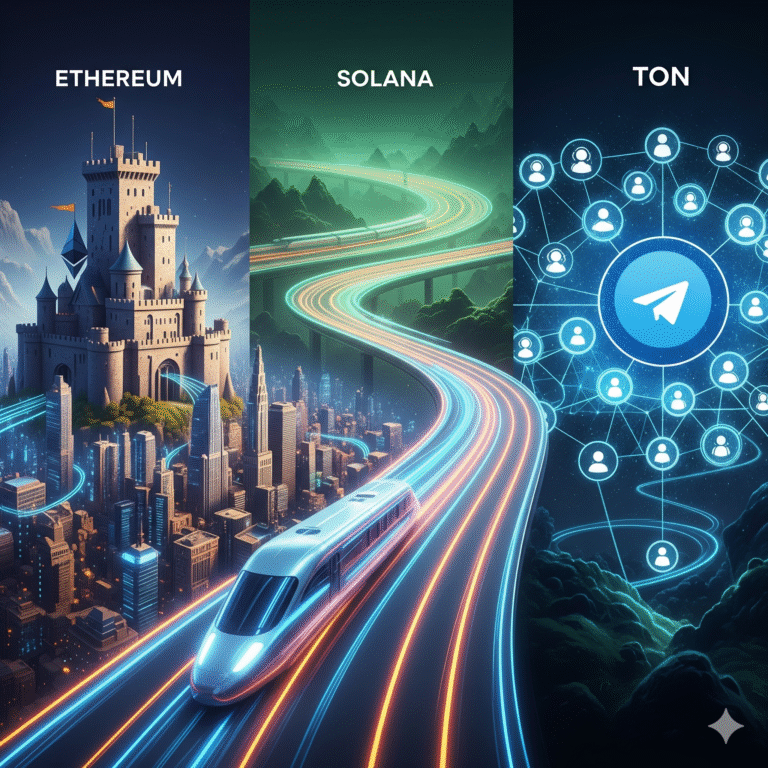
Solana and TON: Why These Chains Are Rising (But Still Can’t Kill Ethereum)

1

TL;DR: The Blockchain Battle of 2025

Solana and TON are climbing fast thanks to lightning speed, near-zero fees, and user-friendly onboarding. Specifically, Solana dominates high-frequency trading and payments, while TON leverages Telegram’s 1 billion-user network. However, Ethereum still rules where it matters most — decentralization, security, liquidity, and developer ecosystem. Furthermore, after upgrades like Dencun (EIP-4844) and Pectra, Ethereum remains the backbone of decentralized finance.


What Are Solana, TON, and Ethereum? Blockchain Basics Explained

Let’s set the stage with the three major players in today’s blockchain landscape.

Ethereum (Launched 2015) — The Smart Contract Pioneer

Ethereum pioneered programmable blockchain technology, creating the foundation for:

  • Decentralized Finance (DeFi) protocols like Uniswap and Aave
  • NFT marketplaces such as OpenSea
  • Gaming platforms and tokenization systems
  • Moreover, smart contracts that power thousands of decentralized applications

Key Stats (2025):

  • Over 1 million validators securing the network
  • Impressively, $120B+ Total Value Locked (TVL)
  • Remarkably, 99.99% uptime since The Merge

Solana (Launched 2020) — The Speed Demon

Solana combines Proof-of-History (PoH) with Proof-of-Stake (PoS) to achieve:

  • Theoretical capacity: ~65,000 transactions per second (TPS)
  • In practice, real-world average: 3,000–4,000 TPS
  • Transaction fees: <$0.01 on average
  • Additionally, block time: ~400 milliseconds

Popular Solana Apps:

TON (The Open Network) — The Telegram Integration

Originally developed by Telegram, TON brings blockchain to messaging:

  • Dynamic sharding for horizontal scalability
  • Seamlessly integrated into Telegram Messenger (1B+ users)
  • Chat-based wallets and mini-apps
  • Additionally, multi-chain architecture with workchains and shardchains

For a deep dive into TON’s evolution and capabilities, check out TON Blockchain: From Telegram’s Ambition to a Web3 Super App in 2025.

Core Philosophy:

  • Solana: Speed and performance
  • In contrast, TON: Accessibility and user experience
  • Meanwhile, Ethereum: Security and decentralization

All three are Layer 1 blockchains, but their priorities differ significantly. Consequently, understanding these differences is key to choosing the right chain for your needs.


Why Solana Is Rising in 2025: Speed Meets Adoption

Solana’s meteoric rise can be attributed to several key factors that set it apart from competitors.

1. Lightning-Fast Transaction Processing

Solana’s innovative Proof-of-History consensus timestamps transactions before they enter the mempool, enabling:

  • Validators to reach consensus faster
  • Consequently, parallel transaction processing
  • As a result, 400+ million transactions per month in 2025
  • Furthermore, sub-second finality for most transactions

Performance Comparison:

  • Ethereum base layer: ~15 TPS
  • In contrast, Solana: 3,000–4,000 TPS (real-world)
  • Meanwhile, TON: Variable based on sharding

2. Near-Zero Transaction Fees

While Ethereum gas fees can spike above $20 during network congestion, Solana maintains:

  • Average fee: <$0.01 per transaction
  • Consequently, enables micro-transactions for gaming
  • Similarly, makes NFT minting economically viable
  • Moreover, powers high-frequency DeFi trading

3. Rapidly Expanding Ecosystem

By mid-2025, Solana’s ecosystem includes:

  • 1.5+ million active addresses (September 2025)
  • In addition, thousands of decentralized applications
  • Notably, DEX volumes rivaling Ethereum’s
  • Furthermore, growing DeFi TVL approaching $8 billion

Key Projects:

4. Real-World Enterprise Adoption

Major corporations are integrating Solana:

  • Visa — Settlement pilot programs
  • PayPal — Exploring stablecoin rails
  • Similarly, Shopify — Merchant payment integration via Solana Pay
  • Additionally, Solana Mobile — Saga and Seeker phones with built-in crypto wallets

5. Challenges: Reliability Concerns

Solana’s Achilles’ heel remains network stability:

  • 5-hour outage on February 6, 2024
  • Additionally, multiple smaller disruptions in 2023–2024
  • Currently, validator count: ~1,300 (vs. Ethereum’s 1M+)
  • Nevertheless, working on Firedancer client for improved resilience

Why TON Is Rising in 2025: The Telegram Advantage

TON’s unique approach to blockchain adoption leverages social messaging in ways never seen before.

1. Instant Access to 1 Billion Users

TON’s integration with Telegram provides:

  • No app downloads required
  • Consequently, in-chat wallet functionality via @Wallet
  • Furthermore, seamless onboarding without seed phrases
  • Moreover, social crypto features native to messaging

User Experience Revolution:

  • Send Toncoin like sending a text message
  • Similarly, access dApps directly in chat
  • Additionally, built-in KYC-free payments

2. Infinitely Scalable Architecture

TON’s dynamic sharding system enables:

  • Multiple workchains processing transactions in parallel
  • Consequently, automatic shardchain creation as demand grows
  • As a result, near-instant settlement times
  • Furthermore, theoretical unlimited throughput

3. Beyond Finance: Diverse Utilities

TON ecosystem includes:

  • TON Storage — Decentralized file storage
  • TON DNS — Blockchain domain names
  • Moreover, TON Sites — Censorship-resistant websites
  • Additionally, TON Payments — Instant micropayments in mini-apps

4. Impressive Market Momentum

Toncoin (TON) Statistics 2025:

  • Trading price: ~$5 USD
  • Market cap ranking: Top 15 globally
  • Additionally, growing DeFi ecosystem with projects like STON.fi
  • Notably, millions of first-time crypto users onboarded

5. Challenges: Early-Stage Ecosystem

TON faces growing pains:

  • Small DeFi ecosystem compared to Ethereum/Solana
  • Limited validator base (few hundred nodes)
  • Network congestion issues in August 2024
  • Centralization concerns similar to Solana

Why Ethereum Still Leads: The King’s Moat

Despite fierce competition, Ethereum maintains its dominance through fundamental advantages that competitors struggle to replicate.

1. Unrivaled First-Mover Advantage and Liquidity

Ethereum dominates where it matters most:

  • $120+ billion TVL in DeFi protocols
  • In comparison, Solana: ~$8B TVL
  • Meanwhile, TON: <$1B TVL

Blue-Chip DeFi Protocols:

  • Uniswap — Leading DEX ($4B+ TVL)
  • Aave — Premier lending protocol ($10B+ TVL)
  • Similarly, MakerDAO — Decentralized stablecoin leader ($5B+ TVL)
  • Additionally, Lido Finance — Dominant liquid staking provider ($33B+ TVL)

To understand how Ethereum maintains its DeFi dominance, read Ethereum vs Solana: Who Leads DeFi Today?

2. Unmatched Decentralization and Security

Network Security Comparison:

  • Ethereum: 1,000,000+ validators globally distributed
  • In contrast, Solana: ~1,300 validators
  • Meanwhile, TON: Few hundred validators

This massive validator network ensures:

  • Censorship resistance
  • Furthermore, geographic distribution across all continents
  • Moreover, attack resistance (would cost billions to compromise)
  • Consequently, long-term credibility with institutional investors

3. Layer 2 Revolution: Scaling Without Compromise

Dencun upgrade (EIP-4844) in March 2024 introduced blob transactions, slashing L2 costs by 10x+.

Leading Ethereum L2s:

  • Arbitrum — Optimistic rollup leader
  • Optimism — OP Stack ecosystem
  • Similarly, Base — Coinbase’s L2 network
  • Moreover, Polygon zkEVM — Zero-knowledge rollup
  • Additionally, zkSync — ZK-rollup innovator

Result: As a consequence, Ethereum L2s now process thousands of TPS for pennies while inheriting Ethereum’s security.

For a detailed comparison of blockchain ecosystems including Polygon, see Ethereum vs Solana vs Polygon: Which Blockchain Wins for DeFi?

4. Proven Reliability and Trust

Ethereum’s track record speaks volumes:

  • Nearly a decade of operation since 2015
  • Impressively, 99.99% uptime (no major outages)
  • Energy-efficient post-Merge (99.95% energy reduction)
  • Moreover, often deflationary during high usage thanks to EIP-1559

5. Institutional Adoption and Regulatory Clarity

Why institutions choose Ethereum:

  • Majority of tokenized real-world assets (RWAs) on Ethereum
  • Additionally, enterprise pilots from JPMorgan, BlackRock
  • Furthermore, regulated stablecoin infrastructure (USDC, PYUSD)
  • Notably, Spot ETH ETFs approved (U.S. regulatory acceptance)
  • Consequently, avoids security classification risks facing SOL

The Multi-Chain Reality: Each Chain Has Its Kingdom

Forget the “Ethereum killer” narrative. Instead, the future is multi-chain specialization.

Blockchain Comparison Table 2025

ChainCore StrengthIdeal Use CaseTPSAvg FeeTVL
EthereumSecurity + LiquidityDeFi, RWAs, Institutions15 (base)$1–20$120B+
SolanaSpeed + Low FeesTrading, Payments, NFTs3,000–4,000<$0.01~$8B
TONAccessibility + UXMass onboarding, TelegramVariable<$0.01<$1B

For a comprehensive analysis with detailed metrics, explore Ethereum vs Solana vs Polygon vs TON: Chain Metrics Compared.

2025 Market Data Reveals the Pattern

Transaction Volume:

  • Solana: 400+ million tx/month
  • In contrast, Ethereum: Lower tx count but higher value per transaction

Value Distribution:

  • Ethereum: 55%+ of total DeFi TVL
  • Furthermore, Ethereum L2s: Rapidly growing share
  • Meanwhile, Solana: Strong in retail and payments
  • Additionally, TON: Leading in new user acquisition

Why Solana and TON Haven’t “Killed” Ethereum (And Won’t)

Despite impressive growth, both Solana and TON face fundamental challenges that prevent them from displacing Ethereum’s dominance.

1. Reliability Is Non-Negotiable

Track Record Matters:

  • Ethereum: 99.99% uptime since genesis
  • In contrast, Solana: Multiple outages (Feb 2024: 5 hours)
  • Similarly, TON: Minor disruptions during growth phases

For institutional money and critical DeFi infrastructure, downtime is unacceptable. Therefore, reliability becomes a decisive factor for serious capital allocation.

2. Decentralization = Censorship Resistance

Validator Distribution:

  • Ethereum’s 1M+ validators spread globally
  • Consequently, harder to censor, easier to trust
  • Therefore, essential for long-term value preservation

Meanwhile, Solana and TON are improving but can’t match this scale yet.

3. Liquidity Network Effects Are Sticky

Capital flows to where capital exists:

  • Ethereum’s DeFi ecosystem has $120B+ for a reason
  • Furthermore, composability between protocols creates moats
  • As a result, developers build where the users and money are

Example: Building a new lending protocol? Consequently, you’ll integrate with Ethereum’s liquidity pools, not start from scratch elsewhere.

4. Regulatory Comfort Zone

U.S. Securities Law Considerations:

  • ETH: Considered a commodity by CFTC, cleared by SEC
  • In contrast, SOL: Gray area, potential security classification risk
  • Meanwhile, TON: Early-stage regulatory scrutiny

Therefore, institutions prefer regulatory clarity.

5. Ecosystem Depth and Maturity

Ethereum’s 10-year advantage:

  • Battle-tested smart contract libraries
  • Additionally, extensive auditing infrastructure (OpenZeppelin, Trail of Bits)
  • Furthermore, deep developer talent pool
  • Moreover, composability standards (ERC-20, ERC-721)

Consequently, this can’t be replicated overnight.


The Road Ahead: 2025–2030 Blockchain Evolution

Each blockchain is charting its own path forward with distinct strategies and priorities.

Solana’s Future Roadmap

Technical Improvements:

  • Firedancer client launch for better resilience
  • Additionally, client diversity to prevent single-point failures
  • Furthermore, enhanced validator infrastructure

Adoption Drivers:

  • Expanding Solana Pay merchant network
  • Moreover, mobile-first strategy with Saga Phone
  • In addition, gaming and NFT ecosystem growth

For insights on how Solana’s NFT ecosystem is performing, read Ethereum vs Solana NFTs: Which Ecosystem Wins in 2025?

TON’s Expansion Strategy

Leveraging Telegram’s Network:

  • Launching comprehensive mini-app ecosystems
  • Additionally, gaming integration within Telegram
  • Furthermore, micropayments for content creators
  • Moreover, social finance (SocialFi) features

Key Question: Can TON convert passive chat users into active on-chain users? Ultimately, this will determine its long-term success.

Ethereum’s Consolidation Phase

Upcoming Upgrades:

  • Pectra upgrade (2025) — Account abstraction improvements
  • Subsequently, Verkle trees — Stateless clients
  • Finally, Danksharding — Full data availability scaling

Focus Areas:

  • Optimizing L2 ecosystem coordination
  • Additionally, improving staking UX and solo staker experience
  • Furthermore, PBS (Proposer-Builder Separation) refinements

Practical Guide: Choosing Your Blockchain in 2025

Understanding which blockchain to use depends entirely on your specific needs and use cases. Let’s break it down.

When to Use Each Chain

Choose Solana for:

  • ✅ Fast, frequent transactions (day trading)
  • ✅ NFT minting and trading at scale
  • ✅ Payment applications requiring speed
  • ✅ Gaming with microtransactions
  • ✅ Consequently, low-cost DeFi experimentation

Choose TON for:

  • ✅ Telegram-based applications
  • ✅ Specifically, onboarding non-crypto users
  • ✅ Social token experiments
  • ✅ Mini-apps and bots integration
  • ✅ Particularly, regions with high Telegram adoption

Choose Ethereum for:

  • ✅ Long-term DeFi investments
  • ✅ Secure staking and yield farming
  • ✅ Tokenized real-world assets (RWAs)
  • ✅ Maximum security requirements
  • ✅ Especially, institutional-grade applications

Diversification Strategy: Use All Three

Smart Multi-Chain Approach:

  1. Core holdings: Ethereum for stability and DeFi
  2. Active trading: Solana for speed and low fees
  3. Experiments: TON for new social crypto features

Safety First:

  • Test with small amounts initially
  • Moreover, use hardware wallets (Ledger, Trezor) for storage
  • Additionally, avoid bridges unless absolutely necessary
  • Finally, verify smart contracts on Etherscan, Solscan, TONScan

Final Thoughts: Multi-Chain Future is Here

Solana and TON aren’t threats — they’re catalysts.

Their speed, simplicity, and accessibility push Ethereum to evolve faster through L2 innovations and protocol upgrades. Meanwhile, Ethereum’s unmatched security and liquidity provide the stability and trust the entire crypto ecosystem needs. Consequently, the future isn’t about “killing kings” — it’s about building interconnected kingdoms.

Key Takeaways for 2025

  1. Ethereum remains the DeFi backbone (security + liquidity)
  2. In comparison, Solana dominates high-speed retail applications
  3. Meanwhile, TON leads in user acquisition via Telegram
  4. Furthermore, Layer 2s make Ethereum competitive on speed/cost
  5. Ultimately, multi-chain usage is the winning strategy

Remember: Test before you trust. Start small. Stay curious. Indeed, in crypto, today’s alternative can become tomorrow’s standard.


Additional Resources

Official Documentation:

Analytics Platforms:

News and Research:

Bitcoin vs Ethereum: What’s the Real Difference in 2025?

1

TL;DR: Bitcoin is “digital gold”—a reliable, simple store of value. Ethereum is a programmable network—fueling apps, finance, NFTs, and tokenized real-world assets. In 2025, both are appreciating, but for very different reasons: BTC on scarcity and institutional demand, ETH on upgrades, yield, and utility.

Market Snapshot: Where Bitcoin and Ethereum Stand in Mid-2025

The cryptocurrency market in 2025 continues to evolve with remarkable momentum. Currently, Bitcoin is trading around $110,000, with mining difficulty and hash rate hitting record levels as miner margins tighten. Meanwhile, Ethereum has reached new all-time highs near $4,900, riding momentum from continuing network improvements and growing institutional interest.

Furthermore, the Bitcoin ETF landscape has matured significantly, with U.S. Bitcoin ETFs currently holding approximately $150–160 billion in assets under management. In contrast, Ethereum ETFs, though smaller, have gained substantial ground with $25–35 billion in AUM. However, flow patterns remain volatile—some weeks see massive BTC inflows, while other weeks ETH leads the charge.

Origins & Purpose: Simple Money vs On-Chain Infrastructure

Bitcoin: The Original Cryptocurrency

Launched in 2009 by the pseudonymous Satoshi Nakamoto, Bitcoin was created as a peer-to-peer electronic cash system. Over time, however, it evolved into a store-of-value asset with a hard cap of 21 million BTC. Notably, the 2024 halving event reduced the block reward to 3.125 BTC, further constraining new supply and reinforcing Bitcoin’s scarcity narrative.

Ethereum: The World Computer

In contrast, Ethereum launched in 2015, conceived by Vitalik Buterin and co-founders as a blockchain with native programmability. Unlike Bitcoin’s focus on simple transfers, Ethereum introduced smart contracts—self-executing code that enables decentralized applications (dApps), automated finance, and complex digital agreements.

If Bitcoin is a vault, Ethereum is a development platform.

Consensus Mechanisms: Proof-of-Work vs Proof-of-Stake

Bitcoin’s Proof-of-Work Security

Bitcoin operates on Proof-of-Work (PoW), where miners expend computational energy to secure the network. Key characteristics include:

  • Block time of approximately 10 minutes
  • Throughput of roughly 7 transactions per second (TPS)
  • Extremely robust and battle-tested security model
  • Energy-intensive but highly decentralized

As a result, the Bitcoin mining network continues to set new hash rate records, demonstrating unparalleled security.

Ethereum’s Proof-of-Stake Evolution

Following The Merge in September 2022, Ethereum transitioned to Proof-of-Stake (PoS), where validators stake ETH instead of burning energy. Consequently, this transformation brought:

  • Reduced energy consumption by ~99.95%
  • Mainnet throughput of approximately 15–20 TPS
  • Validator staking rewards of typically 2–4% annually

Moreover, the 2024 Dencun upgrade (EIP-4844) introduced “blobs”—cheap data availability for rollups—dramatically lowering Layer-2 (L2) costs. Therefore, L2 solutions like Arbitrum and Optimism now push effective throughput into the thousands of TPS, with transaction costs often below $0.01.

Tokenomics: Scarcity vs Dynamic Supply

Bitcoin’s Fixed Supply Model

Bitcoin’s monetary policy is refreshingly simple: a hard cap of 21 million coins with predictable issuance via halvings every four years. Indeed, this scarcity—and the certainty around it—forms a core narrative for both retail holders and institutional investors seeking a digital equivalent to gold.

Ethereum’s Deflationary Mechanism

On the other hand, Ethereum has no fixed supply cap, but EIP-1559 burns a portion of transaction fees with every block. Post-Merge, ETH often runs close to zero net issuance or even slightly deflationary, depending on network activity. As a result, this creates a dynamic supply model where high usage actually reduces the total ETH supply over time.

Additionally, stakers earn yield—typically 2–4% annually from validator rewards and MEV (Maximal Extractable Value), making Ethereum an income-generating asset. Learn more about Ethereum’s key statistics and performance metrics.

Performance, Fees & Transaction Speed

Despite its reliability, Bitcoin remains rock solid but isn’t optimized for micro-transactions at scale. Nevertheless, the Lightning Network offers a Layer-2 solution for instant, cheap payments, though adoption and usability remain fragmented.

In comparison, Ethereum, especially with Layer-2 rollups, offers near-instant, ultra-low-cost transfers. Specifically, many L2 networks now charge less than $0.01 per transaction. Furthermore, network activity across Ethereum rollups often exceeds Bitcoin’s daily transaction volume, demonstrating Ethereum’s superior throughput capabilities.

Use Cases: Store of Value vs Programmable Infrastructure

Bitcoin’s Core Use Case

Primarily, Bitcoin serves as a store of value and macro reserve asset. Institutions acquire BTC via ETFs, corporations add it to their treasuries (like MicroStrategy’s holdings), and nation-states explore it as a reserve currency alternative.

Ethereum’s Ecosystem Dominance

In contrast, Ethereum powers the backbone of Web3 infrastructure:

  • DeFi (Decentralized Finance): Ethereum leads by total value locked (TVL) across lending protocols, decentralized exchanges, and yield farming platforms
  • NFTs and Digital Collectibles: Most major NFT marketplaces operate on Ethereum
  • Tokenized Real-World Assets (RWA): Real estate, bonds, and commodities increasingly tokenize on Ethereum
  • DAOs (Decentralized Autonomous Organizations): Governance and community coordination
  • Stablecoins: Major issuers like USDC use Ethereum extensively

While networks like Tron compete aggressively in USDT issuance, Ethereum remains the dominant chain for innovation and new protocol development.

What’s New in 2025: Upgrades and Headwinds

Bitcoin in 2025

Currently, mining difficulty and hash rate have reached record highs—a double-edged sword. While this demonstrates unparalleled network security, it simultaneously compresses miner profit margins, potentially forcing less efficient operations offline.

Ethereum’s Recent Developments

Notably, the Pectra upgrade (May 2025) delivered significant protocol optimizations and user experience improvements. Additionally, ongoing rollup adoption and Layer-2 consolidation continue driving network usage and fee burns, strengthening Ethereum’s deflationary mechanics.

Risks to Monitor

For Bitcoin:

  • Future halving cycles may threaten miner viability if price appreciation doesn’t offset reduced rewards
  • Quantum computing threats (though still largely speculative and years away)
  • Regulatory scrutiny around energy consumption

For Ethereum:

  • If network usage drops sharply, the burn mechanism could revert to positive issuance
  • Staker concentration among large participants could raise centralization concerns
  • Competition from newer Layer-1 blockchains offering similar smart contract functionality

For more insights on the regulatory landscape, check out our guide on crypto regulation in 2025.

Bitcoin vs Ethereum: Strengths and Weaknesses

FeatureBitcoin — “Digital Gold”Ethereum — “Programmable Money”
Core StrengthsSimplicity, scarcity (21M cap), robustness, clear narrativeStaking yield, flexibility, broad use cases, network effects
Key WeaknessesLow throughput (7 TPS), high energy cost, limited utility beyond storageComplexity, potential centralization risks, variable issuance
Primary Use CaseStore of value, hedge against inflationDeFi, smart contracts, tokenization, Web3 infrastructure
Transaction CostsHigher on-chain, cheaper via LightningUltra-low on Layer-2 rollups (<$0.01)

The Flippening Debate: Competition or Coexistence?

The “flippening”—the hypothetical moment when Ethereum overtakes Bitcoin in market capitalization—remains a popular talking point in crypto communities. However, the more probable outcome is sustainable coexistence:

  • Bitcoin continues as a reserve-grade, simple store of value with maximum decentralization
  • Meanwhile, Ethereum evolves as the infrastructure layer for financial primitives, applications, and tokenized real assets

Ultimately, these cryptocurrencies serve different investment theses and use cases—they’re not necessarily direct rivals, but rather complementary pillars of the digital economy.

Which Cryptocurrency Should You Choose in 2025?

The decision between Bitcoin and Ethereum ultimately depends on your investment goals and risk tolerance. For a comprehensive analysis, see our complete investment guide for Bitcoin vs Ethereum.

Choose Bitcoin if you want:

  • Stability and simplicity
  • A clear scarcity narrative (fixed 21M supply)
  • Maximum security through Proof-of-Work
  • A “set it and forget it” store of value
  • Exposure to institutional adoption via Bitcoin ETFs

Choose Ethereum if you want:

  • Participation in smart contract infrastructure
  • Staking yield (2–4% annually)
  • Exposure to DeFi, NFTs, and Web3 innovation
  • Cheap, programmable transactions via Layer-2
  • A deflationary asset with growing utility

Or consider both. Many sophisticated investors hold both BTC and ETH, recognizing that they serve different purposes in a diversified crypto portfolio. Essentially, Bitcoin offers stability and simplicity; Ethereum offers growth potential and utility.

To get started with purchasing and storing these assets, explore our guides on top crypto exchanges for beginners and the best crypto wallets.

Final Thoughts: Bitcoin and Ethereum in the Evolving Crypto Landscape

In 2025, both Bitcoin and Ethereum matter—for very different reasons. Specifically, Bitcoin has cemented its position as digital gold, a reliable store of value backed by institutional adoption and unwavering scarcity. Simultaneously, Ethereum has established itself as the programmable foundation of decentralized finance and Web3 applications.

Moreover, the cryptocurrency market has matured beyond the “one coin to rule them all” mentality. Smart investors recognize the unique value propositions of both assets. Therefore, whether you prioritize scarcity and simplicity or programmability and yield, understanding these fundamental differences is crucial for making informed investment decisions.

Always conduct your own research using resources like CoinMarketCap, Messari, and Ethereum.org. Balance wisdom with ambition, and never invest more than you can afford to lose in these volatile but revolutionary assets.

Read also: StarkNet Roadmap 2025.

Beginner’s Guide: How to Set Up and Use MetaMask Safely

1

Introduction: Your Gateway to Web3

Welcome to the most comprehensive MetaMask wallet guide for 2025. Whether you’re new to cryptocurrency or exploring decentralized finance (DeFi), this tutorial will help you master MetaMask safely and confidently.

MetaMask has become the industry-standard wallet for accessing Ethereum, DeFi protocols, NFT marketplaces, and blockchain gaming. With over 30 million monthly active users worldwide, it’s trusted by beginners and crypto veterans alike.

For more wallet options, check out our comprehensive guide to the top 10 crypto wallets in 2025.


What Is MetaMask Wallet?

MetaMask is a non-custodial cryptocurrency wallet that gives you complete control over your digital assets. Unlike centralized exchanges like Coinbase or Binance, MetaMask ensures you hold your own private keys—meaning only you can access your funds.

Key MetaMask Features

Digital Asset Storage

First and foremost, MetaMask allows you to store cryptocurrencies including Ethereum (ETH), ERC-20 tokens, stablecoins like USDC, and NFTs. Moreover, it serves as a comprehensive asset management solution.

Web3 Gateway

Additionally, it acts as a Web3 gateway, providing seamless access to decentralized applications (dApps) such as Uniswap, Aave, and OpenSea. Learn more about essential Ethereum tools every user must know.

Platform Availability

Furthermore, MetaMask is cross-platform, available as a browser extension (Chrome, Firefox, Brave, Edge) and mobile app (iOS/Android). This ensures you can access your wallet anywhere.

Transparent Development

Finally, it’s completely open-source, continuously developed by ConsenSys since 2016, ensuring transparency and community-driven improvements.

Multi-Chain Support: MetaMask Goes Beyond Ethereum

One of the biggest 2025 updates is multichain functionality. Consequently, MetaMask now supports numerous blockchain networks beyond Ethereum.

Ethereum Layer 2 Networks

Scalability Solutions

To begin with, MetaMask integrates seamlessly with leading Layer 2 networks:

  • Arbitrum: Offers fast, low-cost Ethereum scaling solutions
  • Optimism: Provides another robust L2 alternative with similar benefits – learn more about how Optimism enables fast and cheap Ethereum transactions
  • Polygon (MATIC): Currently the most popular sidechain for gaming and NFT projects

Advanced Technology

In addition, MetaMask supports cutting-edge blockchain technologies:

  • zkSync: Leverages zero-knowledge rollup technology for enhanced privacy
  • Base: Represents Coinbase’s official Layer 2 network integration

New Blockchain Support

Expanding Ecosystems

Furthermore, MetaMask has expanded beyond Ethereum entirely:

  • Solana: Features native integration for accessing Solana DeFi and NFT ecosystems
  • Bitcoin: Currently rolling out gradually starting Q3 2025, though availability remains region-dependent

Unified Wallet Experience

As a result, you can now manage assets across multiple blockchains without needing separate wallets like Phantom or Trust Wallet. Therefore, this significantly simplifies portfolio management for multi-chain investors. For a comparison of different wallet types, see our guide on the best Ethereum wallets in 2025: hardware vs software vs mobile.

Why Use MetaMask in 2025?

The cryptocurrency ecosystem has matured significantly over recent years. Consequently, MetaMask remains the top choice for several compelling reasons.

Access the Entire Web3 Ecosystem

Decentralized Finance (DeFi)

First, MetaMask provides direct access to leading DeFi platforms:

  • Uniswap: Swap tokens instantly on the world’s largest DEX
  • Compound: Lend your assets and earn competitive interest
  • Curve Finance: Optimize stablecoin trading with minimal slippage

NFT Marketplaces

Moreover, you can seamlessly interact with top NFT marketplaces:

  • OpenSea: Browse and purchase from the largest NFT collection
  • Rarible: Discover emerging artists and unique collections
  • LooksRare: Benefit from trader rewards and community governance

Staking Opportunities

Additionally, MetaMask enables staking to generate passive income:

  • Lido Finance: Stake ETH while maintaining liquidity through stETH tokens
  • Rocket Pool: Access decentralized staking with rETH rewards

Blockchain Gaming

Furthermore, the wallet supports popular gaming ecosystems:

2025 Game-Changing Features

Advanced Account Features

Smart Accounts (EIP-7702): In particular, this enables advanced wallet features including batch transactions and delegated gas payments, significantly improving user experience.

Flexible Gas Payments

ERC-4337 Paymasters: As a result, you can now pay gas fees in USDC or other tokens instead of being limited to ETH only.

Bitcoin Integration

Native Bitcoin Support: Importantly, you can manage BTC directly in MetaMask, though availability is rolling out gradually across regions.

Solana Ecosystem Access

Integrated Solana DeFi: Consequently, you can access the entire Solana ecosystem without requiring a separate wallet.

Native Stablecoin

MetaMask USD (mUSD): Notably, this new stablecoin launched September 16, 2025, fully backed 1:1 with USD reserves, providing enhanced stability.

Crypto Spending Card

MetaMask Card: Finally, spend crypto directly like traditional currency (currently available in UK, EU, select US states, Canada, and Latin America).

Complete MetaMask Setup Guide (Step-by-Step)

Step 1: Download MetaMask Safely

⚠️ Security Warning: Always download only from the official MetaMask website to avoid dangerous phishing scams.

If you’re new to crypto wallets, you might also want to explore our beginner’s guide to the top 10 crypto wallets for BTC, ETH, and multi-chain support.

For Browser Extension:

First, follow these simple steps:

  1. Navigate to metamask.io/download
  2. Next, select your preferred browser (Chrome, Firefox, Brave, or Edge)
  3. Then, add the extension from the official store
  4. Finally, verify that the developer is listed as “ConsenSys”

For Mobile App:

Alternatively, you can download the mobile version:

Step 2: Create Your Wallet

Once downloaded, begin the wallet creation process:

  1. First, click “Create a new wallet”
  2. Subsequently, set a strong password (minimum 12 characters with uppercase, lowercase, numbers, and symbols)
  3. Afterward, read and accept the terms of service

Step 3: Backup Your Secret Recovery Phrase (SRP)

This represents the most critical step for maintaining wallet security. Therefore, pay close attention to the following instructions.

Understanding Your SRP

Your Secret Recovery Phrase serves as:

  • The master key that controls your entire wallet
  • The ONLY method to recover your wallet if device access is lost
  • Something you should NEVER share with anyone under any circumstances

Secure Storage Methods

How to store it safely:

Additionally, consider these secure storage options:

  • ✅ Write it down on paper and create multiple copies
  • ✅ Store copies in a fireproof safe
  • ✅ Consider metal backup solutions like Cryptosteel for long-term durability

However, avoid these dangerous practices:

  • ❌ Never save in digital format (photos, cloud storage, email)
  • ❌ Never share with anyone claiming to be “MetaMask support”

Step 4: Confirm Your Recovery Phrase

To ensure proper backup, MetaMask will ask you to confirm your SRP by selecting words in the correct order. Consequently, this verification step guarantees you’ve accurately recorded the phrase.

For maximum security, especially when managing large holdings, consider connecting a hardware wallet:

Leading Hardware Options

Importantly, hardware wallets keep your private keys completely offline, thereby protecting against malware and sophisticated phishing attacks.

How to Add Funds to MetaMask

Method 1: Transfer from Exchange

Step-by-Step Transfer Process

The most common approach involves transferring crypto from an exchange:

  1. Locate your address: First, open MetaMask and click your wallet name (starting with “0x…”) to copy it
  2. Initiate withdrawal: Next, go to your exchange (Coinbase, Binance, Kraken) and navigate to “Withdraw”
  3. Select currency: Then, choose Ethereum or your desired token
  4. Paste address: Afterward, paste your MetaMask address into the recipient field
  5. Choose network: Critically important: Select “Ethereum (ERC-20)” to avoid losing funds
  6. Review carefully: Finally, double-check ALL details before confirming

⚠️ Pro Tip: Test with a small amount first! Send $10-20 initially to verify everything works correctly before transferring larger sums.

Method 2: Buy Crypto Directly in MetaMask

Convenient Built-In Purchase

Alternatively, MetaMask now offers integrated purchasing through partners:

  1. Access portfolio: First, click “Buy” within MetaMask
  2. Select provider: Then, choose from PayPal, MoonPay, Transak, or Coinbase Pay
  3. Complete purchase: Subsequently, enter payment details and complete the transaction

However, be aware of the costs:

  • Convenience fee: 2-5% additional cost compared to exchanges
  • Best use case: Small purchases under $500
  • Advantage: Instant access without exchange account requirements

Method 3: Receive from Another Wallet

Peer-to-Peer Transfer

Additionally, you can receive crypto directly from friends or family:

  1. Share address: Simply share your wallet address (the 42-character string beginning with “0x”)
  2. Verify network: Importantly, confirm the sender is using the correct network (Ethereum Mainnet for ETH)
  3. Wait for confirmation: Finally, transactions typically confirm within 1-15 minutes depending on gas fees

How to Use MetaMask: Essential Operations

Sending Cryptocurrency

Basic Transfer Steps

To send crypto to another wallet or exchange:

  1. Open MetaMask: First, access your wallet
  2. Click “Send”: Next, select the send button
  3. Enter details: Then, input the recipient’s address (or ENS domain like “vitalik.eth”)
  4. Specify amount: Subsequently, enter the amount you want to send
  5. Adjust gas fees: Optionally, customize your transaction speed:
    • Low: Cheapest but slower (15+ minutes)
    • Market: Standard speed (2-5 minutes)
    • Aggressive: Fastest but expensive (30 seconds)
  6. Confirm transaction: Finally, review ALL details and click “Confirm”

💡 Pro Tip: Always send a small test amount first, especially to new addresses. Once confirmed on blockchain, transactions are irreversible!

Connecting to DeFi Apps (dApps)

Web3 Integration Guide

To interact with decentralized applications:

  1. Visit the dApp: First, navigate to the website (examples: uniswap.org, opensea.io)
  2. Initiate connection: Next, click “Connect Wallet”
  3. Select MetaMask: Then, choose MetaMask from the wallet options
  4. Approve connection: Subsequently, click “Connect” in the MetaMask popup
  5. Verify carefully: Critically important: ALWAYS verify the website URL is correct before connecting

⚠️ Security Alert: Phishing sites are extremely common! Therefore:

  • Bookmark legitimate dApp sites
  • Double-check URLs character-by-character
  • Look for HTTPS padlock icon
  • Never connect to suspicious sites from unsolicited messages

Token Swapping (DEX Trading)

Built-In Exchange Functionality

MetaMask includes integrated token swapping through MetaMask Swaps:

  1. Access swaps: First, click “Swap” in your wallet
  2. Select tokens: Then, choose the token you want to swap FROM and TO
  3. Enter amount: Subsequently, input your desired swap amount
  4. Review quote: Next, check:
    • Exchange rate accuracy
    • Price impact percentage
    • Gas fee estimates
  5. Execute swap: Finally, click “Swap” and approve the transaction

However, consider these important factors:

  • Fees: MetaMask charges 0.875% per swap
  • Alternatives: Direct DEX use (Uniswap, Sushiswap) may offer better rates
  • Best for: Quick, convenient swaps under $1,000

Viewing NFTs in MetaMask

NFT Collection Management

To see and manage your NFT collection:

Desktop/Extension:

  1. Enable NFTs: First, go to Settings > Security & Privacy
  2. Toggle detection: Next, turn on “Autodetect NFTs”
  3. Access collection: Then, click the “NFTs” tab to view your collection

Mobile App:

Alternatively, on mobile devices:

  1. Open app: First, launch MetaMask mobile
  2. Navigate to NFTs: Then, tap the “NFTs” tab
  3. Auto-detection: Subsequently, NFTs appear automatically when enabled

Moreover, you can:

  • Send NFTs: Transfer to other wallets
  • View on OpenSea: Click to see full marketplace details
  • Check metadata: View properties and rarity information

MetaMask Security Best Practices (2025 Update)

Protect Your Secret Recovery Phrase

The Foundation of Security

Above all else, protecting your SRP is paramount. Therefore:

Never Share Your Recovery Phrase

❌ Absolutely NEVER provide your 12-word phrase to:

  • Anyone claiming to be “MetaMask support”
  • Any website or form requesting it
  • Friends or family (even if they seem to need help)
  • Any messaging app or email

Remember: MetaMask support will NEVER ask for your recovery phrase under any circumstances.

Offline Storage Only

✅ Instead, secure your SRP by:

  • Writing it on paper immediately
  • Creating multiple backup copies
  • Storing in physically separate, secure locations
  • Using fireproof safes or safety deposit boxes
  • Considering metal backup solutions like Billfodl or Cryptosteel

Avoid Phishing Scams

Website Verification

🔍 Always verify website authenticity:

To protect against increasingly sophisticated phishing:

  • Bookmark official sites and ONLY use bookmarks
  • Manually type URLs rather than clicking links
  • Double-check spelling character-by-character
  • Look for HTTPS and padlock icons
  • Use MetaMask’s built-in phishing detection
  • Additionally, install browser extensions like MetaMask’s official phishing detector

Common Phishing Tactics

⚠️ Be extremely wary of:

Moreover, watch for these red flags:

  • Urgent messages claiming “wallet compromise”
  • Emails pretending to be from MetaMask
  • Fake customer support accounts on Twitter/Discord
  • Messages offering “exclusive” NFT drops or tokens
  • Websites with subtle misspellings (metmask.io instead of metamask.io)

Use Hardware Wallets for Large Amounts

Cold Storage Security

🔐 For significant holdings (over $5,000), hardware wallets provide military-grade security:

Hardware Wallet Benefits

Specifically, hardware wallets offer:

  • Private keys remain completely offline
  • Physical confirmation required for every transaction
  • Protection against sophisticated malware attacks
  • Immunity to clipboard hijacking
  • Peace of mind for long-term holdings

Integration Process

Furthermore, connecting hardware wallets is straightforward:

  1. Purchase from official manufacturer website only
  2. Connect to MetaMask following device instructions
  3. Approve transactions physically on the device
  4. Enjoy maximum security for your assets

Regular Software Updates

Maintain Current Versions

🔄 Keep MetaMask updated consistently:

In addition, regular updates provide:

  • Latest security patches and fixes
  • Protection against newly discovered vulnerabilities
  • Access to newest features and improvements
  • Enhanced performance optimizations

Therefore, enable automatic updates or check weekly for new versions.

Verify All Transaction Details

Pre-Confirmation Checklist

✅ Before clicking “Confirm” on any transaction, verify:

Most importantly, always check:

  • Recipient address matches intended destination exactly
  • Amount is correct (watch for decimal placement!)
  • Network is accurate (Ethereum Mainnet vs. Layer 2)
  • Gas fees are reasonable for current conditions
  • Smart contract interactions seem legitimate
  • Token permissions being granted are necessary

Consequently, taking an extra 30 seconds to review can save thousands of dollars.

Secure Network Connections

🔒 Secure your internet connection

Furthermore, protect your transactions by:

  • Avoiding public Wi-Fi for all crypto transactions
  • Using VPN services like NordVPN or ExpressVPN
  • Additionally, enabling your device’s firewall

Advanced Security Measures

Regular Permission Audits

Revoke token approvals regularly:

To maintain optimal security:

  • Periodically visit Revoke.cash or Etherscan Token Approvals
  • Subsequently, remove permissions for dApps you no longer use
  • Consequently, this prevents potential smart contract exploits

Address Poisoning Prevention

Watch for address poisoning scams:

Importantly, be aware that:

  • Attackers sometimes send tiny amounts from similar-looking addresses
  • Therefore, always verify the FULL address before sending any funds
  • Moreover, use ENS domains when possible for added verification

Wallet Lock Settings

Enable wallet lock features:

Additionally, configure these protective measures:

  • Set MetaMask to auto-lock after brief inactivity periods
  • Use strong, unique device passwords
  • Furthermore, enable biometric authentication on mobile devices

Two-Factor Authentication Limitations

Two-Factor Authentication (2FA):

However, understand that:

  • ⚠️ MetaMask doesn’t have built-in 2FA functionality
  • Instead, hardware wallets serve as physical 2FA
  • Nevertheless, use 2FA on all connected exchange accounts

Advanced MetaMask Features

Adding Custom Networks

Connect to additional blockchains:

  1. Click network dropdown (usually shows “Ethereum Mainnet”)
  2. Select “Add Network”
  3. Enter network details:
    • Polygon: Lower fees for NFTs and gaming
    • Avalanche: Fast smart contract platform
    • Fantom: High-speed DeFi ecosystem

Or use ChainList for one-click network additions.

MetaMask Snaps (Plugins)

Extend functionality with Snaps:

  1. Visit MetaMask Snaps
  2. Browse available plugins:
    • Portfolio tracking tools
    • Advanced security alerts
    • Transaction simulation
    • Multi-chain support extensions
  3. Install and configure

Portfolio Tracking

Monitor your entire crypto portfolio:

Tax Reporting

Export transaction history for tax purposes:

  • CoinTracker: Automated crypto tax software
  • Koinly: Supports MetaMask CSV exports
  • TaxBit: Enterprise-grade tax reporting

Connect MetaMask and automatically import transactions for accurate tax calculations.

MetaMask Frequently Asked Questions

Is MetaMask free to use?

Yes, MetaMask is completely free to download and use. You only pay gas fees (transaction costs) to the blockchain network validators. Gas fees vary based on network congestion—typically $1-50 on Ethereum, but much cheaper on Layer 2 networks like Arbitrum or Polygon (often under $0.10).

Can I recover my wallet if I lose my device?

Yes, but ONLY if you have your Secret Recovery Phrase. Download MetaMask on a new device, select “Import using Secret Recovery Phrase,” and enter your 12 words in correct order. Your wallet and all assets will be restored.

Without your SRP, recovery is impossible—even MetaMask support cannot help you.

Does MetaMask support Bitcoin now?

Bitcoin support is rolling out gradually throughout 2025. Availability depends on your region and MetaMask version. Check MetaMask’s official blog for the latest updates on Bitcoin integration.

How do I contact MetaMask support?

⚠️ Warning: MetaMask will NEVER contact you first. Beware of scammers impersonating support on social media.

What are gas fees and why do they vary?

Gas fees are payments to blockchain validators for processing transactions. They vary based on:

  • Network congestion (high demand = higher fees)
  • Transaction complexity
  • Speed preference (faster = more expensive)

Check current gas prices at Etherscan Gas Tracker or ETH Gas Station.

Is MetaMask safe?

MetaMask is considered very safe when used correctly. It’s open-source, regularly audited, and developed by reputable company ConsenSys. However, security ultimately depends on YOU:

  • Protecting your Secret Recovery Phrase
  • Avoiding phishing websites
  • Using hardware wallets for large amounts
  • Following security best practices

Can I use MetaMask on multiple devices?

Yes! Import your wallet on any device using your Secret Recovery Phrase. Your wallet will sync automatically since everything is stored on the blockchain. However, settings and address book are stored locally and won’t transfer between devices.

What’s the difference between MetaMask and Coinbase?

  • MetaMask: Non-custodial wallet (you control keys), access to all dApps, no account required
  • Coinbase: Custodial exchange (Coinbase controls keys), easier for beginners, regulated, insured

MetaMask gives you more control and freedom; Coinbase offers more hand-holding and support.

Conclusion: Master Web3 with MetaMask

MetaMask remains the essential tool for exploring Web3 in 2025. Whether you’re trading on Uniswap, collecting NFTs on OpenSea, or earning yield through DeFi protocols, MetaMask is your gateway to the decentralized future.

Remember the golden rules:

  1. Protect your Secret Recovery Phrase above all else
  2. Use hardware wallets for significant holdings
  3. Always verify websites before connecting
  4. Start with small amounts to learn safely
  5. Stay informed through official channels

The Web3 revolution is here—and with MetaMask, you’re ready to participate safely and confidently.

Security Tools

Hardware Wallets

DeFi Platforms

NFT Marketplaces

Portfolio & Tax Tools

Learning Resources

Read also: Ethereum Security Guide.


📌 Disclaimer: This guide is for educational purposes only and does not constitute financial advice. Cryptocurrency investments carry significant risk. Always do your own research (DYOR) and never invest more than you can afford to lose. Past performance does not guarantee future results.
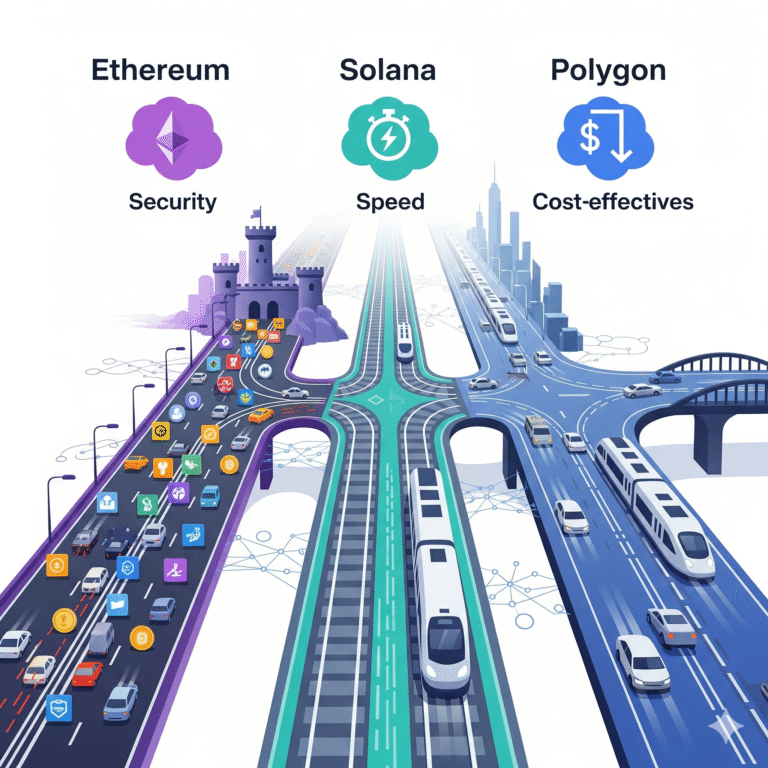
Understanding Ethereum Gas Fees: A Beginner’s Guide to the Fuel of the Blockchain

1

Introduction: Understanding Blockchain Transaction Costs

Imagine you’re driving a car on a busy highway. To keep moving, you need fuel—gasoline. Without it, your car stops. Now, picture the Ethereum blockchain as that highway, where millions of people are “driving” their digital transactions, like sending money or interacting with apps. The “fuel” here isn’t gasoline; it’s called “gas,” and the cost to buy it is known as gas fees. These fees keep the Ethereum network running smoothly, securely, and fairly.

Ethereum, launched in 2015, offers more than just cryptocurrency like Bitcoin. Developers use this decentralized platform to build smart contracts—self-executing programs that power everything from decentralized finance (DeFi) apps to non-fungible tokens (NFTs) and games. Every action on this network requires computation, and that’s where gas comes in. Gas fees compensate validators for processing and verifying transactions.

For newcomers, gas fees can seem confusing or frustrating, especially when they spike during high demand. Why do they exist? How does the protocol calculate them? And how can you avoid overpaying? This guide explains everything in simple terms, using 2025 data and the latest Ethereum upgrades.

What You’ll Learn

By the end, you’ll understand:

As of late 2025, typical Layer-2 (L2) fees are often under $0.02, thanks to the Dencun upgrade, while Layer-1 (L1) fees on mainnet remain variable (commonly tens of cents) depending on demand.


What Is Ethereum Gas?

Gas is a unit that measures the computational work required for a transaction or smart-contract execution. Think of it like paying for electricity to run your computer—every task uses energy, and every blockchain action consumes gas.

Why Ethereum Measures in Gas

Ethereum acts as a global computer maintained by thousands of nodes. Without fees, spammers could overload the network with junk transactions. Gas fees ensure that every operation has a cost, discouraging abuse.

Gas itself isn’t money—it’s a measure. Actual payment is in Ether (ETH), denominated in gwei, where 1 gwei = 0.000000001 ETH.

How Gas Protects the Network

For example, a simple ETH transfer uses about 21,000 gas units. If the base fee is 10 gwei, the cost is 210,000 gwei (0.00021 ETH). Users set a gas limit, the maximum gas they are willing to consume. If a transaction runs out of gas, it reverts, but you still pay for the work already done.


How Gas Fees Work

The total fee equals gas units × gas price. Since the London upgrade in 2021, the gas price consists of:

  • Base fee: Minimum required per gas, set automatically each block and adjusted by up to 12.5 % depending on how full the previous block was (target 50 % of max gas). This base fee is burned, reducing ETH supply.
  • Priority fee (tip): Optional extra paid to validators to prioritize your transaction.
  • Max fee per gas: The ceiling you’re willing to pay. If the actual base + tip is lower, you’re refunded the difference.

Example: sending 1 ETH might require 21,000 gas. If base fee = 8 gwei and tip = 1 gwei, you pay 21,000 × 9 gwei = 189,000 gwei (≈ 0.000189 ETH).

Different actions use different gas. Minting an NFT or trading on Uniswap might consume 100,000+ gas units.


EIP-1559: The Game Changer

Implemented in August 2021, EIP-1559 replaced the old first-price auction model with a base-fee mechanism.
Benefits:

  • Predictable fees and fewer bidding wars
  • Automatic burning of base fees, which creates deflationary pressure on ETH
  • Smooth integration with Ethereum’s Proof-of-Stake (since the 2022 Merge).

Factors Influencing Gas Fees

  • Network congestion: NFT drops or DeFi surges can still push L1 fees up.
  • Transaction complexity: A simple transfer costs far less than a multi-step contract call.
  • Timing: Prices often dip during weekends or late-night UTC hours.
  • Layer choice: Moving to L2 networks such as Arbitrum, Optimism, Polygon, or Immutable zkEVM typically cuts fees by 90–99 %.
  • ETH price: Fees are in gwei, so a rising ETH price can raise the dollar cost even if gwei stays constant.

Use tools like Etherscan Gas Tracker or Blocknative to monitor real-time fees.


Recent Upgrades and Their Impact

Dencun (EIP-4844)

Activated March 2024, Dencun introduced proto-danksharding, adding low-cost “blobs” of data for rollups.
Result: L2 transaction costs plunged by up to 95 %, with many routine transfers now costing only a few cents.

Pectra (Prague-Electra)

Activated May 2025, Pectra (not “end-of-2025” as some early plans suggested) brought EIP-7702, allowing externally owned accounts to gain temporary smart-contract abilities—a key step toward account abstraction and easier wallet UX.

Full danksharding is still in development and will further improve scalability, but it’s too early to promise “near-zero” L1 fees.


How to Keep Gas Costs Low

  • Use L2 networks whenever possible for 90 %+ savings.
  • Time transactions for off-peak hours (e.g., weekends UTC).
  • Use accurate gas estimates from trusted trackers to avoid overbidding.
  • Batch carefully: combining actions can reduce overhead, but only if contracts are optimized.
  • Monitor ETH price to understand dollar costs.

The Road Ahead

Layer-2 ecosystems now handle the majority of Ethereum activity. With account abstraction and future sharding, the user experience will keep improving. Major DeFi, NFT, and gaming applications are already defaulting to L2 for cost efficiency.

Gas will never fully disappear—it’s fundamental to Ethereum’s security and spam protection—but for most users it’s becoming an invisible, minimal expense.


Conclusion

Gas fees are the invisible engine of Ethereum. They deter spam, pay validators, and help maintain a deflationary ETH supply. After EIP-1559, the Merge, and Dencun, fees are far more predictable and, on L2s, astonishingly low.

Understand how base fee, tips, and network demand interact, and you’ll know how to transact smarter—whether you’re swapping tokens, minting NFTs, or exploring the next wave of decentralized apps.

Helpful Resources