Home Blog Page 2

AI Trading Bots — Who Actually Delivers Profit in 2025

0

In the fast-paced world of cryptocurrency trading, AI trading bots have emerged as powerful tools promising to automate strategies and generate profits around the clock. But with so many options available in 2025, the big question remains: which ones actually deliver real results? This comprehensive guide explores the landscape of AI trading bots, focusing on those backed by reliable reviews and performance data. We’ll break it down simply for beginners while drawing on verified sources to ensure accuracy. Whether you’re new to crypto or looking to optimize your ETH/USD trades, understanding these bots can help you make informed decisions.

What Are AI Trading Bots?

AI trading bots are software programs that use artificial intelligence, machine learning, and algorithms to execute trades automatically on cryptocurrency exchanges. Unlike manual trading, where you monitor charts and make decisions yourself, these bots analyze market data, predict trends, and act on predefined strategies 24/7 without human intervention.

At their core, they rely on historical data, real-time indicators like RSI (Relative Strength Index) or moving averages, and sometimes advanced neural networks to spot opportunities. For example, a bot might buy Ethereum when its price dips below a certain threshold and sell when it rebounds, aiming for small but consistent gains over time. Understanding these automated systems is becoming as crucial as following emerging blockchain technologies that continue to reshape the digital asset landscape.

Grid Trading: Places buy and sell orders at set intervals to profit from price fluctuations within a range. This strategy works best in sideways markets where prices oscillate without strong directional trends.

Dollar-Cost Averaging (DCA): Buys fixed amounts of cryptocurrency at regular intervals to average out costs over time, reducing the impact of volatility on your overall investment.

Arbitrage: Exploits price differences across venues, including spot-futures funding differentials. Platform tutorials often present attractive annualized ranges under ideal conditions; these are historical or illustrative and depend heavily on market funding spreads. Source: Pionex

Scalping: Makes numerous small trades to capture tiny price movements, requiring high-frequency execution and tight spreads to be profitable.

These bots connect to exchanges via APIs (Application Programming Interfaces), ensuring hands-off operation. However, success isn’t guaranteed—markets are volatile, and bots can’t predict regulatory shocks or black swan events. Regulators have also warned that AI systems can behave in unexpected ways; for instance, recent research highlights that AI agents may even learn tacit collusive behaviors in certain markets, a reminder to keep risk controls tight. Source: BakerHostetler

How Do AI Trading Bots Work?

Imagine a tireless assistant scanning the crypto market for you every second of every day. AI bots process vast amounts of data faster than any human could possibly manage. They use machine learning to “learn” from past trades, adapting strategies to current market conditions. For instance, if Ethereum’s price shows a pattern of rebounding after a 5% drop, the bot might automate buys during similar dips in the future—similar to how yield farming on Ethereum requires careful strategy and timing to maximize returns.

Key Components of AI Trading Bots

Data Input: Real-time prices, trading volume, and sometimes news feeds or technical indicators feed into the bot’s decision-making engine.

Algorithm Execution: Rules like “if ETH/USD falls 3%, buy; if it rises 5%, sell” guide the bot’s actions based on market movements.

Risk Management: Stop-loss orders, position sizing, and take-profit rules help protect capital and lock in gains.

Backtesting: Simulates strategies on historical data to evaluate potential performance—useful for optimization, but remember backtests aren’t audited live results and can’t predict future outcomes.

In practice, a beginner might start with a simple DCA bot on Pionex, investing small amounts regularly with spot fees starting at 0.05%, while advanced users might script custom logic on platforms like HaasOnline for more sophisticated strategies. Source: Pionex

Benefits and Risks of Using AI Trading Bots

Benefits

Efficiency: Trade 24/7 without fatigue, particularly helpful for volatile assets that can move significantly while you sleep.

Emotion-Free Decisions: Pre-programmed rules reduce panic sells during crashes and FOMO (fear of missing out) buys during pumps—a discipline that’s equally important whether you’re trading established coins or exploring emerging meme coin launches.

Diversification: Run multiple trading pairs simultaneously without spreading your attention too thin.

Backtesting and Optimization: Many platforms offer simulators to test strategies before risking real capital; treat results as indicative, not promises of future performance.

Accessibility: Several platforms offer free tiers or trial periods, lowering the barrier to entry for newcomers.

Risks

Market Volatility: Bots won’t save you from market crashes or sustained bear markets—they follow their programming regardless of broader conditions.

Technical Issues: API glitches or exchange downtime can halt trading at critical moments, potentially causing missed opportunities or losses.

Over-Reliance: Poor configuration equals poor outcomes; independently audited “win rates” for retail bots are scarce, making it difficult to verify marketing claims.

Fees: Platform subscriptions plus trading fees can eat into returns, especially for smaller accounts or high-frequency strategies.

Security: Use reputable tools and manage API key scopes carefully. For example, 3Commas confirmed an API key data exposure incident in December 2022; rotate keys regularly and use IP allowlists and withdrawal locks where possible. Source: 3Commas | Source: The Block

To mitigate risks, start with small position sizes, diversify across strategies and assets, and monitor performance regularly rather than setting and forgetting.

Top AI Trading Bots That Have Shown Strong Features

Our focus is on crypto-specific tools with robust feature sets and broad exchange support. Where exact live ROI claims are marketing-led or anecdotal, we note that explicitly to maintain transparency.

1. Cryptohopper

Cloud-based automation platform with backtesting capabilities and a marketplace for copying strategies from experienced traders. Supports major exchanges including Binance, Kraken, KuCoin, Coinbase Advanced, and others. Plans range from Free to $107.50 per month depending on features and limits. Source: Cryptohopper

As with peer platforms, no independently audited performance track record is published; results depend entirely on the strategies you deploy or copy from the marketplace.

Best For: Beginners who want to copy vetted strategies and tinker with templates without coding.

2. Pionex

Cryptocurrency exchange with built-in bots (marketing materials highlight 16+ free bots) and low spot trading fees of 0.05%. Claims around spot-futures arbitrage APRs ranging from 15–50% originate from Pionex’s own older tutorials and should be treated as illustrative or historical; actual returns vary significantly with funding rates and market conditions. Source: Pionex

Best For: Cost-conscious users who want “no-code” grid or DCA bots on a single venue without paying separate subscription fees.

3. 3Commas

Feature-rich platform offering DCA, grid, and signal bots across numerous exchanges, though support varies by region. Current public pricing shows plans around $15, $40, and $160 per month (monthly billing, before annual discounts). Note the December 2022 API key incident confirmed by 3Commas; apply least-privilege API scopes and rotate keys regularly to maintain security. Regional restrictions may apply to paid plans. Source: 3Commas

Best For: Experienced users who want multi-exchange automation and granular bot controls with advanced customization options.

4. Coinrule

Rule-based automation platform with “if-this-then-that” logic and pre-built templates. Pricing ranges from Free to $749 per month depending on trading volume limits and advanced features. Backtesting and paper trading are standard; live profitability depends on your rules and the market regime. Source: Coinrule

Best For: Users who prefer visual rule builders and pre-built strategy templates over coding custom scripts.

5. HaasOnline

Advanced platform with HaasScript scripting language and deep customization capabilities. Pricing has historically used crypto-denominated licenses and has evolved over time, with tiers like Beginner, Simple, and Advanced in past schedules; verify current licensing on their site before purchase. This is a power-user tool—highly capable, but demands significant skill and technical knowledge. Source: HaasOnline

Best For: Technical users comfortable with scripting and advanced trading logic who want maximum control and flexibility.

Other Notable Platforms

Bitsgap: Multi-exchange bot platform with plans starting in the $23–$29 per month range depending on billing cycle, offering portfolio management and arbitrage tools. Source: Bitsgap | Source: Traders Union

TradeSanta: Three-tier pricing structure commonly listed around $25, $45, and $90 monthly with lower annualized rates for annual commitments. As with other platforms, performance depends on configuration and market conditions, not just the bot itself. Source: TradeSanta

Case Studies: Real Examples and Performance Context

Grid Trading in Ranging Markets

Vendor and community case studies often show strong grid outcomes when prices stay in a defined band. For example, GoodCrypto presented a self-published BTC grid case study claiming high annualized returns during a sideways period. Treat such write-ups as educational illustrations rather than performance guarantees. The automated nature of these strategies shares similarities with AI-generated NFTs in that both leverage algorithmic decision-making, though in very different contexts. Source: GoodCrypto

Backtests vs. Live Trading Reality

Platforms frequently highlight backtests that beat buy-and-hold strategies; however, backtests use historical data and idealized execution conditions. There is no standardized, audited cross-platform performance database for retail bot users as of November 2025—results vary widely and are sensitive to fees, latency, and slippage. General AI trading research underscores that agent behavior can diverge from expectations in live markets. Source: Investopedia

Important Correction to Common Claims

Specific percentage gains widely circulated in blogs and forums lack independent, verifiable sources. Treat such figures as anecdotal unless you can reproduce them with transparent trade logs and documented execution history. Marketing materials should always be evaluated critically.

Who Actually Delivers Value?

The “who” boils down to reputable platforms with robust tooling rather than miracle bots that promise guaranteed returns. Leaders like Cryptohopper, Pionex, 3Commas, Coinrule, Bitsgap, and HaasOnline provide:

Transparent Features: Backtesting, paper trading, and strategy editors that let you test before risking capital. Source: Cryptohopper | Source: Pionex

Exchange Coverage: Integrations with well-known venues, though availability varies by jurisdiction and regulatory environment. Source: Cryptohopper Support

Risk Tools: Stop-loss, take-profit, and position sizing features baked into the platform interface.

Reality Check

Profits come from well-designed strategies executed in the right market regime, plus strict risk management and disciplined execution. No bot “prints” money on its own—they’re tools that amplify good strategy or magnify poor decisions. Just as NFTs serve as access passes to exclusive experiences, trading bots serve as gateways to automated execution—but the value depends entirely on what you bring to the table.

Getting Started with AI Trading Bots: A Practical Roadmap

AI trading bots can help automate your trading, but sustained profits require education, cautious position sizing, and constant monitoring. For beginners, a small DCA or conservative grid bot on a reputable venue like Pionex with 0.05% spot fees is a pragmatic entry point; as you upskill, explore rule-builders like Coinrule or strategy marketplaces like Cryptohopper.

Essential Best Practices

Paper Trade First: Test strategies with simulated funds before risking real capital to understand how the bot behaves.

Secure Your API Keys: Keep API keys restricted with withdrawal permissions disabled, rotate them often, and use IP allowlists where possible. Source: 3Commas | Source: Binance API Documentation

Track All Fees: Account for both platform subscription fees and trading commissions when calculating net returns.

Expect Variance: Ignore screenshot “success stories” without transparent trade histories showing entries, exits, and fees.

Stay Informed: Regulation is evolving in 2025; keep an eye on SEC and CFTC guidance affecting crypto trading tools and venues. Source: SEC | Source: CFTC

Final Thoughts

The cryptocurrency trading landscape is competitive and unforgiving. AI trading bots are sophisticated tools that can help you execute strategies consistently without emotional interference, but they’re not a replacement for knowledge and risk management. Start small, learn continuously, and remember that every profitable trader—whether using bots or trading manually—has experienced losses along the way. The difference is in how you manage risk and adapt to changing market conditions.


Disclaimer: This article is for informational purposes only and does not constitute financial advice. Cryptocurrency trading involves substantial risk of loss. Always conduct your own research and consult with a qualified financial advisor before making investment decisions.

Copy Trading Platforms in Crypto: A Beginner’s Guide to Automated Investing in 2025

0

In the fast-paced world of cryptocurrency, where prices can swing wildly in minutes, many newcomers feel overwhelmed by the need to analyze charts, predict trends, and execute trades. This is where copy trading platforms come in. Copy trading allows beginners to automatically replicate the strategies of experienced traders, making crypto investing more accessible without requiring deep expertise. As of 2025, with the crypto market maturing and regulations tightening, these platforms have become popular tools for passive income generation. This article explores what copy trading is, how it works in crypto, its benefits and risks, top platforms, and tips to get started. Whether you’re new to Bitcoin or Ethereum trading, understanding copy trading can help you navigate the volatile crypto landscape smartly.

What Is Copy Trading in Crypto?

Copy trading is a straightforward investment method where you mirror the trades of successful, experienced traders in real time. In the context of cryptocurrency, this means when a professional trader buys or sells assets like Bitcoin (BTC), Ethereum (ETH), or altcoins, your account does the same automatically. You don’t need to make decisions yourself; the platform handles the execution based on the trader you’ve chosen to follow.

For beginners, think of it like shadowing a mentor. You select a trader based on their past performance—such as win rates, return on investment (ROI), and risk levels—and allocate funds from your account. The system then copies their moves proportionally. For example, if the trader invests 10% of their portfolio in ETH/USD and you’ve allocated $1,000, $100 of your funds would go into that trade. This automation is powered by advanced algorithms on trading platforms, ensuring trades happen almost instantly.

Unlike traditional crypto trading, where you might spend hours studying market news or technical indicators, copy trading democratizes access to crypto markets. It’s particularly useful in crypto due to 24/7 trading and high volatility, allowing novices to benefit from experts’ insights without constant monitoring. However, it’s not a guarantee of profits—markets can turn, and past success doesn’t predict future results.

Copy trading differs from social trading (where you discuss and manually follow ideas) or signal trading (where you get alerts but execute yourself). In pure copy trading, everything is hands-off once set up, making it ideal for busy individuals or those new to blockchain technology.

How Does Copy Trading Work in Crypto?

At its core, copy trading in crypto involves linking your account to a lead trader’s via a platform’s software. Here’s a step-by-step breakdown for beginners:

Sign Up and Fund Your Account: Choose a reputable platform, create an account, verify your identity (KYC), and deposit funds. Minimums vary by platform—for example, eToro requires $200 to copy a trader, so check before you start. Source: eToro Help Center

Browse and Select Traders: Platforms provide leaderboards with detailed stats. Look at metrics like ROI, maximum drawdown (biggest loss), win rate, and trading history.

Allocate Funds and Set Parameters: Decide how much to invest in copying that trader. Set risk controls like stop-loss (automatic sell if losses hit a threshold) or take-profit (sell when gains reach a goal).

Automatic Replication: Once activated, the platform mirrors trades in real time. If the lead trader shorts BTC/USD during a bear market, your account does too, scaled to your allocation.

Monitor and Adjust: Dashboards show performance. You can pause, add funds, or switch traders anytime.

In crypto-specific platforms, this often includes spot trading (buying actual coins) or futures (leveraged contracts for amplified gains/losses). Typical futures fees for major exchanges like Binance and Bybit are around 0.02% maker and 0.04–0.055%+ taker for entry-level tiers. Source: Binance Fee Schedule

Tools like API integrations ensure seamless execution, but delays in high-volatility events like flash crashes can occur. Always start with a demo account to practice without real money—many platforms now offer mock or demo copy trading. Source: Binance

Benefits of Copy Trading in Crypto

Copy trading offers several advantages, especially for beginners entering the crypto space:

Accessibility for Novices: No need for advanced knowledge of blockchain, smart contracts, or technical analysis. Even if you’re just starting to learn about crypto trading, you can participate immediately.

Time Efficiency: Crypto markets never sleep, but you can. Automation lets you earn passively while focusing on other projects, whether you’re exploring NFT marketplaces or building blockchain applications.

Diversification: Copy multiple traders with different styles—for example, one focusing on ETH/USD longs, another on altcoin scalping—to spread risk across assets.

Potential for Higher Returns: Experienced traders often outperform solo beginners due to their market knowledge and trading strategies, particularly those who use on-chain analytics tools to inform their decisions.

Risk Management Features: Platforms include tools like drawdown limits, helping mitigate crypto’s infamous volatility.

Risks and Drawbacks of Copy Trading in Crypto

While appealing, copy trading isn’t risk-free. Crypto’s volatility amplifies potential issues:

Market and Trader Risks: If the lead trader makes poor calls, you lose money. Crypto events like regulatory crackdowns or hacks can cause sudden drops.

No Guaranteed Profits: Past performance isn’t indicative of future results—this fundamental truth applies even when copying successful traders.

Fees Eating Profits: Profit shares (often 10%–30%, depending on platform and trader level) and trading fees add up, especially in low-return periods. Source: Binance

Lack of Control: You’re reliant on others’ decisions and trading strategies, which may not always align with your risk tolerance.

Platform and Regional Limits: Availability and feature sets differ by region and regulation; always review what’s actually offered in your country.

Top Copy Trading Platforms for Crypto in 2025

Based on 2025 reviews, here are five leading platforms supporting crypto copy trading. We selected them for user-friendliness, security, and features:

1. eToro

eToro pioneered social trading and remains top for beginners. It supports copying trades across crypto, stocks, and more. Features include CopyTrader for real-time replication, detailed trader profiles, and a $200 minimum per copied trader. There’s no extra “copy fee”—you pay the platform’s normal pricing. Source: eToro

Fees (crypto): Since 2025, eToro applies a 1% crypto commission each time you buy or sell, in addition to market spread, replacing older single-spread examples you may see cited online. Source: eToro Fees

Regulation: eToro entities are regulated by the FCA (UK), ASIC (Australia), and CySEC (EU). Source: eToro

US availability note: Following a September 2024 SEC settlement, U.S. users’ crypto access is restricted mainly to BTC, ETH, and BCH; other tokens were phased out for U.S. customers. Separately, CopyTrader for U.S. stocks/ETFs has rolled out in late 2025. Source: Reuters

Pros: Regulated, community-driven, easy interface.

Cons (updated): Crypto selection for U.S. users is limited post-settlement; spreads/commissions can be higher than pure crypto exchanges.

2. Bybit

Bybit excels in crypto derivatives copy trading. Users follow top traders via leaderboards showing ROI and win rates. As detailed in our comprehensive platform comparison, Bybit offers smart leverage tools, risk controls, and a test environment. Profit share is typically 10% of net profits to the lead trader; derivatives fees for regular users are approximately 0.02% maker and 0.055% taker. Source: Bybit Fees

Pros: High liquidity, transparent metrics, comprehensive trading tools.

Cons: Not available for U.S. users; derivatives carry higher risk than spot trading.

3. Binance

As the largest crypto exchange, Binance integrates spot and futures copy trading, plus mock copy trading with virtual funds (handy for practice). If you’re new to the platform, check out our complete Binance tutorial for beginners. Lead traders can receive up to 30% performance share and 10% of copy traders’ trading fees—numbers that vary by program and product. Spot fees for entry tiers are typically 0.1%, while futures start around 0.02% maker and 0.04–0.05% taker before VIP discounts. Source: Binance Fee Structure

Pros: Vast asset selection, high liquidity, practice mode (mock), comprehensive ecosystem.

Cons: Availability and restrictions vary by country; advanced interface can overwhelm true beginners.

4. Zignaly

Zignaly stands out with its profit-sharing model and Z-Score for vetting traders. It typically connects via API to exchanges like Binance, so your crypto stays on the connected exchange. Zignaly markets itself as non-custodial, with security certifications referenced. Check current terms for any product that changes custody. Source: Hedge With Crypto

Pros: API-based setup, trader scoring system, non-custodial approach.

Cons: Experience can depend on the connected exchange’s fees and features.

5. OKX

OKX offers advanced tools for spot and futures copy trading with wide asset coverage. As covered in our top trading platforms guide, OKX provides profit-sharing up to 30% based on lead-trader level (older documentation citing 8–13% has been superseded). OKX also provides a demo trading environment for practice (general demo trading is available; check whether copy-specific demo is currently supported in your region). Source: OKX

Pros: Broad markets, strong toolset, competitive fees, comprehensive trading options.

Cons: Not available to U.S. residents.

Why some earlier numbers changed: You’ll see articles quoting fixed figures like “eToro BTC spread 0.75%” or “OKX profit share 8–13%.” Fee models and revenue sharing changed in 2024–2025 on multiple platforms; the current official pages above reflect the latest structures. Source: eToro

How to Choose a Copy Trading Platform

When selecting a platform for crypto copy trading in 2025:

Regulation and Security: Prefer licensed venues or those with clear regulatory posture and transparent security practices, such as FCA, ASIC, or CySEC oversight for eToro. Source: eToro Regulation

Fees and Minimums: Compare profit-share rates and maker/taker fees; confirm minimums (for example, $200 per trader on eToro). Understanding the complete fee structures of platforms like Binance is essential. Source: eToro Help Center and Binance

Trader Quality: Ensure transparent statistics and adequate trading history to evaluate performance accurately. Advanced traders often use on-chain analytics tools like Dune and Nansen to gain market insights.

User Experience: Look for intuitive apps and mock or demo options to practice first. Source: Binance

Asset Support: Verify your preferred trading pairs (such as ETH/USD perpetuals) are supported in your region.

Getting Started with Copy Trading in Crypto

To begin your copy trading journey:

Research platforms using comprehensive guides like this one and our complete crypto trading guide to understand features and limitations.

Sign up and fund your account with crypto or fiat currency according to platform requirements. For step-by-step guidance, see our Binance tutorial.

Practice on mock or demo environments to understand mechanics without risking capital. Source: Binance

Select two to three traders with different strategies, allocating small amounts to test performance.

Monitor weekly and adjust your portfolio based on performance metrics.

Start small to test the waters, focusing on low-risk strategies until you gain confidence.

Tips for Success as a Beginner

Diversify across traders and assets: Don’t put all your funds with one trader or in one cryptocurrency. Consider diversifying across different blockchain ecosystems, just as you might explore different NFT marketplaces.

Set strict risk limits: Consider limiting risk to 2% per trade to protect your capital.

Stay educated on crypto news: Keep up with market developments through reliable sources and understand crypto trading fundamentals.

Review performance monthly: Regularly assess whether your copied traders are meeting expectations; switch if needed.

Avoid greed: Remember that copy trading is a tool, not a guaranteed shortcut to wealth.

Use analytics: Learn to interpret market data using on-chain analytics platforms to better understand the strategies of traders you’re copying.

Conclusion

Copy trading platforms in crypto empower beginners to participate in markets like ETH/USD without deep expertise, offering automation and valuable learning opportunities. Platforms like eToro, Bybit, Binance, Zignaly, and OKX lead the market in 2025, but success requires caution amid inherent risks.

By starting small, using verified platform features (including demo or mock modes), and understanding fees and profit-sharing structures, you can build a crypto portfolio more confidently. For more detailed platform comparisons, explore our guide to top trading platforms in 2025. Remember to invest wisely—cryptocurrency is exciting but unpredictable, and responsible risk management should always be your priority.


Key External Resources:

Whale Watching: How Big Wallets Move Markets

0

In the world of cryptocurrency, the term “whale” doesn’t refer to the massive ocean creatures but to powerful players who hold enormous amounts of digital assets. These big wallets, often belonging to individuals, institutions, or even exchanges, can send ripples through the market with a single transaction. Imagine a small fish swimming in a vast sea—that’s the average investor. Now picture a whale gliding by, creating waves that affect everyone nearby. This article explores how these crypto whales operate, their impact on prices and trends, and why beginners should pay attention to whale watching. We’ll break it down simply, using real examples from reliable sources, to help you navigate this exciting yet volatile space.

Understanding Crypto Whales: The Basics for Beginners

Crypto whales are entities that own a significant portion of a cryptocurrency’s supply, giving them the power to influence market dynamics. For Bitcoin, a whale is typically someone holding at least 1,000 BTC, which, at current prices, could be worth tens of millions of dollars. This threshold varies by coin; for smaller altcoins, even a few hundred thousand dollars might qualify as whale-level holdings.

Why call them whales? The analogy comes from traditional finance, where large investors are like big fish in a pond. In crypto, whales include:

Early Adopters: People who bought Bitcoin or Ethereum early, like those who mined BTC in its infancy and understood how crypto trading works from the beginning.

Institutions: Companies such as MicroStrategy or Tesla, which have publicly accumulated large Bitcoin holdings.

Exchanges and Custodians: Platforms like Binance, Coinbase, or Kraken hold vast reserves on behalf of users, making them de facto whales.

For beginners, think of whales as market heavyweights. Their wallets are public on the blockchain, but their identities often remain anonymous. Tools like blockchain explorers allow anyone to track these addresses, turning whale watching into a popular strategy.

Source: Glassnode Insights | CoinDesk

How Big Wallets Influence Market Prices

Whales don’t just hold crypto—they move it, and these movements can dramatically affect prices. When a whale buys or sells in large volumes, it creates immediate supply or demand shifts. Here’s how this plays out in simple terms:

Price Volatility

Large sell-orders from whales can flood the market, driving prices down quickly. Conversely, big buys can spark rallies. For instance, if a whale accumulates Bitcoin, it signals confidence, attracting more buyers and pushing prices up. Research shows that activity by large holders is associated with changes in volatility and subsequent price dynamics in major networks like Bitcoin and Ethereum.

Example: In July 2025, a whale transferred 25,498,179 XRP from an unknown wallet to Coinbase (approximately $57.8M at alert time), an event widely tracked by Whale Alert and often interpreted by traders as potential sell pressure. Understanding these movements is crucial for anyone learning what crypto trading entails.

Source: SSRN Research Papers | Whale Alert

Liquidity Impacts

Liquidity refers to how easily an asset can be bought or sold without affecting its price. Whales provide liquidity by trading large amounts, but they can also drain it. In less liquid markets (like smaller altcoins or new generation memecoins on TON and Base blockchains), a whale’s sell-off might cause a “liquidity drain,” leading to sharper price drops.

For beginners: Imagine a small pond versus the ocean. In a pond (low liquidity), a whale’s splash creates big waves. In the ocean (high liquidity like Bitcoin), the impact is smaller but still noticeable.

Whales often set trends. Their actions can trigger fear of missing out (FOMO) during accumulations or panic selling during dumps. When whales move funds to exchanges, it might signal selling, shifting sentiment bearish. On the flip side, withdrawing to cold storage suggests long-term holding, boosting confidence. Studies and market reports frequently observe that large-holder behavior correlates with retail flows and overall market mood.

Even in stablecoin markets like DAI, USDC, and USDT, whale movements can affect liquidity and trading pair dynamics across exchanges.

Source: Yahoo Finance

Blockchain Governance

Beyond prices, whales can sway decisions in decentralized networks. With large stakes, they influence voting on protocol upgrades or governance proposals. This gives them power over the future direction of a blockchain, whether it’s emerging platforms like NEAR, Aptos, or Sui or established networks like Ethereum. The governance influence is particularly significant in next-generation blockchains like Sui and Aptos that use the Move programming language, where early whales can shape the ecosystem’s development.

Real-World Examples of Whales Moving Markets

To make this concrete, let’s look at verified cases where whale actions directly impacted markets. These examples are drawn from on-chain data and reports, avoiding any speculation.

XRP Whale Transfer: In July 2025, Whale Alert flagged a transfer of 25,498,179 XRP to Coinbase; the alert value was about $57.8M at the time. Such exchange-bound transfers are closely watched because they can precede selling and short-term price pressure.

Source: Whale Alert

Solana Whale Activity: On August 13, 2025, on-chain trackers reported pump.fun sent 86,255 SOL (approximately $16.22M) to Kraken, a whale-scale move that drew trader attention to potential short-term impacts on SOL’s microstructure.

Source: Cryptopolitan

Bitcoin Accumulation Trends: Multiple market updates in 2025 noted shifts in the count of Bitcoin “whale entities” (≥1,000 BTC) and linked accumulation/withdrawal patterns with risk-on phases; Glassnode’s definition and counts are widely referenced in such analyses.

Source: Glassnode Insights

ASTER Short Position: Recent reports (November 2–3, 2025) describe a whale opening a 3× leveraged short on ASTER with notional size reported between approximately $18.8M and $53M, reflecting differing trackers at different times. This showcases how whale conviction trades can influence sentiment; note the token referenced is ASTER (not Astar/ASTR).

Source: The Block Beats

Whale Watching: A Beginner’s Guide to Tracking Big Wallets

Whale watching is the practice of monitoring these large holders to gain insights into potential market moves. It’s like birdwatching but for blockchain transactions. Beginners can start with free tools:

Blockchain Explorers: Sites like Etherscan for Ethereum or Blockchair for Bitcoin let you view wallet balances and transactions. These tools are especially useful when monitoring Ethereum gas fees and transaction costs associated with whale movements. For newer blockchains, specialized explorers track whale activity on high-performance platforms like Sui and Aptos.

Whale Alert Services: Platforms such as Whale Alert tweet real-time notifications of large transfers.

Source: Whale Alert

Analytics Platforms: Tools like Nansen or Glassnode provide advanced tracking, including whale wallet labels and behavior patterns.

Source: Nansen

Social Media and Apps: Follow accounts on X (formerly Twitter) for updates, or use apps with whale-tracking feeds.

Tips for Beginners

Look for patterns: Repeated accumulations might signal a rally.

Combine with other data: Don’t rely solely on whales—check news and charts. Understanding fundamental crypto trading principles helps contextualize whale activity.

Be cautious: Not all large moves are intentional market plays; some are just wallet reorganizations.

Risks and Considerations When Following Whales

While whale watching can be informative, it’s not foolproof. Markets are unpredictable, and whales can manipulate perceptions. For example, a “sell-off” might simply be a whale moving funds between their own wallets. Beginners should:

Avoid FOMO: Don’t chase every whale move without research.

Diversify: Spread investments to mitigate volatility from whale actions. Consider diversifying across different blockchain ecosystems, from modern VM platforms to stablecoins, and explore innovative blockchains like Sui and Aptos with their Move language advantages.

Use Risk Management: Set stop-losses, as whale-induced swings can be sharp.

Remember, crypto is high-risk. Whale influence amplifies this, but understanding it empowers you.

Conclusion: Why Whale Watching Matters for Your Crypto Journey

Crypto whales are the giants of the digital asset world, capable of moving markets with their big wallets. From causing price volatility to shaping sentiment and governance, their actions offer valuable clues for investors. By learning to watch whales through tools and patterns, beginners can make more informed decisions, turning potential waves into opportunities.

As the market evolves, staying updated via reliable sources is key. Whether you’re trading ETH/USD and monitoring gas fees, exploring emerging memecoin opportunities, researching next-generation blockchain platforms, or simply learning the basics of crypto trading, remember: In crypto, knowledge of the big players can help small fish swim smarter. Dive in responsibly, and always do your own research.

Source: Glassnode Insights


Additional Resources:

  • CoinMarketCap – Track cryptocurrency prices and market caps
  • CoinGecko – Comprehensive crypto data and analytics
  • Messari – In-depth crypto research and insights
  • DeFi Llama – Track DeFi protocols and TVL
  • Dune Analytics – Community-powered crypto analytics

On-Chain Analytics for Traders: Mastering Dune, Nansen, and DeFi Llama

0

In the fast-paced world of cryptocurrency trading, data is king. On-chain analytics refers to the process of examining data directly from blockchain networks, such as transaction volumes, wallet activities, and smart contract interactions. Consequently, this approach gives traders a transparent view of market behaviors that off-chain data—like stock prices or news sentiment—often misses. For beginners, think of on-chain analytics as peeking under the hood of a car engine to see how it’s really performing, rather than just looking at the dashboard speedometer.

Why do traders need on-chain analytics? It helps spot trends early, identify risks like potential rug pulls, and track “smart money” movements from experienced investors. Furthermore, tools like Dune Analytics, Nansen, and DeFi Llama make this accessible, turning complex blockchain data into actionable insights. In this article, we’ll explore these platforms in detail, with simple explanations, beginner-friendly examples, and tips for crypto trading. Whether you’re trading ETH/USD pairs or diving into DeFi, these tools can sharpen your edge. To understand the broader context of cryptocurrency trading, check out our complete beginner’s guide to crypto trading.

What Is On-Chain Analytics and Why It Matters for Traders

On-chain analytics involves querying and visualizing data stored on blockchains like Ethereum, Solana, or Binance Smart Chain. Unlike traditional financial analysis, which relies on centralized reports, on-chain data is public, immutable, and real-time. Therefore, traders use it to:

Detect Market Trends: See rising transaction volumes that signal growing interest in a token.

Assess Project Health: Monitor total value locked (TVL) in DeFi protocols to gauge liquidity and user adoption.

Follow Whale Activity: Track large wallet movements to predict price shifts.

Avoid Risks: Identify unusual patterns, like sudden token dumps, that could indicate scams.

For beginners, imagine trading ETH/USD without knowing if big players are buying or selling ETH on-chain—this is like driving blindfolded. Fortunately, on-chain tools democratize this data, helping retail traders compete with institutions. In 2025, with over 100 blockchains active, platforms like Dune, Nansen, and DeFi Llama stand out for their user-friendly interfaces and comprehensive coverage. To dive deeper into Ethereum’s on-chain metrics, explore our guide on key Ethereum stats and charts every investor should know.

Dune Analytics: Community-Driven Data Queries for Traders

Dune Analytics is a collaborative platform that turns raw blockchain data into queryable SQL databases, making it ideal for custom on-chain analysis. Launched in 2018, it provides historical data across 100+ chains and hosts 1.5 million+ datasets with 750,000+ public dashboards and insights, plus AI-assisted features for discovery.

Key Features of Dune for On-Chain Analytics

SQL Querying: Users write simple SQL queries to extract data, like transaction histories or token balances.

Dashboards and Visualizations: Create charts to track metrics such as DeFi yields or NFT sales volumes.

Cross-Chain Coverage: Additionally, Dune advertises 2,000+ cross-chain tables and approximately 60,000 decoded contracts.

Community Insights: Explore pre-built dashboards for quick starts.

As a result, traders benefit by discovering granular insights, such as tracking essential metrics for DeFi protocols or NFTs at a detailed level. For instance, you can query wallet activities to see if a token’s holders are accumulating or distributing. Moreover, if you’re interested in NFT analytics, learn more about leading NFT marketplaces like OpenSea, Blur, and Magic Eden.

How Traders Use Dune: Beginner Examples

Beginners can start with free tools to analyze ETH/USD trends. Here’s a step-by-step example:

Sign Up and Explore: First, create a free account and browse trending dashboards on dune.com/discover. Dune states it’s free to get started.

Run a Basic Query: Next, to check ETH transaction volumes, use SQL like:

sql

SELECT date, COUNT(*) FROM ethereum.transactions GROUP BY date;

This shows daily activity spikes, helping predict price volatility.

Build a Dashboard: Subsequently, visualize TVL in a DeFi protocol like Uniswap. If TVL rises while prices dip, it might signal a buying opportunity.

Track NFTs: Finally, query on-chain sales data for collections to spot undervalued assets before they pump.

One real-world use: Traders used Dune to analyze NFT minting patterns, identifying profitable flips by monitoring gas fees and buyer wallets.

Nansen: AI-Powered Wallet Insights for Smart Trading

Nansen is an agentic on-chain app that acts like a personal research team, specializing in wallet labeling and smart money tracking. Notably, Nansen publicly claims coverage of 20+ chains, 500 million labeled addresses, and 10,000 “Smart Money” wallets—numbers that matter if you rely on entity context.

Key Features of Nansen for On-Chain Analytics

Wallet Labeling: Identifies wallets as “top investor,” “exchange,” or “rug puller” for context.

Smart Alerts: Get notifications for specific activities, like large transfers.

Token God Mode: Dive into any coin’s trades, holders, and flows.

Portfolio Management: Track holdings with profit and loss (PnL) across chains.

API Access: For programmatic data pulls in trading bots.

These features help traders verify hunches and act fast. In particular, Nansen’s research team documented on-chain flows around the FTX collapse in November 2022, a widely cited case study in outflow detection.

How Traders Use Nansen: Beginner Examples

Nansen excels in following “smart money”—wallets of successful traders. A beginner’s guide:

Monitor Smart Money: First, search for top wallets and see what tokens they’re buying, like ETH accumulations signaling bullish ETH/USD moves.

Set Alerts: Additionally, alert for whale transfers over 1,000 ETH to anticipate dumps.

Analyze PnL: Moreover, track wallet profits to copy strategies; Nansen shows unified views across EVM chains.

Whale Holder Patterns: Use AI to spot token distributions, avoiding pumps-and-dumps.

In practice, some users report outsized gains in testimonials, but treat this as marketing and not a guarantee of results.

Pricing Note: Nansen offers subscription plans with trial options, but exact tiers change—check the current pricing page directly rather than relying on third-party summaries.

DeFi Llama: Comprehensive DeFi Dashboard for Market Overview

DeFi Llama is a free analytics hub aggregating data from thousands of protocols across hundreds of chains, focusing on DeFi metrics like TVL and volumes. Specifically, it provides real-time sections for TVL, DEX volumes, perpetuals volumes, and stablecoins, including USDT dominance, which DeFi Llama’s public dashboard recently showed at approximately 59.75%. For a comparison of leading DeFi ecosystems, read our analysis on Ethereum vs Solana in DeFi.

Key Features of DeFi Llama for On-Chain Analytics

TVL Rankings: Sort protocols by locked value to find top performers. DeFi Llama defines TVL in its documentation.

Volume and Fees: In fact, DEX 24-hour volume commonly hovers around tens of billions; a recent snapshot showed approximately $19 billion per 24 hours on DeFi Llama’s DEX dashboard.

Cross-Chain Data: Covers Ethereum to emerging chains like Base or Sui.

Yields and Unlocks: Check staking APYs and upcoming token releases.

Stablecoin Insights: Track market caps and dominance.

How Traders Use DeFi Llama: Beginner Examples

DeFi Llama is beginner-friendly with no login required. Examples:

Spot High-Yield Opportunities: First, filter staking pools by APY; stake ETH in a top pool for passive income.

Monitor TVL Trends: Similarly, if a chain’s TVL jumps sharply, it may indicate DeFi growth—consider related tokens.

Analyze Volumes: Furthermore, use perpetuals and DEX sections to focus on active venues. Decentralized perpetuals hit roughly $1 trillion+ in rolling 30-day volume in late 2025, underscoring sector depth.

Track Unlocks: Finally, avoid tokens with large unlocks to prevent dumps.

Traders profit from TVL rankings by investing in rising protocols early. Indeed, DeFi Llama is free and does not run sponsored content on its dashboards. Additionally, blockchain gaming protocols are increasingly tracked on DeFi Llama; learn more about on-chain gaming infrastructure on Arbitrum and Ronin.

Comparing Dune, Nansen, and DeFi Llama: Which Tool for Your Trading Strategy?

When choosing on-chain analytics tools in 2025, consider your needs:

Depth vs. Breadth: Dune offers deep SQL customization; in contrast, Nansen emphasizes AI-driven wallet intelligence; meanwhile, DeFi Llama gives broad DeFi overviews.

Cost: Dune and DeFi Llama have free entry points; however, Nansen is subscription-based for advanced features.

Use Cases: Use Dune for custom queries, Nansen for whale tracking, and DeFi Llama for TVL and volume scans.

Integration: All support APIs; nevertheless, Nansen stands out for Smart Alerts geared to active trading.

Important Note on DEX vs CEX Share: Industry tracking showed DEXs reached approximately 25% of global spot volume share in May 2025—a cyclical high. Therefore, treat “DEX vs CEX” shares as volatile and time-specific.

Getting Started with On-Chain Analytics as a Beginner Trader

To begin:

Choose a Tool: Start with DeFi Llama for overviews.

Learn Basics: Next, watch tutorials for Dune SQL or set up Nansen alerts.

Practice with ETH/USD: Then, track on-chain ETH flows to inform trades.

Combine Tools: Subsequently, use DeFi Llama for TVL and volumes, Dune for details, Nansen for alerts.

Stay Safe: Finally, cross-verify data and never invest more than you can lose.

These tools empower informed decisions, turning beginners into savvy traders.

Conclusion: Empower Your Trading with On-Chain Insights

On-chain analytics via Dune, Nansen, and DeFi Llama transforms crypto trading from guesswork to strategy. By leveraging factual blockchain data, traders can spot opportunities, mitigate risks, and stay ahead in 2025’s volatile markets. Whether analyzing DeFi TVL or tracking smart money, these platforms make expert-level insights accessible. Ultimately, start small, experiment with examples, and watch your trading improve. Remember, the blockchain never lies—use it to your advantage.

External Resources:

Related Articles:

Top Trading Platforms in 2025: Binance, Bybit, and OKX

In the fast-paced world of cryptocurrency, choosing the right trading platform can make all the difference between a smooth experience and a frustrating one. As we step into 2025, the crypto market continues to evolve, with billions of dollars traded daily across various exchanges. For beginners, understanding these platforms is crucial—they act as digital marketplaces where you can buy, sell, and trade cryptocurrencies like Bitcoin, Ethereum, and thousands of others.

This article focuses on three of the top trading platforms in 2025: Binance, Bybit, and OKX. These exchanges stand out due to their high trading volumes, diverse features, and global reach. According to industry rankings from CoinMarketCap and CoinGecko, Binance leads in overall spot volume, while derivatives rankings typically place Binance first with Bybit and OKX among the top tier. Combined spot and derivatives turnover on active days can run into the hundreds of billions of dollars across centralized venues.

These platforms handle everything from simple spot trades (buying and selling at current prices) to advanced futures contracts (betting on future price movements). Whether you’re dipping your toes into crypto for the first time or looking to expand your trading toolkit, this expert overview uses verified data from reliable sources to keep things factual and up-to-date.

What to Consider When Choosing a Crypto Trading Platform in 2025

Security: Your First Priority

Security is non-negotiable when selecting a cryptocurrency exchange. Leading platforms provide two-factor authentication (2FA), cold-storage practices, and public Proof-of-Reserves (PoR) dashboards. Binance also maintains the SAFU (Secure Asset Fund for Users), an exchange-backed protection pool designed to protect user funds in extreme cases.

Important note: PoR shows assets and reserve ratios, but it’s not a full financial audit. Users should understand the limitations of these transparency measures.

Fee Structures Matter

Transaction fees can significantly impact your trading profitability. Here are the headline spot fees for retail tiers across the three platforms:

Binance: 0.1% standard fee (reduced by 25% if you pay with BNB, bringing it down to 0.075%). Source: Binance Fee Schedule

Bybit: Typical retail futures fees are approximately 0.01% maker / 0.06% taker; spot trading fees hover around 0.1%. Source: Bybit Fee Structure

OKX: Spot trading starts at 0.08% maker / 0.10% taker for retail users. Source: OKX Trading Fees

User Experience and Learning Resources

Ease of use counts, especially for newcomers. Simplified “Lite” or “Simple” trading modes, comprehensive tutorials, and demo trading environments help shorten the learning curve and build confidence before committing real capital.

Regulatory Compliance and Geographic Availability

Regulatory availability differs significantly by country. Binance operates multiple licensed entities, including VARA approval in Dubai. Bybit secured a full UAE Securities and Commodities Authority license in October 2025, as reported by PR Newswire. OKX holds a Dubai VARA VASP license but withdrew its Hong Kong VASP application in May 2024, according to Reuters.

Critical reminder: U.S. access remains restricted for Bybit and OKX. Always check local regulations before onboarding with any exchange.

Liquidity: The Hidden Advantage

High trading volume equals better liquidity, which translates to tighter spreads and less slippage on your trades. As of 2025, Binance leads spot share globally, while Bybit and OKX are among the largest in derivatives markets, according to data from CoinMarketCap.

Binance: The Giant of Crypto Trading

Market Position and Volume

Binance remains the world’s largest cryptocurrency exchange by trading volume. In Q3 2025, it captured approximately 43% of global spot market share and also leads derivatives volumes, per CoinMarketCap data. On busy trading days, combined spot and futures turnover across Binance can exceed the $100 billion mark.

Key Features for All Trader Levels

Binance offers an extensive ecosystem with over 500 listed assets and trading pairs. Features include:

Leverage ceilings vary by trading pair and risk tier, with the platform implementing safeguards to protect traders.

Beginner-Friendly Approach

For newcomers, Binance provides a “Lite” interface that simplifies the trading experience. Fiat on-ramps remain available, allowing users to deposit traditional currencies directly. The baseline spot trading fee is 0.1%, dropping to 0.075% when paying with Binance’s native BNB token, as detailed on their official fee schedule.

If you’re new to the platform, our comprehensive Binance tutorial walks you through everything from account creation to executing your first trades safely.

Security and Transparency Measures

Binance implements industry-standard security protocols including 2FA and provides Proof-of-Reserves snapshots that users can independently verify. The platform also maintains the SAFU fund as an additional protection layer. Remember: PoR demonstrates reserve ratios but doesn’t constitute a complete financial audit.

Regulatory Status

Binance FZE holds a Dubai VARA VASP license covering both retail and qualified clients, according to Reuters reporting. However, availability differs by jurisdiction—U.S. residents, for example, access separate and more limited services.

Bottom line: Binance offers the broadest product set and deepest liquidity in the market. The platform can feel overwhelming on day one, but comprehensive on-ramps and Academy content help new users navigate successfully.

Bybit: Derivatives Powerhouse for Aspiring Traders

Market Position and Specialty

Bybit is consistently ranked among the top global derivatives venues, often placing #2–#3 by open interest and volume depending on the day and data source, according to CoinGecko. While reported spot turnover is smaller than derivatives, it remains material and growing.

Feature-Rich Trading Environment

Bybit excels in derivatives trading with robust features:

  • Spot trading on hundreds of cryptocurrencies
  • USDT-margined and coin-margined perpetual contracts
  • Options trading
  • Copy trading functionality
  • Demo mode for risk-free practice
  • Unified margin and portfolio margin systems

Maximum leverage on select contracts reaches 125×, though risk limits automatically reduce leverage as position size increases. Source: DataWallet analysis

Understanding the mechanics of perpetual futures trading is essential before engaging with these advanced products, especially at high leverage levels.

Competitive Fee Structure

Bybit maintains competitive fees with typical retail futures pricing at 0.01% maker / 0.06% taker, and spot trading around 0.1%, per their official fee schedule.

Security and Verification

Bybit provides a public Proof-of-Reserves with Merkle-tree self-verification capabilities. The platform has published third-party checks, including audits by Hacken, confirming greater than 100% reserves at snapshot dates. As with all PoR systems, users should review the scope and methodology of each report.

Regulatory Advancement

In October 2025, Bybit received the UAE Securities and Commodities Authority’s full Virtual Asset Platform Operator license, significantly expanding its regulated services across the UAE, as announced via PR Newswire. U.S. access remains restricted.

Bottom line: Bybit is derivatives-centric with strong tooling for learning through demo accounts and copy trading. However, leverage risks are real—beginners should start at 1×–2× leverage or avoid it entirely until they understand the mechanics.

OKX: Versatile and User-Centric Exchange

Market Standing

OKX operates as a top-tier venue in both spot and derivatives markets, with hundreds of listed assets and deep perpetual and options markets. The platform maintains competitive positioning across multiple trading categories, according to CoinGecko data.

Comprehensive Product Suite

OKX distinguishes itself with a well-rounded offering:

  • Spot trading
  • Futures and perpetual contracts (up to 125× on select contracts)
  • Options trading
  • Earn products for passive income
  • Non-custodial OKX Wallet with broad Web3 integrations

The integrated Web3 wallet provides seamless access to decentralized applications and services. For traders interested in exploring decentralized alternatives, our comparison of decentralized derivatives platforms offers insights into GMX, dYdX, and Kwenta.

Fee Transparency

Retail spot trading tiers commonly start at 0.08% maker / 0.10% taker, per the OKX fee schedule. This pricing structure remains competitive within the industry.

Security Infrastructure

OKX publishes market-leading monthly Proof-of-Reserves with reserve ratios publicly posted by asset. This regular transparency cadence allows users to monitor the platform’s solvency continuously. As always, PoR doesn’t constitute an audit of the full business operations.

Regulatory Landscape and Risk Disclosure

OKX withdrew its Hong Kong VASP application in May 2024, according to Reuters reporting, and is not licensed to offer centralized exchange services to Hong Kong residents. The platform holds a Dubai VARA VASP license and has Bahamas registration under the DARE Act, per OKX regulatory disclosures.

Important risk disclosure: In February 2025, Aux Cayes FinTech Co. (an OKX operator entity) pleaded guilty in the U.S. to AML-related violations and agreed to pay approximately $505 million, with a compliance monitor in place through 2027, as reported by Reuters. Prospective users should factor this into their risk assessment. U.S. access remains restricted.

Bottom line: OKX is a strong all-rounder with robust PoR transparency and an integrated Web3 wallet. Review the 2025 U.S. compliance case and your jurisdiction’s rules carefully before onboarding.

Comparing Binance, Bybit, and OKX: At-a-Glance

FeatureBinanceBybitOKX
Market Position#1 spot & futuresTop-tier futures (often #2–#3)Top-tier spot & futures
Spot Fees (retail)0.1% (0.075% with BNB)~0.1%0.08% maker / 0.10% taker
Futures Max LeverageUp to 125× (pair-dependent)Up to 125× (pair-dependent)Up to 125× (pair-dependent)
Assets Listed500+700+ (incl. many perp markets)350+
Beginner ToolsAcademy, Lite modeDemo, Copy TradingTutorials, Simple mode, Wallet
Security / PoRSAFU + PoRPoR (Merkle; 3rd-party checks)Monthly PoR with reserve ratios
U.S. AvailabilityLimited/region-specificRestrictedRestricted

Data sources: Official fee schedules from Binance, Bybit, and OKX; PoR pages; rankings from CoinMarketCap and CoinGecko

Understanding Trading Types: Spot vs. Futures

Before choosing a platform, it’s crucial to understand the fundamental difference between trading types. Spot trading involves immediate purchase and ownership of the cryptocurrency, while futures trading allows you to speculate on price movements without owning the underlying asset. Each approach carries different risk profiles and capital requirements.

For those specifically interested in futures, perpetual contracts have become the dominant derivative product in crypto, offering continuous exposure without expiration dates—a feature that distinguishes them from traditional futures contracts.

Start Your Crypto Trading Journey Wisely

In 2025, Binance, Bybit, and OKX remain top choices for cryptocurrency trading, offering secure, feature-rich environments for beginners and experts alike. Each platform brings unique strengths: Binance for unmatched variety and liquidity, Bybit for derivatives-focused trading with learning tools, and OKX for versatility combined with Web3 integration.

Three Essential Pre-Trading Checks

Before committing funds to any exchange, complete these sanity checks:

  1. Confirm geographic access: Verify your country’s regulations and the exchange’s local license or registration status
  2. Verify current conditions: Check current fee tiers and review the latest PoR snapshots on official exchange websites
  3. Practice before risking capital: Use small positions or demo accounts before touching leverage products

Expanding Your Knowledge Base

Beyond centralized exchanges, the crypto ecosystem offers various opportunities for earning and trading:

Final Thoughts on Risk Management

The cryptocurrency market offers tremendous opportunities, but success requires disciplined risk management. High leverage (up to 125× on these platforms) can amplify both gains and losses. New traders should start with spot trading or minimal leverage (1×–2×) while building experience and understanding market dynamics.

Understanding the difference between spot and futures trading is fundamental to making informed decisions about which products suit your risk tolerance and trading goals.

The market backdrop in 2025 remains strong, but your process and risk discipline matter far more than chasing FOMO-driven trades. Take time to learn each platform’s features, understand the fee structures, and most importantly, never invest more than you can afford to lose.

For the latest information, always refer to official sources: Binance, Bybit, OKX, CoinMarketCap, and CoinGecko.


Disclaimer: This article is for informational purposes only and does not constitute financial advice. Cryptocurrency trading carries significant risk. Always conduct your own research and consult with financial professionals before making investment decisions.

DEX vs CEX: Who Wins the Liquidity War in Crypto Trading?

In the fast-evolving world of cryptocurrency, exchanges play a pivotal role in how people buy, sell, and trade digital assets. Two main types dominate the scene: Centralized Exchanges (CEX) and Decentralized Exchanges (DEX). The “liquidity war” refers to the ongoing battle between these platforms over which can provide better liquidity—the ease of executing trades without significant price impacts. As of 2025, this competition has intensified, with DEX volumes surging amid growing concerns over CEX security and custody risks. This article explores the differences, current data, advantages, challenges, and future outlook, helping beginners understand why liquidity matters and who might be winning.

What Are Centralized Exchanges (CEX)?

Centralized Exchanges, like Binance, Coinbase, and Kraken, operate much like traditional stock exchanges. They act as intermediaries, holding users’ funds in their custody while facilitating trades. Users deposit money or crypto, and the exchange matches buyers and sellers through an order book system.

CEXs are user-friendly, often featuring intuitive apps, fiat on-ramps (like buying crypto with USD), and advanced tools like margin trading. However, they require Know Your Customer (KYC) verification, which involves sharing personal information for regulatory compliance. This centralization makes them efficient but also vulnerable to hacks, outages, or regulatory shutdowns, as seen in past incidents like the FTX collapse.

For beginners: Imagine a CEX as a bank where you deposit money, and the bank handles your transactions. It’s convenient, but you don’t fully control your assets—the exchange does. If you’re just starting out, check out our guide on the top 10 crypto exchanges for beginners in 2025 to find the right platform for your needs.

What Are Decentralized Exchanges (DEX)?

Decentralized Exchanges, such as Uniswap, PancakeSwap, or newer ones like Hyperliquid, run on blockchain networks without a central authority. They use smart contracts—self-executing code—to automate trades directly between users’ wallets. This means you retain custody of your assets at all times, trading peer-to-peer.

DEXs often employ Automated Market Makers (AMMs), where liquidity comes from pools funded by users (liquidity providers) who earn fees in return. No KYC is needed, emphasizing privacy and decentralization. However, they can be more complex for newcomers, requiring wallet connections and dealing with gas fees (transaction costs on the blockchain). To optimize your trading experience across multiple DEXs, learn how DEX aggregators work with platforms like 1inch, Matcha, and CowSwap.

For beginners: Think of a DEX as a peer-to-peer marketplace, like swapping items directly with someone at a flea market. You keep your “wallet” with you, but prices might fluctuate more if fewer people are trading.

Why Liquidity Matters in Crypto Exchanges

Liquidity is the lifeblood of any exchange. It measures how easily you can buy or sell an asset without causing drastic price changes. High liquidity means tight bid-ask spreads (small difference between buying and selling prices), low slippage (minimal price movement during a trade), and the ability to handle large orders.

In crypto, poor liquidity can lead to high volatility. For example, on a low-liquidity platform, selling a large amount of a token might crash its price. Liquidity wars arise because better liquidity attracts more traders, creating a virtuous cycle: more users mean deeper liquidity pools, which draw even more activity.

Key Liquidity Metrics to Watch

Trading Volume: Total value of trades over a period—a crucial indicator of exchange health and market activity.

Total Value Locked (TVL): Assets committed to liquidity pools (key for DEXs). Understanding TVL is essential when evaluating DEX performance.

Order Book Depth: How many orders exist at different price levels (stronger on CEXs). Deeper order books mean better price stability.

DEX to CEX Ratio: Percentage of spot trades on DEXs versus CEXs—a metric that reveals shifting market preferences.

As of October 2025, global crypto trading volumes highlight this battle, with DEXs gaining ground but CEXs still leading across major trading pairs like BTC and ETH.

2025 has been a landmark year for crypto exchanges, marked by recovery and shifts in user behavior. Centralized exchanges saw a resurgence after confidence dips post-2022, averaging higher volumes but facing competition from DEXs.

Key Statistics

CEX Dominance: In October 2025, CEX spot trading volume reached $2.17 trillion (highest since January). Binance’s October volume was about $810.4 billion, with Binance’s market share hovering around 40% in Q3 2025 according to CoinGecko’s quarterly report. Other major players include OKX and Bybit.

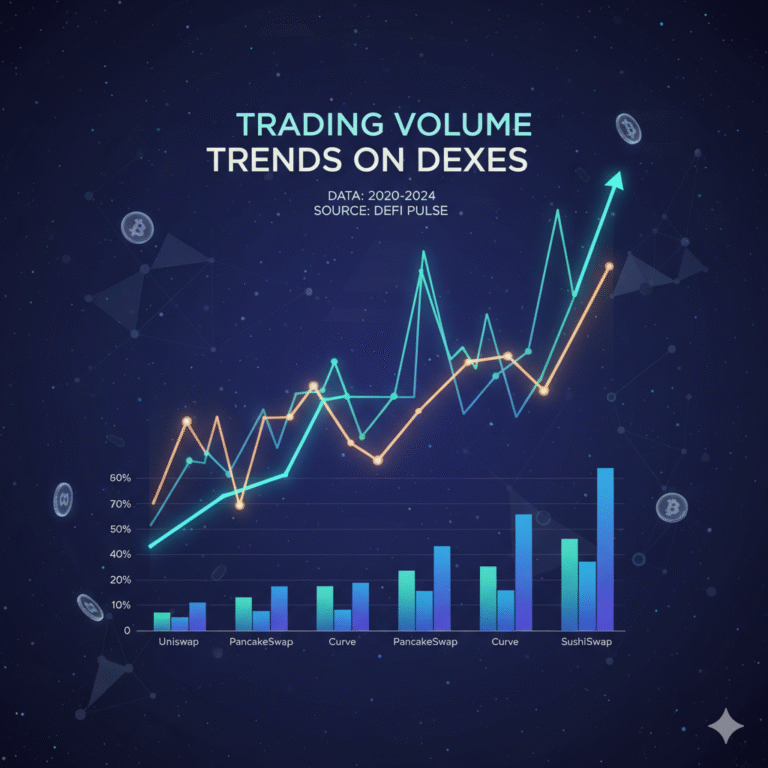
DEX Surge: DEX spot volumes hit a record approximately $613.3 billion in October, up from roughly $500 billion in September according to DefiLlama data. Uniswap led October with about $170.9 billion monthly volume. Perpetual DEX volumes climbed 87% quarter-over-quarter to approximately $1.81 trillion in Q3 2025, demonstrating explosive growth in decentralized derivatives trading.

DEX vs CEX Ratio: The DEX/CEX spot share rose from approximately 18.8% in September to 19.8% in October 2025. More broadly in 2025, reports show the ratio reaching the 20-23% band—a notable jump from roughly 10-12% ranges seen in 2024, according to ForkLog.

Breadth of DEXs: Trackers list approximately 1,092 DEXs with around $11.5 billion in rolling 24-hour volume (real-time snapshot that varies daily) according to CoinGecko. This diversity showcases the decentralized ecosystem’s innovation.

For beginners: If CEXs are like busy highways with lots of cars (high volume), DEXs are emerging expressways gaining traffic. The ratio tells us DEXs now handle around one-fifth of spot trades, a significant leap. If you’re interested in buying major cryptocurrencies, our guide on how to buy Ethereum safely in 2025 covers both CEX and DEX options.

Advantages of CEX in the Liquidity War

CEXs have historically won on liquidity due to their structure:

Higher Volumes and Trading Pairs: They offer thousands of trading pairs with deep order books, reducing slippage. For major assets like BTC/USD and ETH/USD, CEXs provide better prices and faster execution. To understand Ethereum’s market dynamics better, explore our article on Ethereum in numbers: key stats and charts every investor should know.

Institutional Appeal: Large players prefer CEXs for compliance, high-speed trading, and fiat integrations. 2025 data shows CEX spot volume recovering to approximately $5.1 trillion in Q3 according to CoinGecko’s Q3 report. Institutional liquidity providers often use platforms like CME Group alongside traditional crypto exchanges.

Stability in High-Volume Trades: Complex orders or large trades are smoother on CEXs, with lower latency. Advanced order types like stop-loss, take-profit, and iceberg orders are standard features.

Customer Support: Dedicated support teams help resolve issues quickly—critical during volatile market conditions.

Example: Trading $1 million in ETH on Binance might incur minimal slippage, thanks to its scale and deep liquidity pools.

Advantages of DEX in the Liquidity War

DEXs are catching up, especially in decentralized finance (DeFi):

Self-Custody and Privacy: No need to trust a central entity, reducing custodian risk—one driver of the on-chain shift post-FTX collapse. Your keys, your crypto—this fundamental principle attracts sovereignty-minded traders.

Innovative Liquidity Models: AMMs and liquidity pools distribute fees to providers. Uniswap consistently ranks among top DEXs by volume. Hyperliquid has emerged as a leading decentralized perpetuals venue with a fully on-chain order book according to Decrypt. Platforms like Curve Finance specialize in stablecoin swaps with minimal slippage.

Growth in Niche Markets: DEXs excel in memecoins and emerging tokens. Trackers count approximately 1,092 DEXs with around $11.5 billion in 24-hour volume (snapshot)—illustrating breadth and long tail. For insights into trending tokens, read our article on exploring the new generation of memecoins on TON and Base blockchains in 2025.

High-Performance Chains: Solana-native perpetuals DEXs like Pacifica have posted rapid growth and on some days overtook Jupiter in perps volume, with coverage highlighting “CEX-like” speed and AI-assisted tools according to Crypto Briefing. Solana and Base networks offer near-instant finality.

Permissionless Innovation: Anyone can list tokens without approval, fostering innovation. New projects launch on Raydium and Orca before reaching CEXs.

Example: On Uniswap, liquidity providers earn from pools, and trades happen in seconds on efficient chains, rivaling CEX speeds while maintaining full asset control.

Challenges Facing Both Sides

CEX Challenges

Custody Risks: Reports of withdrawal freezes and issues surfaced at MEXC in 2025, drawing public scrutiny with a widely publicized multimillion-dollar account dispute according to Yahoo Finance. Historical incidents like the Mt. Gox hack remind users of centralization risks.

Regulatory Pressure: Stricter rules could limit liquidity and operational flexibility. The SEC’s crypto enforcement actions continue to shape the industry.

Counterparty Risk: Users must trust the exchange to manage funds properly—a significant concern after multiple exchange failures.

Geographic Restrictions: Many CEXs block users from certain countries due to regulatory compliance requirements.

DEX Challenges

Lower Overall Liquidity on Major Pairs: Still behind on top BTC/ETH pairs at peak times, which can mean higher slippage for very large orders. This gap narrows during periods of CEX uncertainty.

User Experience: Gas fees and wallet UX can deter beginners, though improvements are happening on high-throughput chains like Arbitrum and Optimism.

Technical Complexity: Requires understanding of wallets, blockchain networks, and smart contracts. New users must learn about MetaMask, seed phrases, and network configurations.

Smart Contract Risks: Bugs or exploits in smart contracts can lead to loss of funds, as seen in various DeFi hacks.

Impermanent Loss: Liquidity providers face potential losses when token prices diverge significantly from deposit ratios.

Hybrid Solutions Emerging

Hybrid models are blurring lines between CEX and DEX. Sei-based venues like Symphony position themselves with CEX-like UX while maintaining decentralized characteristics, representing this “hybrid-feel” DEX trend. dYdX offers decentralized perpetuals with orderbook-based trading, bridging both worlds.

Looking ahead, 2025 trends suggest a hybrid future. DEXs are projected to capture more market share as blockchains scale, with perpetual DEXs already hitting record monthly volumes in October (crossing the $1 trillion mark intra-month) and Q3 perps at approximately $1.81 trillion.

Cross-Chain Liquidity: A hot area of development, with protocols like Mitosis working on cross-chain liquidity solutions discussed widely this fall according to Gate.io and Bitget. Technologies like LayerZero and Wormhole enable seamless asset transfers across chains.

SocialFi Integration: Platforms like Clout show how attention markets may intersect with on-chain liquidity primitives, creating new trading paradigms. Friend.tech pioneered social token trading.

Institutional Adoption: As regulatory clarity improves, more institutional players are exploring DEX infrastructure for compliance-friendly decentralized trading. Fireblocks and other custody solutions are bridging institutional DeFi access.

Layer 2 Scaling: Polygon, zkSync, and other L2 solutions dramatically reduce gas fees while maintaining Ethereum security.

Intent-Based Architecture: New protocols focus on user intent rather than execution details, simplifying the DEX experience for mainstream adoption.

Conclusion: No Clear Winner Yet, But DEXs Are Gaining Ground

In the liquidity war, CEXs currently lead with superior volumes and stability for mainstream trading, holding approximately 80% of spot market share in 2025 snapshots according to ForkLog and CoinDesk. However, DEXs are winning hearts with security and innovation, surging to record highs and closing the gap to approximately 20%.

For beginners, start with CEXs for ease of use and fiat on-ramps, but explore DEXs to experience true ownership and participate in the future of decentralized finance. Understanding both ecosystems gives you flexibility and deeper market insight.

Ultimately, the “winner” depends on your needs: speed and volume (CEX) or privacy and control (DEX). As crypto matures, expect more convergence between these models, making the ecosystem stronger for all participants.

Stay informed—liquidity wars evolve quickly in this dynamic space. Continue your crypto education journey with our comprehensive guides at Blocktown.


Additional Resources

Read also: Binance Tutorial.

NFT Security Best Practices: A Comprehensive Guide for Beginners

0

In the rapidly evolving world of digital assets, Non-Fungible Tokens (NFTs) have become a popular way to own unique items like art, music, and collectibles on the blockchain. However, with their growing value, NFTs have also attracted hackers, scammers, and other threats. Understanding NFT security best practices is essential for protecting your investments. This guide breaks down key strategies in simple terms, drawing from reliable sources to help beginners secure their NFTs effectively. Whether you’re just starting out or looking to strengthen your defenses, these tips will help you navigate the NFT space safely.

What Are NFTs and Why Does Security Matter?

NFTs are digital certificates of ownership stored on blockchains like Ethereum or Solana. They represent unique assets that can’t be duplicated, making them valuable for creators and collectors. But unlike traditional assets, NFTs live in a decentralized environment where security relies heavily on personal responsibility.

The risks are real: In recent years, NFT thefts through hacks and scams have resulted in millions of dollars in losses. For example, a 2022 OpenSea phishing incident stole more than $1.7 million in NFTs (Artnet News), and a BAYC Instagram compromise led to roughly $2–3 million in NFT losses (The Verge). More broadly across crypto, compromised private keys—often at centralized platforms—remain a top cause of losses (Reuters), underscoring why custody and key management are critical.

Common threats include phishing attacks, smart contract vulnerabilities, and wallet compromises. By following NFT security best practices, you can minimize these risks and enjoy the benefits of digital ownership without constant worry.

Security isn’t just about avoiding loss—it’s about building trust in the ecosystem. As NFTs integrate with DeFi (Decentralized Finance) and other Web3 tools, poor practices can lead to broader issues like unauthorized access or fraudulent transactions. Despite ongoing debates about NFT relevance, beginners should start by treating NFTs like high-value physical items: lock them up, verify everything, and stay vigilant.

Common NFT Security Risks You Need to Know

Before diving into solutions, let’s explore the main threats. Awareness is the first step in any NFT security strategy.

Phishing and Scams: Hackers often pose as legitimate platforms or projects to trick users into revealing wallet details. Platforms have suffered high-profile incidents demonstrating how effective phishing can be (The Verge).

Wallet Compromises: If someone gains access to your seed phrase or private keys, they can drain your NFTs instantly. This is one of the most devastating threats facing NFT collectors.

Smart Contract Vulnerabilities: Flawed code in NFT projects can allow exploits, like unauthorized minting or transfers. Even well-intentioned projects can have hidden bugs that attackers exploit.

Marketplace Risks: Even “verified” marketplaces can have lapses. There have been cases where fake NFTs appeared under verified collections, so don’t rely on badges alone (Web3 is Going Great).

DeFi Integration Issues: When NFTs are used in lending or staking, additional risks arise from interconnected smart contracts. A vulnerability in one protocol can cascade across multiple platforms.

Other dangers include wash trading (fake volume to inflate prices) and metadata persistence assumptions—off-chain NFT data can be altered or disappear if not stored correctly.

Choosing the Best Wallet for NFT Storage

Your wallet is the gateway to your NFTs, so selecting the right one is a cornerstone of NFT security best practices. Understanding the differences between hardware, software, and mobile wallets is crucial for making an informed decision.

Hardware Wallets (Cold Storage): Devices like Ledger or Trezor keep your private keys offline, making them highly secure for long-term storage. These physical devices are the gold standard for protecting high-value NFT collections.

Software Wallets (Hot Wallets): Apps like MetaMask are convenient for frequent trading but more exposed to phishing and malware. Use them for smaller amounts and daily transactions, but consider moving valuable NFTs to cold storage.

Decentralized Storage for Metadata:

IPFS does not guarantee permanence by itself. Content stays available only if it’s pinned (by you or a pinning service). Use a reputable pinning service or run your own node to keep NFT metadata available (IPFS Documentation, Pinata Docs).

For stronger permanence guarantees, consider Arweave, which is designed for pay-once, long-term storage. Many NFT projects use it for metadata and media (Arweave Wiki).

Always back up your wallet’s seed phrase in multiple secure offline locations. Never store it in cloud notes or screenshots—this is one of the most common mistakes that leads to NFT theft.

Enabling Strong Authentication and Access Controls

Authentication adds layers of defense, but there’s important nuance to understand:

Two-Factor Authentication (2FA):

Enable 2FA on exchanges, marketplaces, and any custodial wallet accounts (e.g., OpenSea’s Embedded/Account Wallet, Magic Eden account). Prefer authenticator apps or hardware keys over SMS (OpenSea Support).

However, non-custodial wallets (e.g., MetaMask, hardware wallets) don’t use 2FA to authorize on-chain transactions. 2FA protects account logins on web platforms; it does not stop you from signing a malicious transaction if you approve it (OpenSea). Use 2FA where available, but rely on signing-safety tools to understand what you’re signing.

Multi-Signature Wallets: For high-value NFTs or shared collections, consider a multisig wallet (e.g., Safe, formerly Gnosis Safe) so multiple approvals are required for transfers (Bitbond).

Permission Management: Regularly review and revoke token/NFT approvals using tools like Revoke.cash so old dapps can’t move assets without your knowledge.

Safe Buying, Selling, and Trading Practices

When engaging with NFT marketplaces, caution is key to protecting your digital assets. If you’re choosing between platforms, consider reading this comprehensive comparison of OpenSea, Blur, and Magic Eden to understand their security features.

Use Trusted Platforms: Established sites like OpenSea and Magic Eden provide security guidance and account protections (including 2FA), but you must still verify what you sign and what you buy (OpenSea Support).

Verify Transactions: Before approving any smart-contract interaction, read the prompts carefully. Consider transaction-simulation tools and extensions like Pocket Universe or wallets and services using Blowfish simulation to preview what a signature will actually do (GitHub, Chrome Web Store, Pocket Universe). These tools can help you understand exactly what permissions you’re granting before it’s too late.

Avoid Suspicious Links: Don’t click unsolicited links in emails or direct messages. Always navigate to marketplaces via bookmarks or by typing the official URL directly into your browser.

If trading NFTs across different blockchains, be aware of additional security considerations when using cross-chain bridges. Start with small test transactions and confirm contract addresses from official project pages. Never rush into a transaction, even if someone claims it’s a limited-time opportunity.

Protecting Against Phishing and Other Scams

Phishing remains one of the top threats in the NFT world, accounting for millions in losses annually.

Be Cautious with Communications: Ignore unsolicited DMs or “urgent” support outreach. Legitimate projects and platforms will never ask for your seed phrase or private keys.

Use Security Tools:

Transaction-aware protections like Pocket Universe (browser extension) simulate transactions and flag drainer patterns before you approve them (Chrome Web Store).

Phishing-domain protection tools like ChainPatrol provide real-time blocklists and brand-protection feeds that wallets (e.g., MetaMask) and communities use to warn or block malicious sites (MetaMask). It’s not a transaction simulator; it focuses on detecting and denylisting scam domains and infrastructure.

Digital Hygiene: Keep your operating system, browser, and wallet software up to date. Be extra careful when using public Wi-Fi networks, which can be intercepted by attackers.

If you suspect a compromise, immediately revoke approvals using Revoke.cash, move assets to a fresh wallet, and follow marketplace recovery steps (Magic Eden Help).

Backing Up and Recovering Your NFTs

Backups ensure you don’t lose access to your digital assets forever.

Secure Seed Phrases: Write them down on paper and store offline in safe places. Consider using metal backup plates that are fireproof and waterproof for maximum security.

Multiple Backups: Keep separate offline copies in different physical locations to guard against loss, theft, or damage. Don’t keep all copies in one place.

Recovery Plans: Periodically test restoring a wallet (with no funds) so you’re confident the backup works when you need it. This practice run can save you from panic during an actual emergency.

For creators: Ensure the wallet controlling your collections is backed up properly and, for teams, consider multisig wallets for continuity (Bitbond).

Advanced NFT Security Tips for Developers and Projects

If you’re building NFT projects, security must start at the code level.

Conduct Audits: Use reputable security auditors and follow secure development practices. An audit can identify vulnerabilities before they’re exploited by attackers (CertiK).

Follow Best Coding Practices: Implement proper access controls, minimal privileges, and upgrade safety mechanisms. Follow established patterns from OpenZeppelin and other trusted libraries (OpenZeppelin).

User Protections: Consider emergency pause mechanisms and circuit breakers. Use multisig wallets for sensitive admin actions, with deployer and owner roles managed via Safe (Bitbond).

Metadata Storage: Use IPFS with reliable pinning services or Arweave for long-term persistence (IPFS Documentation, Pinata Docs). Don’t rely on centralized servers that could go offline.

Building a Secure NFT Future

Securing your NFTs doesn’t have to be overwhelming. By choosing the right wallet, enabling strong authentication where it actually applies, verifying transactions before approval, and staying alert to scams, you can protect your digital assets effectively. Remember, NFT security best practices evolve with the technology—stay informed through reliable sources and engaged communities.

As the NFT space grows and matures, integrating these security habits will help you avoid common pitfalls and focus on what matters: collecting, creating, and enjoying digital art and collectibles. Whether you’re safeguarding a single piece of digital art or managing a full portfolio, proactive security ensures your investments remain yours.

Start implementing these NFT security best practices today for peace of mind tomorrow. The effort you invest in securing your digital assets now will pay dividends as the NFT ecosystem continues to expand and evolve.


Key Takeaways for NFT Security:

  • Use hardware wallets for long-term storage of valuable NFTs
  • Enable 2FA on marketplace accounts, but understand its limitations
  • Always verify transactions with simulation tools before signing
  • Store seed phrases offline in multiple secure locations
  • Regularly revoke unnecessary token approvals
  • Stay vigilant against phishing attempts and suspicious links
  • Keep all software updated and use trusted security tools
  • For projects, conduct audits and use multisig wallets for admin functions

By following these comprehensive NFT security best practices, you’ll be well-equipped to navigate the exciting world of digital collectibles safely and confidently.

AI-Generated NFTs: The New Frontier in Digital Art

0

In the rapidly evolving world of digital creativity, AI-generated NFTs are emerging as a groundbreaking intersection of technology and artistry. These unique digital assets combine artificial intelligence’s ability to create stunning visuals with blockchain’s secure ownership model. For beginners, think of it as computer-made artwork that’s one-of-a-kind, owned like a rare collectible, and traded online. This fusion is not just a trend; it’s reshaping how we create, buy, and value art in the digital age.

AI tools like diffusion models—the technology behind platforms such as DALL·E, Midjourney, and Stable Diffusion—allow anyone to produce complex images or animations from simple text prompts. Meanwhile, NFTs (non-fungible tokens) ensure each piece is verifiable and unique on the blockchain. This accessibility has democratized art creation, enabling both professional artists and hobbyists to enter the market without traditional barriers. As of 2025, the NFT ecosystem remains active across major marketplaces, with AI now central to generating diverse content—from static images to interactive pieces.

What Are NFTs?

Before diving into AI’s role, let’s break down NFTs. A non-fungible token is a digital certificate of ownership stored on a blockchain, like Ethereum or Tezos. Unlike cryptocurrencies such as Bitcoin, which are interchangeable (fungible), NFTs are unique and cannot be swapped one-for-one. They represent ownership of digital items, such as artwork, music, videos, or even virtual real estate.

For example, imagine buying a digital painting. Without an NFT, anyone could copy the file. But with an NFT, the blockchain records you as the official owner, much like a deed for a house. This technology uses smart contracts—self-executing code—to handle sales, royalties, and transfers automatically. Popular platforms like OpenSea allow users to create (“mint”), buy, and sell NFTs, with transactions secured by cryptography. Beginners should note that while NFTs provide proof of ownership, they don’t always grant copyright; that’s a separate legal matter.

What Is AI-Generated Art?

AI-generated art refers to visuals created by algorithms, often using machine learning models trained on vast datasets of existing images. Tools like DALL·E, Midjourney, and Stable Diffusion take user inputs—called prompts, such as “a futuristic city at sunset”—and produce original artwork in seconds. These systems today are diffusion models, which generate images by iteratively denoising random noise toward the prompt; Stable Diffusion is a latent diffusion model that works particularly efficiently.

These systems rely on generative models that can be steered by human prompts and subsequent selection or curation. For beginners, it’s like having a super-smart assistant that paints based on your description. This has expanded art forms to include animations, 3D models, and even music. However, the AI draws from human-made data, raising questions about originality and attribution.

How AI and NFTs Combine

When AI-generated art meets NFTs, the result is a verifiable, ownable digital masterpiece. Artists use AI to create pieces, then mint them as NFTs on blockchain platforms. This ensures scarcity and authenticity, as each NFT has a unique identifier. For instance, a user inputs a prompt, the AI generates an image, and it’s tokenized—turned into an NFT—for sale.

This combination addresses key art market issues: provenance (tracking ownership history) and creator royalties configured at mint time. However, the NFT royalties landscape has become increasingly complex, with enforcement varying significantly by marketplace. Understanding how NFT royalties work in 2025 is essential for creators looking to maximize their earnings. Platforms like OpenSea support creator earnings settings and streamlined minting flows. Beginners can also start on lower-cost, proof-of-stake chains such as Tezos to minimize fees and environmental impact.

History and Evolution of AI-Generated NFTs

The roots of generative art date back to the 1960s, with pioneers like Georg Nees showcasing computer-generated works in 1965. However, AI-generated NFTs exploded in popularity around 2021–2022, fueled by advances in generative models and the NFT boom.

Milestones include Larva Labs’ Autoglyphs in 2019, an early on-chain generative art project, and the Christie’s sale of “Edmond de Belamy” in 2018—an AI portrait sold for $432,500—which signaled mainstream attention to AI art.

As of 2025, the field has matured. Despite questions about whether NFTs on Ethereum are still relevant, the network remains a primary hub for high-value AI art. Hic et Nunc—a seminal Tezos marketplace—shut down in November 2021, but its open-source contracts live on via community forks; many creators now use Teia for low-cost minting on Tezos. Recent innovations include dynamic or “evolving” works, such as Beeple’s HUMAN ONE, a continually updated hybrid sculpture whose visuals are changed by the artist over time.

Community-driven AI art has also flourished. Botto—a decentralized autonomous artist—generates many images weekly; a DAO votes on one to mint and auction, with proceeds shared between participants and the project treasury. In February–March 2025, Botto’s London presentations highlighted this model’s evolution.

Several standout projects illustrate this frontier:

Art Blocks: A platform for on-chain generative art featuring collections like Tyler Hobbs’ Fidenza, which consists of 999 unique algorithmic works. Buyers typically see the final output only after minting, with traits derived from transaction hashes.

Metascapes: A collection that blends photography and AI to produce rare, landscape-like images. Collection specifics vary by series and marketplace, so verify details at the point of purchase.

Botto Project: An AI artist governed by a DAO where the community votes weekly, one work is minted and auctioned, and revenue is split between DAO contributors and Botto’s treasury. London exhibitions in 2025 showcased algorithmic pieces curated on-chain.

Note: References to smaller social-media projects should be verified for legitimacy and provenance directly on the marketplace before purchasing.

Choosing the Right Marketplace for AI-Generated NFTs

Selecting the appropriate platform is crucial for AI artists. When considering where to mint and sell your work, it’s worth exploring a comprehensive comparison of NFT marketplaces to understand the differences between OpenSea, Blur, and Magic Eden. Each platform offers distinct features, fee structures, and community dynamics that can significantly impact your success as a digital creator.

Benefits of AI-Generated NFTs

This technology offers numerous advantages:

Accessibility: Anyone can create art without advanced technical skills, lowering entry barriers for beginners and democratizing artistic expression.

Innovation: AI blends styles and enables novel formats, including evolving or interactive pieces such as continuously updated installations like HUMAN ONE.

Economic Opportunities: Creators can earn primary-sale income and set creator earnings at mint, subject to marketplace policy. Platforms provide minting and selling infrastructure, as seen on OpenSea.

Verification: Blockchains provide public provenance records, aiding authenticity checks for digital art and establishing clear ownership trails.

Despite the excitement, hurdles remain:

Copyright and Ownership: U.S. policy and recent court decisions clarify that purely AI-generated works without sufficient human authorship are not eligible for copyright; only the human contributions may be protectable. Creators should disclose AI-generated portions when seeking registration, as outlined in the Federal Register.

Environmental Impact: Earlier concerns were significant under proof-of-work systems. But Ethereum’s 2022 transition to proof-of-stake cut estimated network energy use by approximately 99.95%, substantially reducing the footprint of minting and transacting NFTs on Ethereum. As blockchain technology continues to evolve, creators should keep an eye on emerging blockchains to watch that may offer even more sustainable and cost-effective alternatives for minting AI-generated NFTs.

Market Saturation: Easy creation can lead to oversupply, which may dilute attention and value. Buyers should research artists, provenance, and editions carefully before making purchases.

Fraud and Phishing Risks: Wallet-drainer and phishing scams have targeted NFT users; security firms report hundreds of millions of dollars in crypto losses industry-wide in H1 2025, with phishing and wallet compromise prevalent. Use hardware wallets, verify links, and avoid signing unknown transactions to protect your assets.

Ethical concerns include authorship—who “owns” AI art: the prompter, the model’s developer, or the dataset’s rights holders? That debate is ongoing, with legal guidance evolving as documented by the U.S. Copyright Office.

Embracing the Digital Art Revolution

AI-generated NFTs represent a new frontier, blending creativity with technology to make art more inclusive and innovative. From early generative art to today’s dynamic and community-curated projects, this space continues to evolve. Beginners can start by experimenting with reputable AI tools and exploring established marketplaces like OpenSea for Ethereum and other chains, or Teia on Tezos.

While legal ambiguities and security risks persist, the benefits of accessible creation, transparent provenance, and programmable royalties make this an exciting area to watch. As blockchain and AI mature, they’re likely to keep redefining digital art for years to come, opening new possibilities for creators and collectors worldwide.


External Resources:

Related Reading:

Web3 Gaming Guilds and Economies: A Beginner’s Guide to Blockchain-Powered Play

0

Introduction to Web3 Gaming

Web3 gaming is transforming the way we play video games by integrating blockchain technology, allowing players to truly own digital assets like characters, items, and land. Unlike traditional games where everything stays locked within the game’s ecosystem, Web3 games use non-fungible tokens (NFTs) and cryptocurrencies to create open, player-driven economies. This means you can buy, sell, or trade in-game items on global marketplaces, turning virtual fun into real-world value.

To understand how this technology works under the hood, check out our detailed guide on Ethereum gaming and how blockchain games actually work.

At the heart of this revolution are Web3 gaming guilds and economies. Guilds are organized communities of players who pool resources to maximize earnings and experiences in blockchain games. They act like modern-day cooperatives, investing in assets and sharing profits. Meanwhile, Web3 gaming economies refer to the financial systems within these games, often built around models like play-to-earn (P2E), where players can make money through gameplay.

The rise of Web3 gaming guilds began with the play-to-earn boom during the COVID-19 pandemic, particularly in regions like the Philippines, where games like Axie Infinity provided income for jobless individuals. Guilds lowered entry barriers by lending expensive NFTs to new players, known as “scholars,” who then shared earnings with the guild. This model has evolved, with guilds now focusing on sustainable strategies amid market fluctuations.

Today, Web3 gaming is attracting big investors due to its ownership economy. Players spend roughly $189 billion per year on games in 2025 (Newzoo), and historically they owned none of the items they purchased—Web3 changes that by making many assets transferable outside a single publisher’s servers. Important nuance: assets can remain tradable even if a game shuts down, but their utility and resale value depend on market demand and whether other games or markets support them.

As of 2025, the sector is maturing from hype to polished experiences, with guilds playing a key role in community building and economic stability. For insights into the P2E revival, read our analysis on the return of play-to-earn in 2025. This article explores what Web3 gaming guilds are, how their economies work, real-world examples, benefits, challenges, and future trends—all in simple terms for beginners.

What Are Web3 Gaming Guilds?

Web3 gaming guilds are decentralized organizations that bring together players, investors, and enthusiasts to collaborate in blockchain games. Think of them as teams or clubs in traditional MMORPGs (massively multiplayer online role-playing games), but supercharged with crypto economics. Instead of just grouping up for raids, these guilds invest in NFTs, manage digital assets, and create income streams for members.

How Web3 Gaming Guilds Operate

Guilds raise funds by selling governance tokens, which give holders voting rights on decisions like which games to invest in. They use this capital to buy in-game assets, such as virtual land or characters, and lend them to players via “scholarships.” Scholars play the game, earn rewards, and split profits—often 50/50 or similar—with the guild. This lowers the high entry costs of Web3 games, where starting NFTs can cost hundreds of dollars.

To understand the broader context of how tokens power gaming economies, explore our comprehensive guide on game tokens economy: demystifying SAND, MANA, GALA, and IMX.

For beginners, joining a guild is like getting a starter kit. Guilds provide education on setting up wallets, managing assets, and navigating blockchain transfers. They also organize communities for strategy sharing, esports, content creation, and marketing, adding value to the games themselves. In essence, guilds are crypto-native structures creating real economic opportunities, especially in emerging markets (Chainlink).

Why Join a Web3 Gaming Guild?

For new players, guilds reduce risks and amplify rewards. They handle investments, allowing you to focus on playing. Guilds also foster social bonds, turning solo gaming into collaborative adventures. In games like Big Time, guilds interact with player-driven economies featuring cosmetic NFTs, Time Crystals, and event access rather than pure “mint-more-tokens” loops, which is one reason these models are seen as more sustainable than early P2E designs (Big Time).

As Web3 matures, guilds are evolving beyond simple asset rental. Automation tools for guild operations are emerging, such as platforms like KWALA, but they’re still early and adoption varies by guild—treat them as experimental infrastructure for now.

Understanding how communities create economic value is crucial to guild dynamics. Learn more about how social tokens turn communities into economies to see the broader picture of Web3 community monetization.

Key Examples of Web3 Gaming Guilds

Several standout guilds illustrate the power of this model and demonstrate different approaches to blockchain gaming communities.

Yield Guild Games (YGG)

Yield Guild Games (YGG) is a pioneer, founded by Gabby Dizon. YGG invests in NFTs across games like Axie Infinity and builds global communities for economic empowerment. With sub-DAOs (decentralized autonomous organizations) for specific regions or games, YGG has expanded to Southeast Asia via W3GG, focusing on adoption in fast-growing markets (CoinDesk Consensus Hong Kong 2025).

Merit Circle and BEAM

Merit Circle started with Axie Infinity but broadened to various games and investments. Important update: in late 2023 the DAO migrated the MC token to BEAM. Today the ecosystem is commonly referenced via BEAM, with a market cap around $250M as of November 2025, though figures vary slightly by data provider (Medium).

Avocado DAO

Avocado DAO built large scholarship programs during the P2E wave and continues to run education and onboarding for players. Scale fluctuates with markets, but the model remains active (Avocado DAO).

Regional Sub-DAOs: IndiGG and W3GG

IndiGG is YGG’s India-focused sub-DAO, created with Polygon, while W3GG is a Southeast Asia hub that runs open quests, leagues, and partnerships. Both have featured in community awards lists and events in 2023–2024, including PlayToEarn’s community awards and the GAM3 Awards ecosystem (Decrypt, Medium, Scopely).

These examples show guilds’ diversity: from regional focuses to broad ecosystems. Beginners can start by joining via Discord or Telegram, often after passing simple applications. Many guilds are also leveraging memecoins as marketing tools to conquer Web3, creating engaging community experiences.

Understanding Web3 Gaming Economies

Web3 gaming economies are the financial backbones of these games, powered by blockchain for transparency and ownership. These economies represent a fundamental shift in how value is created, distributed, and owned in gaming.

Play-to-Earn (P2E) Model

The most common model is play-to-earn (P2E), where players earn tokens or NFTs through gameplay, like battling in Axie Infinity to gain SLP tokens. These can be sold for real money, creating a borderless economy accessible via smartphones (SpringerLink).

However, P2E has challenges like inflation: too many tokens from grinding can devalue them. To counter this, games use dual-token systems—one for governance (e.g., AXS) and one for utilities (e.g., SLP)—plus burn mechanisms to reduce supply.

Play-to-Own (P2O): The Sustainable Evolution

Enter play-to-own (P2O), a more sustainable evolution. Here, focus shifts to long-term asset ownership rather than quick earnings. Players truly control NFTs, which can be used across games or held for value appreciation. Unlike P2E’s reward focus, P2O emphasizes interoperability and community-driven economies (Sequence).

How Guilds Enhance Gaming Economies

Guilds enhance these economies by providing asset lending, staking, and trading. For example, in Alien Worlds, players can stake TLM to participate in planetary governance and certain reward mechanisms, including voting power and planet-level incentives, though staking here is primarily tied to governance and gameplay features rather than guaranteed passive yield (Medium).

Free-to-Play Entry Points

For beginners, free-to-play options like Loot Legends exist, where you can earn tradable items and NFTs through gameplay and events without upfront NFT purchases (PlayToEarn).

Benefits and Challenges of Web3 Gaming Guilds and Economies

The Benefits: Economic Empowerment and True Ownership

The benefits are clear: economic empowerment, especially in developing regions, where guilds create jobs through gaming. Players gain true ownership, turning hobbies into income streams. Guilds build vibrant communities, driving game adoption and innovation. Economies foster global participation, with no need for traditional banks.

Web3 gaming guilds have demonstrated particular success in countries like the Philippines, where they’ve provided alternative income sources during economic uncertainty. The scholarship model has enabled thousands of players to access blockchain games without significant capital investment.

The Challenges: Volatility and Sustainability

Challenges include volatility—token values can crash due to speculation. Early P2E games like Axie Infinity faced bubbles and engagement drops when rewards dried up. Regulatory hurdles and scams also pose risks. Beginners should research guilds’ track records and start small (SpringerLink).

The sustainability question remains central to Web3 gaming’s future. Many early models proved unsustainable when new player growth slowed, leading to the evolution toward P2O and more balanced economic designs.

Looking ahead, Web3 gaming will integrate AI, VR, and cross-game economies for seamless asset transfers. Guilds may become “digital nations,” influencing governance across multiple gaming platforms and metaverse environments.

Emerging Technologies and Models

Sustainable models like P2O are gaining traction, and guild-operations automation is emerging but still in early stages. Expect growth in emerging markets, with guilds leading education initiatives.

New “learn-to-earn” course platforms such as Olympus Insights are emerging as on-ramps for players, providing structured education about blockchain gaming, wallet management, and NFT trading (Blockchain App Factory, KWALA Network).

Cross-Game Interoperability

The future of Web3 gaming likely involves greater interoperability, where assets and identities can move seamlessly between different games and platforms. Guilds are positioning themselves to manage these complex, multi-game portfolios for their members.

Conclusion: Getting Started in Web3 Gaming

Web3 gaming guilds and economies are democratizing play, blending fun with finance. From YGG’s global reach to P2O’s ownership focus, this space offers exciting opportunities for beginners. The combination of blockchain technology, community organization, and economic incentives is creating new possibilities for gamers worldwide.

Start by exploring free games, joining a guild, and always verify sources. Research guild reputations on platforms like Discord and Twitter, and never invest more than you can afford to lose. As the industry grows, it promises a more equitable gaming future—where your time and skills truly pay off.

The key to success in Web3 gaming is education, community involvement, and patience. Whether you’re looking to earn supplemental income or simply explore the future of gaming, Web3 guilds provide the support structure and resources to begin your journey safely.

Related Reading:


This article provides educational information about Web3 gaming and should not be considered financial advice. Always conduct your own research before participating in blockchain gaming or investing in digital assets.

Real-World NFT Use Cases: Revolutionizing Tickets, Music, and Intellectual Property

0

Non-fungible tokens (NFTs) are transforming how we handle ownership, authenticity, and transactions in the digital age. Many people associate NFTs primarily with digital art speculation. However, their practical applications in event ticketing, music distribution, and intellectual property management are solving real-world problems. These include fraud prevention, unfair royalties, and inefficient ownership tracking.

Understanding NFTs: The Foundation of Digital Ownership

Non-fungible tokens are unique digital assets. Blockchains like Ethereum store them securely. Unlike cryptocurrencies such as Bitcoin, which are interchangeable, each NFT is one-of-a-kind. Blockchain technology verifies its authenticity.

NFTs deliver immutability and transparency. Blockchain technology prevents anyone from duplicating or altering these tokens. This provides unprecedented security and trust. Moreover, smart contracts—self-executing code embedded within NFTs—automate complex actions. These include royalty payments, access rights, and ownership transfers without intermediaries.

According to joint analysis conducted in 2024 by the U.S. Copyright Office (USCO) and U.S. Patent & Trademark Office (USPTO), NFTs continue demonstrating utility across entertainment and business sectors. Nevertheless, existing intellectual property laws generally suffice without requiring NFT-specific statutory changes.

NFT Ticketing: Eliminating Fraud and Enhancing Event Experiences

The event ticketing industry has long suffered from counterfeiting, scalping, and uncontrolled secondary markets. Consequently, NFT tickets address these systemic issues. They transform entry passes into unique blockchain assets with transparent ownership tracking.

How NFT Tickets Operate

When you purchase an NFT ticket, it stores securely in your digital wallet. At the venue, scanning a QR code linked to the NFT verifies authenticity through blockchain validation. This makes counterfeit tickets virtually impossible to pass through. Furthermore, smart contracts embedded in these NFTs can enforce resale price caps. They prevent predatory scalping or ensure event organizers receive secondary market percentages.

Key Advantages of Blockchain-Based Ticketing

Anti-fraud protection stands as the primary benefit. Blockchain immutability makes ticket duplication extremely difficult. Additionally, verification is instant and fully auditable. GUTS Tickets, which operates the GET Protocol, has deployed this “honest ticketing” infrastructure globally through various partners.

Exclusive perks and ongoing engagement represent another significant advantage. NFT holders can receive digital collectibles, post-event content, or exclusive experiences. Similarly, some projects tie additional benefits directly to the NFT. This creates value beyond basic event admission, much like how NFTs function as access passes in other contexts.

Resale royalties through programmable rules allow creators and organizers to earn revenue on secondary sales where marketplaces support this. This creates fairer markets and generates ongoing revenue streams. Indeed, the ongoing debate about NFT royalties between creators and marketplaces highlights these mechanisms’ importance.

Community building through token-gated access has been successfully deployed. For instance, entrepreneurs like Gary Vaynerchuk demonstrate how NFT tickets foster sustained fan engagement.

Verified Real-World NFT Ticketing Examples

Coachella (2022): The music festival auctioned 10 “Coachella Keys” NFTs. These granted lifetime festival passes and unique experiences. However, this case also illustrates platform risk. The drop was hosted on FTX. After the exchange’s collapse in November 2022, some NFTs became inaccessible or required remediation.

Kings of Leon (2021): As part of their “NFT Yourself” release with YellowHeart, the band auctioned “golden tickets.” These offered lifetime front-row seats, marking one of the earliest music-ticketing utility cases.

VeeCon (2022–2024): Gary Vaynerchuk’s conference used NFTs as the primary access mechanism. Holders received NFT tickets each year.

Olympics Digital Pins: The International Olympic Committee launched official NFT pins in 2021–2022. These served as digital collectibles and rewards—not as general admission tickets, but as supplementary engagement.

GET Protocol / GUTS Tickets: This live ticketing infrastructure uses blockchain to curb fraud and control resales. It has global deployment through multiple partners.

SeatlabNFT: An NFT ticketing marketplace focuses on strengthening artist-fan connections. Industry trade press documents dozens of implementations.

YellowHeart: This platform built NFT ticketing and wallet tools used throughout entertainment. It powered the Kings of Leon release.

Primavera Sound × Binance (2022): Primavera Sound and Binance offered POAP-style NFTs for ticket holders. These served as collectible mementos with additional perks. This demonstrates NFT enhancement of traditional ticketing rather than wholesale replacement.

Music Industry Transformation: Empowering Artists Through NFTs

The music industry has historically struggled with low streaming royalties. Power imbalances between artists and labels compound this problem. Therefore, NFTs offer alternative ways to make money. They tokenize songs, albums, and rights, enabling direct fan engagement and fairer revenue distribution.

Reimagining Music Ownership and Royalty Distribution

Artists can mint NFTs of their work. Then, they sell directly to fans through general marketplaces or music-specific platforms. Smart contracts can automate royalty routing on secondary sales where marketplaces enforce this. Additionally, they support innovative models like selling fractional ownership of streaming royalties. For creators exploring these options, understanding NFT royalties in 2025 is essential.

Benefits for Artists and Music Fans

Direct income generation allows artists to sell limited digital editions with bundled perks. These often outperform traditional release economics for independent creators.

Royalty automation through on-chain logic makes payouts easier. It also provides transparent revenue splits where properly set up.

Enhanced fan engagement through access perks is powerful. For example, voting rights, virtual meetups, and token-gated content drops work well. Projects across the entertainment sector successfully deploy these strategies.

Verified origin and scarcity on-chain strengthen collectibility. They also support long-term value for music NFTs.

Pioneering Music NFT Projects

Kings of Leon (2021): The band released their album as NFTs. “Golden ticket” NFTs included lifetime front-row seats. The sale grossed millions.

Grimes (2021): The artist sold approximately $5.8–6 million of NFT art with accompanying music in minutes. She used Nifty Gateway.

3LAU (2021): The DJ tokenized his album “Ultraviolet.” He sold 33 NFTs for approximately $11.6 million. Media widely cites this as a landmark music-NFT transaction.

Royal (2022): Nas’s drop on Royal allowed fans to buy tokens tied to streaming royalties for songs “Ultra Black” and “Rare.” This demonstrated revenue-sharing in practice.

Catalog: A music-NFT platform serves independent artists. Media coverage highlights its role in creator income generation.

Band Royalty: This platform markets NFTs. Stakers receive 50% of royalty income from their music catalog. Featured artists participate through catalog performance rights rather than direct partnership.

EulerBeats (2021): These algorithmic music NFTs paid out over $1.1 million in royalties during the first week. Later reports cited approximately 912 ETH (about $1.43 million) in two weeks. This demonstrated programmable royalty flows effectively.

Infrastructure development: Solutions like Chainlink oracles are discussed as essential infrastructure. They support dynamic NFTs and automated royalty triggers.

Intellectual Property Management: Streamlining Protection and Monetization

Intellectual property management traditionally involves complex tracking, transfers, and licensing. This includes copyrights, patents, and trademarks. NFTs tokenize IP assets, making ownership proof easier. They also simplify licensing rights and speed up sales with greater efficiency and transparency.

How NFTs Transform IP Management

An NFT can link to detailed IP information on-chain. It can also embed licensing logic in smart contracts. Consequently, this reduces ownership disputes and speeds up transactions. This is particularly valuable for global IP portfolios.

Important regulatory context: In March 2024, the USCO/USPTO joint report reached a conclusion. Existing intellectual property law generally covers NFT scenarios well. Therefore, they recommended against major legal changes at this time.

Advantages of Blockchain-Based IP Systems

Origin tracking and anti-counterfeiting through on-chain records establish clear creation histories. They also show ownership chains, making verification easy.

Efficient transfers via tokenized assets can make licensing and sales workflows smoother. This reduces paperwork and transaction times.

Innovative income options become possible. For instance, splitting ownership and automated payment splits work through smart contract implementation.

Global accessibility allows anyone to tokenize patents and IP rights. Then, they can trade them across international markets with less friction.

Verified IP and NFT Applications

IPwe × IBM (2021): These companies announced plans to tokenize patents. They aimed to create an IP marketplace using IBM blockchain technology. Trials and commercialization were targeted for 2021.

Royalty Exchange (2021): This platform sold income-producing NFTs tied to royalty streams. One example was Lil Dicky’s “Save Dat Money.” Notably, a third-party rights holder sold royalty shares from the group ATCQ. The hip-hop collective stated they were not directly involved in the transaction.

Nike Trademark Enforcement: Nike pursued trademark enforcement against StockX over sneaker-image NFTs in 2022. The matter settled in 2023. Additionally, Nike has secured patents describing “CryptoKicks” (U.S. Patent 10,505,726). These link physical shoes to NFTs.

The Future of NFTs in Practical Applications

NFTs are moving from niche technology to mainstream utility. Applications in ticketing, music, and intellectual property are steadily maturing. These tokens address persistent problems. For example, they tackle ticket fraud, unclear royalty flows, and paper-heavy IP transfers. However, they also highlight operational risks. The Coachella-FTX situation illustrated custody and platform vulnerabilities.

Adoption is speeding up. Evolving infrastructure like oracles for dynamic royalties supports this growth. Furthermore, clearer guidance from regulatory bodies including the USCO and USPTO helps. Therefore, expect deeper integration across industries.

Many people wonder about the current state of blockchain technology. Questions like “are NFTs on Ethereum still relevant” arise frequently. Similarly, understanding how the underlying infrastructure works is crucial. For instance, learning about token swapping on Ethereum provides valuable context for NFT transactions.

For those beginning to explore NFT applications, start with a trusted wallet. Verify that marketplaces enforce royalty mechanisms. Carefully consider platform risk between self-custody and custodial solutions. Conduct thorough research on any project before participating.

NFTs represent more than short-term trends. They’re practical tools fundamentally reshaping how we establish, transfer, and earn from ownership in the digital age. From eliminating ticket fraud to enabling direct artist-to-fan income generation and making complex IP transactions smoother, blockchain-based tokens solve real problems with real solutions.


Sources: