
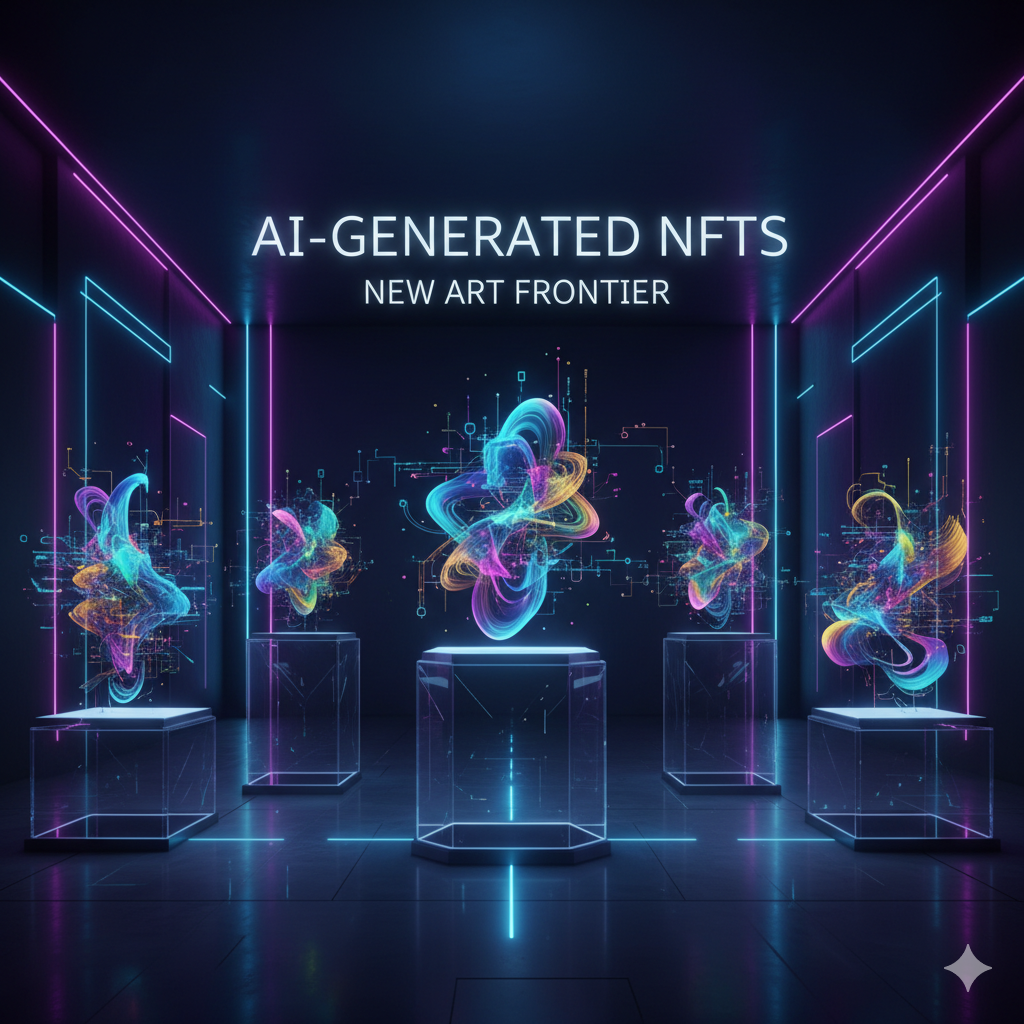
In the rapidly evolving world of digital creativity, AI-generated NFTs are emerging as a groundbreaking intersection of technology and artistry. These unique digital assets combine artificial intelligence’s ability to create stunning visuals with blockchain’s secure ownership model. For beginners, think of it as computer-made artwork that’s one-of-a-kind, owned like a rare collectible, and traded online. This fusion is not just a trend; it’s reshaping how we create, buy, and value art in the digital age.
AI tools like diffusion models—the technology behind platforms such as DALL·E, Midjourney, and Stable Diffusion—allow anyone to produce complex images or animations from simple text prompts. Meanwhile, NFTs (non-fungible tokens) ensure each piece is verifiable and unique on the blockchain. This accessibility has democratized art creation, enabling both professional artists and hobbyists to enter the market without traditional barriers. As of 2025, the NFT ecosystem remains active across major marketplaces, with AI now central to generating diverse content—from static images to interactive pieces.
What Are NFTs?
Before diving into AI’s role, let’s break down NFTs. A non-fungible token is a digital certificate of ownership stored on a blockchain, like Ethereum or Tezos. Unlike cryptocurrencies such as Bitcoin, which are interchangeable (fungible), NFTs are unique and cannot be swapped one-for-one. They represent ownership of digital items, such as artwork, music, videos, or even virtual real estate.
For example, imagine buying a digital painting. Without an NFT, anyone could copy the file. But with an NFT, the blockchain records you as the official owner, much like a deed for a house. This technology uses smart contracts—self-executing code—to handle sales, royalties, and transfers automatically. Popular platforms like OpenSea allow users to create (“mint”), buy, and sell NFTs, with transactions secured by cryptography. Beginners should note that while NFTs provide proof of ownership, they don’t always grant copyright; that’s a separate legal matter.
What Is AI-Generated Art?
AI-generated art refers to visuals created by algorithms, often using machine learning models trained on vast datasets of existing images. Tools like DALL·E, Midjourney, and Stable Diffusion take user inputs—called prompts, such as “a futuristic city at sunset”—and produce original artwork in seconds. These systems today are diffusion models, which generate images by iteratively denoising random noise toward the prompt; Stable Diffusion is a latent diffusion model that works particularly efficiently.
These systems rely on generative models that can be steered by human prompts and subsequent selection or curation. For beginners, it’s like having a super-smart assistant that paints based on your description. This has expanded art forms to include animations, 3D models, and even music. However, the AI draws from human-made data, raising questions about originality and attribution.
How AI and NFTs Combine
When AI-generated art meets NFTs, the result is a verifiable, ownable digital masterpiece. Artists use AI to create pieces, then mint them as NFTs on blockchain platforms. This ensures scarcity and authenticity, as each NFT has a unique identifier. For instance, a user inputs a prompt, the AI generates an image, and it’s tokenized—turned into an NFT—for sale.
This combination addresses key art market issues: provenance (tracking ownership history) and creator royalties configured at mint time. However, the NFT royalties landscape has become increasingly complex, with enforcement varying significantly by marketplace. Understanding how NFT royalties work in 2025 is essential for creators looking to maximize their earnings. Platforms like OpenSea support creator earnings settings and streamlined minting flows. Beginners can also start on lower-cost, proof-of-stake chains such as Tezos to minimize fees and environmental impact.
History and Evolution of AI-Generated NFTs
The roots of generative art date back to the 1960s, with pioneers like Georg Nees showcasing computer-generated works in 1965. However, AI-generated NFTs exploded in popularity around 2021–2022, fueled by advances in generative models and the NFT boom.
Milestones include Larva Labs’ Autoglyphs in 2019, an early on-chain generative art project, and the Christie’s sale of “Edmond de Belamy” in 2018—an AI portrait sold for $432,500—which signaled mainstream attention to AI art.
As of 2025, the field has matured. Despite questions about whether NFTs on Ethereum are still relevant, the network remains a primary hub for high-value AI art. Hic et Nunc—a seminal Tezos marketplace—shut down in November 2021, but its open-source contracts live on via community forks; many creators now use Teia for low-cost minting on Tezos. Recent innovations include dynamic or “evolving” works, such as Beeple’s HUMAN ONE, a continually updated hybrid sculpture whose visuals are changed by the artist over time.
Community-driven AI art has also flourished. Botto—a decentralized autonomous artist—generates many images weekly; a DAO votes on one to mint and auction, with proceeds shared between participants and the project treasury. In February–March 2025, Botto’s London presentations highlighted this model’s evolution.
Popular Examples of AI-Generated NFTs
Several standout projects illustrate this frontier:
Art Blocks: A platform for on-chain generative art featuring collections like Tyler Hobbs’ Fidenza, which consists of 999 unique algorithmic works. Buyers typically see the final output only after minting, with traits derived from transaction hashes.
Metascapes: A collection that blends photography and AI to produce rare, landscape-like images. Collection specifics vary by series and marketplace, so verify details at the point of purchase.
Botto Project: An AI artist governed by a DAO where the community votes weekly, one work is minted and auctioned, and revenue is split between DAO contributors and Botto’s treasury. London exhibitions in 2025 showcased algorithmic pieces curated on-chain.
Note: References to smaller social-media projects should be verified for legitimacy and provenance directly on the marketplace before purchasing.
Choosing the Right Marketplace for AI-Generated NFTs
Selecting the appropriate platform is crucial for AI artists. When considering where to mint and sell your work, it’s worth exploring a comprehensive comparison of NFT marketplaces to understand the differences between OpenSea, Blur, and Magic Eden. Each platform offers distinct features, fee structures, and community dynamics that can significantly impact your success as a digital creator.
Benefits of AI-Generated NFTs
This technology offers numerous advantages:
Accessibility: Anyone can create art without advanced technical skills, lowering entry barriers for beginners and democratizing artistic expression.
Innovation: AI blends styles and enables novel formats, including evolving or interactive pieces such as continuously updated installations like HUMAN ONE.
Economic Opportunities: Creators can earn primary-sale income and set creator earnings at mint, subject to marketplace policy. Platforms provide minting and selling infrastructure, as seen on OpenSea.
Verification: Blockchains provide public provenance records, aiding authenticity checks for digital art and establishing clear ownership trails.
Challenges and Legal Issues
Despite the excitement, hurdles remain:
Copyright and Ownership: U.S. policy and recent court decisions clarify that purely AI-generated works without sufficient human authorship are not eligible for copyright; only the human contributions may be protectable. Creators should disclose AI-generated portions when seeking registration, as outlined in the Federal Register.
Environmental Impact: Earlier concerns were significant under proof-of-work systems. But Ethereum’s 2022 transition to proof-of-stake cut estimated network energy use by approximately 99.95%, substantially reducing the footprint of minting and transacting NFTs on Ethereum. As blockchain technology continues to evolve, creators should keep an eye on emerging blockchains to watch that may offer even more sustainable and cost-effective alternatives for minting AI-generated NFTs.
Market Saturation: Easy creation can lead to oversupply, which may dilute attention and value. Buyers should research artists, provenance, and editions carefully before making purchases.
Fraud and Phishing Risks: Wallet-drainer and phishing scams have targeted NFT users; security firms report hundreds of millions of dollars in crypto losses industry-wide in H1 2025, with phishing and wallet compromise prevalent. Use hardware wallets, verify links, and avoid signing unknown transactions to protect your assets.
Ethical concerns include authorship—who “owns” AI art: the prompter, the model’s developer, or the dataset’s rights holders? That debate is ongoing, with legal guidance evolving as documented by the U.S. Copyright Office.
Embracing the Digital Art Revolution
AI-generated NFTs represent a new frontier, blending creativity with technology to make art more inclusive and innovative. From early generative art to today’s dynamic and community-curated projects, this space continues to evolve. Beginners can start by experimenting with reputable AI tools and exploring established marketplaces like OpenSea for Ethereum and other chains, or Teia on Tezos.
While legal ambiguities and security risks persist, the benefits of accessible creation, transparent provenance, and programmable royalties make this an exciting area to watch. As blockchain and AI mature, they’re likely to keep redefining digital art for years to come, opening new possibilities for creators and collectors worldwide.
External Resources:
- OpenSea Marketplace
- OpenSea Support Documentation
- Teia Community Platform
- Christie’s Auction House
- SuperRare NFT Platform
- Ethereum Foundation
- U.S. Copyright Office
- Federal Register
Related Reading:
- NFT Royalties Debate: Creators vs Marketplaces – The Complete 2025 Guide
- NFTs on Ethereum: Still Relevant or Already Dead?
- NFT Marketplaces: OpenSea vs Blur vs Magic Eden – Complete Comparison Guide
- NFT Royalties in 2025: Complete Guide for Digital Artists & Creators
- Top 10 Emerging Blockchains to Watch in 2026