
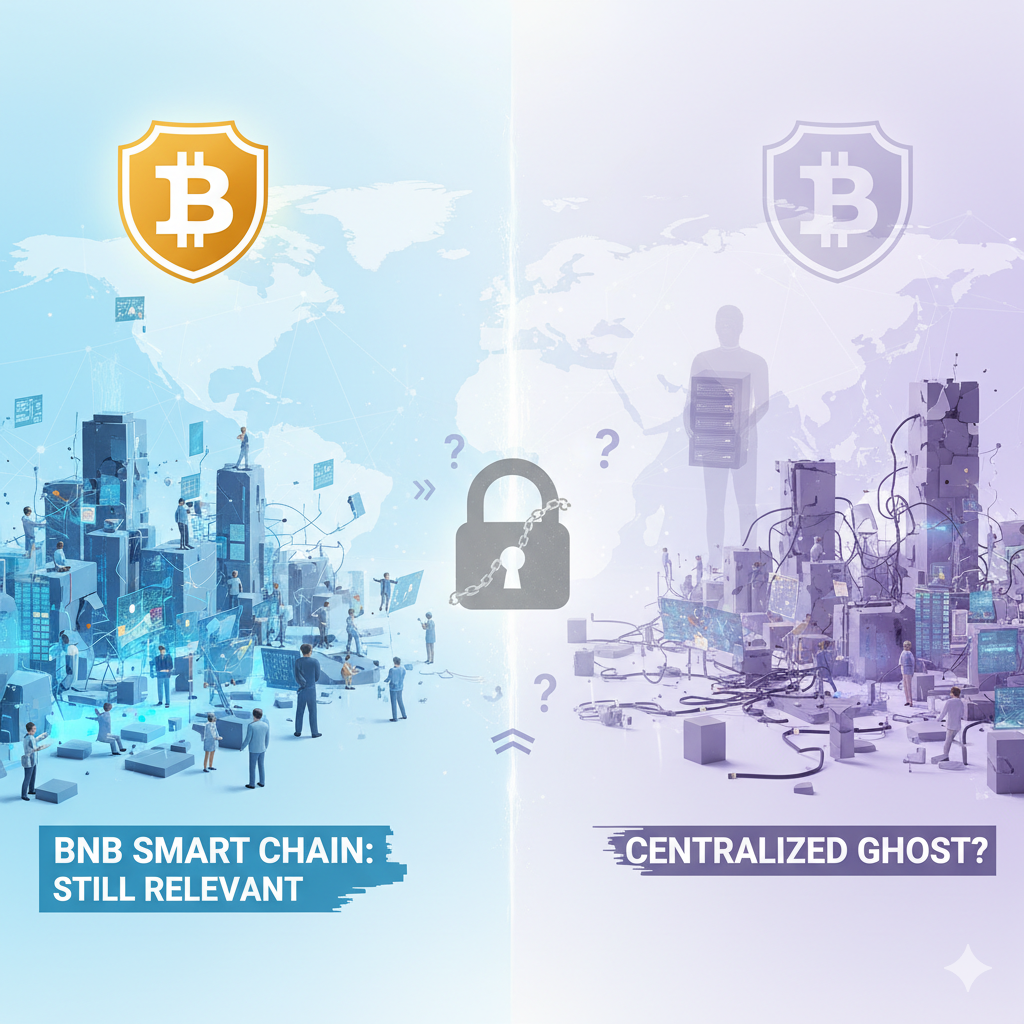
In a crypto landscape where narratives shift faster than block times, BNB Smart Chain (BSC) remains one of the most polarizing networks in decentralized finance. Is it still a vibrant DeFi engine, or has it ossified into a “centralized ghost”—a shadow of what it once promised? The data in 2025 suggest it’s very much alive, but also still haunted by centralization concerns that refuse to disappear.
What Is BNB Smart Chain—and Why It Still Matters
BSC, now part of the broader BNB Chain family, launched in September 2020 as an affordable, Ethereum Virtual Machine (EVM)-compatible alternative to Ethereum, especially during periods of prohibitively high gas fees. In 2022, the platform underwent a strategic rebrand under the umbrella “BNB Chain” to reflect its expanding multi-chain architecture, which now includes:
- BSC proper for smart contracts and decentralized finance applications,
- opBNB, an optimistic rollup Layer-2 solution designed for high-throughput, low-cost execution,
- BNB Greenfield, a decentralized data storage layer that bridges on-chain logic with persistent data management.
The overarching goal: deliver an end-to-end Web3 infrastructure stack—from smart contracts to decentralized storage—with minimal friction, maximum speed, and accessibility for both developers and everyday users. To understand how BNB has evolved into this comprehensive ecosystem, check out our ultimate guide to Binance Coin.
Under the Hood: How BNB Smart Chain Works in 2025
Consensus Mechanism & Validator Structure
BSC operates on a Proof-of-Staked-Authority (PoSA) consensus mechanism. Currently, the network maintains 45 total validators, with 21 acting as active block producers in rotation. This expanded validator set represents a more robust architecture compared to earlier versions, though it remains modest when measured against chains with hundreds or thousands of validators.
Lightning-Fast Block Times
A significant 2025 network upgrade, known as Maxwell, reduced block times to approximately 0.75 seconds. This improvement gives BSC near-instantaneous responsiveness for everyday applications, competing directly with high-performance chains like Solana while maintaining EVM compatibility.
Low Fees Meet High Throughput
On-chain gas costs remain minimal for most transactions on the main BSC network. The opBNB Layer-2 solution pushes fees even lower, targeting sub-penny costs for microtransactions—a critical feature for gaming, social applications, and high-frequency trading. For context on how Layer-2 solutions are reshaping the blockchain landscape, explore our analysis of the Layer-2 wars between Arbitrum, Optimism, and Base.
An added benefit of recent upgrades: new MEV (miner or validator extractable value) mitigation mechanisms, including the Good Will Alliance framework, reportedly cut sandwich attacks by over 90% following implementation.
Ecosystem Integration with Greenfield
BNB Greenfield enables developers to integrate decentralized storage and data logic alongside on-chain smart contracts. This architectural innovation bridges a major gap between blockchain logic and persistent data requirements, opening new possibilities for dApps that need reliable, censorship-resistant storage.
The Numbers Don’t Lie: BSC’s 2025 Market Footprint
- Total Value Locked (TVL): Approximately $10–11 billion across DeFi protocols
- Daily Active Addresses: Around 2.4 million unique users
- Daily Transactions: Between 20–25 million transactions processed daily
- DEX Volume (7-day): Approximately $26 billion in weekly decentralized exchange volume, with PancakeSwap leading the pack
- Stablecoin Presence: Roughly $13.5 billion in stablecoins circulating on BSC, with USDT commanding approximately 59% market share
- Network Revenue: $70.8 million in fees generated during Q1 2025 alone
- BNB Token Performance: As of October 7, 2025, BNB reached a new all-time high and temporarily surpassed XRP in market capitalization
These metrics underscore that BSC still channels substantial capital and user activity. Far from being a forgotten blockchain, it remains one of the busiest networks in the cryptocurrency ecosystem.
Where the Centralization Critique Still Holds Water
While BSC’s validator architecture has evolved, the centralization critique hasn’t disappeared—and for good reason:
Validator Concentration Remains a Concern
Twenty-one active block producers represents a relatively small set compared to more decentralized networks. This narrow gatekeeper class potentially wields outsized influence over network governance and security decisions.
The Emergency Pause Precedent
In 2022, following a significant bridge exploit, BSC’s validators coordinated a temporary network halt to mitigate damage and prevent further losses. While effective in that specific crisis, this kind of centralized intervention is impossible—or at least considerably more difficult—on strongly permissionless chains like Ethereum or Bitcoin.
Persistent Scam and Rug Pull Issues
BSC consistently ranks high on lists of chains with the most rug pull incidents by absolute count. The combination of extremely low gas costs and a massive user base creates fertile ground for malicious token launches and exit scams. User vigilance remains paramount.
The Binance Influence Factor
Binance’s influence—both real and perceived—casts a long shadow over the network. Governance decisions, communications strategies, and validator alignment all feed into the “centralized ghost” narrative that critics regularly invoke.
Strengths vs. Risks: A Balanced Assessment
Key Strengths
Speed and Cost Efficiency: Few blockchain networks can compete with sub-second block times combined with penny or sub-penny transaction costs for retail users.
Developer Familiarity: EVM compatibility means Ethereum developers can port applications with minimal code changes, dramatically lowering barriers to entry.
Ecosystem Depth: An active culture spanning DeFi protocols, blockchain gaming, memecoins, and serious developer communities keeps the network continuously evolving. For a direct comparison of how BSC stacks up against its primary competitor, read our Ethereum vs BNB Chain analysis.
Revenue Capture and Innovation: BSC isn’t merely a free ride—the network captures meaningful fees and reinvests in infrastructure upgrades including Layer-2 solutions, MEV reduction mechanisms, and decentralized storage.
Legitimate Risks
Validator Centralization: The modest validator set creates fewer points of failure and influence compared to more decentralized alternatives.
Security and Scam Vulnerability: Users must exercise extreme caution—thorough audits and due diligence remain essential before interacting with new protocols.
Censorship and Intervention Risk: The historical precedent of network pauses raises questions about potential future interventions.
Intensifying Competition: Ethereum Layer-2 solutions and newer high-performance chains like Solana and TON aggressively challenge BSC’s cost and speed advantages.
The Final Verdict on BNB Smart Chain
BNB Smart Chain in 2025 is definitively not a ghost. The network is bustling with activity, processing tens of millions of daily transactions and securing billions in total value locked. For many users and builders—especially those prioritizing cost efficiency, speed, and seamless EVM integration—it remains one of the most pragmatic platforms in Web3.
However, it’s also not a decentralization utopia. Centralization concerns aren’t mythical fears—they’re inherent trade-offs embedded in the network’s design philosophy and historical evolution. Smart users will treat BSC as a specialized tool rather than a one-size-fits-all solution: leverage it where it demonstrably excels, hedge with more decentralized chains where censorship resistance matters most, and always carefully weigh risk versus reward.
External Sources & Further Reading:
- BNB Chain Official Documentation
- DeFiLlama BNB Chain Analytics
- CoinGecko BNB Price Data
- PancakeSwap DEX Platform
- opBNB Network Information
- BNB Greenfield Documentation