
In the rapidly evolving world of digital assets, Non-Fungible Tokens (NFTs) have become a popular way to own unique items like art, music, and collectibles on the blockchain. However, with their growing value, NFTs have also attracted hackers, scammers, and other threats. Understanding NFT security best practices is essential for protecting your investments. This guide breaks down key strategies in simple terms, drawing from reliable sources to help beginners secure their NFTs effectively. Whether you’re just starting out or looking to strengthen your defenses, these tips will help you navigate the NFT space safely.
What Are NFTs and Why Does Security Matter?
NFTs are digital certificates of ownership stored on blockchains like Ethereum or Solana. They represent unique assets that can’t be duplicated, making them valuable for creators and collectors. But unlike traditional assets, NFTs live in a decentralized environment where security relies heavily on personal responsibility.
The risks are real: In recent years, NFT thefts through hacks and scams have resulted in millions of dollars in losses. For example, a 2022 OpenSea phishing incident stole more than $1.7 million in NFTs (Artnet News), and a BAYC Instagram compromise led to roughly $2–3 million in NFT losses (The Verge). More broadly across crypto, compromised private keys—often at centralized platforms—remain a top cause of losses (Reuters), underscoring why custody and key management are critical.
Common threats include phishing attacks, smart contract vulnerabilities, and wallet compromises. By following NFT security best practices, you can minimize these risks and enjoy the benefits of digital ownership without constant worry.
Security isn’t just about avoiding loss—it’s about building trust in the ecosystem. As NFTs integrate with DeFi (Decentralized Finance) and other Web3 tools, poor practices can lead to broader issues like unauthorized access or fraudulent transactions. Despite ongoing debates about NFT relevance, beginners should start by treating NFTs like high-value physical items: lock them up, verify everything, and stay vigilant.
Common NFT Security Risks You Need to Know
Before diving into solutions, let’s explore the main threats. Awareness is the first step in any NFT security strategy.
Phishing and Scams: Hackers often pose as legitimate platforms or projects to trick users into revealing wallet details. Platforms have suffered high-profile incidents demonstrating how effective phishing can be (The Verge).
Wallet Compromises: If someone gains access to your seed phrase or private keys, they can drain your NFTs instantly. This is one of the most devastating threats facing NFT collectors.
Smart Contract Vulnerabilities: Flawed code in NFT projects can allow exploits, like unauthorized minting or transfers. Even well-intentioned projects can have hidden bugs that attackers exploit.
Marketplace Risks: Even “verified” marketplaces can have lapses. There have been cases where fake NFTs appeared under verified collections, so don’t rely on badges alone (Web3 is Going Great).
DeFi Integration Issues: When NFTs are used in lending or staking, additional risks arise from interconnected smart contracts. A vulnerability in one protocol can cascade across multiple platforms.
Other dangers include wash trading (fake volume to inflate prices) and metadata persistence assumptions—off-chain NFT data can be altered or disappear if not stored correctly.
Choosing the Best Wallet for NFT Storage
Your wallet is the gateway to your NFTs, so selecting the right one is a cornerstone of NFT security best practices. Understanding the differences between hardware, software, and mobile wallets is crucial for making an informed decision.
Hardware Wallets (Cold Storage): Devices like Ledger or Trezor keep your private keys offline, making them highly secure for long-term storage. These physical devices are the gold standard for protecting high-value NFT collections.
Software Wallets (Hot Wallets): Apps like MetaMask are convenient for frequent trading but more exposed to phishing and malware. Use them for smaller amounts and daily transactions, but consider moving valuable NFTs to cold storage.
Decentralized Storage for Metadata:
IPFS does not guarantee permanence by itself. Content stays available only if it’s pinned (by you or a pinning service). Use a reputable pinning service or run your own node to keep NFT metadata available (IPFS Documentation, Pinata Docs).
For stronger permanence guarantees, consider Arweave, which is designed for pay-once, long-term storage. Many NFT projects use it for metadata and media (Arweave Wiki).
Always back up your wallet’s seed phrase in multiple secure offline locations. Never store it in cloud notes or screenshots—this is one of the most common mistakes that leads to NFT theft.
Enabling Strong Authentication and Access Controls
Authentication adds layers of defense, but there’s important nuance to understand:
Two-Factor Authentication (2FA):
Enable 2FA on exchanges, marketplaces, and any custodial wallet accounts (e.g., OpenSea’s Embedded/Account Wallet, Magic Eden account). Prefer authenticator apps or hardware keys over SMS (OpenSea Support).
However, non-custodial wallets (e.g., MetaMask, hardware wallets) don’t use 2FA to authorize on-chain transactions. 2FA protects account logins on web platforms; it does not stop you from signing a malicious transaction if you approve it (OpenSea). Use 2FA where available, but rely on signing-safety tools to understand what you’re signing.
Multi-Signature Wallets: For high-value NFTs or shared collections, consider a multisig wallet (e.g., Safe, formerly Gnosis Safe) so multiple approvals are required for transfers (Bitbond).
Permission Management: Regularly review and revoke token/NFT approvals using tools like Revoke.cash so old dapps can’t move assets without your knowledge.
Safe Buying, Selling, and Trading Practices
When engaging with NFT marketplaces, caution is key to protecting your digital assets. If you’re choosing between platforms, consider reading this comprehensive comparison of OpenSea, Blur, and Magic Eden to understand their security features.
Use Trusted Platforms: Established sites like OpenSea and Magic Eden provide security guidance and account protections (including 2FA), but you must still verify what you sign and what you buy (OpenSea Support).
Verify Transactions: Before approving any smart-contract interaction, read the prompts carefully. Consider transaction-simulation tools and extensions like Pocket Universe or wallets and services using Blowfish simulation to preview what a signature will actually do (GitHub, Chrome Web Store, Pocket Universe). These tools can help you understand exactly what permissions you’re granting before it’s too late.
Avoid Suspicious Links: Don’t click unsolicited links in emails or direct messages. Always navigate to marketplaces via bookmarks or by typing the official URL directly into your browser.
If trading NFTs across different blockchains, be aware of additional security considerations when using cross-chain bridges. Start with small test transactions and confirm contract addresses from official project pages. Never rush into a transaction, even if someone claims it’s a limited-time opportunity.
Protecting Against Phishing and Other Scams
Phishing remains one of the top threats in the NFT world, accounting for millions in losses annually.
Be Cautious with Communications: Ignore unsolicited DMs or “urgent” support outreach. Legitimate projects and platforms will never ask for your seed phrase or private keys.
Use Security Tools:
Transaction-aware protections like Pocket Universe (browser extension) simulate transactions and flag drainer patterns before you approve them (Chrome Web Store).
Phishing-domain protection tools like ChainPatrol provide real-time blocklists and brand-protection feeds that wallets (e.g., MetaMask) and communities use to warn or block malicious sites (MetaMask). It’s not a transaction simulator; it focuses on detecting and denylisting scam domains and infrastructure.
Digital Hygiene: Keep your operating system, browser, and wallet software up to date. Be extra careful when using public Wi-Fi networks, which can be intercepted by attackers.
If you suspect a compromise, immediately revoke approvals using Revoke.cash, move assets to a fresh wallet, and follow marketplace recovery steps (Magic Eden Help).
Backing Up and Recovering Your NFTs
Backups ensure you don’t lose access to your digital assets forever.
Secure Seed Phrases: Write them down on paper and store offline in safe places. Consider using metal backup plates that are fireproof and waterproof for maximum security.
Multiple Backups: Keep separate offline copies in different physical locations to guard against loss, theft, or damage. Don’t keep all copies in one place.
Recovery Plans: Periodically test restoring a wallet (with no funds) so you’re confident the backup works when you need it. This practice run can save you from panic during an actual emergency.
For creators: Ensure the wallet controlling your collections is backed up properly and, for teams, consider multisig wallets for continuity (Bitbond).
Advanced NFT Security Tips for Developers and Projects
If you’re building NFT projects, security must start at the code level.
Conduct Audits: Use reputable security auditors and follow secure development practices. An audit can identify vulnerabilities before they’re exploited by attackers (CertiK).
Follow Best Coding Practices: Implement proper access controls, minimal privileges, and upgrade safety mechanisms. Follow established patterns from OpenZeppelin and other trusted libraries (OpenZeppelin).
User Protections: Consider emergency pause mechanisms and circuit breakers. Use multisig wallets for sensitive admin actions, with deployer and owner roles managed via Safe (Bitbond).
Metadata Storage: Use IPFS with reliable pinning services or Arweave for long-term persistence (IPFS Documentation, Pinata Docs). Don’t rely on centralized servers that could go offline.
Building a Secure NFT Future
Securing your NFTs doesn’t have to be overwhelming. By choosing the right wallet, enabling strong authentication where it actually applies, verifying transactions before approval, and staying alert to scams, you can protect your digital assets effectively. Remember, NFT security best practices evolve with the technology—stay informed through reliable sources and engaged communities.
As the NFT space grows and matures, integrating these security habits will help you avoid common pitfalls and focus on what matters: collecting, creating, and enjoying digital art and collectibles. Whether you’re safeguarding a single piece of digital art or managing a full portfolio, proactive security ensures your investments remain yours.
Start implementing these NFT security best practices today for peace of mind tomorrow. The effort you invest in securing your digital assets now will pay dividends as the NFT ecosystem continues to expand and evolve.
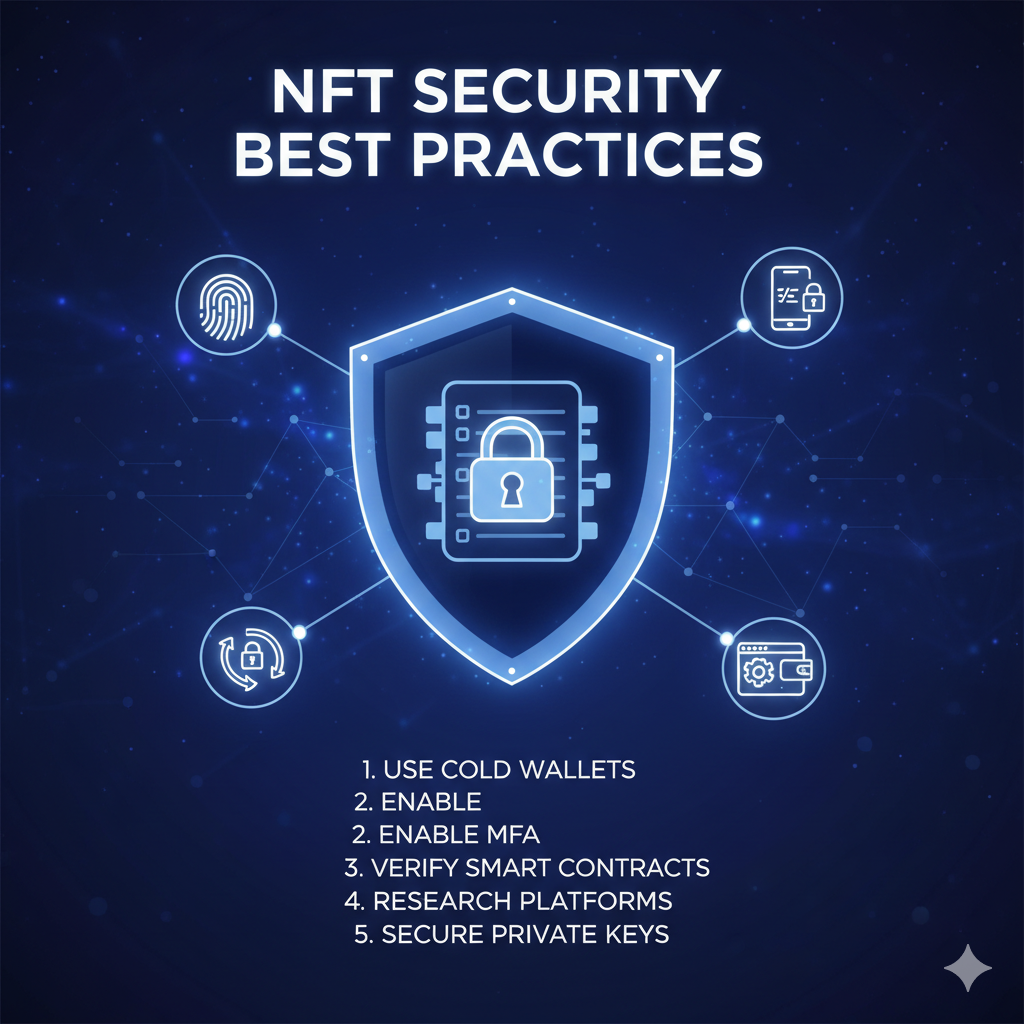
Key Takeaways for NFT Security:
- Use hardware wallets for long-term storage of valuable NFTs
- Enable 2FA on marketplace accounts, but understand its limitations
- Always verify transactions with simulation tools before signing
- Store seed phrases offline in multiple secure locations
- Regularly revoke unnecessary token approvals
- Stay vigilant against phishing attempts and suspicious links
- Keep all software updated and use trusted security tools
- For projects, conduct audits and use multisig wallets for admin functions
By following these comprehensive NFT security best practices, you’ll be well-equipped to navigate the exciting world of digital collectibles safely and confidently.