
Introduction to NFT Marketplaces
Non-Fungible Tokens (NFTs) have evolved significantly since their inception, representing unique digital ownership proofs for art, music, virtual land, gaming assets, and collectibles. In 2025, the NFT ecosystem has matured with renewed institutional interest, improved user experience, and enhanced cross-chain functionality.
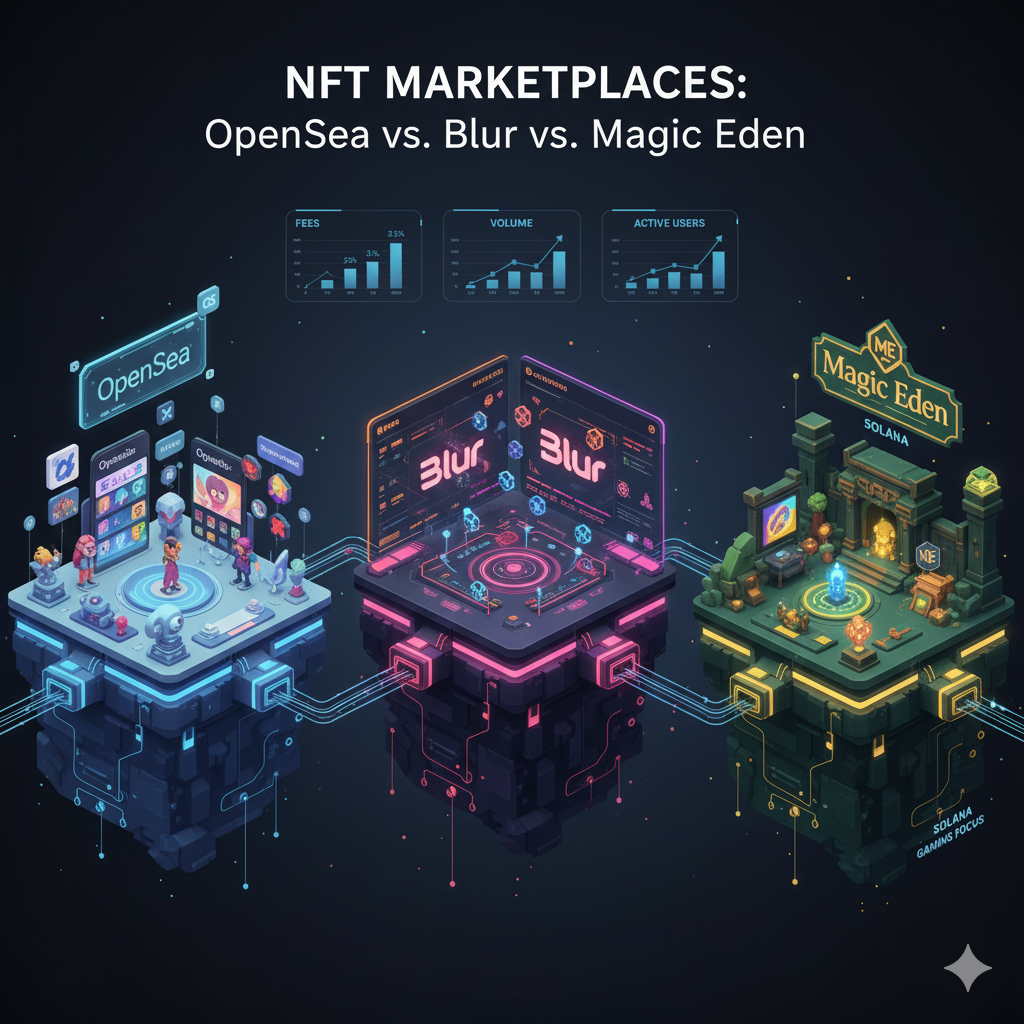
NFT marketplaces serve as the primary platforms where creators mint, buyers purchase, and collectors trade these digital assets. The three dominant platforms—OpenSea, Blur, and Magic Eden—each cater to different user needs and trading strategies.
Key Factors When Choosing an NFT Marketplace:
- Transaction fees and gas costs
- Supported blockchain networks
- Trading tools and user interface
- Community size and liquidity
- Security features and reputation
- Creator royalty policies
OpenSea: The Industry Leader
Platform Overview
OpenSea remains the largest NFT marketplace by user base and collection diversity. Founded in 2017, it has established itself as the “Amazon of NFTs” with comprehensive discovery tools and broad blockchain support.
2025 Key Features & Updates
OpenSea 2.0 (OS2) Launch:
- Support for 19+ blockchain networks including Ethereum, Polygon, Solana, Base, and Arbitrum
- Enhanced user interface with improved batch operations
- Advanced search and filtering capabilities
- Mobile app optimization for iOS and Android
Rewards Program:
- Voyages rewards program for active users
- Planned $SEA token launch with transaction fee revenue sharing
- Exclusive access to featured collections and early mints
Fee Structure (2025)
| Fee Type | Amount | Details |
|---|---|---|
| Marketplace Fee | 1% | Reduced from previous 2.5% |
| Creator Royalties | Variable | Set by original creators (0-10%) |
| Gas Fees | Blockchain-dependent | High on Ethereum, low on Polygon/Solana |
OpenSea Pros and Cons
✅ Strengths:
- Largest selection of NFT collections
- Excellent discovery and curation tools
- Strong creator support and minting tools
- Cross-chain compatibility
- Institutional partnerships and backing
- Robust mobile application
❌ Weaknesses:
- Higher fees compared to competitors
- Slower transaction processing during peak times
- Limited advanced trading features
- Occasional customer support delays
Best for: Beginners, collectors seeking variety, creators launching new projects
Blur: The Pro Trader’s Choice
Platform Overview
Blur has revolutionized NFT trading by focusing on speed, efficiency, and professional trading tools. Launched with a trader-first approach, it quickly gained market share among active NFT flippers and institutional traders.
2025 Platform Features
Advanced Trading Tools:
- Real-time portfolio analytics with P&L tracking
- Sweep functionality for bulk purchases across collections
- Order book-style listings similar to traditional exchanges
- Advanced filtering by traits, rarity, and price points
- Mobile-optimized trading interface
Blockchain Support:
- Primary focus on Ethereum mainnet
- Blast Layer 2 integration for reduced fees
- Plans for additional L2 expansions in late 2025
Blur Fee Structure
| Fee Type | Amount | Benefits |
|---|---|---|
| Marketplace Fee | 0% | All proceeds go to sellers |
| Creator Royalties | ~0.5% | Enforced minimum royalties |
| Gas Fees | Standard Ethereum | No additional markup |
Blur Pros and Cons
✅ Strengths:
- Zero marketplace fees maximize profits
- Lightning-fast execution speeds
- Professional-grade analytics tools
- Strong liquidity for popular collections
- Airdrop rewards for active traders
❌ Weaknesses:
- Steep learning curve for beginners
- Limited collection discovery features
- Primarily Ethereum-focused
- Less creator-friendly tools
Best for: Active traders, NFT flippers, institutional investors, experienced collectors
Magic Eden: Multi-Chain Gaming Hub
Platform Overview
Magic Eden started as Solana’s premier NFT marketplace and has evolved into a comprehensive multi-chain platform with strong gaming and community focus. It’s particularly popular for trading game assets and utility NFTs.
2025 Expansion & Features
Multi-Chain Support:
- Solana (dominant position with 60%+ market share)
- Ethereum (growing presence)
- Bitcoin Ordinals/Runes (emerging market leader)
- Base, Berachain, and other Layer 2 solutions
Gaming & Community Features:
- Launchpad for new gaming projects
- Community rewards and engagement programs
- Bulk listing tools for collection management
- Game asset integration with popular blockchain games
- Creator tools for gaming studios
Magic Eden Fee Structure
| Chain | Marketplace Fee | Typical Gas Costs |
|---|---|---|
| Solana | 2% | <$0.01 |
| Ethereum | 2% | $15-50+ |
| Bitcoin | 2% | $5-15 |
| Base/L2 | 2% | $1-5 |
Magic Eden Pros and Cons
✅ Strengths:
- Extremely low transaction costs on Solana
- Strong gaming ecosystem integration
- Active community and social features
- Bitcoin Ordinals market leadership
- Developer-friendly APIs and tools
❌ Weaknesses:
- Higher marketplace fees (2%)
- Smaller Ethereum collection variety
- Volume can be inconsistent
- Less advanced trading analytics
Best for: Gamers, Solana ecosystem participants, Bitcoin Ordinals collectors, cost-conscious traders
Detailed Comparison Table
| Feature | OpenSea | Blur | Magic Eden |
|---|---|---|---|
| Primary Chains | 19+ (ETH, SOL, MATIC, BASE) | ETH, Blast L2 | SOL, ETH, BTC, BASE, BERA |
| Marketplace Fee | 1% | 0% | 2% |
| Creator Royalties | Variable (0-10%) | ~0.5% minimum | Optional/Collection-based |
| Gas Costs | High on ETH, Low on alts | Standard ETH costs | Very low on SOL |
| Trading Tools | Good discovery, batching | Advanced analytics, sweeps | Bulk operations, gaming focus |
| Market Share (Q3 2025) | ~37% | ~27% | ~10% overall, 62% on Solana |
| Mobile App | ★★★★★ | ★★★★☆ | ★★★★☆ |
| Beginner Friendly | ★★★★★ | ★★☆☆☆ | ★★★★☆ |
| Pro Trading Features | ★★★☆☆ | ★★★★★ | ★★★☆☆ |
Which NFT Marketplace Should You Choose?
For Beginners and Casual Collectors
Choose OpenSea if you’re:
- New to NFTs and want the easiest onboarding
- Looking for the widest variety of collections
- Interested in cross-chain NFT exploration
- Prioritizing user-friendly interface and mobile experience
For Active Traders and Professionals
Choose Blur if you’re:
- Trading NFTs frequently for profit
- Need advanced analytics and portfolio tracking
- Want to minimize fees and maximize returns
- Comfortable with complex trading interfaces
For Gaming and Solana Enthusiasts
Choose Magic Eden if you’re:
- Focused on gaming NFTs and utility tokens
- Active in the Solana ecosystem
- Want minimal transaction costs
- Interested in Bitcoin Ordinals trading
Multi-Platform Strategy
Many successful NFT traders use multiple marketplaces:
- OpenSea for discovery and rare finds
- Blur for quick flips and bulk operations
- Magic Eden for Solana gaming assets and low-cost trades
Understanding NFT Royalties Across Platforms
One of the most critical aspects of NFT trading in 2025 is how each marketplace handles creator royalties. OpenSea allows creators to set their own royalty percentages, typically ranging from 0-10%, giving artists maximum control over their secondary market earnings. Blur enforces a minimum royalty of approximately 0.5% to ensure creators receive some compensation, while Magic Eden’s approach varies by collection and blockchain, with some collections maintaining optional royalties.
Blockchain Ecosystem Considerations
When choosing your NFT marketplace, it’s essential to consider the underlying blockchain ecosystem. The debate between Ethereum vs Solana NFTs continues to shape marketplace selection in 2025. Ethereum remains the dominant force for high-value collections and established projects, with OpenSea and Blur providing the most robust support. However, Solana’s dramatically lower transaction costs make Magic Eden an attractive option for frequent traders and gaming enthusiasts.
For those exploring multiple networks, understanding the broader comparison between Ethereum, Solana, Polygon, and TON can inform your marketplace strategy and help you identify where specific collections might offer the best value.
Are NFTs Still Relevant in 2025?
Despite market fluctuations, NFTs on Ethereum remain highly active and continue to evolve with new use cases. The maturation of marketplaces like OpenSea, Blur, and Magic Eden reflects the industry’s shift from speculation to utility, with gaming assets, digital identity, and tokenized real-world assets driving renewed interest.
Frequently Asked Questions
What are the safest NFT marketplaces in 2025?
All three platforms (OpenSea, Blur, Magic Eden) are considered secure with strong track records. Always verify smart contracts and use reputable wallets like MetaMask or Phantom.
Which marketplace has the lowest fees?
Blur offers 0% marketplace fees, while OpenSea charges 1% and Magic Eden charges 2%. However, consider gas fees and overall ecosystem when comparing total costs.
Can I use the same wallet across all marketplaces?
Yes, wallets like MetaMask work across all Ethereum-based platforms. For Solana-based trading on Magic Eden, you’ll need a Solana wallet like Phantom.
How do NFT royalties work in 2025?
- OpenSea: Creator-set royalties (typically 2.5-10%)
- Blur: Enforced minimum ~0.5% royalties
- Magic Eden: Varies by collection and blockchain
Which marketplace is best for new NFT projects?
OpenSea offers the best creator tools and largest audience for launches. Magic Eden is excellent for gaming projects, especially on Solana.
Conclusion
The NFT marketplace landscape in 2025 offers specialized platforms for different trading styles and preferences. Whether you’re a collector, trader, or creator, understanding each platform’s strengths will help you make informed decisions and maximize your NFT experience.
Stay updated with the latest developments by following official channels and always practice safe trading with proper security measures.
Related Resources:
- CoinGecko NFT Rankings
- DappRadar NFT Statistics
- Nansen NFT Analytics
- NFT Calendar
- Solana and TON: Why These Chains are Rising.
Disclaimer: This article is for educational purposes only and does not constitute financial advice. Always conduct your own research before making investment decisions.