

Ever lost sleep worrying if your crypto is really safe on that crypto exchange you signed up for? If you’re new to the world of cryptocurrency, you’re not alone. Millions of beginners jump in by using a crypto exchange like Binance or Coinbase to buy their first Bitcoin or Ethereum.
But here’s the thing: while a crypto exchange is great for trading, it’s not the best place to store your assets long-term. That’s where crypto wallets come in. In this complete guide, I’ll walk you through everything you need to know about the best crypto wallets for beginners in 2025. We’ll cover why you should use a wallet instead of relying solely on a crypto exchange, top recommendations, setup steps, and how to avoid common pitfalls.
Trust me, I’ve been in your shoes, starting with a small investment and learning the hard way about security. By the end, you’ll feel confident managing your crypto like a pro.
In this article, you’ll learn:
- The key differences between crypto wallets and crypto exchanges
- Types of wallets and which ones suit beginners
- Our top picks for 2025, based on ease of use, security, and features
- Step-by-step setup guides with real examples
- Security tips to protect your investments
- Answers to frequently asked questions
- Next steps to get started today
What Is a Crypto Wallet and Why Do Beginners Need One?
Let’s start simple. A crypto wallet isn’t like your leather billfold stuffed with cash. Instead, it’s a tool that stores your private keys—the secret codes that let you access and control your cryptocurrencies on the blockchain. Think of it like a key to a safety deposit box: the box (your crypto) is on the blockchain, but without the key, you can’t get in.
Why bother with one if you already have an account on a crypto exchange? Well, according to Crypto.com’s research, by 2024 there were already over 560 million crypto users worldwide, and by 2025 the global market cap has hovered around the $4 trillion mark according to CoinMarketCap, so security is more important than ever.
Exchanges are convenient for buying and selling, but they’re also big targets for hackers. Remember the FTX collapse in 2022? Thousands lost everything because their assets were stored on the exchange. A dedicated wallet gives you full control—it’s your money, your rules.
For beginners, a good wallet makes things less intimidating. You can start small, say with $50 in Ethereum, and practice sending and receiving without the fear of losing it all. In my early days, I kept everything on a crypto exchange and nearly had a heart attack during a market dip. Switching to a wallet changed that. Here’s the deal: wallets come in different flavors, and choosing the right one can save you headaches down the road.
If you’re specifically interested in Ethereum security, check out our comprehensive Ethereum security guide with 10 essential rules to protect your holdings.
Pro Tip: If you’re just dipping your toes in, start with a free software wallet. It’s like training wheels before upgrading to something more secure.
Crypto Wallet vs. Crypto Exchange: The Crucial Differences
Confused about the difference? You’re not alone. A crypto exchange is like a bustling marketplace where you buy, sell, and trade coins—think Binance or Coinbase. They handle the transactions, but when you leave your crypto there, it’s in their custody. That means if the exchange gets hacked or goes bankrupt, your assets could vanish.
A crypto wallet, on the other hand, puts you in the driver’s seat. You own the private keys, so no one else can touch your funds without your permission. Exchanges are for trading; wallets are for storing. In fact, many experts recommend moving your crypto off exchanges after buying.
According to Chainalysis, global crypto adoption has surged, with countries like India and the US leading the way, but so has crypto crime—Chainalysis estimates that in 2024 alone, scams took in at least $9.9 billion and total illicit crypto activity reached about $40.9 billion, much of it driven by sophisticated frauds and hacks rather than simple beginner mistakes.
Here’s a quick analogy: A crypto exchange is like a bank where you deposit money for easy access, but a wallet is your personal safe at home. Safer, but you have to manage the combination (your seed phrase).
Have you ever wondered why pros always say “not your keys, not your crypto”? That’s why. Using a wallet alongside your crypto exchange setup gives you the best of both worlds. For more detailed wallet comparisons, see our guide on the top 10 crypto wallets in 2025.
Types of Crypto Wallets: Hot, Cold, and Everything in Between
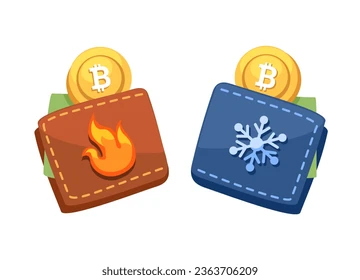
Crypto wallets aren’t one-size-fits-all. They fall into two main categories: hot and cold.
Hot wallets are connected to the internet, making them super convenient for daily use. Examples include mobile apps like Trust Wallet or browser extensions like MetaMask. They’re great for beginners because you can send crypto quickly, like paying for coffee with Bitcoin (if that’s a thing where you live). However, that online connection makes them more vulnerable to hacks.
Cold wallets, meanwhile, are offline—think hardware devices like Ledger Nano X or Trezor, or even paper wallets. They’re like Fort Knox for your crypto, ideal for long-term storage. In 2025, with the global crypto wallet market (hot and cold combined) projected to reach around $15.54 billion according to market research from Grand View Research, cold wallets are more popular than ever for serious investors.
Which one for beginners? Start with a hot wallet for learning, then add a cold one as your portfolio grows. I did that and never looked back. If you’re interested in exploring newer blockchain ecosystems, check out our guide on memecoins on TON and Base blockchains.
Warning: Never store large amounts in a hot wallet. It’s like leaving cash in your car glovebox—handy, but risky.
Best Crypto Wallets for Beginners in 2025 (With Comparison Table)
Alright, let’s get to the good stuff. Based on reviews from sites like CoinLedger, NerdWallet, and PCMag, here are my top picks for 2025. I focused on ease, security, and beginner-friendliness.
For a more detailed breakdown of wallet options specifically designed for beginners, check out our comprehensive guide on the top 10 crypto wallets for beginners.
First, a quick comparison table:
| Wallet | Type | Best For | Cost | Supported Coins | Rating |
|---|---|---|---|---|---|
| Zengo | Hot (Mobile) | Absolute Beginners | Free (Pro version $10/mo) | 120+ | 4.8/5 |
| Coinbase Wallet | Hot (Mobile/App) | Integration with Exchange | Free | 500+ | 4.7/5 |
| Ledger Nano X | Cold (Hardware) | Security | $149 | 5,500+ | 4.9/5 |
| MetaMask | Hot (Browser/Mobile) | Ethereum & DeFi | Free | ETH-based | 4.6/5 |
| Trust Wallet | Hot (Mobile) | Multi-Chain | Free | 4.5M+ | 4.5/5 |
| Exodus | Hot (Desktop/Mobile) | User-Friendly Interface | Free | 150+ | 4.7/5 |
| Tangem | Cold (Card) | Portability | $55+ | Multi | 4.8/5 |
Zengo tops my list for newbies—it’s keyless, using biometrics instead of seed phrases, reducing the chance of losing access. I tried it myself, and setup took under 5 minutes.
Coinbase Wallet is perfect if you’re already on their exchange. Seamless transfers, and it’s non-custodial, meaning you control the keys. If you want to learn more about buying Ethereum safely before setting up a wallet, read our step-by-step Ethereum buying guide.
For hardware, Ledger Nano X is a beast. Bluetooth connectivity makes it easy, and it supports thousands of coins. In 2025, it’s still the go-to for cold storage according to TechRadar’s hardware wallet reviews.
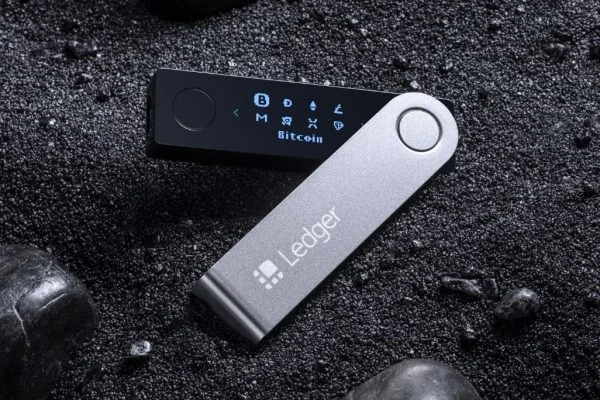
MetaMask shines for Ethereum fans—great for NFTs and DeFi. But if you’re multi-chain, Trust Wallet or Exodus might suit better.
Pro Tip: Test with small amounts first. Buy $10 worth of crypto on a crypto exchange like Coinbase, then transfer to your new wallet to practice.
(Disclosure: As an affiliate, I may earn commissions from links to Coinbase or Binance. But I only recommend what I’d use myself.)
How to Choose the Right Crypto Wallet for You
Overwhelmed by options? Ask yourself: How much crypto do I have? If under $1,000, a hot wallet like Zengo is fine. More? Go cold with Ledger.
Consider compatibility—Ethereum-focused? MetaMask. Multi-coin? Trust Wallet. Bitcoin purist? Check out dedicated Bitcoin wallets.
Ease of use matters too. Beginners, avoid complex ones like Sparrow unless you’re Bitcoin-only and ready for advanced features.
Finally, check fees and support. Free wallets are great, but premium features can be worth it. Resources like Bitcoin.org’s wallet guide can help with specific use cases.
In my experience, the best choice evolves. Start simple, upgrade as needed.
Step-by-Step: Setting Up Your First Crypto Wallet
Ready to dive in? Let’s use Coinbase Wallet as an example—it’s beginner-friendly and ties into a popular crypto exchange.
- Download the app from the official site (avoid fakes!).
- Create a new wallet—write down your 12-word seed phrase securely. (Never share it!)
- Set a PIN or biometric lock.
- Buy crypto on Coinbase exchange and transfer to your wallet address.
Boom! You’re set.
Took me 10 minutes first time. For hardware like Ledger, connect via USB/Bluetooth and follow the app prompts.
Important: Back up your seed phrase offline. Lose it, lose your crypto.

Common Mistakes Beginners Make with Crypto Wallets (And How to Avoid Them)
Most beginners screw up here—I did too. Top mistake: Forgetting to back up the seed phrase. Solution: Store it in a fireproof safe or metal plate like Cryptosteel or Billfodl.
Another: Sending to the wrong address. Always double-check—crypto transactions are irreversible. According to Cointelegraph, user errors account for a significant portion of crypto losses.
Leaving funds on a crypto exchange long-term? Big no-no. Move to a wallet ASAP.
Falling for scams: Never click suspicious links. Use official apps only. The Federal Trade Commission has resources on recognizing crypto scams.
Constantly checking prices? It leads to panic selling. Set it and forget it for holdings.
According to security researchers and industry reports from sources like Kaspersky, these kinds of security errors contribute to the billions of dollars lost to hacks and scams each year.
Warning: Ignore DMs promising free crypto. They’re scams 99% of the time.
Essential Security Tips for Your Crypto Wallet
Security isn’t optional in 2025’s crypto world. Enable 2FA everywhere—apps like Authy or Google Authenticator provide excellent protection.
Use strong, unique passwords—consider a manager like LastPass, 1Password, or Bitwarden.
For hot wallets, avoid public Wi-Fi. If you must use it, connect through a VPN service for added security.
Cold wallets? Keep them offline when not in use.
Regularly update software to patch vulnerabilities. Check CVE databases for known crypto wallet vulnerabilities.
And diversify: Don’t put all eggs in one wallet. Learn more about Ethereum security best practices for comprehensive protection strategies.
Think of it like home security—locks, alarms, and vigilance.
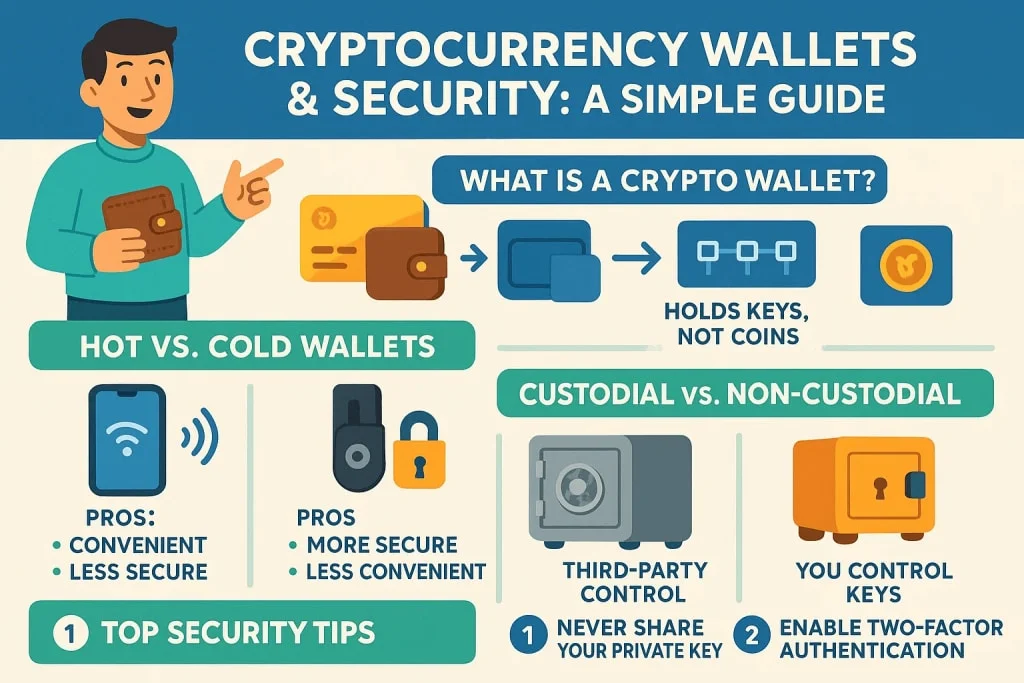
Cryptocurrency Wallets Explained: How They Work and Stay Secure
Pro Tip: Test recovery with a small amount. Simulate losing access to ensure your backup works.
Pros and Cons of Popular Crypto Wallets
Every wallet has trade-offs. According to comprehensive reviews from CNET and Forbes:
Zengo: Pros—Easy, no seed phrase. Cons—Limited to mobile.
Ledger: Pros—Ultra-secure, supports thousands of coins. Cons—Costs money, less convenient.
MetaMask: Pros—DeFi integration, huge ecosystem. Cons—Gas fees can add up.
Weigh them against your needs. For a deeper comparison of wallet features, our top 10 crypto wallets guide breaks down each option in detail.
In the end, the best wallet is one you use correctly.
Frequently Asked Questions About Crypto Wallets
What is the safest crypto wallet for beginners?
Zengo or Coinbase Wallet for hot, Ledger for cold. CoinDesk’s wallet reviews provide additional comparisons.
Do I need a wallet if I use a crypto exchange?
Yes, for better control and security. Read more about the differences between Bitcoin and Ethereum wallets.
What’s the difference between hot and cold wallets?
Hot are online (convenient), cold offline (secure). Investopedia’s guide explains this in depth.
How do I recover a lost wallet?
Using your seed phrase—keep it safe! Resources like Ledger Academy offer recovery tutorials.
Are crypto wallets free?
Many are, like MetaMask, but hardware ones cost $50–150.
Can I store NFTs in a crypto wallet?
Yes, most support them, like MetaMask. Check OpenSea’s wallet guide for NFT storage options.
What’s a seed phrase?
A 12–24 word backup code for your wallet. Never share it with anyone.
Is it safe to buy crypto wallets from Amazon?
It’s safer to buy directly from the manufacturer or an authorized reseller to avoid tampered devices. Ledger’s official warning explains why.
How many crypto wallets should I have?
Start with one, add more for diversification.
What if I forget my wallet password?
Use seed phrase to reset, but don’t lose that!
Conclusion: Take Control of Your Crypto Today
There you have it—a complete guide to the best crypto wallets for beginners in 2025. We’ve covered why they’re superior to just using a crypto exchange for storage, top picks like Zengo and Ledger, setup tips, and how to stay secure.
Remember, crypto is exciting but volatile—start small, learn as you go, and never invest more than you can afford to lose. (This isn’t financial advice; always do your research.)
Next steps: Pick a wallet from our list, set it up today, and transfer a small amount from your crypto exchange. Ready to buy your first crypto? Check out Binance for global options or Coinbase for US users.
Related Articles:
- How to Buy Ethereum Safely in 2025: A Beginner’s Guide
- Bitcoin vs Ethereum: What’s the Real Difference in 2025?
- Ethereum Security Guide: 10 Essential Rules to Protect Your Crypto in 2025
- Top 10 Crypto Wallets in 2025: Best Picks for Ethereum, Bitcoin, and Multi-Chain Support
- Top 10 Crypto Wallets for Beginners in 2025: BTC, ETH, Multi-Chain
- Exploring the New Generation of Memecoins on TON and Base Blockchains in 2025
- Best Tools for Memecoin Analysis in 2025