
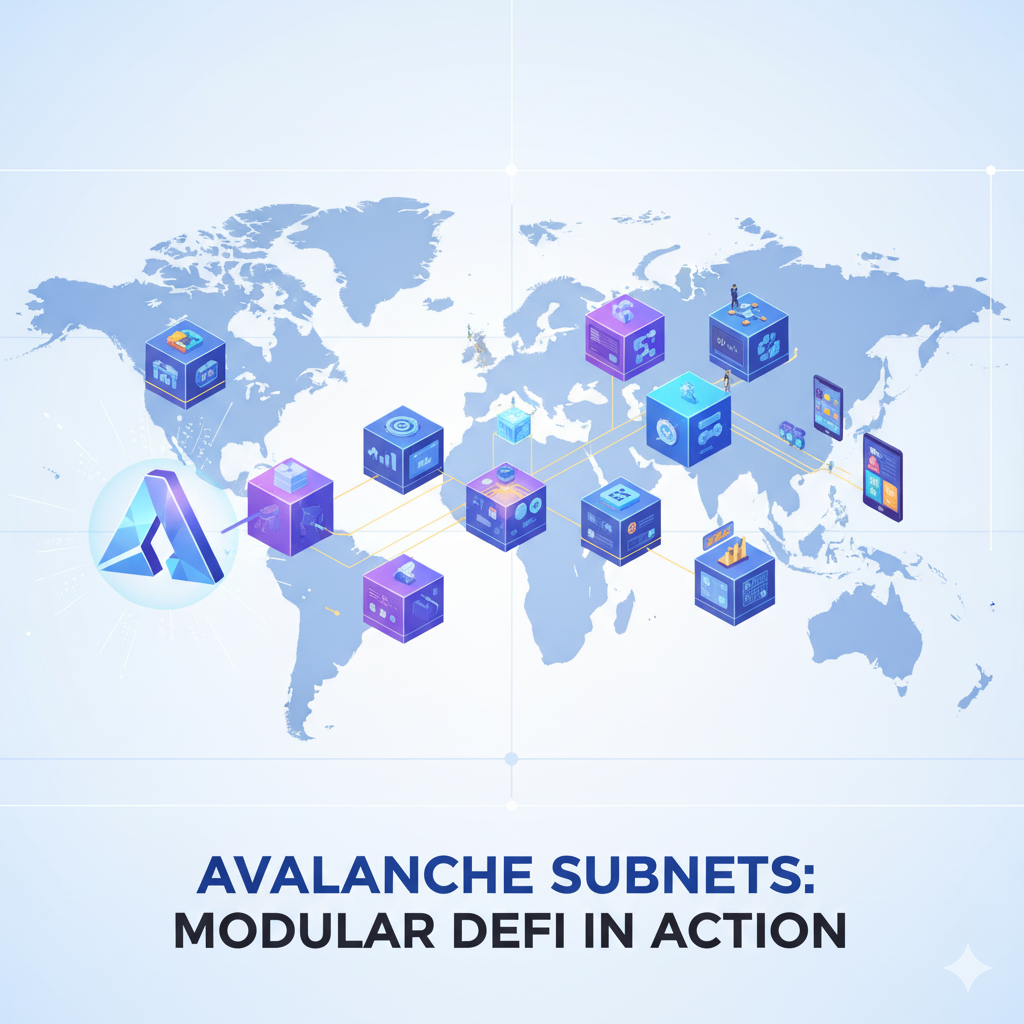
In 2025, Avalanche continues to stand out as one of the most flexible blockchain platforms available. Its Layer-1 networks (L1s) — previously known as Subnets — let developers launch independent blockchains. These run parallel with Avalanche’s primary network.
Moreover, each L1 operates with its own validators, fee model, and tokenomics. At the same time, they remain natively connected with the rest of the ecosystem. This modular approach positions Avalanche uniquely in the competitive landscape of DeFi platforms.
Revolutionary Changes in the Avalanche9000 Upgrade
The Etna upgrade (also known as Avalanche9000) introduced a transformative new validator model. As a result, this fundamentally changes how developers participate in the network.
Key improvements include:
First, validators for new L1s no longer face steep requirements. Previously, they needed to stake 2,000 AVAX tokens. Additionally, they had to validate the Primary Network. Now, instead, they simply pay a continuous fee for participation. Consequently, this dramatically lowers barriers for new projects.
However, legacy Subnets still follow the original rule. Specifically, they require 2,000 AVAX staking plus Primary Network validation. Therefore, both systems now coexist. This dual approach opens Avalanche to a wider range of developers. For instance, it welcomes both bootstrapped startups and institutional players.
For those comparing custom blockchain solutions, our guide to Avalanche Subnets vs Polygon Supernets provides detailed insights into different approaches to network customization.
For more details on the Avalanche9000 upgrade, visit the official Avalanche documentation.
Performance Metrics: Speed and Finality That Matter
Avalanche has built its reputation on delivering sub-second finality. Specifically, transactions finalize in approximately 1 second. Furthermore, each L1 network can handle thousands of transactions per second (TPS).
Nevertheless, some marketing materials claim “hundreds of thousands of TPS.” In reality, actual throughput depends on several factors. These include network setup, validator distribution, and specific use cases.
What truly matters for DeFi users is reliable performance. Consequently, Avalanche’s structure delivers fast confirmations and low latency. This makes it ideal for time-sensitive operations. For example, it excels at liquidations, arbitrage, and high-frequency trading. Those interested in scalability solutions might also explore how Optimism achieves fast and cheap Ethereum transactions through Layer 2 technology.
Learn more about Avalanche’s consensus mechanism at Avalanche’s technical documentation.
Native Cross-Chain Communication Without External Bridges
The Durango upgrade activated Avalanche Warp Messaging (AWM) on the C-Chain. Simultaneously, it introduced Teleporter. This native system enables messaging and token transfers between L1 chains. Notably, it works without external bridges.
This breakthrough means DeFi projects can maintain their independence. At the same time, they remain seamlessly connected across the ecosystem. Therefore, developers no longer worry about bridge security issues. Similarly, they avoid custodial risks that have plagued cross-chain DeFi.
For technical specifications on Avalanche Warp Messaging, check the AWM documentation.
Why Modular Architecture Matters for DeFi
Avalanche’s modular design allows developers to offload heavy DeFi activity. Specifically, they can use specialized networks built for specific purposes. As a result, this creates several compelling advantages:
Dedicated environments: First, you can deploy a DEX, lending market, or RWA platform on its own L1. Then, you can tune it for low latency and minimal fees. Additionally, you can set custom MEV rules.
Smooth user experience: Furthermore, traders avoid gas wars and network congestion. This happens because unrelated activity runs elsewhere. For instance, gaming transactions or NFT mints don’t interfere. Consequently, each L1 maintains its own throughput.
Flexible economics: Moreover, each L1 defines its own token model and fee structure. It also sets validator incentives. Therefore, this enables tailored ecosystems that can experiment freely.
The modular blockchain concept extends beyond Avalanche. For a deeper understanding of this architectural approach, explore our comprehensive comparison of modular blockchains including Celestia, Monad, and EigenLayer.
Real-World L1 Implementations in Production
Dexalot L1: This is a central limit order book (CLOB) style exchange. It runs on its own network. As a result, it delivers low-latency order execution. Furthermore, it maintains price stability even during peaks. Visit Dexalot to experience institutional-grade trading.
DFK Chain: Similarly, this is a hybrid gaming and DeFi network. Here, play-to-earn mechanics work seamlessly. Additionally, liquidity pools and token swaps run smoothly. Consequently, they don’t clog other chains. Explore DeFi Kingdoms for more information.
IntainMARKETS (Evergreen Subnet): This is a compliance-ready market for tokenized securities. Therefore, it serves as a bridge between DeFi and traditional finance. Learn more at IntainMARKETS.
Grove Finance (with Centrifuge): This platform focuses on institutional credit and real-world asset tokenization. Consequently, it brings traditional capital on-chain through compliant infrastructure.
Important note: Trader Joe (DEX) and BENQI still operate on Avalanche’s C-Chain. In other words, they don’t have their own dedicated L1s. Meanwhile, BENQI’s Ignite program helps bootstrap validators across the ecosystem. Thus, this showcases the blend of shared and modular infrastructure.
Check current DeFi activity on DeFiLlama’s Avalanche page.
Getting Started as a Beginner: Your First Steps
Download the Core wallet to begin your journey. It supports the X-Chain, C-Chain, P-Chain, and new L1s in one interface. Get it at Core.app.
Start simple: First, try a token swap on Trader Joe. This operates on the C-Chain. As a result, you’ll get familiar with basic DeFi operations.
Then explore L1-based applications like Dexalot. Here, you’ll immediately notice faster confirmations. Additionally, you’ll experience near-zero fees. Furthermore, the user experience remains smooth even during high-volume trading.
The 2025 Institutional and Market Landscape
Total Value Locked (TVL): Currently, this stands at approximately $2 billion USD. According to DeFiLlama, this fluctuates with broader market conditions.
Native interoperability: Significantly, this was strengthened by the Durango and Teleporter upgrades. Consequently, reliance on external bridges decreased.
Institutional momentum: Notably, VanEck filed an Avalanche ETF (S-1 filing). Updates continued through October 2025. Therefore, this represents major institutional attention.
Enterprise pilots: Meanwhile, the Evergreen and Spruce networks hosted real-world tests. Participants included major institutions. For example, T. Rowe Price, WisdomTree, Wellington Management, and Cumberland joined. Additionally, Citi ran a tokenization pilot.
Together, these developments demonstrate Avalanche’s unique position. Specifically, it sits at the intersection of DeFi innovation and traditional finance. For those exploring emerging scaling technologies, our articles on zkSync vs StarkNet offer insights into zero-knowledge proof implementations.
Track institutional developments at the SEC’s EDGAR database.
Important Caveats and Clarifications
Terminology: First, understand that “Subnets” and “L1s” refer to the same concept. Both terms are used interchangeably in the ecosystem. This maintains historical continuity.
Validator requirements: Legacy Subnets still use the 2,000 AVAX staking rule. Additionally, they require Primary Network validation. However, new L1s use a fee-based model. Therefore, always verify which system applies to your case.
Throughput claims: Treat theoretical “TPS” numbers with skepticism. Instead, focus on finality guarantees. Similarly, prioritize user-perceived speed. These matter more for practical use.
Institutional participation facts: Importantly, BlackRock is not part of the Evergreen program. This is despite common misconceptions. Confirmed participants are those listed above.
The Bottom Line: Modular DeFi Infrastructure Ready for Scale
Avalanche’s L1s deliver true modular DeFi architecture. These are specialized blockchains purpose-built for specific uses. For instance, they serve trading, lending, or real-world assets. Moreover, they’re all connected through native protocols and sub-second finality.
Whether you’re a beginner or an institutional builder, Avalanche offers a scalable foundation. Specifically, it unites performance, flexibility, and compliance in one ecosystem.
This isn’t speculative hype. Rather, it’s modular DeFi infrastructure in production. Furthermore, it’s battle-tested and ready for the next wave of adoption.
For the latest updates and technical documentation, visit:
Read also: Celestia Mainnet Year One.