
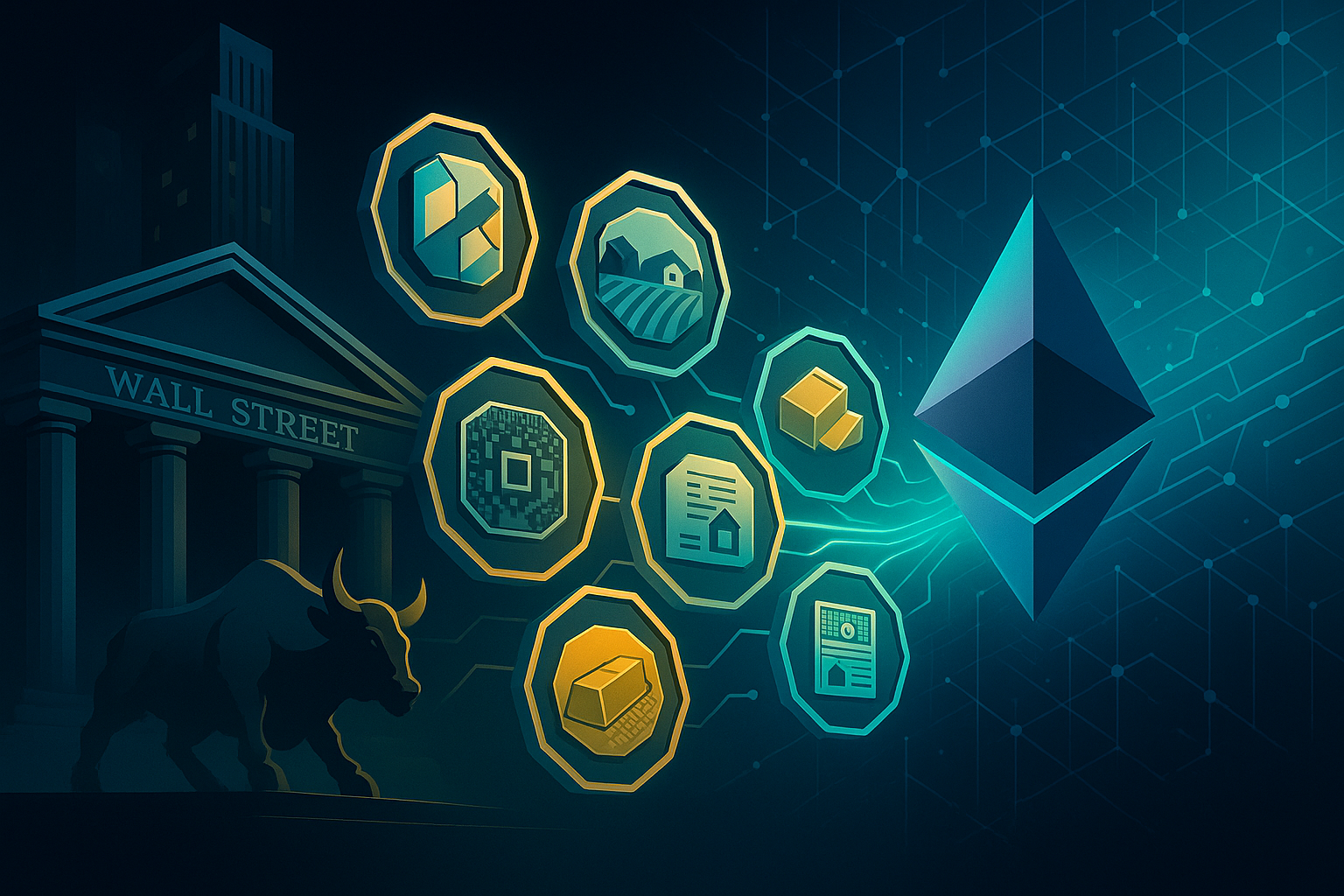
Imagine owning a piece of a Manhattan skyscraper, a fraction of a Picasso painting, or shares in a Tuscan vineyard—all without millions of dollars or traditional brokers. This is tokenization of real-world assets (RWA), a revolutionary blockchain innovation transforming how we invest in property, art, bonds, and more.
In this comprehensive guide, we’ll explore what asset tokenization is, how Ethereum enables it, why major financial institutions like BlackRock and JPMorgan are investing billions, and what this means for everyday investors in 2025.
What Is Asset Tokenization? A Simple Explanation
Tokenization converts ownership rights of physical or financial assets into digital tokens on a blockchain. Think of it as slicing a valuable asset into thousands of affordable shares that anyone can buy, sell, or trade online.
Real-World Example
A $1 million apartment building gets tokenized into 1 million digital tokens, each worth $1. You can purchase just 10 tokens for $10, owning a proportional stake in the property. When the building appreciates or generates rental income, your tokens increase in value or pay dividends.
These tokens exist on blockchain networks—secure, transparent digital ledgers that track ownership without banks or intermediaries. You can trade them 24/7 on specialized platforms, similar to stocks on the NYSE or NASDAQ.
Why Tokenization Matters
Historically, assets like commercial real estate, fine art, and private equity were exclusive to wealthy investors and institutions. Tokenization democratizes finance by:
- Lowering investment minimums from millions to just dollars
- Increasing liquidity in traditionally illiquid markets
- Reducing transaction costs and settlement times
- Enabling global access to premium assets
According to Boston Consulting Group, tokenized assets could reach a $16 trillion market by 2030.
Why Ethereum Powers the Tokenization Revolution
Ethereum has emerged as the dominant blockchain for tokenizing real-world assets. For investors looking to understand the broader context, check out our complete investment guide comparing Bitcoin vs Ethereum to see why institutions increasingly favor Ethereum for tokenization projects.
Smart Contracts: The Backbone of Tokenization
Ethereum enables smart contracts—self-executing code that automates complex transactions without middlemen. These digital agreements automatically:
- Transfer ownership when payment is received
- Distribute rental income or dividends to token holders
- Enforce compliance with KYC/AML regulations
- Handle voting rights for governance decisions
Think of smart contracts as vending machines: insert the right input (money), get the guaranteed output (asset tokens) instantly.
Industry-Standard Token Protocols
Ethereum supports multiple token standards optimized for different asset types:
- ERC-20: Fungible tokens for divisible assets (real estate shares, commodities)
- ERC-721: Non-fungible tokens (NFTs) for unique items (art, collectibles)
- ERC-1400: Security tokens with built-in regulatory compliance
- ERC-3643 (T-REX): Advanced standard for permissioned securities with automatic KYC/AML enforcement
The Merge and Layer-2 Scaling Solutions
The old term “Ethereum 2.0” is outdated. The actual transformation happened through:
- The Merge (2022): Ethereum transitioned to proof-of-stake, reducing energy consumption by 99.95% (Ethereum Foundation)
- Dencun Upgrade (EIP-4844, 2024): Dramatically lowered costs for Layer-2 networks
Today, token transfers on Layer-2 solutions like Arbitrum, Optimism, and Base cost mere cents while maintaining Ethereum’s security. To dive deeper into how DeFi protocols utilize Ethereum for tokenization and financial innovation, explore our comprehensive beginner’s guide.
Robust Developer Ecosystem
Ethereum hosts thousands of developers building tokenization infrastructure:
- Trading platforms (Securitize, tZERO)
- Custody solutions (Fireblocks, Anchorage Digital)
- Compliance tools (Chainalysis, Elliptic)
- Oracle networks (Chainlink) for real-world data feeds
Wall Street’s Multi-Billion Dollar Bet on Tokenization
Traditional finance initially dismissed blockchain as speculative. Today, the world’s largest institutions are actively tokenizing assets worth billions. Understanding Ethereum’s key statistics and institutional adoption helps explain why these institutions chose this blockchain over alternatives.
Major Institutional Tokenization Projects (2022-2025)
BlackRock BUIDL Fund (2024)
The world’s largest asset manager launched a tokenized U.S. Treasury money market fund on Ethereum. The BlackRock USD Institutional Digital Liquidity Fund allows investors to hold shares as on-chain tokens, marking mainstream adoption of public blockchains by a $10 trillion institution.
JPMorgan’s Onyx & Tokenized Collateral (2023)
JPMorgan’s Onyx blockchain platform executed the first tokenized collateral transaction: BlackRock tokenized money market fund shares and pledged them to Barclays for an instant repo transaction—settling in minutes rather than days.
Franklin Templeton OnChain U.S. Government Money Fund (FOBXX)
Franklin Templeton, managing $1.5 trillion, operates a tokenized government money market fund on Stellar and Ethereum blockchains, allowing shareholders to hold and transfer shares 24/7.
Goldman Sachs Digital Asset Platform (GS DAP)
Goldman Sachs issued tokenized bonds, including green bonds for the Hong Kong government, using its proprietary blockchain platform. The bank views tokenization as critical infrastructure for future capital markets.
Coinbase-BlackRock Partnership (2022)
Coinbase partnered with BlackRock to provide institutional crypto access through Aladdin portfolio management software, connecting thousands of asset managers to digital assets.
Why Wall Street Embraces Tokenization
Traditional financial institutions see three major advantages:
- Operational Efficiency: Blockchain settlement reduces clearing times from T+2 days to near-instant, cutting costs by up to 80% (Deloitte)
- New Revenue Streams: Fractional ownership attracts retail investors and millennials to traditionally exclusive markets like commercial real estate and private credit
- 24/7 Markets: Unlike stock exchanges with limited hours, tokenized assets can theoretically trade continuously (though regulated platforms still enforce compliance and trading windows)
- Transparency & Auditability: Immutable blockchain records simplify regulatory reporting and reduce fraud risk
According to McKinsey, tokenization could unlock $2-4 trillion in currently illiquid assets by 2030.
How Asset Tokenization Works: Step-by-Step Process
Let’s walk through tokenizing a $10 million commercial office building:
Step 1: Asset Identification and Valuation
Independent appraisers from firms like CBRE or Cushman & Wakefield assess the property’s fair market value, condition, and income potential.
Step 2: Legal Structure and Compliance
Legal counsel establishes a Special Purpose Vehicle (SPV)—typically an LLC or trust—that owns the asset. The SPV issues security tokens under SEC regulations (usually Regulation D for accredited investors or Regulation A+ for public offerings).
Step 3: Token Creation on Blockchain
Developers deploy a smart contract on Ethereum that:
- Creates 10 million tokens (each representing $1 of ownership)
- Defines dividend distribution rules (e.g., quarterly rental income payouts)
- Enforces transfer restrictions (KYC/AML compliance, accredited investor verification)
- Manages governance rights (voting on major property decisions)
Step 4: Platform Listing
Tokens are listed on regulated Alternative Trading Systems (ATS) like:
These platforms handle investor onboarding, KYC/AML checks, and ensure securities law compliance.
Step 5: Investment and Trading
Accredited investors (those meeting SEC wealth requirements) can purchase tokens using:
Token holders receive:
- Proportional rental income distributions
- Rights to appreciation when the property is sold
- Governance voting power
- Tax documentation (1099 forms)
Real Example: Banksy Artwork Tokenization (2022)
Startup Particle fractionalized Banksy’s “Love is in the Air” painting into thousands of tokens, allowing everyday collectors to own shares in the $12.9 million artwork. The project demonstrated tokenization’s potential for democratizing access to blue-chip art.
Benefits of Tokenization for Everyday Investors
Asset tokenization isn’t just for hedge funds and family offices. Here’s how it benefits retail investors:
1. Affordable Access to Premium Assets
Invest in Class-A real estate, commercial properties, or fine art with as little as $50-100, compared to traditional minimums of $250,000-$5 million.
2. Portfolio Diversification
Spread risk across multiple asset classes:
- Real estate (office buildings, multifamily, industrial)
- Private credit and loans
- Fine art and collectibles
- Venture capital and startups
- Commodities (gold, silver)
3. Enhanced Liquidity
Traditionally illiquid investments like real estate can take months to sell. Tokenized assets trade on secondary markets, though liquidity varies by platform and asset type.
4. Transparency and Security
Every transaction is recorded on the blockchain—an immutable, publicly auditable ledger. Smart contracts eliminate counterparty risk and human error.
5. Global Investment Opportunities
A teacher in Brazil can invest in New York commercial real estate. A retiree in Japan can own fractional shares of European art—assuming platforms permit international investors.
6. Passive Income Streams
Many tokenized real estate projects distribute rental income quarterly or monthly, providing steady cash flow similar to dividend stocks.
Risks and Challenges in Asset Tokenization
Despite its promise, tokenization faces significant hurdles:
Regulatory Uncertainty
Securities laws vary by jurisdiction. In the United States, most tokenized assets qualify as securities under SEC regulations, requiring:
- Registration or exemption (Regulation D, Regulation A+, Regulation S)
- Accredited investor verification (net worth exceeding $1 million or income above $200,000)
- Ongoing disclosure and reporting requirements
The European Union’s MiCA regulations and other international frameworks add complexity for global investors.
Technology Risks
Blockchain technology, while secure, isn’t infallible:
- Smart contract bugs: Coding errors can lead to loss of funds (e.g., The DAO hack in 2016)
- Oracle failures: If external data feeds malfunction, automated distributions may fail
- Network congestion: During high demand, Ethereum transaction fees can spike (though Layer-2 solutions mitigate this)
Liquidity Concerns
While tokenization promises improved liquidity, reality varies:
- Limited trading volumes on secondary markets
- Wide bid-ask spreads
- Lock-up periods (some tokens restrict sales for 6-12 months)
Fraud and Scam Risk
Bad actors issue fake tokens without real asset backing. Protect yourself by:
- Only using regulated platforms (Securitize, tZERO)
- Verifying asset ownership through independent audits
- Checking if the issuer is registered with financial regulators
- Avoiding platforms that promise unrealistic returns
Valuation Complexity
Unlike publicly traded stocks with real-time pricing, tokenized real estate or art valuations depend on:
- Periodic appraisals (may be outdated)
- Market comparables (limited data for unique assets)
- Subjective assessments (especially for art and collectibles)
The Future of Tokenization: Market Size and Projections
The tokenization market is growing exponentially:
Market Forecasts
- Boston Consulting Group: $16 trillion tokenized assets by 2030
- McKinsey: $2-4 trillion in real-world assets on blockchain by 2030
- Citibank: $4-5 trillion tokenized digital securities by 2030
Real Estate: The Biggest Opportunity
Savills estimates global real estate at nearly $380 trillion (2023). Even if just 1% moves on-chain, that’s $3.8 trillion in tokenized property.
Early movers include:
- RealT: Tokenized rental properties in Detroit, allowing global investors to earn rental income
- Lofty AI: Fractionalized U.S. real estate starting at $50
- Elevated Returns: Tokenized luxury hotels and resorts
Beyond Real Estate: Emerging Asset Classes
Government Bonds and Treasuries
BlackRock, Franklin Templeton, and Goldman Sachs are already tokenizing sovereign debt, making government bonds accessible to retail investors with instant settlement.
Carbon Credits
Blockchain-based carbon credit markets improve transparency and reduce fraud in offset trading. Platforms like Toucan Protocol and KlimaDAO tokenize verified carbon credits.
Music Royalties and Intellectual Property
Artists tokenize song rights, allowing fans to invest in music and earn streaming royalties. Royal and ANote Music lead this sector.
Sports Collectibles and Team Ownership
Platforms explore fractional ownership of sports teams and rare memorabilia. NBA Top Shot popularized sports NFTs, generating over $1 billion in sales.
Private Credit and Loans
Maple Finance and Centrifuge tokenize corporate loans, allowing lenders to invest in diversified debt portfolios with blockchain transparency.
How to Get Started with Tokenized Assets
Ready to explore tokenization? Follow these steps:
1. Educate Yourself
- Read Ethereum.org’s developer documentation
- Follow industry news on The Block, CoinDesk, Decrypt
- Join communities on Reddit’s r/RealEstate and r/Ethereum
For newcomers to the crypto space, our guide to the top crypto exchanges for beginners will help you set up accounts on platforms where you can acquire ETH and stablecoins needed for tokenized investments.
2. Choose a Regulated Platform
Start with established, compliant platforms:
- Securitize: Largest tokenization platform, handling offerings from KKR and Hamilton Lane
- tZERO: SEC-registered Alternative Trading System
- Republic: Crowdfunding platform with tokenized offerings
- RealT: Focused on rental real estate
3. Complete KYC Verification
Prepare documents:
- Government-issued photo ID
- Proof of address (utility bill, bank statement)
- Tax identification number
- Accreditation verification (if required)
4. Start Small
Begin with $50-500 to understand the process before committing significant capital. Diversify across multiple assets and platforms.
5. Use Secure Custody
Store tokens in:
- Hardware wallets (Ledger, Trezor)
- Institutional custody (Coinbase Custody, Fireblocks)
- Platform-native wallets (for smaller amounts)
Never share your private keys or seed phrases with anyone.
Tokenization and Traditional Finance: The Convergence
The line between blockchain and traditional finance is blurring. Institutional adoption is accelerating, with Ethereum ETFs providing regulated access for pension funds, endowments, and traditional investors seeking exposure to the tokenization revolution.
Central Bank Digital Currencies (CBDCs)
Over 100 countries are exploring CBDCs—government-issued digital currencies that could interoperate with tokenized assets for seamless settlement.
Integration with Banking Systems
Banks like HSBC, BNY Mellon, and State Street offer crypto custody and tokenization services, bridging traditional finance with blockchain infrastructure.
Programmable Money
Tokenization enables programmable money—payments that automatically execute when conditions are met (e.g., release escrow when property inspection passes). This transforms industries from real estate to supply chain finance.
Conclusion: The Tokenization Revolution Is Here
Tokenization represents the most significant financial innovation since the internet transformed banking in the 1990s. By combining Ethereum’s blockchain technology with Wall Street’s capital markets expertise, tokenization is:
- Democratizing access to investments once reserved for the ultra-wealthy
- Increasing liquidity in traditionally illiquid markets
- Reducing costs through automated, blockchain-based settlement
- Enabling 24/7 global markets without geographic barriers
- Improving transparency through immutable, auditable records
Major institutions—BlackRock, JPMorgan, Goldman Sachs, Franklin Templeton—aren’t experimenting anymore. They’re deploying billions into tokenization infrastructure because they recognize it as the future of finance.
You don’t need a Wall Street pedigree or a million-dollar fund to participate. But you do need to:
- Understand the risks and regulations
- Choose trustworthy, compliant platforms
- Start small and diversify
- Stay informed as the industry evolves
The tokenization revolution isn’t coming—it’s already here. The question isn’t whether to pay attention, but whether you’re ready to participate in the next generation of investing.
Additional Resources
Regulatory Bodies
- U.S. Securities and Exchange Commission (SEC)
- Commodity Futures Trading Commission (CFTC)
- Financial Conduct Authority UK (FCA)
- European Securities and Markets Authority (ESMA)
Industry Organizations
Research and News
Educational Platforms
Disclaimer: This article is for educational purposes only and does not constitute financial, legal, or investment advice. Cryptocurrency and tokenized assets are high-risk investments. Always conduct thorough research and consult licensed professionals before investing.